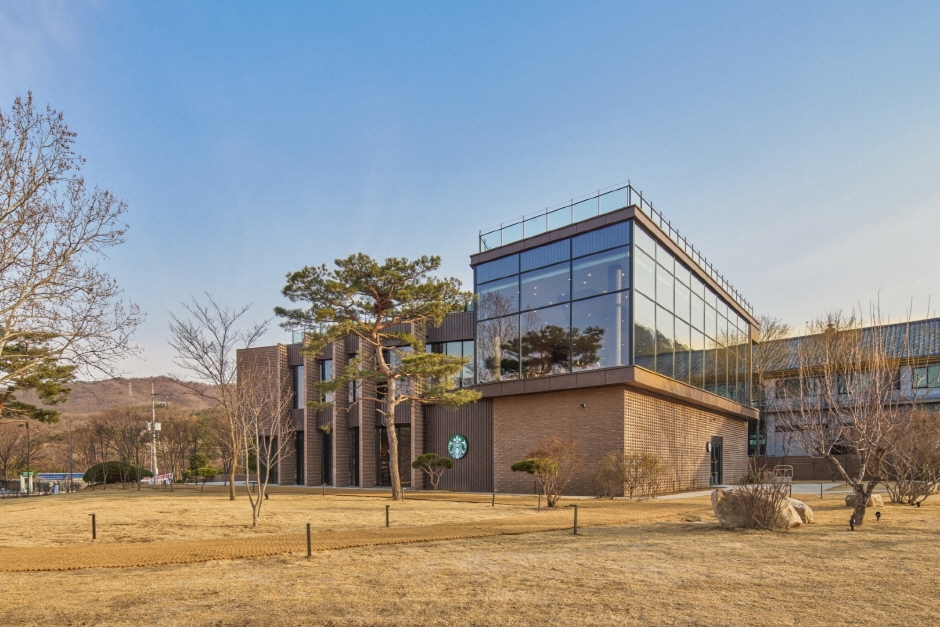
Starbucks Buckhansan (스타벅스 더북한산)
14.0Km 2024-12-27
24-11 Daeseomun-gil, Eunpyeong-gu, Seoul
'"The" store, panoramic view of Bukhansan Mountain and garden
Starbucks Bukhansan is the third Destination Store by Starbucks. It features a “Healing in Nature” concept that beautifully combines the natural beauty of Bukhansan Mountain with various landscape spaces and offers breathtaking views of Bukhansan Mountain.
Starbucks Bukhansan store is currently the most loved and trending place in Korea, and it ranked first in the “2023 Best Restaurants Voted by Locals VS Foreigners” list announced by the Korea Tourism Organization.
Starbucks Bukhansan proudly offers the store's exclusive Bukhansan Lemon Earl Grey Blended beverage, and Crafted Food available only at some Starbucks stores. There is a photo zone on the 3F rooftop to take memorable pictures. These are the reasons why many customers consider it one of the top locations to have a special Starbucks experience.
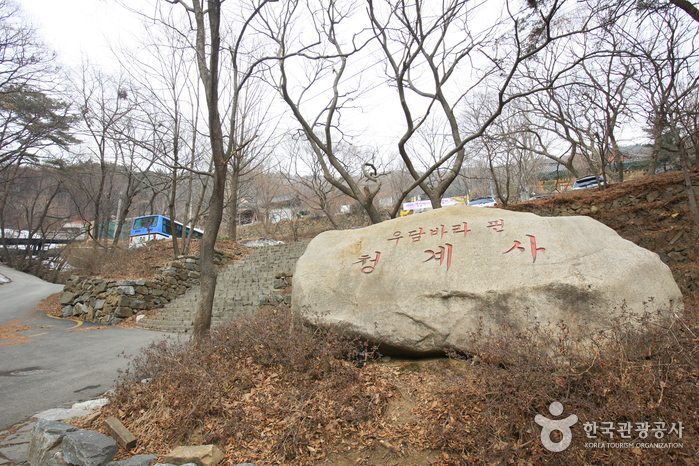
Gyeonggi Cheonggyesa Temple (청계사(경기))
14.1Km 2021-11-23
475, Cheonggye-ro, Uiwang-si, Gyeonggi-do
+82-31-345-2533
Cheonggyesa Temple is a Buddhist temple near Baegunhosu Lake that became well-known as the site of udumbara flower, a rarity that blooms on Buddhist statues. Built during the Silla Kingdom, the temple offers many sights, including the Cheonggyesa Temple Monument, Geungnakjeon Hall, the bell tower, Samseonggak Shrine, Ksitigarbha Hall, and Gamnoji Pond. Among the many things to see, visitors should not miss a glimpse of the Bronze Bell of Cheonggyesa Temple and the Wood Printing Block in Cheonggyesa Temple. Created in the 27th year of the reign of King Sukjong (1701) of the Joseon dynasty, the Bronze Bell has been designated as a national treasure, and is adorned with elaborate patterns.

Anyang Art Park (안양예술공원)
14.2Km 2025-10-23
7 Yesulgongwon-ro 131beon-gil, Manan-gu, Anyang-si, Gyeonggi-do
+82-31-8045-7000
Anyang Art Park, formerly known as Anyang Recreational Park, is an easily accessible, well-maintained cultural space. It has been revitalized with updated features such as artificial waterfalls, an outdoor stage, a plaza, walking paths, and enhanced lighting facilities. The park promotes art projects by displaying 50 artworks from renowned Korean and international artists throughout various locations. Nearby, visitors can explore additional local attractions including hiking trails through dense forests, traditional temples such as Anyangsa Temple and Yeomburam Hermitage, the treasure-designated Flagpole Supports at Jungchosa Temple Site, and the Kimchungup Architecture Museum, all of which contribute to a rich area experience.
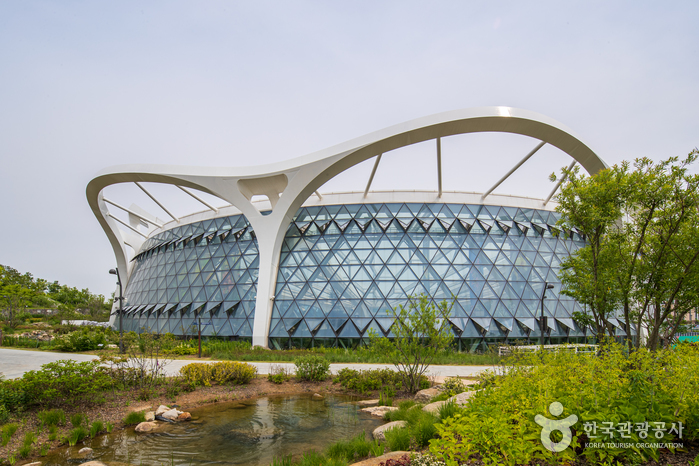
Seoul Botanic Park (서울식물원)
14.2Km 2025-06-18
161 Magokdong-ro, Gangseo-gu, Seoul
The Seoul Botanical Garden was created in Magok, the last remaining development site in Seoul, to introduce native plants and horticulture of 12 different cities from around the world and raise ecological awareness in the city. Seoul Botanic Park integrates a botanical garden and a public park, and the area is the size of 70 soccer fields. It serves as a bridgehead and lifelong education institution with the aim of spreading urban garden culture while staying true to its original role as a plant research conservation institution through expanding endangered wild plant habitats, researching the proliferation of species, and developing varieties. The botanical garden is divided into four spaces: Open Forest, Themed Garden, Lake Garden, and Wetland Garden. The main highlight is the Themed Garden that comprises the Botanic Center, Mogok Cultural Hall, and an outdoor themed garden.
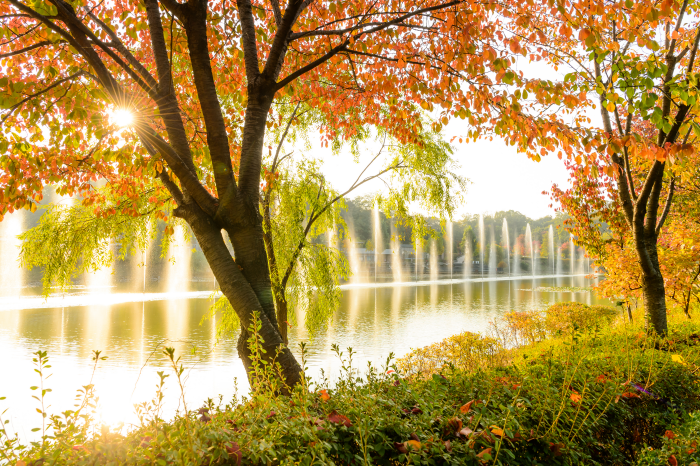
Seoseoul Lake Park (서서울호수공원)
14.2Km 2022-10-19
20, Nambusunhwan-ro 64-gil, Yangcheon-gu, Seoul
+82-2-2604-3004
Covering over 225,000 ㎡ of land in the southwestern part of Seoul, Seoseoul Lake Park, also known as West Lake Park, was to resolve the regional imbalance in the city. The park is a eco-friendly park designed with the themes of "water" and "recycling." Before turning into a park, the area was used as a purification plant that produced approximately 120,000 tons of tap water to Seoul. The park has a children's playground, sports facilities like the soccer field, basketball court and badminton courts, and a cultural plaza. With its vast space and 24-hour operation, the park provides a relaxing ground for the citizens of Seoul.
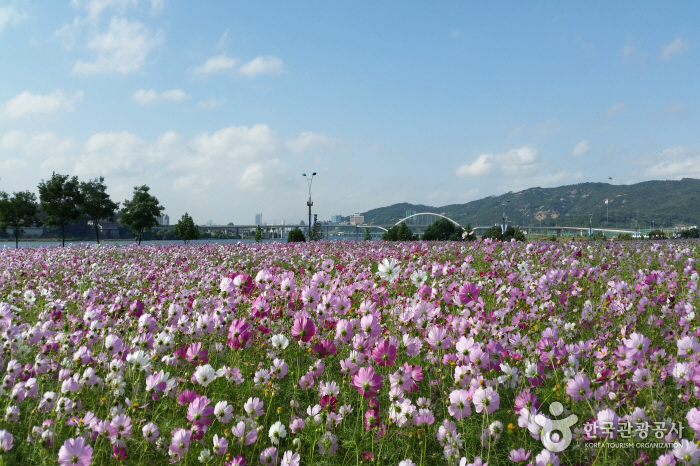
Guri Hangang Park (Cosmos Park) (구리시민한강공원 (코스모스공원))
14.3Km 2021-09-15
Topyeong-dong, Guri-si, Gyeonggi-do
+82-31-550-2474
Guri Hangang Park offers a perfect rest area for visitors where visitors can feel the cool breeze coming off the river and rest amidst the beautiful natural scenery. The park’s bounties of flowers are at their peak in May with field of canola flowers, and in September when the cosmos bloom.
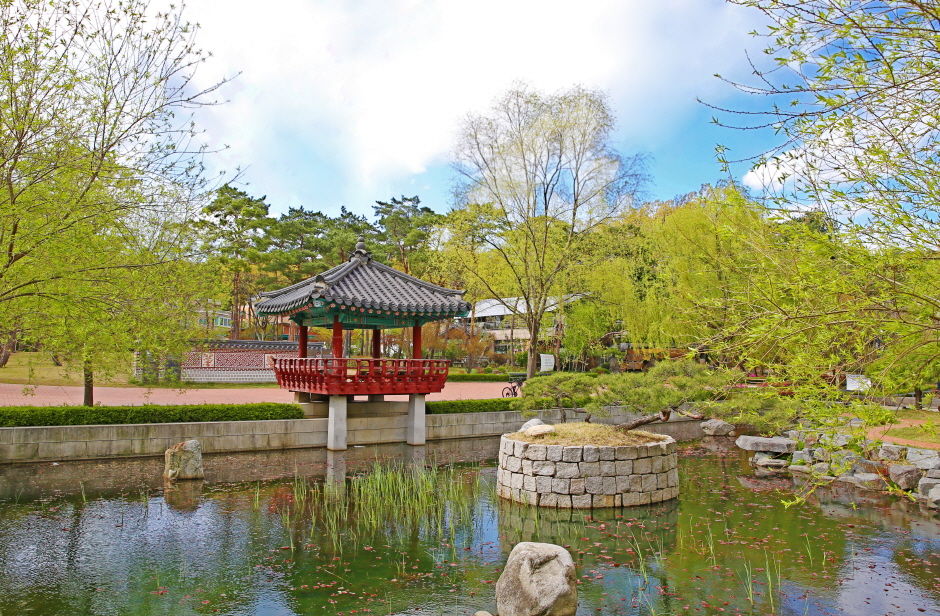
Wondangsaem Park (원당샘공원)
14.3Km 2024-02-15
16 Haedeung-ro 32ga-gil, Dobong-gu, Seoul
Wondangsaem Pond is named after the Wondang village, where the Yun family settled about 600 years ago. It is a park that harmoniously blends a traditional pond with a Hall of Rejoicing Pavilion called Samojeong, a wall fall, and a floral wall. During autumn, the golden foliage of an 800-year-old ginkgo tree enriches the surroundings, and a deck path around the tree offers a delightful stroll.
Seoul Hiking Tourism Center - Bukhansan Branch (서울도심등산관광센터(북한산))
14.4Km 2024-03-05
5F, 181-7 Ui-dong, Gangbuk-gu, Seoul
+82-1533-2608
The Seoul Hiking Tourism Center is located 5 minutes on foot from Exit 2 of Bukhansan Ui Station and provides various services to hikers. It provides hiking course guidance and information (available in Korean, English, Chinese, and Japanese) about the mountains of Seoul, including Bukhansan, Bugaksan, and Inwangsan Mountains, as well as promotional materials such as Seoul hiking tourism guidebooks and maps. Also, it operates hiking tour programs with various themes every week for foreigners and offers hiking gear rental services such as hiking boots, hiking attire, trekking poles, gloves, and crampons for foreigners. (Koreans accompanied by foreigners can also rent the gear.) In addition, there is a storage locker and lounge for visitors, so they can pack up and rest before hiking.
Seoul Doseonsa Temple (도선사(서울))
14.4Km 2025-06-25
504 Samyang-ro 173-gil, Gangbuk-gu, Seoul
Doseonsa Temple was established 1,100 years ago during the latter part of the Silla Kingdom when the renowned Buddhist priest Doseonguksa was traveling through the mountains. After visiting the site, Doseonguksa made a prophecy that led to the construction of the temple. According to legend, he used only his walking stick to carve the large Bodhisattva that sits at the temple. Interestingly enough, the statue does not show any evidence of chisel marks, further adding to the mystery of how the statue was made.
During the 7th year of King Gwangmu of the Joseon dynasty, Doseonsa Temple was officially named the representative temple of Korea with the purpose of promoting Cheongdamdaejongsa's Korean Buddhism movement, aiming at a religious revival. Due to these special circumstances Deseonsa Temple gained a high reputation and much recognition, which have held strong to this day.
Inside the temple, visitors can view the remains and written works of Cheongdamdaejongsa in the Cheongdamdaejongsa Memorial Hall. Next to the road leading to Cheonbuljeon Hall is a pond where you can toss a coin and make a wish and just past Yongammun Gate is a hiking path connecting Baegundae Cliff and Insubong Peak. Inside the Ksitigarbha Hall are portraits of President Park Chung-hee, Yuk Yeong-su, and Hyundai Chairman Chung Ju-yung. In front of the hall is a tree that is said to have been planted by a Buddhist priest who brought it from India 200 years ago. Historical artifacts can be found throughout the temple.
 English
 한국어
한국어 日本語
日本語 中文(简体)
 Deutsch
 Français
 Español
 Русский


