
Grand Plastic Surgery (그랜드성형외과의원)
7.2Km 2025-10-23
(#601, 6th Floor, JB Miso Building), 841 Nonhyeon-ro, Gangnam-gu, Seoul
With top-notch multidisciplinary medical staff
and a one-stop total healthcare system,
we lead the world in aesthetic medicine.
Grand Plastic Surgery opened its doors in 2004.
In its 19-year history, we established ourselves as Korea's leading aesthetic medicine group.
We are the hospital of choice for more than 30,000 international patients, attracting patients from more than 100 countries around the world with a top-tier specialized medical consultation system, a well-organized safety system, and distinguished services tailored to both domestic and international patients.
Grand Plastic Surgery promises satisfactory surgical results to our patients with our long-standing surgical experience and know-how, and aims to become a medical group capable of leading not only Korea but also Asia and the world.
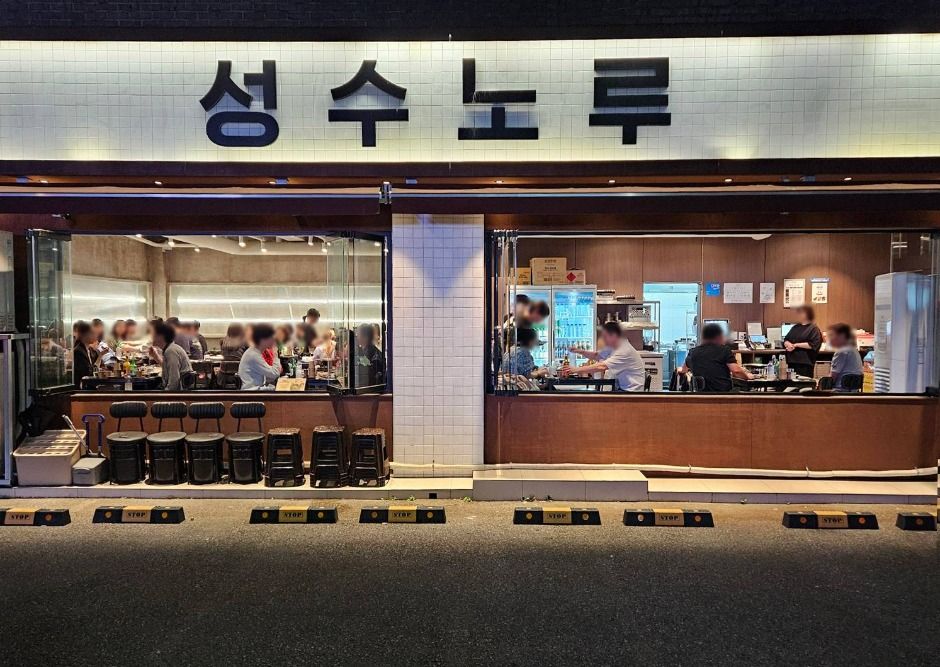
Seongsunoru (성수노루)
7.2Km 2025-05-07
110 Achasan-ro, Seongdong-gu, Seoul
Seongsunoru is a hanu grilled gopchang (Korean beef small intestines) restaurant. The meat is grilled by staff, ensuring crispy on the outside and soft on the inside. Besides grilled gopchang, the restaurant also offers a variety of menu items using Korean beef daechang (large intestines) and makchang (tripe) as the main ingredient. Popular add-ons and side dishes include yukhoe (beef tartare), cheese fried rice, kimchi noodles, and soft bean curd jjigae. The restaurant is equipped with a parking lot and has a corkage fee system.
Topface Plastic Surgery (탑페이스성형외과의원)
7.3Km 2025-10-23
(4th Floor, Apgujeong Building), 842 Nonhyeon-ro, Gangnam-gu, Seoul
Top Face Plastic Surgery is located at Exit 3 of Apgujeong Station and specializes in eyelid and nose revision surgeries as well as facelifts. The clinic’s medical team is committed to ensuring high safety and satisfaction with their extensive experience and expertise.
Top Face Plastic Surgery does not recommend unnecessary procedures and focuses on personalized surgeries tailored to individual needs rather than a one-size-fits-all approach. The clinic adheres to strict safety protocols and operates with various safety systems in place. All operating rooms are equipped with closed-circuit televisions, ensuring that every surgical procedure is recorded in real time, making the clinic transparent and free of shadow doctors or ghost surgeries.
The clinic is committed to achieving distinctive beauty through inner healing as its core philosophy.
The 3.0 Clinic (더3.0피부과의원)
7.3Km 2025-10-23
(4th Floor, Cham Building, Sinsa-dong), 48 Apgujeong-ro 28-gil, Gangnam-gu, Seoul
The 3.0 Clinic has successfully developed a method to treat acne without using conventional acne dermatological treatments that have inevitably accompanying side effects, which require taking cumbersome medications with side effects, and require continuous management. We were invited to give a lecture at the American Academy of Dermatology and also gave lectures in China and Europe. We also developed a simple injection method to reduce sebum, which had no proper treatment. In addition, we developed a method to blur the shape of intractable scars and received an award at the Eastern Asia Dermatology Congress in Japan.
Our skin and body have incredible power. If you understand the reasons why our skin is like this, what changes, and results and take fundamental care of your skin, you can treat acne without taking medicine and atopic dermatitis without steroids.
Symptom relief for the 1.0 generation, fundamental cause and resolution for the 2.0 generation, and prevention for the 3.0 generation. We aim to help people improve the power of their skin!
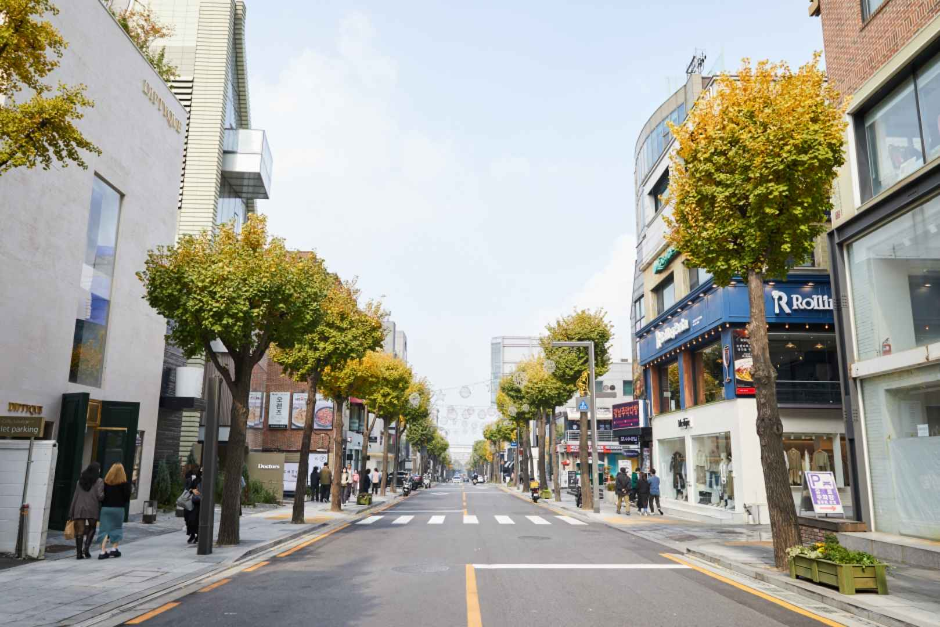
Sinsa-dong Garosu-gil Road (신사동 가로수길)
7.3Km 2024-12-02
Sinsa-dong, Gangnam-gu, Seoul
The ginkgo tree-lined street (Sinsa-dong Garosu-gil) that runs from Sinsa Station (Subway Line 3) to Hyeondae High School is a popular, upscale street in Seoul. The street (also known as ‘artists' street’) has an eccentric flair thanks to its variety of charmingly decorated coffee shops, and designer stores. Garosu-gil is particularly popular in autumn when the golden ginkgo leaves begin to fall. Furthermore, with continous popularity, it has become one of the most attractive film locations in the city.
Leaders Dermatology Clinic Apgujeong (리더스피부과의원 압구정점)
7.3Km 2025-10-23
4th-5th Floors, 843 Eonju-ro, Gangnam-gu, Seoul
Founded in 2001 by board-certified dermatologists from Seoul National University College of Medicine, Leaders Dermatology has grown into a trusted network of over 12 clinics across Korea and internationally, with a team of more than 20 dermatologists and 150 medical professionals.
Our doctors are actively involved in global academic circles delivering lectures at renowned conferences and seminars and are dedicated to raising the bar for dermatological care. With a systematic, patient-centered approach, our mission is to become the No.1 dermatology clinic in customer satisfaction through excellence in service and results.
![Jingwansa Temple (Seoul) [진관사(서울)]](http://tong.visitkorea.or.kr/cms/resource/33/3429433_image2_1.JPG)
Jingwansa Temple (Seoul) [진관사(서울)]
7.3Km 2025-06-30
73 Jingwan-gil, Eunpyeong-gu, Seoul
Jingwansa Temple is one of the four Buddhist temples that surround Seoul. It was known as the center of Buddhism and academics. Jingwansa Temple is home to a variety of buildings, such as Daeungjeon Hall, Myeongbujeon Hall, and Nahanjeon Hall, all surrounded by the beautiful nature of Bukhansan Mountain. In fact, the temple complex is a popular fall destination for its fall colors. Visitors can also visit the nearby Eunpyeong Hanok Village.
Lee & Chaeum Skin Clinic (리앤채움의원)
7.3Km 2025-10-23
4F, 837, Nonhyeon-ro, Gangnam-gu, Seoul
Lee & Chaeum Skin Clinic offers medical semi-permanent makeup procedures through a collaboration between beauty technicians and experienced medical professionals.
We provide a range of treatments, including eyebrow, scalp, hairline, lip, and eyeliner tattoos, with personalized solutions and a comprehensive aftercare program.
The clinic holds a patented 3D micro needle technology for natural results, and our Chaeum Pigment has received Dermatest Seal and trademark registration from the Korean Intellectual Property Office, ensuring superior results for our clients.
As a designated hospital of the Korean Film Actors Association (KFAA), we contribute to the growth of K-beauty.
Jingwansaggyegok Valley (진관사 계곡)
7.3Km 2024-02-20
73 Jingwan-gil, Eunpyeong-gu, Seoul
Jingwansaggyegok Valley is a 1km-long stream located within the Bukhansan National Park, with clear water always flowing. Surrounded by deep forests, it offers refreshing shade and clean air. The valley features various shaped rocks and waterfalls, creating a beautiful scenery. In particular, it's a great spot for water activities with the cool shade and refreshing stream during the summer, and the autumn leaves make it stunning in the fall. Its accessibility from downtown Seoul adds to its appeal.
Global Plastic Surgery (글로벌성형외과의원)
7.3Km 2025-10-23
8F, 846 Eonju-ro, Gangnam-gu, Seoul
Since its opening in 1990, Global Plastic Surgery aims to continue its operation based on its zero-accident tradition and expertise. It has become a major Korean medical brand consisting of specialists in each field. As a hospital that leads medical hallyu and sets an example to other clinics, Global Plastic Surgery is committed to research with a sense of duty and responsibility.
Global Plastic Surgery operates Aesthetic Surgery Center with 30 years of clinical experience; the Global Stem Cell Research Center dedicated to rejuvenation from the cellular level; and the Global Anti-aging Center. The clinic is exerting its best efforts as a life-long beauty clinic customized for the customer's lifestyle.
In return for the love and trust given to them, all members of Global Plastic Surgery treat customers like family and exert their best efforts to provide top-quality services to each customer through cutting-edge medical technology.
 English
 한국어
한국어 日本語
日本語 中文(简体)
 Deutsch
 Français
 Español
 Русский


