
Samcheong-dong Street (삼청동길)
3.8Km 2025-01-22
107 Samcheong-ro, Jongno-gu, Seoul
It is said that Samcheong-dong was named from the story about the three "cheong" (Chinese character meaning clean) of the area, namely the mountain, water, and people. Another theory is that the origin of the region's name came from Samcheongjeon Hall where three tablets called "Taecheong," "Sangcheong," and "Okcheong," were set up based on Taoism. Samcheong-dong Street features a mixture of old scenes of hanok buildings with traditional beauty and modern scenes of galleries and cafés, creating a unique atmosphere. Visitors can feel the abundant cultural mood at every corner of the street through the art galleries, museums, antique shops, and quiet pathways.
The Street in front of Cheongwadae (The Blue House) (청와대 앞길)
3.8Km 2025-08-20
Gungjeong-dong, Jongno-gu, Seoul
+82-2-120
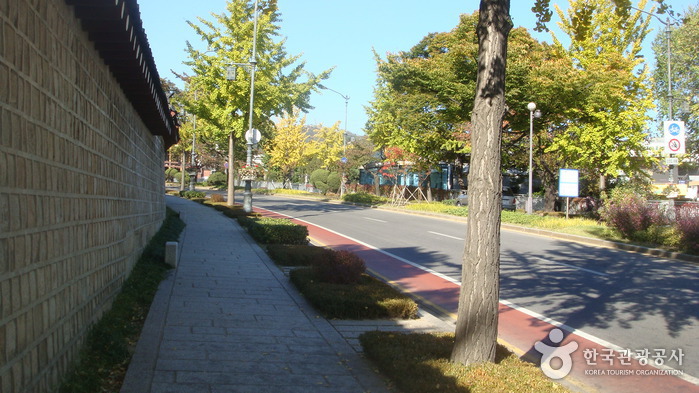
The street in front of Cheongwadae (the Blue House) is open to the public and includes both Hyoja Samgeori (Hyoja three-way intersection) in Hyoja-dong and Palpan Samgeori (Palpan three-way inetersection) in Palpan-dong. When walking along Hyoja-ro Road from Gyeongbokgung Station, sights include a fountain, Mugunghwa Garden, Yeonmugwan Hall, and Daegogak & Yeongbingwan Hall.
Cheongwadae Sarangchae consists of one basement level and two above-ground levels, including Korean Culture Exhibition Hall, Planned Exhibition Hall, a gift shop, and rest area (Korean Food Promotion Hall, Café) on the first floor and Cheongwadae Hall and Haengboknuri Hall on the second floor. Daegogak Hall houses a book donated to former president, Kim Young-sam for expressing the past spirit of Sinmungo (Petitioner's drum from Korean History). Yeonmugwan Hall is a martial art and fitness center for guards. Mugunghwa Dongsan, formed after the ansa (Safe House) was demolished in 1993, includes a well, mock fortress, and rest area. Located behind Mugunghwa Dongsan is Apostolic Nunciature in Korea and Chilgung (Seven Palaces).
At the beginning of the street in front of Cheongwadae, dense trees and beautiful flower gardens decorating both sides of the road make it a nice place for taking a walk. The area from the north gate of Gyeongbokgung Palace, Chunchumun, to the main gate of Gyeongbokgung Palace, Geonchunmun, is Samcheongdong-gil Road. This road is home to many art galleries, including Kukje Gallery, Growrich Gallery, Gallery Hyundai, and Jin Art gallery, in the area of Hyoja-ro.
Starbucks Edae R (스타벅스 이대R)
3.8Km 2024-12-27
34 Ewhayeodae-gil, Seodaemun-gu, Seoul
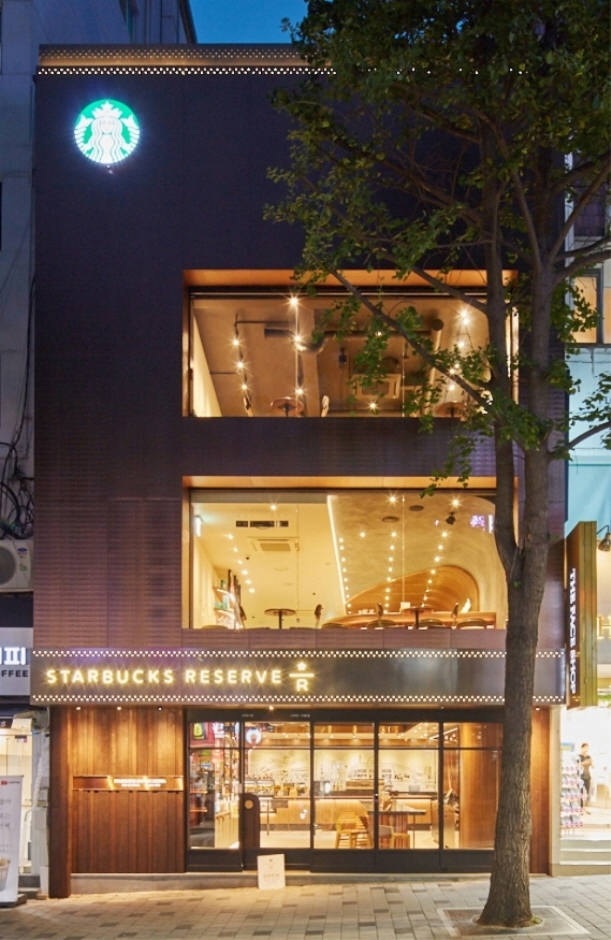
Starbucks Edae R store is the first Starbucks store opened in 1999 and Korea's first Reserve only store
Starbucks Edae R store is the first Starbucks store opened in Korea. It is located 150 meters from the front gate of Ewha Womans University. The store has been loved by customers for over two decades since 1999. In celebrating its 20th anniversary in 2019, the store re-opened as Korea's first Reserve-only store. It specializes in offering specialty coffee and memorable experiences to many customers visiting Korea's first Starbucks store. As the leading store presenting the history and future of Starbucks, it offers high-quality coffee in a beautifully decorated setting, along with unique beverages and exclusive merchandise available only at this particular store.
Cheong Wa Dae Media Display (청와대 국민과 함께 영상전시)
3.8Km 2025-08-20
1 Cheongwadae-ro, Jongno-gu, Seoul
박주원 학예연구사 02-3771-8636
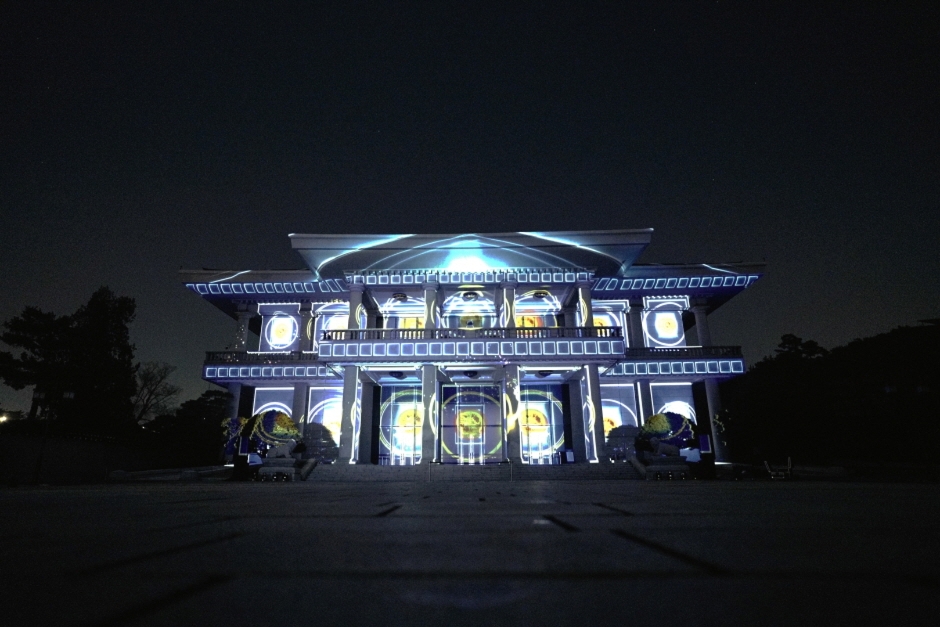
Cheong Wa Dae Media Display brightens the night through a media facade display on Yeongbingwan Hall. The display shows the history of Cheong Wa Dae through the theme "Twelve Lights".
Ewha Womans University Museum (이화여자대학교박물관)
3.9Km 2022-09-14
52, Ewhayeodae-gil, Seodaemun-gu, Seoul
+82-2-3277-3152
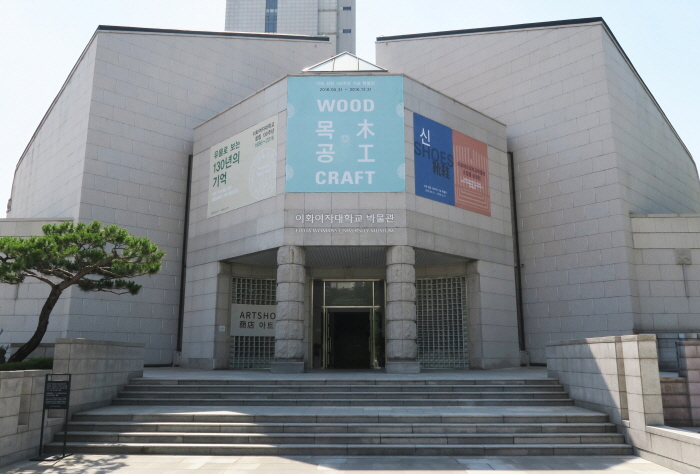
The Ewha Womans University Museum was established in 1935 with the goal of preserving the cultural heritage of Korea. Originally, items related to folk art, traditional woodwork, and pottery were put on display in the hall of the main university to keep them from being confiscated during the Japanese occupation. This later led to the opening of the museum to display and store the growing collection.
Regular exhibitions of the museum’s collection have been taking place annually from 1972. Since 1996, the museum also held special exhibitions that focus on other themes related to cultural heritage. Additional small-scale exhibitions are also held frequently to promote Korea's traditional culture and art.
A ceramics research facility as well as a more traditional museum, a large portion of the museum’s efforts is focused on the research and excavation of kilns. To this aim, excavation teams from the museum have traveled to various parts of the country to conduct studies on historic sites and assess the value of artifacts. Through the publication of books and reports on its discoveries, the museum has contributed to raising knowledge and awareness of Korean cultural heritage in academia and among the public.
 English
 한국어
한국어 日本語
日本語 中文(简体)
 Deutsch
 Français
 Español
 Русский


