
Cha Fertility Ceter - Seoul Station ((의)성광의료재단 차여성의원)
1.3Km 2025-10-23
(2nd Floor, Seoul Square), 416 Hangang-daero, Jung-gu, Seoul
Since opening in 2015, CHA Fertility Center - Seoul Station has served as Korea's leading fertility treatment center. Based on the know-how of CHA University Gangnam Medical Center, the first private hospital to deliver a test-tube baby in 1986, CHA Fertility Center - Seoul Station is conveniently located near the center of Seoul, making it convenient for domestic and international fertility clients. Foreign fertility patients who arrive in Korea via Incheon Airport not only have easy access to the clinic via the direct rail linking Seoul and the airport but also benefit from the capital city's excellent infrastructure (transportation, tours, accommodations, restaurants, etc.) for a safe and comfortable fertility treatment during their stay. In particular, many international residents in Korea, embassy officials, U.S. soldiers, and Koreans living abroad visit CHA Fertility Center for fertility treatment.
Bank of Korea Money Museum (화폐박물관)
1.3Km 2024-03-18
39 Namdaemun-ro, Jung-gu, Seoul
This Renaissance-style three-story stone building is the museum of the Bank of Korea. The older Bank of Korea was established as the central bank of the Korean Empire in 1909 and has been designated as a National Historical Site. During the Japanese colonial period, the bank was renamed the Bank of Joseon, and the building was used as the main and head office of the Bank of Korea until 2001. The building has been used as the nation’s Money Museum since June 2001 in celebration of the 50th anniversary of the Bank of Korea. The museum has 13 exhibition rooms on two floors, with one basement floor and two above-ground floors. It holds special exhibitions of various currency and art collections to provide domestic and foreign visitors with the opportunity to enjoy the history and culture of currency. Visitors can learn about the Bank of Korea and the central banking system, as well as how to identify counterfeit notes and how money is produced and circulated. It is also a good place for children to learn about currencies from around the world. Advance reservations are required, and parking is not available. The museum can easily be reached via subway by getting off at Hoehyeon Station (Seoul Subway Line 4) and exiting through Exit 7.
Yejiwon (예지원)
1.3Km 2022-09-19
72, Jangchungdan-ro, Jung-gu, Seoul
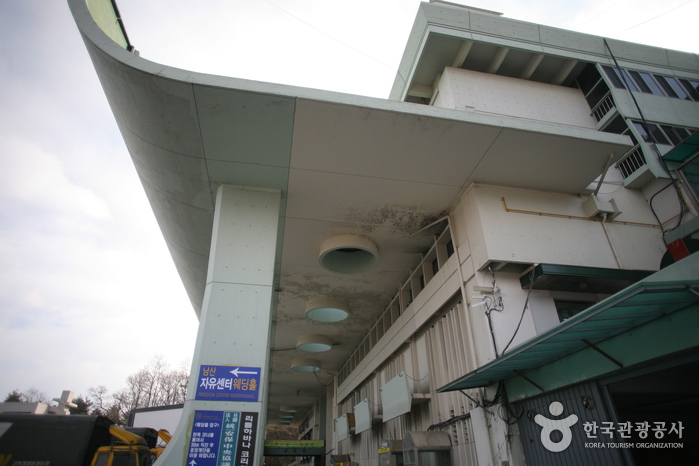
The Yejiwon is located in Seoul Jung-gu Jangchung-dong and has been offering traditional Korean etiquette education programs since its inception on September 16th, 1974. Furthermore, the Yejiwon also serves to introduce the traditional cultures and living cultures of Korean etiquettes to foreigners.
Most programs offered are short-term classes, and reservations can be made on the homepage up to 15 days in advance. Reservations are only available for groups of 10 or more and classes are instructed in Korean only, so it may be a good idea to be accompanied by a guide.
Myeongdong Nanta Theatre (명동난타극장)
1.4Km 2021-07-23
26, Myeongdong-gil, Jung-gu, Seoul
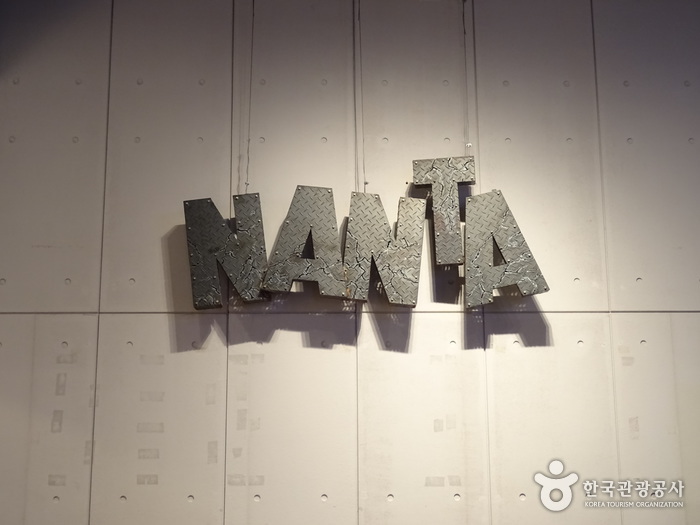
Nanta, Korea's representative non-verbal performance, opened their fourth exclusive theater in Myeong-dong, the center of shopping. The 386-seat theater is located within the UNESCO Building. It is the largst of the Nanta theaters, and was the first to present foreign actors within the performances. There are 3 shows every day, all year round.
Namsan Outdoor Botanical Garden (남산 야외식물원)
1.4Km 2022-12-16
323, Sowol-ro, Yongsan-gu, Seoul
Namsan Outdoor Botanical Garden opened its doors on February 18, 1997 in Hannam-dong, where the residential complex for foreigners once stood before it was demolished in 1994. Covering an area of around 59 ㎡, it is divided into 13 themed gardens with a total 117,132 plants from 269 species. Among this diversity, 60,912 plants from 129 species are tree types and 56,220 plants from 140 species are grass types.
Lime Tree Dental Hospital (라임나무치과병원)
1.4Km 2025-10-23
7F, 43 Myeongdong-gil, Jung-gu, Seoul
Located in Myeong-dong, the heart of Seoul tourism, Lime Tree Dental Hospital is a hospital-grade medical institute. It is led by In-su Kim, the Chief Director with 27 years of experience, and it has a team of specialists covering different departments. This hospital boasts superb accessibility as it is right near Myeong-dong Station (Subway Line 4) and Euljiro 1(il)-ga Station (Subway Line 2).
Skilled medical staff in esthetic prosthodontics are in charge of procedures such as One-day Veneer and All Ceramic Crowns. Additionally, medical staff who have experience placing over 35,000 dental implants directly perform implant procedures.
A leader in K-medicine, Lime Tree Dental Hospital is committed to giving customers the utmost satisfaction.
Beauty Play (뷰티플레이)
1.4Km 2025-11-14
73 Myeongdong-gil, Jung-gu, Seoul
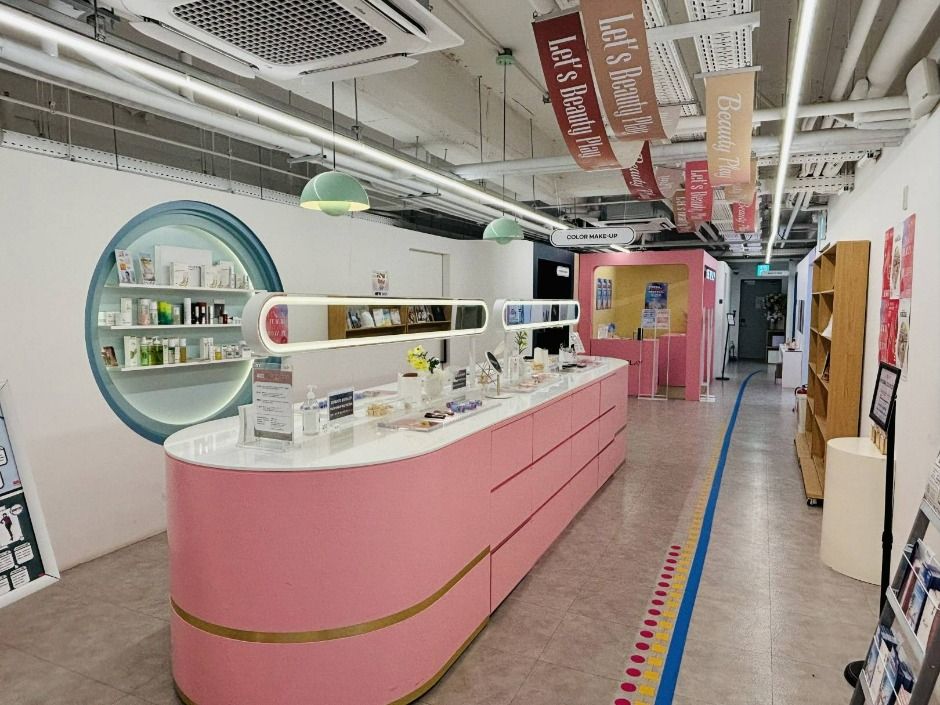
Beauty Play is a K-beauty experience center operated by the Korea Cosmetics Industry Institute and supported by the Ministry of Health and Welfare. It offers a wide variety of sample Korean beauty products for testing as well as diverse beauty experience programs such as makeup touch-up service (choice of base, eyes, or lips), personal color test, and skin evaluation. Visitors can also ask for product recommendation based on their skin type or skincare concerns. Beauty Play also frequently hosts free one-day classes, which are announced online via its official website. It also hosts a variety of sample product giveaway events and the exhibited products get changed every two months, allowing visitors to get familiarized with lesser known quality products as well.
Myeong-dong, Namdaemun, Bukchang-dong, Da-dong and Mugyo-dong Special Tourist Zone (명동 남대문 북창동 다동무교동 관광특구)
1.4Km 2021-12-30
40, Sejong-daero, Jung-gu, Seoul
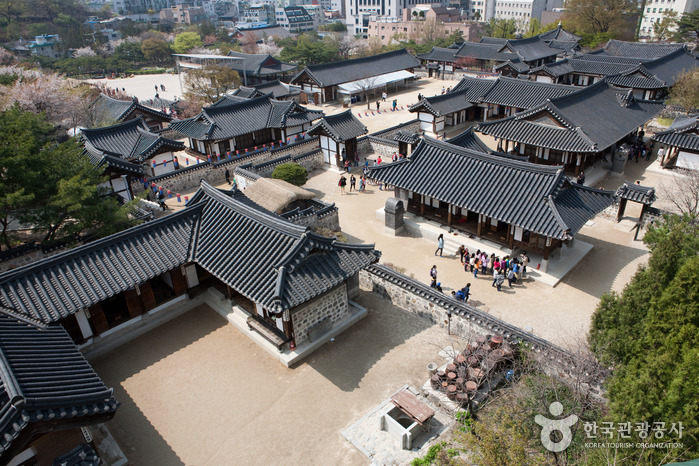
Myeong-dong, Namdaemun, Bukchang-dong and Da-dong are widely known among international visitors as hot spots for shopping and food.
Myeong-dong is a popular destination for shopping, culture, arts and fashion. Major shopping malls such as Lotte Department Store, Shinsegae Department Store, Myeong-dong Migliore and Samik Fashion Town are located here. Shoppers can find a variety of products here from high-end items to relatively inexpensive clothes. There’s also no shortage of street food, traditional restaurants, coffee shops and fancy cafes.
Namdaemun Market is the biggest traditional market in Korea. Visitors can purchase souvenirs and local produce at an affordable price in the shopping complex crowded with stores and street stalls. The market sells a variety of clothes, kitchenware, toys, accessories, food, flowers and imported goods.
Bukchang-dong and Sogong-dong have high-end accommodations including Lotte Hotel Seoul and Westin Chosun Seoul, duty-free shops, and restaurants serving traditional dishes.
[Myeong-dong, Namdaemun Market and Bukchang-dong Special Tourist Zone]
Areas included: Myeong-dong, Bukchang-dong, Mugyo-dong and Da-dong, Seoul
Area size: 872,809 ㎡
Tourist attractions: Myeong-dong, Namdaemun Market and Bukchang-dong, Department Stores (Lotte Department and Shinsegae Department Store, etc.), Traditional Market, Duty-free Shop, Hanok Village, N Seoul Tower, etc.
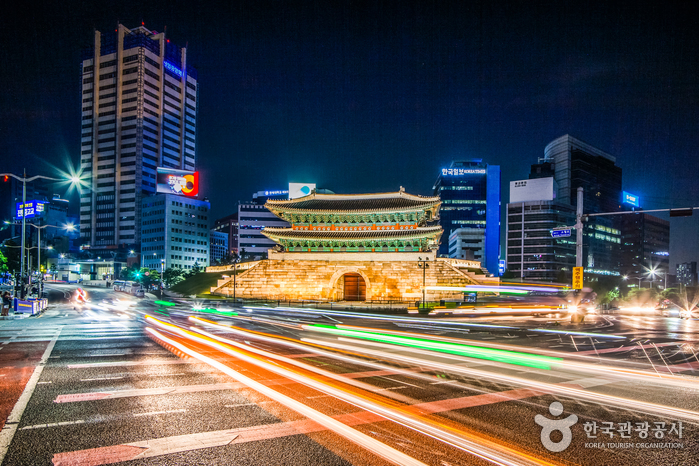
Sungnyemun Gate (숭례문)
1.4Km 2024-11-27
40 Sejong-daero, Jung-gu, Seoul
Sungnyemun Gate is Korea’s National Treasure No. 1, and its unofficial name is Namdaemun Gate. Sungnyemun Gate is the largest castle gate stone structure with an arched entrance in the middle. There’s a column on top of a platform, raising the roof, distinguishing the upper stories and lower stories of the building. Passageways for traffic are located at the east and west ends of the gate. Different from the other gates, Sungnyemun Gate’s tablet has its name written vertically.
On February 10, 2008, Sungnyemun was destroyed by fire. After a 5-year reconstruction work, the gate was re-opened to the public again on May 4, 2013.
 English
 한국어
한국어 日本語
日本語 中文(简体)
 Deutsch
 Français
 Español
 Русский


