Museum Kimchikan (뮤지엄 김치간) - Area information - Korea travel information

Museum Kimchikan (뮤지엄 김치간)

Museum Kimchikan (뮤지엄 김치간)

2.4Km    2025-06-19

(4-6th floor, Maru Art Center), 35-4 Insadong-gil, Jongno-gu, Seoul

Museum Kimchikan is a museum dedicated to kimchi in Insa-dong’s Maru Art Center. The exhibition details the culture, history, trajectory, and efficacy of kimchi and teaches the visitors how to make kimchi through videos. Visitors can also sample different types of kimchi. The museum offers both individual and group experience programs.

Korea Medical Tourism Promotion Association ((사)대한의료관광진흥협회)

2.4Km    2025-10-23

(#601) 29-3 Saemunan-ro 9-gil, Jongno-gu, Seoul

The Korea Medical Tourism Promotion Association aims to attract over 100,000 medical tourists within three years by establishing a structured system for attracting medical tourists, training specialized personnel, and supporting both domestic and international medical tourism. With the increasing number of foreign visitors coming to Korea for various purposes beyond tourism, such as international conferences, business, and exhibitions, there is a growing need for specialized services.

Plans is a company that can meet all these diverse customer needs. ceremonial arrangements, tours, and events often proceed irregularly due to changes in weather, group size, and transportation. To address these variables, Plans, the plural form of "Plan," represents a company that is always prepared from start to finish. It is a leading VIP travel agency in Korea, tailored to meet the needs of its clients.

Seoul International Writers' Festival (서울국제작가축제)

Seoul International Writers' Festival (서울국제작가축제)

2.4Km    2025-07-30

26 Insadong 9-gil, Jongno-gu, Seoul
+82-70-8826-5207

Seoul International Writers' Festival was founded in 2006 with aims to lay a foundation for connecting Korean literature and international literature. This year's theme is "() Meets the Eye," inviting attendees to explore the beauty of literature that is much more than meets the eye.

The Story of King Sejong (세종이야기)

The Story of King Sejong (세종이야기)

2.5Km    2022-09-13

jiha 175, Sejong-daero, Jongno-gu, Seoul
+82-2-399-1000

The Story of King Sejong comprises six different sections with a total area of 3,200 square meters. The museum consists of exhibition zones, an event space, video room, shop and more to display King Sejong’s scientific, artistic, military, and political contributions, including the theory of Minbon, which recognized the people as the base of politics. King Sejong, the 4th king of the Joseon dynasty (1397-1450, reigning from 1418-1450) was responsible for some of the most brilliant achievements in the history of Korea, including the creation of Hangeul (Korean alphabet) and great advancements in the areas of science, culture, art and politics.

Sieunjae (시은재)

Sieunjae (시은재)

2.5Km    2024-12-23

439 , Samil-daero, Jongno-gu, Seoul
+82-10-5355-3029

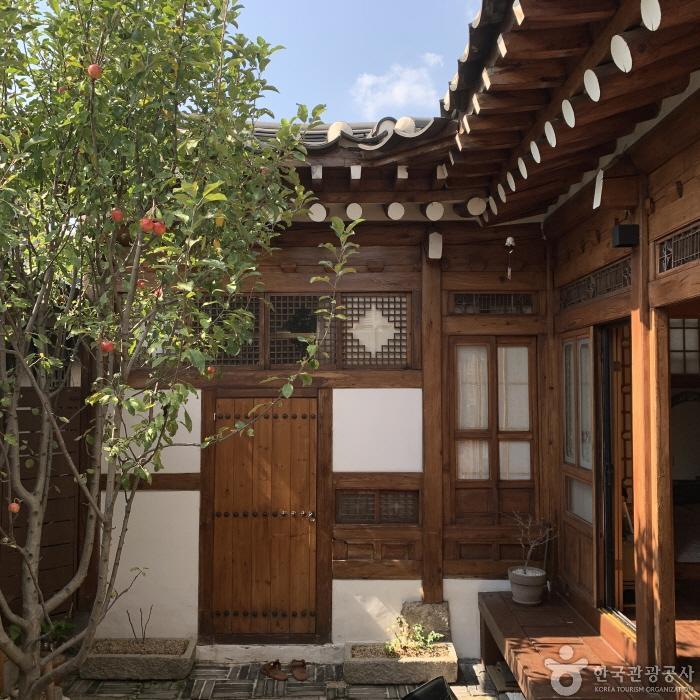
Sieunjae is a hanok stay that has stood in the midst of busy Gyeongun-dong, Jongno-gu, Seoul, for generations. The guestrooms comprise an anbang (bedroom plus living room), three smaller rooms, and a byeolchae or detached house. All rooms have a toilet, and there’s a well-equipped shared kitchen and a washing machine. Guests can either rent individual rooms or the whole hanok. Jongno is convenient for travel to all the historic sites of Seoul, and there’s a public carpark nearby.

CAPO FOOTBALL STORE[Korea Quality]/카포 풋볼 스토어[한국관광 품질인증]

CAPO FOOTBALL STORE[Korea Quality]/카포 풋볼 스토어[한국관광 품질인증]

2.5Km    2024-08-20

282 , Eulji-ro, Jung-gu, Seoul
+82-10-8922-7981

Located in Eulji-ro, Jung-gu, Seoul, Capo Football store is the largest football store in Korea. It stocks football boots of various levels, plus fan wear, uniforms, and training wear. On the 5th floor, a customer lounge provides free coffee, a football book cafe, a PlayStation for enjoying FIFA games, table soccer, and an exhibition of capo collections.

Tteulan Teahouse (뜰안)

Tteulan Teahouse (뜰안)

2.5Km    2024-12-10

Tteulan Teahouse is a cafe that really allows one to feel the tradition and flair of Korea. Tteulan has two entrances: one facing the wide alley and the other facing the smaller one. The smaller entrance is decorated like a garden, so it feels as if one is stepping into a land of fairy-tales. The café has a floor seating tables with traditional items like gadari soban (a table with legs that curve like a dog's legs), and jogakbo (a textile woven from several pieces of scrap cloth), all of which add to the traditional Korean aesthetic. The menu features ssanghwacha (medicinal herb tea known to help the immune system), a favorite among middle-aged and elderly Koreans; omija tea (omija is a tart berry that grows in East Asia known to be good for lung and bronchial health and boosts immunity); citrus tea (usually made with yuzu which is rich in vitamin C and said to help mitigate fatigue); and pour-over coffee. Traditional desserts include mugwort rice cake (rice cake with mugwort added for herbal flavor, best enjoyed with malt syrup), pumpkin rice cake, and roasted grain powder (a nutritious beverage made with a variety of powdered grain). It can be hard to find seating in the afternoon, so visitors are advised to avoid these hours if they seek to enjoy their drink in peace.

King Sejong Statue (세종대왕 동상)

King Sejong Statue (세종대왕 동상)

2.5Km    2024-03-04

175, Sejong-daero, Jongno-gu, Seoul
+82-2-2133-7713

King Sejong Statue can be found at Seoul’s Gwanghawmun Square. The statue commemorates King Sejong the Great (1397-1450, reign 1418-1450), the fourth king of Joseon (1392-1897). He is thought to be the greatest king in Korean history, for he is credited with great developments in science and technology, expansion of Joseon’s territory, and the creation of the Korean script, [Hangeul]. King Sejong’s likeness can be found on the 10,000 won bill as well. 

Ojugine (오죽이네)

Ojugine (오죽이네)

2.5Km    2024-12-10

Ojugine is a restaurant that specializes in dak maeuntang, a spicy chicken stew that is different from dak bokkeumtang (spicy braised chicken), as the former has more soup than the latter. The stew is served whilst boiling, so one just needs to let it sit for a bit on the table before digging in. The spicy sauce and chicken are a match made in heaven, and the same goes for this dish. Interestingly, Ojugine uses smaller chickens to prepare their dishes, so the flesh braises in the stock faster. The resulting combination is sure to offer a memorable meal. Any remaining soup can be reused as a sauce for fried rice after the main meal, so visitors are advised to leave some space in their stomach.

Sejong Center (세종문화회관)

Sejong Center (세종문화회관)

2.5Km    2023-06-14

175, Sejong-daero, Jongno-gu, Seoul
+82-2-399-1000

Sejong Center, officially known as Sejong Center for the Performing Arts, opened on July 1, 1999 to provide citizens with a cultural art space. Having completed a grand remodeling project in 2007, Sejong Center offers customer-friendly programs aimed at improving the quality of art performances in a comfortable resting area. Comprising the Grand Theater of Sejong Center, Sejong M Theater, Sejong Chamber Hall, Exhibition Hall, and other subsidiary facilities, Sejong Center is a multicultural art center.

Various genres of performances including traditional, classic, and crossover have taken place in the center, giving many opportunities for cultural nostalgia.

* Opened April 14, 1978