
London Bagel Museum Anguk Main Store (런던베이글뮤지엄 안국점)
1.9Km 2024-02-20
20 Bukchon-ro 4-gil, Jongno-gu, Seoul
London Bagel Museum is a bagel specialty shop adorned with a wooden-tone interior and a garland in the shape of the British flag. The bagels are made using the traditional British method of fermenting the dough, boiling it, and then baking it in the oven. Jambon butter sandwich bagel, made with sesame bagel filled with ham and butter, is a signature menu item.
Gyeonghuigung Palace (경희궁)
1.9Km 2024-07-09
45 Saemunan-ro, Jongno-gu, Seoul
+82-2-724-0274
Gyeonghuigung Palace, a designated Historic Site, was originally called the large palace by Saemun Gate, or the Western Palace, for its location within the city. It was not until the eighth year of Gwanghaegun (1616) that the palace was used as a royal residence for the king, changing the name to Gyeongdeokgung Palace. The name later changed again to the current Gyeonghuigung Palace in 1760. The palace grounds included many halls but they were mostly all burned down in a fire in 1829. After the Japanese occupation began, all remaining buildings on the site were torn down and the palace grounds were turned into Gyeongseong Middle School (now Seoul High School). The school moved to Gangnam area in 1987, afterwhich the previous location was turned into a park. The palace grounds currently hold Seoul Museum of Art and walking paths, as well as a restoration of Heunghwamun Gate, the main gate of the palace, and Sungjeongjeon Hall, the main hall, completed in November 1994.
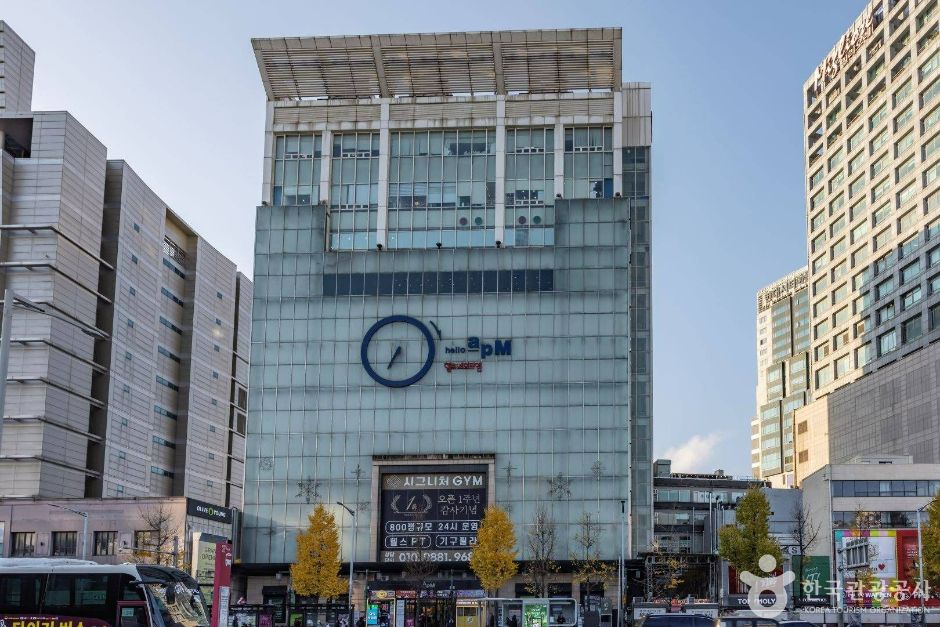
Hello apM (헬로에이피엠)
1.9Km 2025-05-13
253 Jangchungdan-ro, Jung-gu, Seoul
+82-2-6388-1114
Hello apM is located within the Dongdaemun shopping district and appeals to customers in their 10s and 20s for it's latest trending styles and low prices. It is crowded year-round with young people from all over the world. Bargaining has faded out over recent years with prices more often indicated.
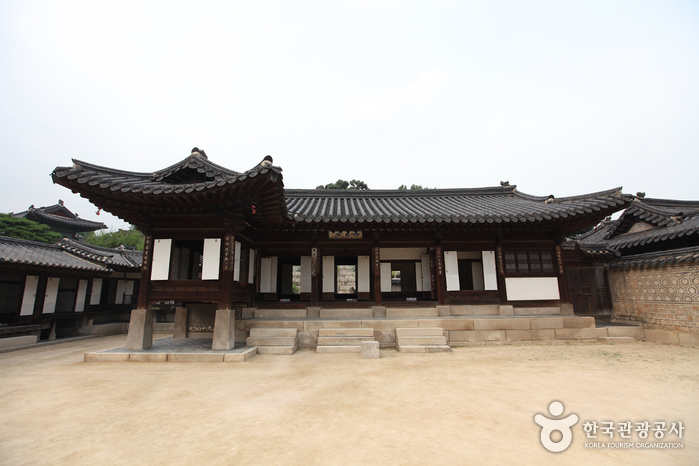
Nakseonjae Hall (낙선재)
1.9Km 2021-09-30
99, Yulgok-ro, Jongno-gu, Seoul
+82-2-2148-1822
Located inside Changdeokgung Palace, Nakseonjae Hall is a one-story structure built in ikgong style (bird wing-shaped eaves placed on top of the pillars) with a hip tiled and gable roof. It has 6 kan in the front and 2 kan (traditional unit of measurement of the space between pillars) to the sides. It originally belonged to the nearby Changgyeonggung Palace, but came to be considered a part of Changdeokgung Palace in more recent years.
The hall was constructed in 1846 (12th year of King Heonjong’s reign) and it is collectively called Nakseonjae together with the adjacent Seokbokheon Hall and Sugangjae Hall.
Behind the building is a flower garden made of stacked large stones. The chimney, the flowers, and the oddly shaped stones harmoniously blend into one another to create an outstanding landscape gardening.
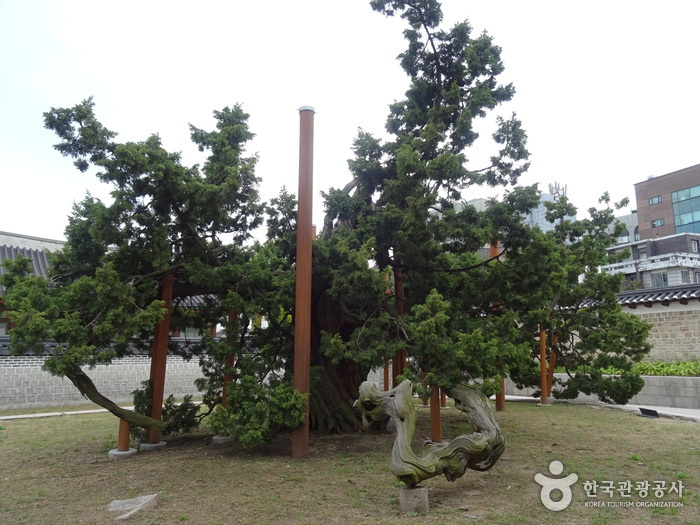
Hyangnamu Tree in Changdeokgung Palace (창덕궁 향나무)
2.0Km 2025-01-13
99, Yulgok-ro, Jongno-gu, Seoul
+82-2-3668-2300
Hyangnamu or 'Aromatic Tree' in Changdeokgung Palace is estimated to be about 700 years old, meaning it had likely been planted before the palace was built. It stands 12m in x_height, measures 5.9m in girth around the roots, and has branches spreading in all four directions. It is designated and protected as a National Natural Monument.
![Bukchon Pharmacy [Tax Refund Shop] (북촌약국)](http://tong.visitkorea.or.kr/cms/resource/83/3314583_image2_1.jpg)
![Soda - Hyundai Dongdaemun Branch [Tax Refund Shop] (소다 현대동대문점)](http://tong.visitkorea.or.kr/cms/resource/96/2887796_image2_1.jpg)
Soda - Hyundai Dongdaemun Branch [Tax Refund Shop] (소다 현대동대문점)
2.0Km 2024-04-22
3F, 20, Jangchungdan-ro 13-gil, Jung-gu, Seoul
-
![KL - Hyundai Outlets Dongdaemun Branch [Tax Refund Shop] (KL 현대아울렛동대문점)](http://tong.visitkorea.or.kr/cms/resource/06/2887806_image2_1.jpg)
KL - Hyundai Outlets Dongdaemun Branch [Tax Refund Shop] (KL 현대아울렛동대문점)
2.0Km 2024-04-16
3F Hyundai City Outlet Dongdaemun Branch, 20, Jangchungdan-ro 13-gil, Jung-gu, Seoul
-
![Zio Songzio - Hyundai Dongdaemun Branch [Tax Refund Shop] (지오송지오 현대동대문)](http://tong.visitkorea.or.kr/cms/resource/26/2888926_image2_1.jpg)
Zio Songzio - Hyundai Dongdaemun Branch [Tax Refund Shop] (지오송지오 현대동대문)
2.0Km 2024-04-22
6F, 20, Jangchungdan-ro 13-gil, Jung-gu, Seoul
-
![The Handsome Mine - Hyundai Dongdaemun Branch [Tax Refund Shop] (한섬 마인 현대동대문)](http://tong.visitkorea.or.kr/cms/resource/55/2888055_image2_1.jpg)
The Handsome Mine - Hyundai Dongdaemun Branch [Tax Refund Shop] (한섬 마인 현대동대문)
2.0Km 2024-04-17
Hyundai City Outlet Dongdaemun Branch, 20, Jangchungdan-ro 13-gil, Jung-gu, Seoul
-
 English
 한국어
한국어 日本語
日本語 中文(简体)
 Deutsch
 Français
 Español
 Русский


