![Olive Young - Twin City Branch [Tax Refund Shop] (올리브영 트윈시티)](http://tong.visitkorea.or.kr/cms/resource/04/2889104_image2_1.jpg)
Olive Young - Twin City Branch [Tax Refund Shop] (올리브영 트윈시티)
1.8Km 2024-04-18
Store #B109, #B110, GF Twin City Bldg., 366, Hangang-daero, Yongsan-gu, Seoul
-

Beodeul Maru - Korea Cultural Heritage Foundation Branch [Tax Refund Shop] (한국문화재재단 버들마루)
1.8Km 2024-10-15
37, Samcheong-ro, Jongno-gu, Seoul
-
Sejong Village Food Street (세종마을 음식문화거리)
1.8Km 2025-06-17
Chebu-dong, Jongno-gu, Seoul
Previously known as Geumcheongyo Market, it was officially named Sejong Village Food Street in 2011, as King Sejong was born in this village. The street is full of lively energy and features both long-standing restaurants, also known as nopo in Korean, and recently established trendy eateries. Its convenient location and inviting atmosphere make it a popular place to visit.
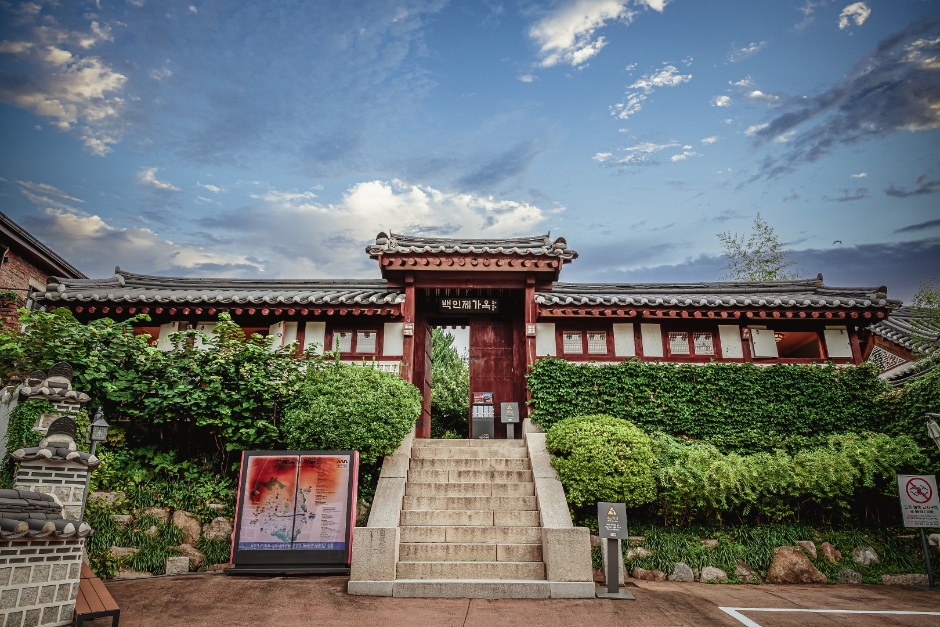
Baek In-je House (백인제가옥)
1.9Km 2025-10-24
16 Bukchon-ro 7-gil, Jongno-gu, Seoul
+82-2-724-0200
Baek In-je House, located in Bukchon Hanok Village, is a hanok built during the Japanese administration period that portrays modern hanok features. The structure consists of a main room offering a good view of the whole village, spacious bedrooms, a large garden, and annex buildings. As it maintains the beauty of a traditional hanok while incorporating the modern trend of its time, Baek In-je House is considered to be highly valuable in means of both architecture and history, representing the Bukchon Hanok Village together with Yun Bo-seon House.
Baek In-je House was built from black pine, which was first introduced in Seoul during the Gyeongseong Expo in 1907, distinguishing itself from other upper-class houses of its time. Unlike other traditional hanok designs that separate the main building from the other rooms, Baek In-je House connects the two with a hallway, allowing convenient access between the two structures. The house also consists of a Japanese-style hallway and floor mat rooms, reflecting the interior trends of that period. Baek In-je House is also unique in that the main room is partially built as a two-story structure, a style that was never seen in any traditional hanok built during the Joseon period.
![Zara - Lotte Seoul Station Branch [Tax Refund Shop] (자라 롯데 서울역점)](http://tong.visitkorea.or.kr/cms/resource/25/2878425_image2_1.jpg)
Zara - Lotte Seoul Station Branch [Tax Refund Shop] (자라 롯데 서울역점)
1.9Km 2024-04-22
378, Cheongpa-ro, Yongsan-gu, Seoul
-
Hwangsaengga Kalguksu (황생가칼국수)
1.9Km 2024-03-18
78 Bukchon-ro 5-gil, Jongno-gu, Seoul
+82-2-739-6334
Hwangsaengga Kalguksu is a specialty restaurant located near Gyeongbokgung Palace, known for its kalguksu (noodle soup). Kalguksu is a type of noodle soup made by thinly slicing dough into noodles with a knife and boiling them in a broth made from beef bones, clams, or seafood. Their menu includes options like wang mandu (jumbo mandu), hanu suyuk (boiled Korean beef slices), kongguksu (noodles in cold soybean soup), beoseot jeongol (mushroom hot pot), and mandutguk (mandu soup). It was selected as a Michelin Guide Seoul 2023 restaurant.
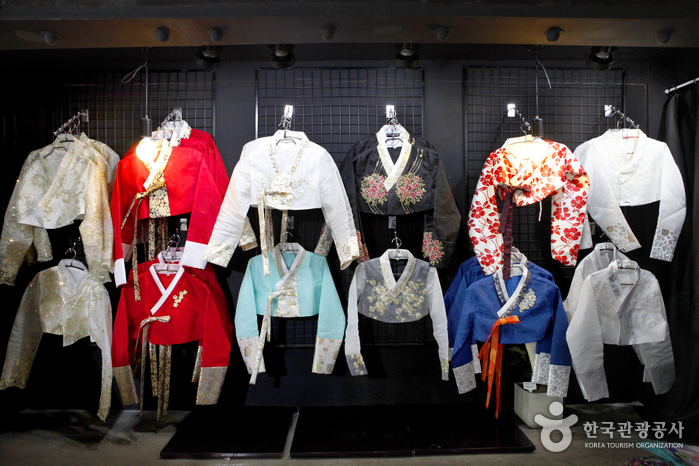
Hanboknam (한복남)
1.9Km 2021-01-27
17, Bukchon-ro 5ga-gil, Jongno-gu, Seoul
+82-10-6485-8507
Started in Jeonju in 2012, Hanboknam strived to promote the beauty of hanbok, earning recognition by the Ministry of Culture, Sports and Tourism in 2015. Following this, Hanboknam opened a hanbok exhibition and rental shop in the Bukchon area of Seoul in 2016. The shop provides customers with numerous styles of hanbok, from royalty to beggars. The rental shop also offers various accessories to pair with the different hanbok for a complete look.
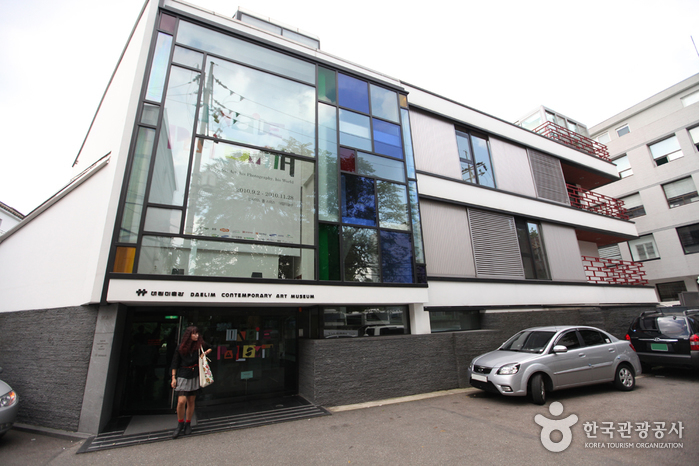
Daelim Museum (대림미술관)
1.9Km 2022-07-29
21, Jahamun-ro 4-gil, Jongno-gu, Seoul
+82-2-720-0667
The Daelim Museum, built by the Daelim Group, was first established in Daejeon in 1996 and later moved to Jongno, Seoul in 2002. The art gallery studies, analyzes, and presents modern art through the lens of photography and holds exhibitions centered around photo media.
The museum is located in the residential area of Tongui-dong, near the time-honored Gyeongbokgung Palace. The museum, which was designed by French architect, Vincent Cornu, and built by the Daelim Corporation, opened its door to the public in late May 2002.
On the first floor, there is a garden, parking lot, reception desk, storage area, and conference room. On the second and third floor are offices and exhibition hall approximately 595 m² in size, consisting of small and large rooms, a long gallery, and a special high-ceilinged exhibition space. On the fourth floor, there is a seminar room that can seat up to 120 guests and a balcony with a beautiful view. From the balcony of the seminar room, Visitors can also enjoy a wide open view of Inwangsan Mountain and Bukhansan Mountain. The stained glass panels (designed to reflect the beauty of traditional Korean wrapping cloth) and the scenic lounges on the 2nd and 3rd floors of the building add to the overall charm.
Above all else, the museum was designed with consideration of the photos, which are very sensitive to humidity, light, and temperature.
![Sujeong Pharmacy [Tax Refund Shop] (수정약국)](http://tong.visitkorea.or.kr/cms/resource/57/2878757_image2_1.jpg)
Sujeong Pharmacy [Tax Refund Shop] (수정약국)
1.9Km 2024-04-22
1F, 195, Jangchungdan-ro, Jung-gu, Seoul
-
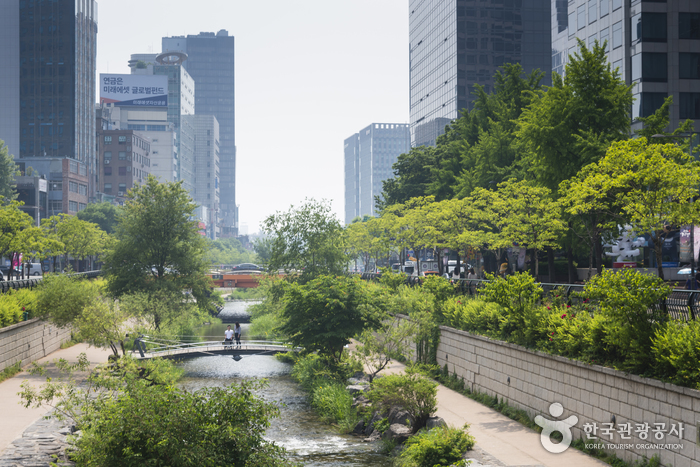
Cheonggyecheon Stream (청계천)
1.9Km 2024-05-16
Changsin-dong, Jongno-gu, Seoul
+82-2-2290-7111
Cheonggye Plaza was built on Sejong-ro Street, where Cheonggyecheon Stream begins. It was built between Dong-A Ilbo, the starting point of the Cheonggyecheon Stream restoration, and Sindap Railroad Bridge, with a length of 160 meters, a x_width of 50 meters, and a total area of 6,962 meters squared. The plaza is decorated with fountains, waterfalls, and walking paths. It was created as a place for meetings, harmony, peace, and unification, to celebrate the significance of the restoration of Cheonggyecheon Stream. A miniaturized version of Cheonggyecheon Stream is displayed here, providing an overview of the restored stream. There are also interpretive panels about the 22 bridges that cross Cheonggyecheon stream. Fountains of various shapes create beautiful scenery. Cheonggyecheon Stream is accessible from the square through stairs on the left and Cheonggye Trail on the right. There is also an 18-meter tunnel on the Cheonggye Trail, providing a unique experience for citizens entering Cheonggyecheon Stream from the plaza. After constructing Cheonggyecheon Plaza, the Seoul Metropolitan Government made it a car-free street on public holidays so that the plaza, waterside area, and streets could be used as cultural spaces for citizens to relax. A spectacular sight is created by three-color lights illuminating the fountains and a two-tiered waterfall coming down from a x_height of four meters. Palseokdam, made of eight stones from eight provinces in Korea, was laid along the waterfall's sides.
 English
 한국어
한국어 日本語
日本語 中文(简体)
 Deutsch
 Français
 Español
 Русский


