![Muji - Lotte Young Plaza Branch [Tax Refund Shop] (MUJI 롯데영플라자)](http://tong.visitkorea.or.kr/cms/resource/78/2889078_image2_1.jpg)
Muji - Lotte Young Plaza Branch [Tax Refund Shop] (MUJI 롯데영플라자)
1.3Km 2024-04-19
5F, 67, Namdaemun-ro, Jung-gu, Seoul
-
![Harvad Eyewear [Tax Refund Shop] (하버드안경)](http://tong.visitkorea.or.kr/cms/resource/11/3314811_image2_1.jpg)

Tonymoly - Euljiro 3(sam)-ga Station Branch [Tax Refund Shop] (토니모리 을지로3가역점)
1.3Km 2024-06-27
B3-14, 131, Eulji-ro, Jung-gu, Seoul
-
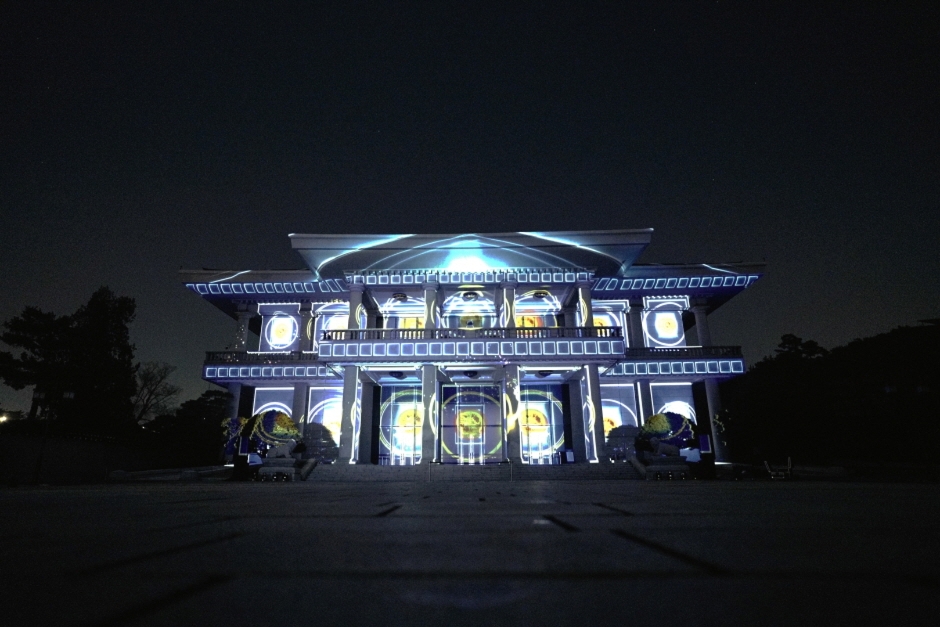
Cheong Wa Dae Media Display (청와대 국민과 함께 영상전시)
1.3Km 2025-08-20
1 Cheongwadae-ro, Jongno-gu, Seoul
박주원 학예연구사 02-3771-8636
Cheong Wa Dae Media Display brightens the night through a media facade display on Yeongbingwan Hall. The display shows the history of Cheong Wa Dae through the theme "Twelve Lights".
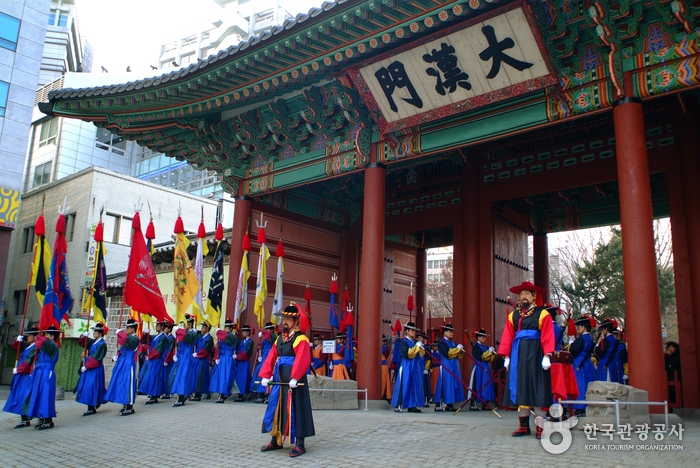
Deoksugung Palace Royal Guard Changing Ceremony (덕수궁 왕궁수문장교대의식)
1.3Km 2025-07-11
99, Sejong-daero, Jung-gu, Seoul
• 1330 Travel Hotline: +82-2-1330 (Korean, English, Japanese, Chinese) • For more info: +82-2-737-6444
Deoksugung Palace has held a guard changing ceremony since 1996 after thorough historical research by leading historians. The ceremony, which is held in front of Daehanmun Gate of Deoksugung Palace, is a tradition similar to the Changing of the Guards at Buckingham Palace and offers a rare opportunity to experience royal culture. The royal gate is opened and closed at pre-determined times, and the gatekeepers in charge of guard duty and patrols hold a shift ceremony three times a day.
The Royal Guard Changing Ceremony is a highly recommended event for tourists. It is held three times a day, with each ceremony following the same procedure and lasts for forty minutes to an hour, and the ceremony is free of charge. There are no ceremonies on Mondays as well as on severely cold or hot days.
As the ceremony begins, the changing of the guards commences replete with traditional musical instruments, and exchanges a password for verification. An eight-minute guard ceremony ensues, followed by a seven-minute change ceremony, and finally a patrol that completes the ceremony. The procedure takes a dramatic turn when 18 guards in six official positions beat a drum and bellow some orders.
The Royal Guard Changing Ceremony is a great opportunity to experience a rare traditional scene. The guards’ splendid costumes, with their brilliant primary colors, are a pleasure to view. Once the ceremony is over, visitors can take pictures with the gatekeepers.
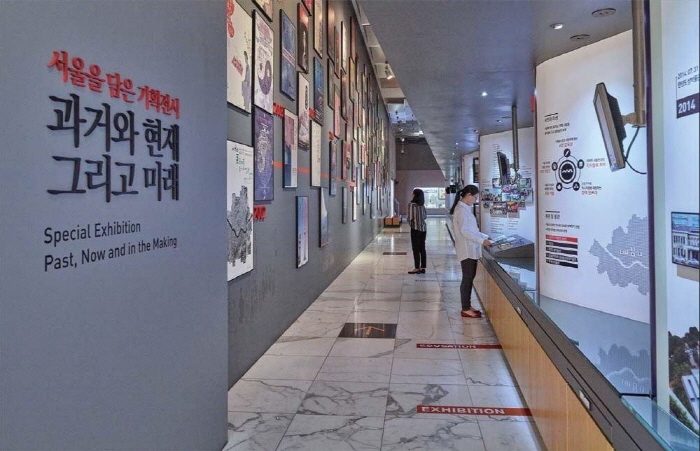
Seoul Museum of History (서울역사박물관)
1.3Km 2025-01-17
55 Saemunan-ro, Jongno-gu, Seoul
Seoul Museum of History covers everything about Seoul's history and culture from the prehistoric era to modern times, focusing especially on the Joseon era. The museum aims to raise cultural awareness and build a strong bond within the community by collecting, preserving, researching, and displaying artifacts and materials related to Seoul as well as promoting the city's history and culture to an international audience.
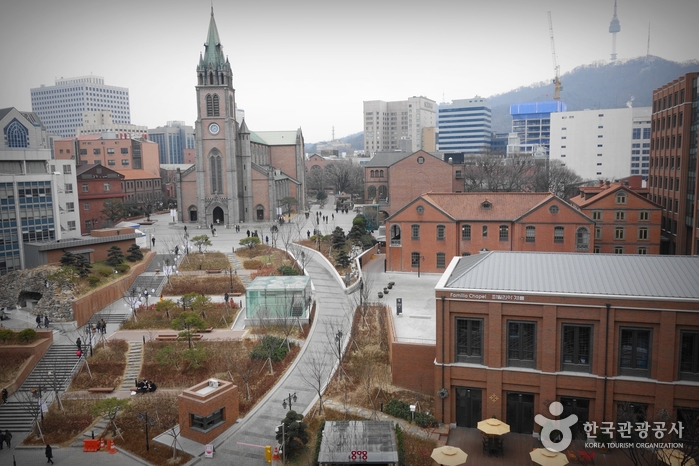
Myeongdong Cathedral (서울 명동성당)
1.3Km 2022-12-27
74, Myeongdong-gil, Jung-gu, Seoul
Myeongdong Cathedral is the Church for Archdiocese of Seoul and was also the birthplace for the Roman Catholic Church community in Korea. The church houses the remains of several individuals: Bishop Laurent Joseph Marie Imbert (1796-1839), and priests Peter Simon (1803-1839), James (Jacques Honor Chastan, 1803-1839) and Pourthie Jean Antoine Charles (1830-1866) and four martyrs.
Myeongdong Cathedral is located in downtown Seoul and tourists frequently come and visit the place. Near the cathedral are other tourism spots such as Namsangol Hanok Village preserving Korean traditional houses, N Seoul Tower overlooking Seoul and Namdaemun Market, a traditional market with a wide variety of food and goods.
The Street in front of Cheongwadae (The Blue House) (청와대 앞길)
1.3Km 2025-08-20
Gungjeong-dong, Jongno-gu, Seoul
+82-2-120
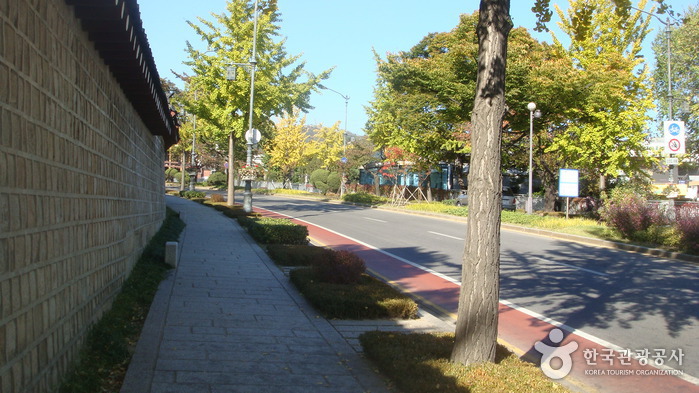
The street in front of Cheongwadae (the Blue House) is open to the public and includes both Hyoja Samgeori (Hyoja three-way intersection) in Hyoja-dong and Palpan Samgeori (Palpan three-way inetersection) in Palpan-dong. When walking along Hyoja-ro Road from Gyeongbokgung Station, sights include a fountain, Mugunghwa Garden, Yeonmugwan Hall, and Daegogak & Yeongbingwan Hall.
Cheongwadae Sarangchae consists of one basement level and two above-ground levels, including Korean Culture Exhibition Hall, Planned Exhibition Hall, a gift shop, and rest area (Korean Food Promotion Hall, Café) on the first floor and Cheongwadae Hall and Haengboknuri Hall on the second floor. Daegogak Hall houses a book donated to former president, Kim Young-sam for expressing the past spirit of Sinmungo (Petitioner's drum from Korean History). Yeonmugwan Hall is a martial art and fitness center for guards. Mugunghwa Dongsan, formed after the ansa (Safe House) was demolished in 1993, includes a well, mock fortress, and rest area. Located behind Mugunghwa Dongsan is Apostolic Nunciature in Korea and Chilgung (Seven Palaces).
At the beginning of the street in front of Cheongwadae, dense trees and beautiful flower gardens decorating both sides of the road make it a nice place for taking a walk. The area from the north gate of Gyeongbokgung Palace, Chunchumun, to the main gate of Gyeongbokgung Palace, Geonchunmun, is Samcheongdong-gil Road. This road is home to many art galleries, including Kukje Gallery, Growrich Gallery, Gallery Hyundai, and Jin Art gallery, in the area of Hyoja-ro.
![Converse - Myeong-dong Branch [Tax Refund Shop] (컨버스 명동점)](http://tong.visitkorea.or.kr/cms/resource/46/2878646_image2_1.jpg)
Converse - Myeong-dong Branch [Tax Refund Shop] (컨버스 명동점)
1.3Km 2024-06-27
16-1, Myeongdong 8-gil, Jung-gu, Seoul
-
Owl Museum (부엉이박물관)
1.3Km 2022-09-19
143, Bukchon-ro, Jongno-gu, Seoul
+82-2-3210-2902
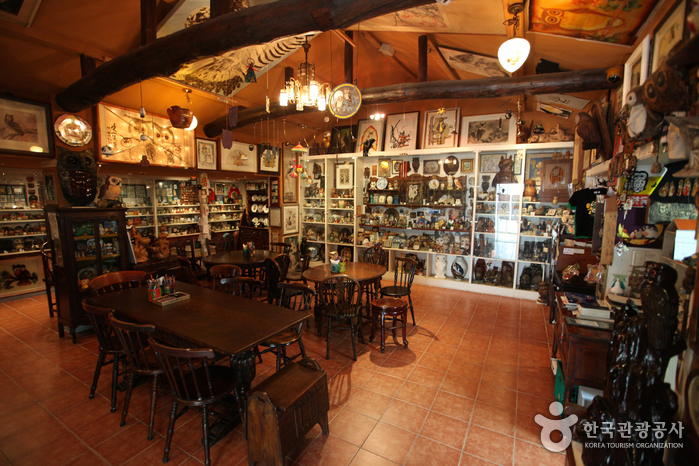
The Owl Museum is filled with over 2,000 pieces of owl-themed arts and crafts collected from all over the world by the owner. Renovated from a house, the museum has a feel of an antique café as the owner offers a cup of coffee or tea to visitors. Located near the city, those interested in owls should stop for a view and a drink. Various stories of how the collection was gathered as well as information on owls are also interesting.
 English
 한국어
한국어 日本語
日本語 中文(简体)
 Deutsch
 Français
 Español
 Русский


