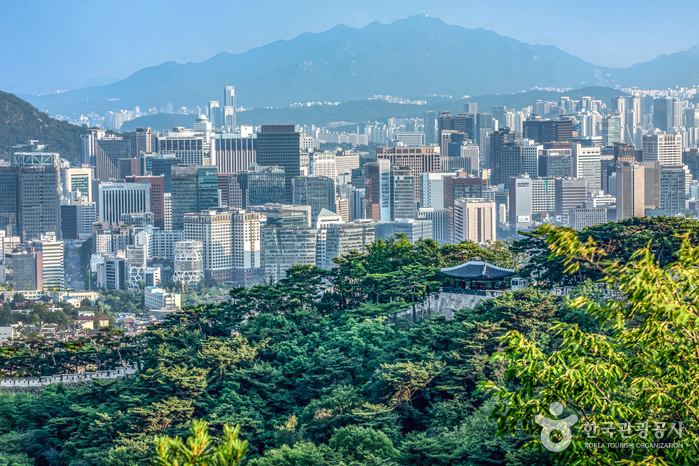
Bugak Skyway Palgakjeong Pavilion (북악스카이 팔각정)
2.6Km 2024-12-31
267 Bugaksan-ro, Jongno-gu, Seoul
Bugak Skyway Palgakjeong Pavilion exudes a tranquil, serene beauty regardless of the season. The pavilion, which sits on Bugaksan's 1,652,900 square meter summit at an altitude of 345 meters, was built in a traditional Korean-style and became a popular attraction within the city. There are also spaces for visitors to enjoy food and drinks.

Seodaemun Independence Park (서대문독립공원)
2.6Km 2022-12-15
251, Tongil-ro, Seodaemun-gu, Seoul
+82-2-3140-8305
Seodaemun Independence Park was built on the former Seoul Detention Camp. It was used to imprison thousands of Korean independence activists until the liberation from the Japanese occupation on August 15, 1945, as well as the political prisoners during the political turmoil in the 1960s. When the prison was moved to Uiwang-si, Gyeonggi-do in November 1987, the area was restored and turned into a memorial park in August 15, 1992 to honor the sacrifices of the martyrs. The park preserves seven prison buildings, an execution ground, underground women’s prison, and the March 1st Movement Monument that has been moved from Tapgol Park in Jongno.
One of the most significant monuments of the Seodaemun Independence Park is Dongnimmun Gate (Independence Gate), which has been designated a Historic Site. Nearby is Dongnipgwan (Independence Hall), originally called Mohwagwan, which was used to greet Chinese envoys during the Joseon dynasty. Today, the hall enshrines 2,327 tablets inscribed with the names of Koreans who died for the cause of national independence. Standing right next to Dongnimmun Gate are the remnants of Yeongeunmun Gate, another Historic Site. Other sights inside the park include the Patriotic Martyr Monument, Declaration of Independence Monument, and Statue of Dr. Seo Jae-pil, who was an independence activist and publisher of Korea’s first independent newspaper. The main highlight of the park is the Seodaemun Prison History Hall, a former prison building that was renovated into a history museum.
Dongnimmun Gate (독립문)
2.6Km 2022-12-15
251, Tongil-ro, Seodaemun-gu, Seoul
Dongnimmun stands at the location originally known as Yeongeun, where envoys were once treated. When a Chinese envoy visited, the King would go out through this door to greet. In 1898, to announce the independence from Japan, Dongnimun was constructed with the fund collected by the citizens. The traces of the past still remain on Dongnimmun with two pillars in front of Dongnimmun being the remains of Yeongeunmun.
The Arc de Triomphe in France can be recalled in comparison to Dongnimmun. Dongnimmun was built using granite with a passageway x_height of 14.28 meters. On the top it is written ‘Dongnimmun’ in Korean with the national flag drawn on each side. On the inner-left side there are stone stairs leading to the attic. The national flower Mugunghwa are planted around Dongnimmun. Now it is surrounded by roads and it is eye-catching to view when passing by.
Seodaemun Prison History Museum (서대문형무소역사관)
2.6Km 2024-12-02
251 Tongil-ro, Seodaemun-gu, Seoul
Seodaemun Prison was built under the Japanese administration to imprison independence movement activists. It first opened on October 21, 1908 under the name Gyeongseong Prison. Eventually, so many activists were imprisoned that the building had to be expanded. At that time, the name changed to Seodaemun Prison on September 3, 1912. Eighty years later, the prison was turned into Seodaemun Independence Park on August 15, 1992 to commemorate the Korean patriots who were tortured in prison, giving their lives for freedom. Of the many buildings, only seven were preserved for their historical significance, among which three prison buildings and the execution site were designated as a Historic Site. In 1998, the park underwent another transformation into today's Seodaemun Prison History Hall to educate the public on the importance of Korea's independence and the sacrifices of those who fought to achieve it.
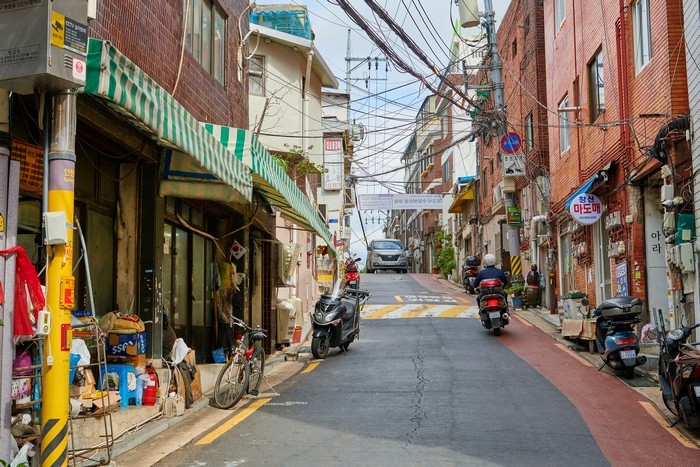
Alleys of Changsin-dong (창신동골목길)
2.6Km 2025-11-05
38, Jibong-ro 11-gil, Jongno-gu, Seoul
K-movie <PARASITE> - A town full of nostalgia
On the day Kitaek's family returned home, the torrential rain flowed ferociously in streams. The alleys of Changsin-dong, with its narrow and steep stairs, were a good backdrop for visually representing the condition of the Kitaek’s family, who were about to fall. Changsin-dong is a warm and charming neighborhood where traces of the 70s and 80s can be felt.
Dongdaemun Design Plaza (동대문디자인플라자 (DDP))
2.6Km 2024-10-24
281 Eulji-ro, Jung-gu, Seoul
+82-2-2153-0000
Dongdaemun Design Plaza (DDP) has a meaning of Dream, Design, and Play. It holds various exhibitions, fashion shows, forums, conferences, and other domestic and international events. The building complex is divided into sections, which are named Allimteo, Beaumteo, Sallimteo, DDP Design Museum, Design Market & Eoullim Plaza, and Dongdaemun History & Culture Park. Designed by world-renowned architect Zaha Hadid, the building's exterior attracts the attention of many photographers with its delicate curves and bold shapes.
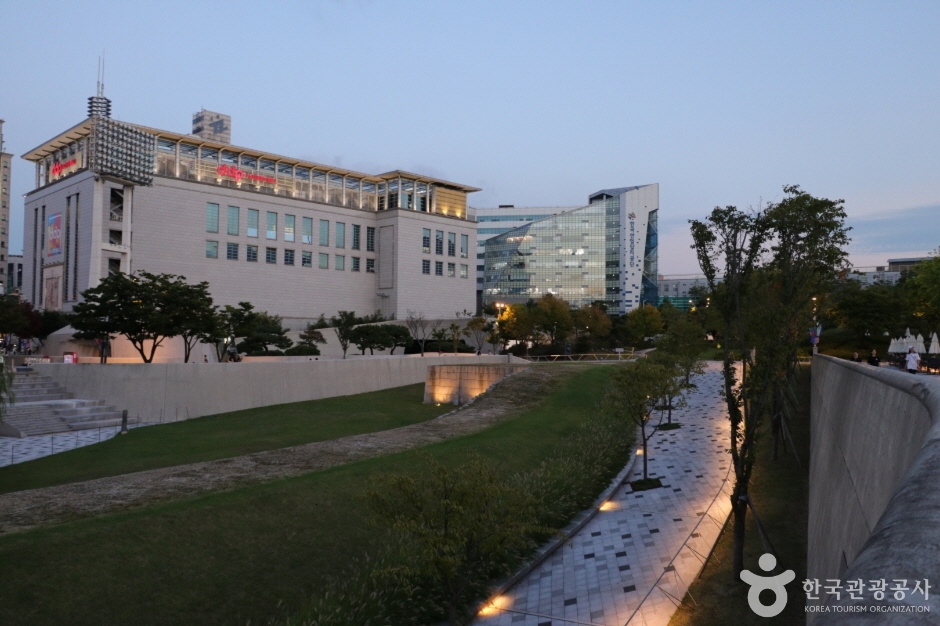
Dongdaemun History & Culture Park (동대문역사문화공원)
2.7Km 2024-11-27
281 Eulji-ro, Jung-gu, Seoul
Dongdaemun History & Culture Park is a park established on the former site of the Dongdaemun Stadium. It serves as a thematic park showcasing the history and culture of Seoul, while also providing a space to experience modern design and culture. During the park's development in 2008, numerous artifacts from the Joseon dynasty, including The Two Floodgates, the Chiseong Castle, Military Training Agency, and over 1,000 relics from the Joseon era, were excavated. Alongside the park, there is the Dongdaemun Design Plaza (DDP) and the Relic area.
Ebookers Korea Inc. ((주)이부커스코리아)
2.7Km 2025-10-23
(2nd Floor), 212 Jangchungdan-ro, Jung-gu, Seoul
We strive for a special kind of tourism that combines wellness tourism (healing) and medical tourism (treatment).
We are a Korean wellness and medical tourism company leading the country’s safe and healthy travel culture.
* Products and Services
Wellness medical tourism programs that uniquely combine wellness and medical tourism
Referral and reservation service for selected wellness destinations and Korean hospitals with excellent medical technology
Guidance services provided at local partner companies
Content creation and reservation based on our personalized service system
Convenient tourism programs catering to each patient's health conditions
Medical tourism visa application and referral services on C33VISA site
* A medical tourism product brand
Medi Well Come products: Health checkup / general practice (minor / major / female / preventive / eye problems)
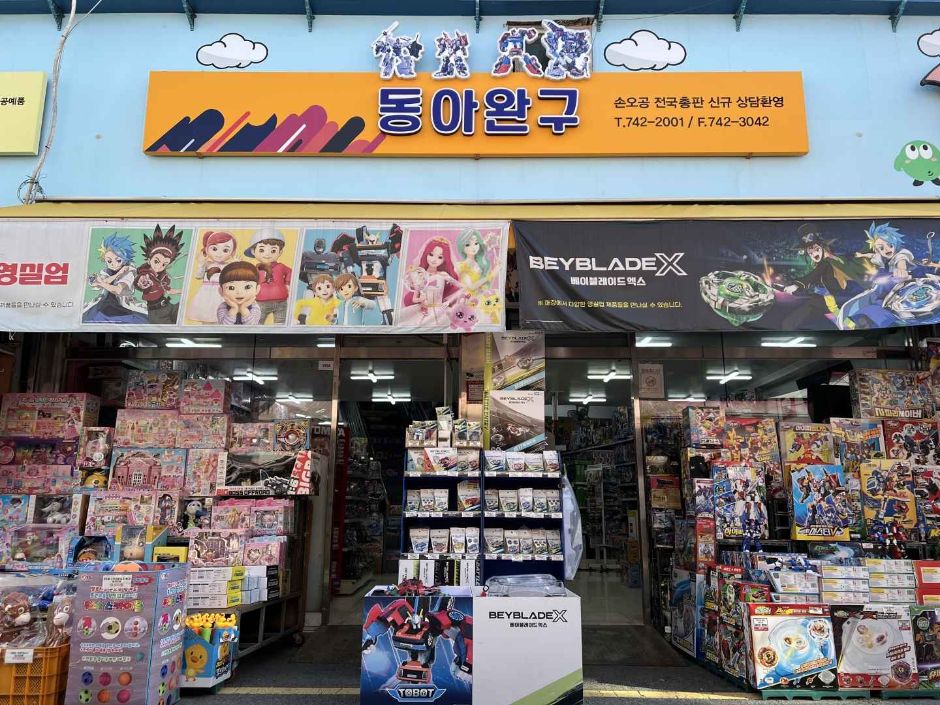
Donga Stationery (동아완구)
2.7Km 2024-09-11
5 Jong-ro 52-gil, Jongno-gu, Seoul
Donga Stationery is a stationery store located along Changsin-dong Stationery Street. The stop offers a full range of stationery and character goods and is popular among children and adults alike. The shop is located right by Dongdaemun Station (Seoul Subway Line 1), Exit 4, making it easily accessible.
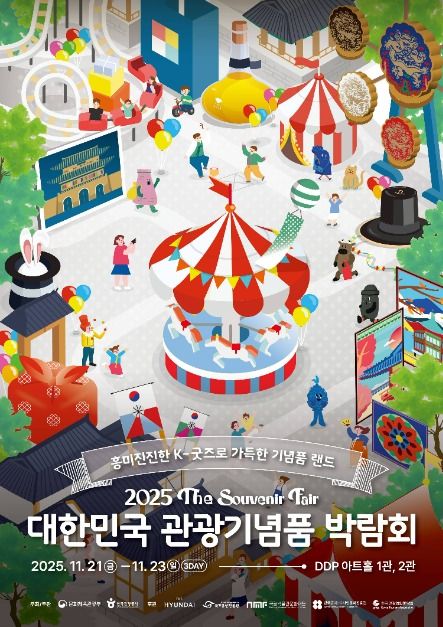
The Souvenir Fair (2025 대한민국 관광기념품 박람회)
2.7Km 2025-10-27
281 Eulji-ro, Jung-gu, Seoul
+82-10-8315-5434
The Souvenir Fair brings together various companies and local governments to showcase a variety of souvenirs, both traditional and trendy. Visitors can freely explore the exhibition space, enjoy souvenir shopping, and take part in various programs. Highlights of the fair include an exhibition of competition-winning works, a zone featuring outstanding local souvenirs, and a special exhibition of overseas souvenirs.
 English
 한국어
한국어 日本語
日本語 中文(简体)
 Deutsch
 Français
 Español
 Русский


