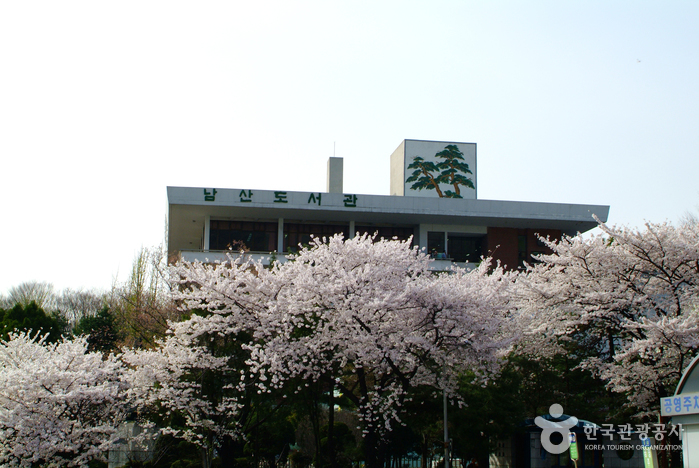
Namsan Library (서울특별시교육청 남산도서관)
1.4Km 2021-07-07
109, Sowol-ro, Yongsan-gu, Seoul
Namsan Library opened as Kyeongseong Prefectural Library in 1922 as a public library in Myeong-dong, Jung-gu, Seoul. The library was moved to the current site in 1964 with a newly built building and its name changed to Namsan Library in 1965. This concrete building was built in 1964 and was designed by architect Lee Haeseong. It was designated as Seoul Future Heritage in 2013, credited for its preservation value.
It is comprised of 19 rooms and educational areas including the Humanity and Social Science Hall, Nature Science Hall, Language and Literature Hall, Electronic Information Room and more. Since opening, the library has collected nearly 500,000 books, 16,000 non-book materials, 700 continuing resources, and other special materials like old books, oriental books (including Japanese books), and more. Namsan Library also operates a reading treatment program unique to this library that began in 2005. The program includes remodeling of reading consultation room, training for people in charge of reading treatment, workshops, programs for individuals and groups. Also, various exhibitions, lectures, shows, cultural classes and other events are available all year long to enhance lifelong education.
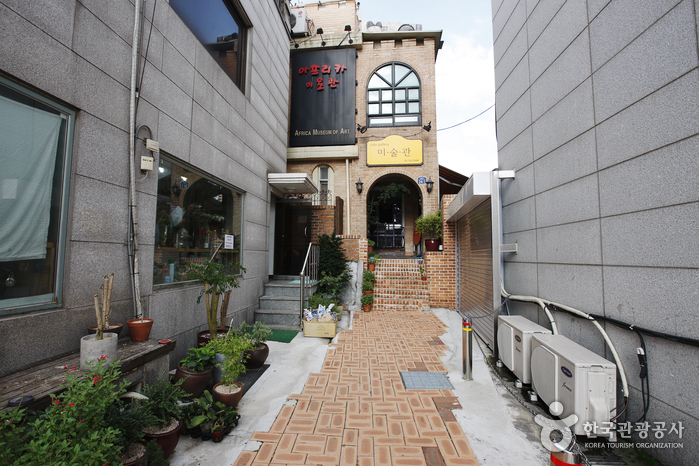
Africa Museum of Art (아프리카미술관)
1.5Km 2022-10-26
24-1, Samcheong-ro, Jongno-gu, Seoul
The Africa Museum of Art was established with the purpose of hosting various art festivals and providing the grounds for researching various art themes. A major principle of the gallery is to promote works of art that actively attempt to explore the human mind.
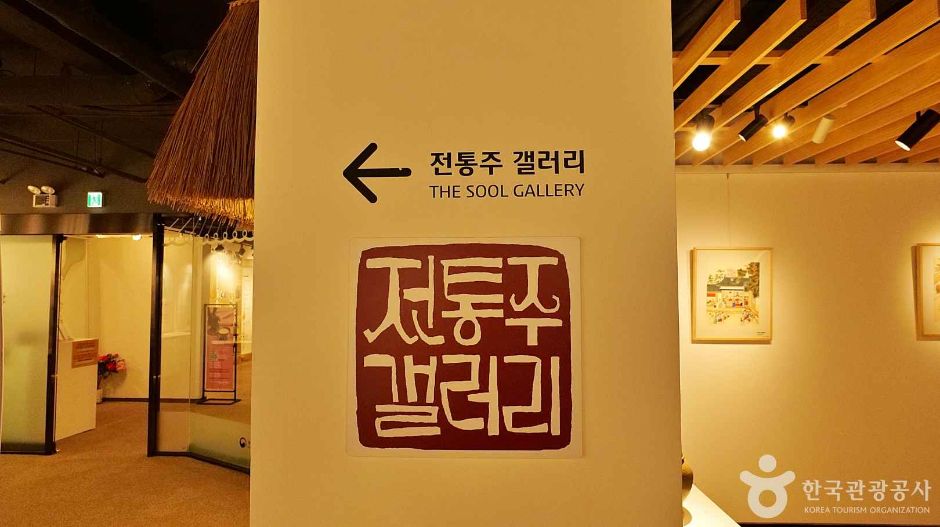
The Sool Gallery (전통주갤러리)
1.5Km 2025-06-19
18 Bukchon-ro, Jongno-gu, Seoul
The Sool Gallery is an exhibition and experience space for traditional Korean liquor, established to promote the taste, style, and cultural values of the time-honored traditional Korean liquor. It provides various information about traditional Korean liquor for consumers or international tourists who can rarely obtain such information elsewhere. In addition, it provides traditional liquor education and business counseling to food service businesses and sales experts to continuously create demand for traditional liquor and expand the market. It is run by experts specializing in traditional liquor, including traditional liquor sommeliers, and it holds events to introduce various traditional liquors with different themes every month, as well as tasting events. Moreover, according to the monthly changing “Recommended Traditional Liquor by Month,” it displays a drinking glass and a bottle of the month recommended by the Korea Craft & Design Foundation.

HANSIK Space E:eum (한식문화공간 이음)
1.5Km 2025-11-11
18 Bukchon-ro, Jongno-gu, Seoul
HANSIK Space E:eum, located in Jongno, is a cultural space operated by the Korean Food Promotion Institute. It offers visitors an opportunity to delve into Korean cuisine through exhibitions, performances, educational programs, and a library.
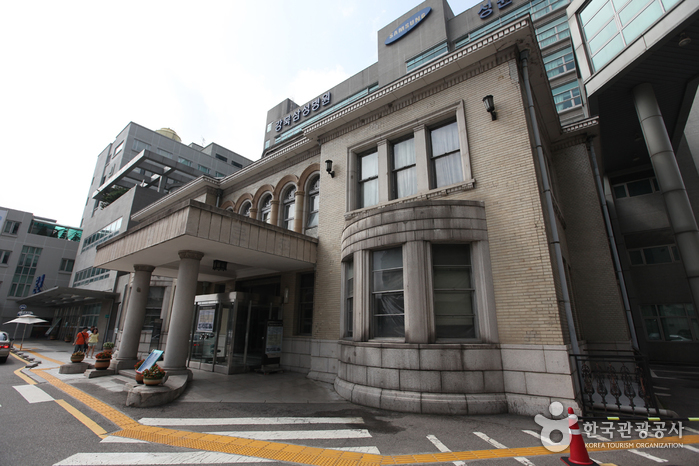
Seoul Gyeonggyojang House (서울 경교장)
1.5Km 2021-09-15
29, Saemunan-ro, Jongno-gu, Seoul
Gyeonggyojang House, a designated Historic Site, was the location of the provisional government and the place where Baekbeom Kim Koo passed away. Seoul reproduced the historical site, Gyeonggyojang House, to use the area as an educational site. Also, the house exhibits the history of the provisional government in order to see the history more clearly.
Restoration work included the demolition of the interior that was changed when the building was turned into a hospital facility and embassy after Kim Koo passed away in 1949. During the work, the remaining parts were maintained with the utmost care. Reconstructed parts were based on the building's floor plan written in Chosun and Architecture (8th edition in 1938). Visitors can see various contents related to the Korean Provisional Government history through relics, video, and information searching corners.
Gyeonghuigung Palace (경희궁)
1.5Km 2024-07-09
45 Saemunan-ro, Jongno-gu, Seoul
Gyeonghuigung Palace, a designated Historic Site, was originally called the large palace by Saemun Gate, or the Western Palace, for its location within the city. It was not until the eighth year of Gwanghaegun (1616) that the palace was used as a royal residence for the king, changing the name to Gyeongdeokgung Palace. The name later changed again to the current Gyeonghuigung Palace in 1760. The palace grounds included many halls but they were mostly all burned down in a fire in 1829. After the Japanese occupation began, all remaining buildings on the site were torn down and the palace grounds were turned into Gyeongseong Middle School (now Seoul High School). The school moved to Gangnam area in 1987, afterwhich the previous location was turned into a park. The palace grounds currently hold Seoul Museum of Art and walking paths, as well as a restoration of Heunghwamun Gate, the main gate of the palace, and Sungjeongjeon Hall, the main hall, completed in November 1994.
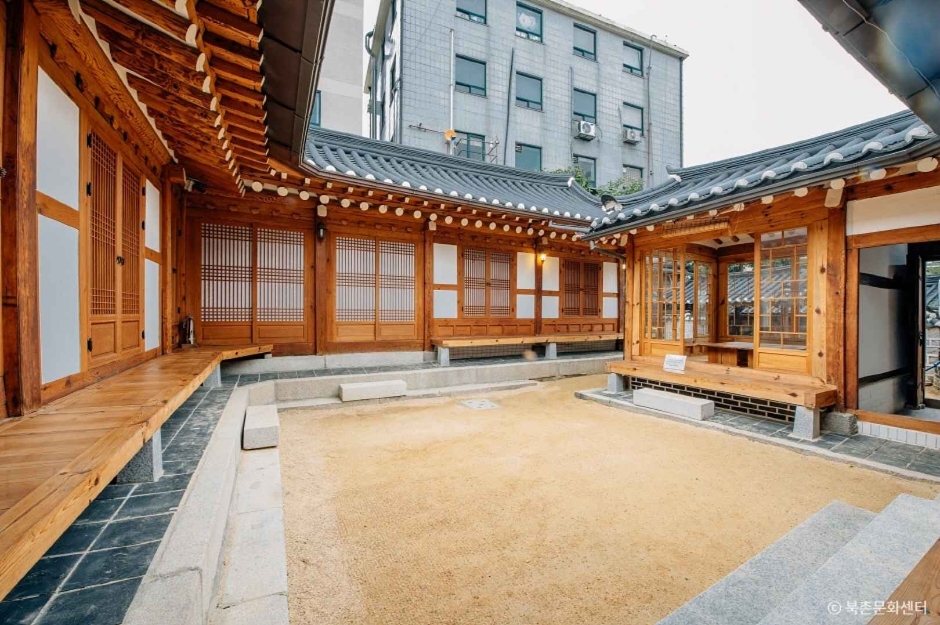
Bukchon Cultural Center (북촌문화센터)
1.5Km 2025-06-19
37 Gyedong-gil, Jongno-gu, Seoul
Bukchon Cultural Center, located in a hanok, was established to offer traditional cultural experience opportunities for visitors to the area. The programs include tea ceremony, handicraft, and gugak as well as a Public Relations Exhibition Hall introducing Bukchon culture and hanok. Also, the center houses a space and a pavilion for visitors to relax while traveling.
Eight Scenic Views of Bukchon (북촌 8경)
1.5Km 2024-03-18
37, Gyedong-gil, Jongno-gu, Seoul
The Eight Scenic Views of Bukchon can be found at the Bukchon Hanok Village between Gyeongbokgung Palace and Changdeokgung Palace. Bukchon was historically a district where the aristocracy of Joseon had resided in, so it is still home to a large number of traditional dwellings, called hanok in Korean. The eight views are as follows: No. 1, view of Chengdeokgung Palace; No. 2, view of Wonseo-dong Handicraft Road; No. 3, view of the Gahoe-dong area; No. 4, view from the hill at Gahoe-dong (Bukchon Observatory); No. 5, the view of the road uphill at Gahoe-dong; No. 6, the view of the road downhill at Gahoe-dong; No. 7, the view at house number (beonji) 31, Gahoe-dong; No. 8, the view of the stone stairway at Samcheong-dong.
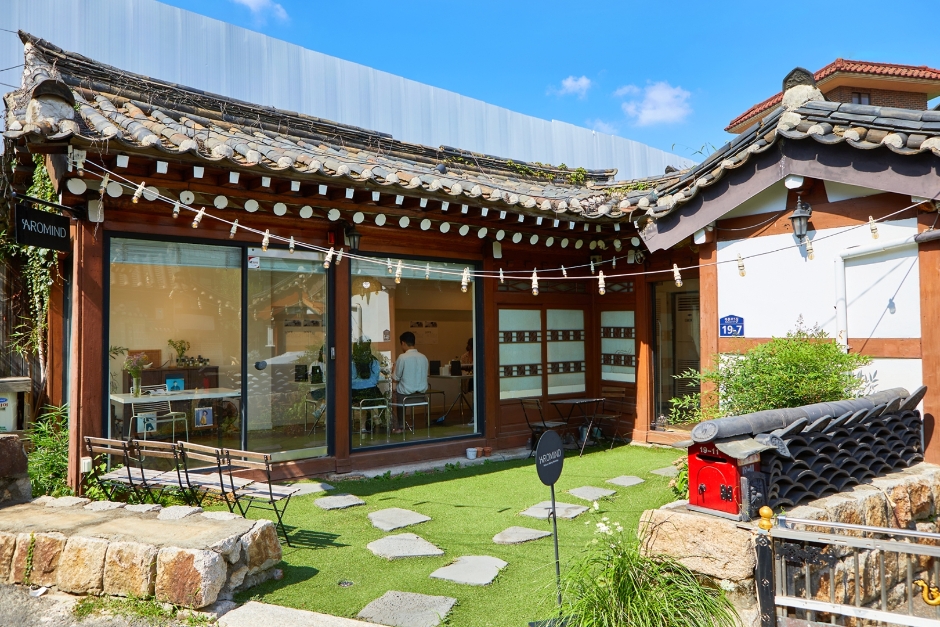
Aromind (아로마인드)
1.5Km 2024-01-30
19-7 Bukchon-ro 5-gil, Jongno-gu, Seoul
Aromind is a perfume workshop that offers a perfume-making experience with a professional perfumer in a quiet hanok building. Visitors can create their own one-of-a-kind perfume by choosing three out of 30 different scent options that change on a seasonal basis. A perfume one-day class is held for one to eight people for one to one and a half hours. The fee for the experience includes a 50 ml product and a 10 ml sample. They also offer the class in Korean with English interpretation when there non-Korean speaking participants. Aromind is the perfect place to create your own scent to associate your memory of Korea.
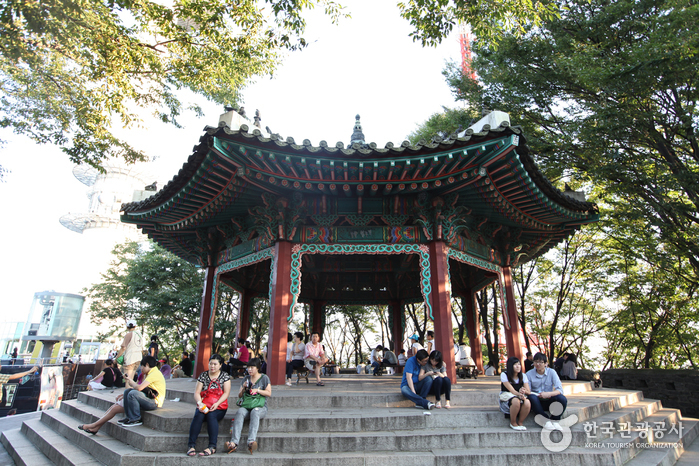
Namsan Octagonal Pavilion (남산 팔각정)
1.5Km 2021-06-19
105, Namsangongwon-gil, Yongsan-gu, Seoul
Originally known as Unamjeong Pavilion, the pavilion was built in 1959 to commemorate Rhee Syngman. It was demolished by the 4.19 movement in 1960 and was rebuilt on November 11, 1968. This pavilion now sits atop Namsan Mountain, with views covering the entirety of Seoul below. As it is a prime spot to view the first sunrise of the year, the annual sunrise festival takes place every New Year's Day.
 English
 한국어
한국어 日本語
日本語 中文(简体)
 Deutsch
 Français
 Español
 Русский


