
Ewha Womans University (이화여자대학교)
3.4Km 2023-07-04
52, Ewhayeodae-gil, Seodaemun-gu, Seoul
+82-2-3277-2114
Ewha Womans University is Korea's first women's university founded in 1886 by American Methodist missionary Mary Scranton. Ewha Womans University is also the most famous women's university in Korea and its name originates from Ehwa Hakdang, a name given by Empress Myeongseong in 1887. Ewha Womans University created a four-year university course in 1910, and in 1943, the name of Ewha was taken away during the Japanese colonial period and downgraded to a one-year school. In October 1945, the year of Korea's independence from Japan, it regained the name of Ewha and was promoted to a university with eight departments. Currently, it consists of 15 graduate schools, 11 colleges, and 67 departments, and there are 8 affiliated research institutes.
The street in front of Ewha Womans University is famous for shopping. This place is full of clothing stores and neat food that boast a popping sensation to suit the tastes of female college students. The shopping street in front of Ewha Womans University is a straight road that lies ahead of Exits 2 and 3 of Seoul Subway Line 2. Alleyways stretch out like branches around this street and are filled with various accessory shops, clothing stores, shoe stores, restaurants, cafes, and beauty salons.
![Olive Young - Gongdeok Station Branch [Tax Refund Shop] (올리브영 공덕역)](http://tong.visitkorea.or.kr/cms/resource/78/2887978_image2_1.jpg)
Olive Young - Gongdeok Station Branch [Tax Refund Shop] (올리브영 공덕역)
3.4Km 2024-04-16
1F, 199, Baekbeom-ro, Mapo-gu, Seoul
-
Olive Young - Ewha Womans Univ. Jungang Branch [Tax Refund Shop] (올리브영 이대중앙)
3.5Km 2024-04-18
43, Ewhayeodae-gil, Seodaemun-gu, Seoul
-
Artbox - Ewha Womans Univ. Branch [Tax Refund Shop] (아트박스이대점)
3.5Km 2024-04-19
7, Ewhayeodae-gil, Seodaemun-gu, Seoul
-
Artbox - Ewha Womans Univ. Branch [Tax Refund Shop] (아트박스 이대)
3.5Km 2024-04-17
7, Ewhayeodae-gil, Seodaemun-gu, Seoul
-
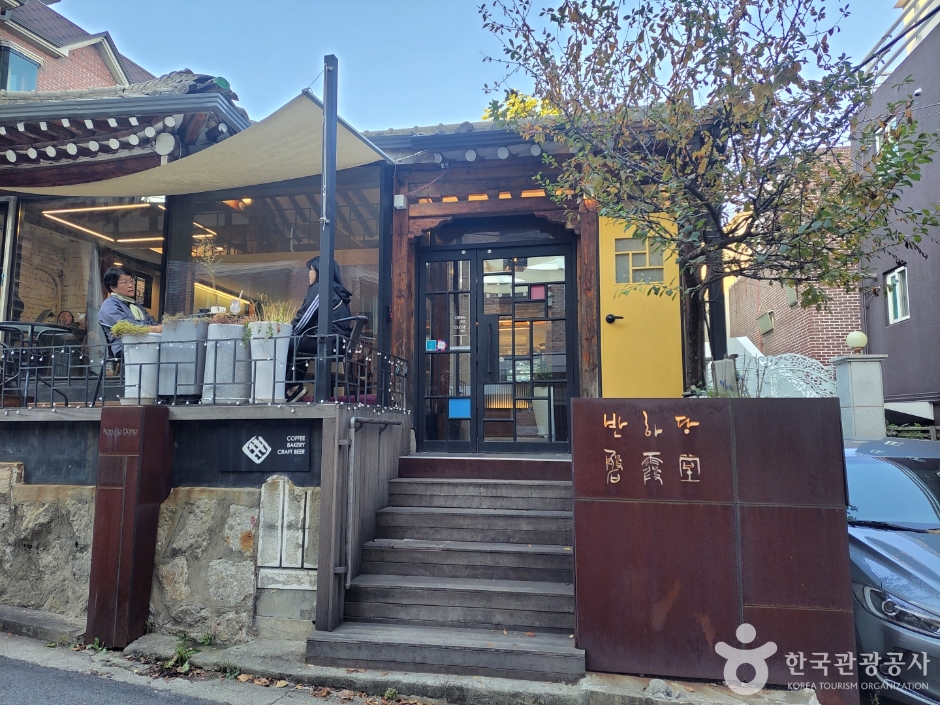
Banhadang (반하당)
3.5Km 2024-02-15
36 Seongbuk-ro 5-gil, Seongbuk-gu, Seoul
Banhadang is a café located 20 minutes from the UNESCO World Heritage site Changdeokgung Palace. Renovated from a hanok, it preserves the charm of hanok with open spaces, leaving only the pillars of the original structure. The signature menu includes a Strawberry latte made with homemade strawberry syrup and milk. During the summer season, the jeontong pat bingsu (traditional shaved ice with red beans), made with domestically sourced jujube and red bean, is also popular.
![Innisfree - Ewha Womans Univ. Station Exit No. 1 Branch [Tax Refund Shop] (이니스프리 이대역1번출구)](http://tong.visitkorea.or.kr/cms/resource/85/2888885_image2_1.jpg)
Innisfree - Ewha Womans Univ. Station Exit No. 1 Branch [Tax Refund Shop] (이니스프리 이대역1번출구)
3.5Km 2024-04-22
1F, 175, Sinchon-ro, Seodaemun-gu, Seoul
-
Bukjeong Village (북정마을)
3.5Km 2024-02-15
132-3 Seongbuk-ro 23-gil, Seongbuk-gu, Seoul
Bukjeong Village, situated along the slopes of Seongbuk-dong, offers a glimpse into Korea's old alleyways. The village expanded as refugees from the Korean War (1950–1953) and people from various regions settled, building houses under the collapsed walls of Hanyang doseong (Seoul City Wall). Presently, the village is home to young artists, and the broad street in front of the village bus stop hosts various community events.
![E-Mart - Mapo Gongdeok Branch [Tax Refund Shop] (이마트 마포공덕)](http://tong.visitkorea.or.kr/cms/resource/21/2888621_image2_1.jpg)
E-Mart - Mapo Gongdeok Branch [Tax Refund Shop] (이마트 마포공덕)
3.5Km 2024-04-22
212, Baekbeom-ro, Mapo-gu, Seoul
-
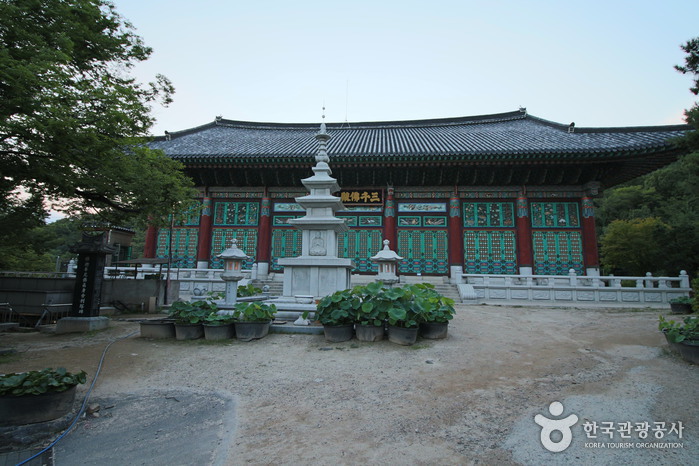
Bongwonsa Temple (봉원사)
3.5Km 2023-03-13
120, Bongwonsa-gil, Seodaemun-gu, Seoul
+82-2-392-3007
Located on the outskirts of Ansan Mountain in Bongwon-dong, Seodaemun-gu, Seoul, Bongwonsa Temple, as the center of Korean Buddhism Taego, is a thousand-year-old temple with a long history and tradition. In 889 (3rd year of Shilla Queen Jinseong’s reign), Monk Doseon founded it at the ground of Yeonhui Palace (now Yonsei Univ.) and named it Banyasa temple. It was destroyed during the Imjin War in 1592, and later in 1748 (the 24th year of Joseon King Yeongjo’s reign), it was rebuilt and renamed “Bongwonsa” by two Buddhist monks, Chanjeup and Jeungam.
“Yeongsanjae,” one of the Buddhist rituals and also a National Intangible Cultural Property, takes place at Bongwonsa on June 6 every year wishing for world peace and the reunification of North and South Korea. It was designated as one of the Intangible Cultural Heritage of Humanity by UNESCO in 2009. During Yeongsanjae, visitors can enjoy the Buddhist arts such as Beompae (Buddhist temple music for rituals) and dancing. Also, during summertime, Seoul Lotus Flower Culture Festival takes place, where visitors can enjoy the beautiful lotus flowers which are a symbol of Buddhism.
 English
 한국어
한국어 日本語
日本語 中文(简体)
 Deutsch
 Français
 Español
 Русский


