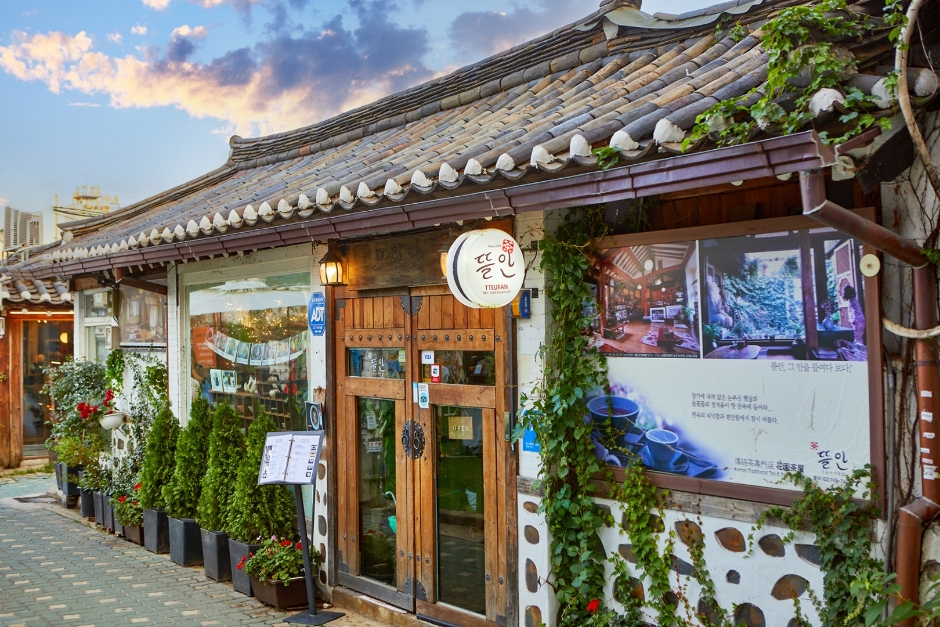
Tteulan Teahouse (뜰안)
2.0Km 2024-12-10
Tteulan Teahouse is a cafe that really allows one to feel the tradition and flair of Korea. Tteulan has two entrances: one facing the wide alley and the other facing the smaller one. The smaller entrance is decorated like a garden, so it feels as if one is stepping into a land of fairy-tales. The café has a floor seating tables with traditional items like gadari soban (a table with legs that curve like a dog's legs), and jogakbo (a textile woven from several pieces of scrap cloth), all of which add to the traditional Korean aesthetic. The menu features ssanghwacha (medicinal herb tea known to help the immune system), a favorite among middle-aged and elderly Koreans; omija tea (omija is a tart berry that grows in East Asia known to be good for lung and bronchial health and boosts immunity); citrus tea (usually made with yuzu which is rich in vitamin C and said to help mitigate fatigue); and pour-over coffee. Traditional desserts include mugwort rice cake (rice cake with mugwort added for herbal flavor, best enjoyed with malt syrup), pumpkin rice cake, and roasted grain powder (a nutritious beverage made with a variety of powdered grain). It can be hard to find seating in the afternoon, so visitors are advised to avoid these hours if they seek to enjoy their drink in peace.
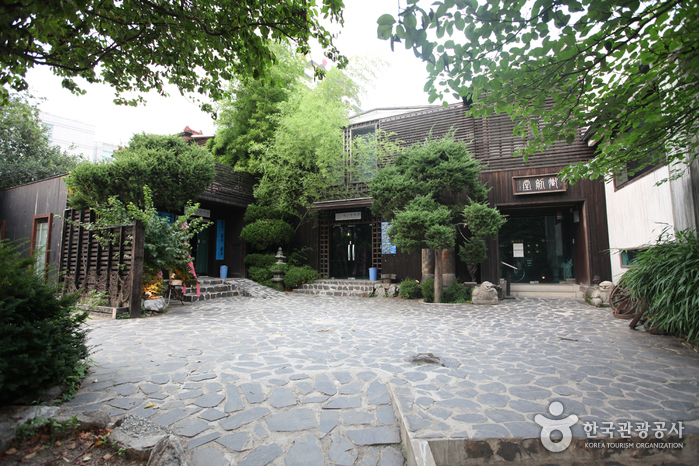
Kyung-In Museum of Fine Art (경인미술관)
2.0Km 2024-03-04
11-4, Insadong 10-gil, Jongno-gu, Seoul
Kyung-In Museum of Fine Art is located in Insa-dong. It has six exhibition rooms, an atelier, an outdoor exhibition area, and a traditional tea house. It hosts outdoor concerts in spring and fall, and Q&A sessions with authors can also be found as well. The traditional tea house offers about 15 types of traditional Korean tea in a space that overlooks the garden.
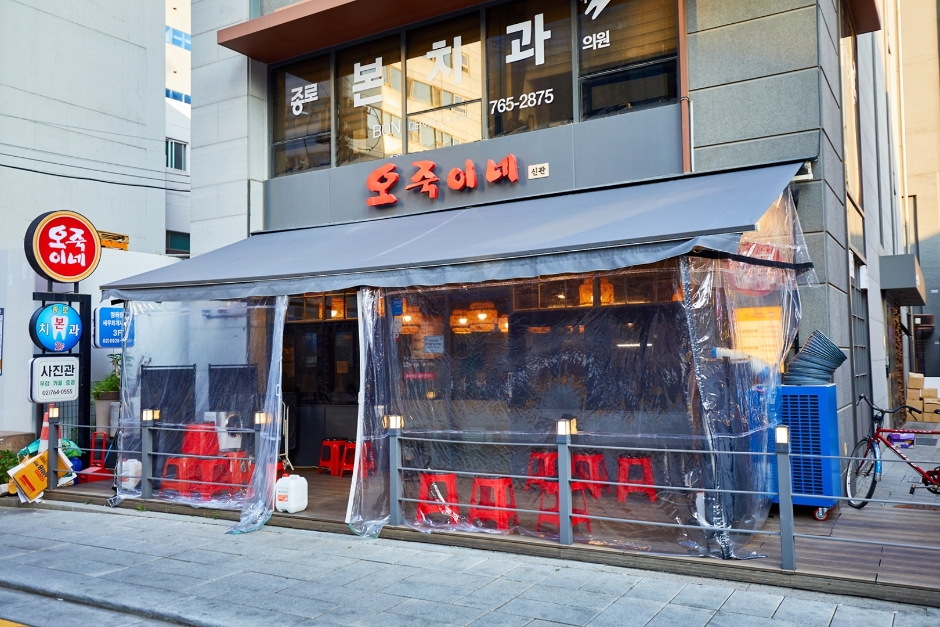
Ojugine (오죽이네)
2.0Km 2024-12-10
Ojugine is a restaurant that specializes in dak maeuntang, a spicy chicken stew that is different from dak bokkeumtang (spicy braised chicken), as the former has more soup than the latter. The stew is served whilst boiling, so one just needs to let it sit for a bit on the table before digging in. The spicy sauce and chicken are a match made in heaven, and the same goes for this dish. Interestingly, Ojugine uses smaller chickens to prepare their dishes, so the flesh braises in the stock faster. The resulting combination is sure to offer a memorable meal. Any remaining soup can be reused as a sauce for fried rice after the main meal, so visitors are advised to leave some space in their stomach.
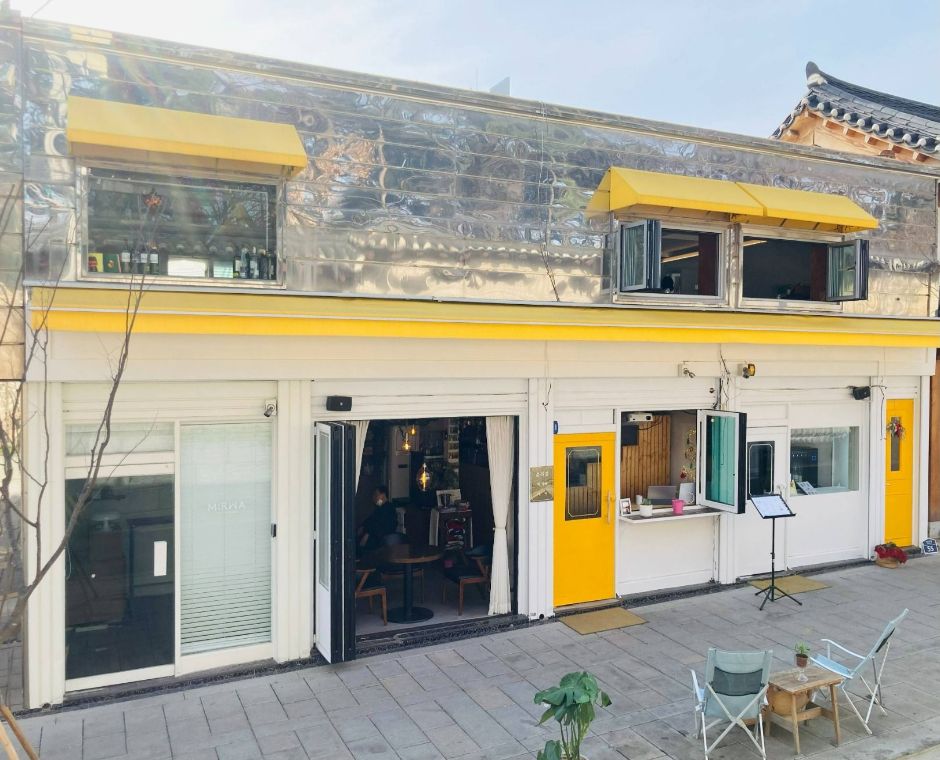
Sulla-gil Yeah Café & Bibi (순라길 예 & 비비)
2.0Km 2025-01-23
55 Seosulla-gil, Jongno-gu, Seoul
Situated in Sulla-gil, the Sulla-gil Yeah Café & Bibi is a roaster café where each bean is handpicked. It also offers a range of wine selections. The café is a perfect place to relax after exploring downtown Seoul. The cozy atmosphere of the café with the added charm of the stone wall visible from café, makes visitors feel at ease and relaxed. The evenings here turn into a music and movie session, adding a lively atmosphere to the space.
Insa-dong (인사동)
2.1Km 2024-05-17
62, Insadong-gil, Jongno-gu, Seoul
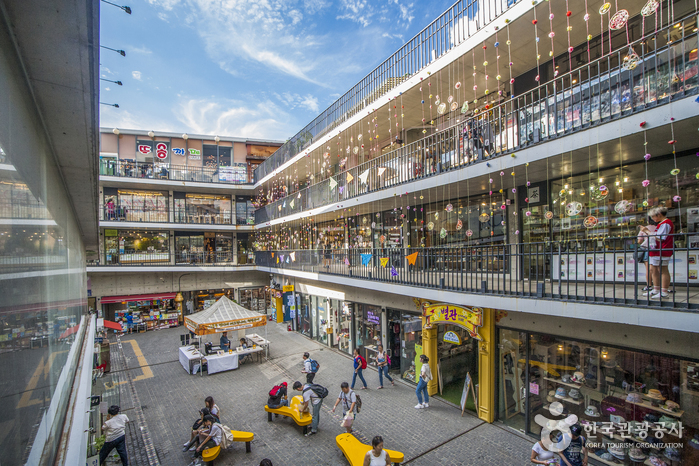
Insa-dong, located in the heart of the city, is an important place where old but precious traditional goods are on display. There is one main road in Insa-dong with alleys on each side. Within these alleys are galleries, traditional restaurants, teahouses, and cafes.
The galleries are the heartbeat of Insa-dong. There are about 100 galleries in the area offering every example of traditional Korean fine art from paintings to sculptures. The most famous galleries are Hakgojae Gallery, which functions as the center of folk art, Gana Art Gallery, which promotes many promising artists, and Gana Art Center.
The teahouses and restaurants are the perfect complement to the galleries. They are hidden deep within the twisting alleyways, making it feel like a treasure hunt. The shops in Insa-dong are very popular among all age groups, because each one is unique.
Every Saturday from 14:00 to 22:00 and Sunday from 10:00 to 22:00, the main street is blocked to vehicular traffic and it becomes a cultural space. Stores set up booths outside and Korean candy merchants and fortune teller stalls can easily be found; there are traditional performances and exhibits as well. Insa-dong is especially popular among international tourists. This is where they can experience and see traditional Korean culture first-hand, and also purchase pieces of fine art.

Gyeongnidan Street (경리단길)
2.1Km 2023-01-18
Itaewon-dong, Yongsan-gu, Seoul
Gyeongnidan Street refers to the 937-meter-long road from the main gate of MND Financial Management Corps to Grand Hyatt Seoul as well as all of the nearby streets and alleys. It is called Gyeongnidan Street because the Korean army's central finance corps, or Gyeongnidan in Korean, used to be located here, and has gained fame for presenting a different vibe than that of Itaewon despite being part of Itaewon-dong. Gyeongnidan Street is an area of culture and youth where people are able to enjoy diverse and special cuisine and dishes at unique restaurants and cafes. Although it resembles a typical neighborhood of Seoul, it features foreigners who have come from many different places around the globe living in natural harmony with Korean locals, which exudes a unique, exotic atmosphere. It is fun to walk along the various streets and alleys to discover novel and sophisticated shops.
Seoul Hyochang Park (서울 효창공원)
2.1Km 2024-07-09
177-18 Hyochangwon-ro, Yongsan-gu, Seoul
Hyochang Park covers 122,245 square meters spanning across Hyochang-dong and Cheongpa 2-dong. It is a historic landmark that once contained several royal tombs, and was known at that time as Hyochangwon. The cemeteries that were originally located in Hyochangwon belonged to Crown Prince Munhyo, King Jeongjo’s first son who died at the age of five; Royal Noble Consort Uibin of the Seong Clan, King Jeongjo’s royal concubine and Crown Prince Munhyo’s mother; Royal Noble Consort Sugui of the Park Clan, King Sunjo’s royal concubine; and her daughter Princess Yeongon. The royal tombs were moved to Seooreung Tombs in the waning months of the Japanese colonial period. The Japanese empire began the development of Hyochangwon into a park in 1924, and the Japanese governor-general officially assigned the site as a park in 1940.
Presently, several of Korea’s greatest leaders are buried in Hyochang Park. The remains mostly belong to independence activists including Yoon Bong-gil, Lee Bong-chang, and Baek Jeong-gi, whose graves are collectively known as Samuisa Tomb. A statue of Lee Bong-chang has been built in the graveyard. Among the other patriotic martyrs who are interred in the park are Kim Gu and some of the key figures of the provisional government such as Lee Dong-nyeong, Cha I-seok, and Cho Seong-hwan. An ancestral shrine named Uiyeolsa has been built along the main gate and holds the portraits of the deceased independence activists.
SAEWHA HOSTEL(세화호스텔)
2.1Km 2024-06-20
50 , Samil-daero 32ga-gil, Jongno-gu, Seoul
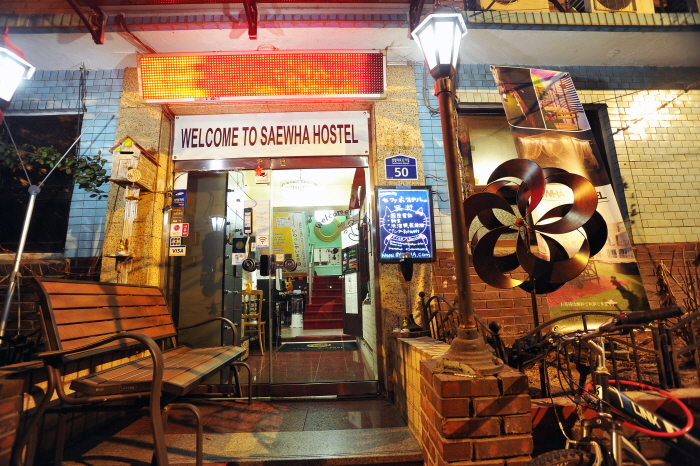
Located in Jongno, in the heart of Seoul, Saehwa Hostel offers a variety of guest rooms, including ondol rooms and bedrooms, for up to 3 people. There’s a bathtub in each room. Shared PCs, massage chairs, microwave ovens, washing machines and dryers are all available free of charge. A simple free breakfast is provided, plus a free international phone service and a foreign language guidance service. Seoul Station is 15 minutes away by subway, and the airport limousine bus stops at Jongno 3-ga station. Changdeokgung Palace, Jongmyo Shrine, and downtown shopping streets are all reachable on foot.
Matthew Chang Anguk (메튜장 안국)
2.1Km 2025-07-14
33 Yulgok-ro, Jongno-gu, Seoul
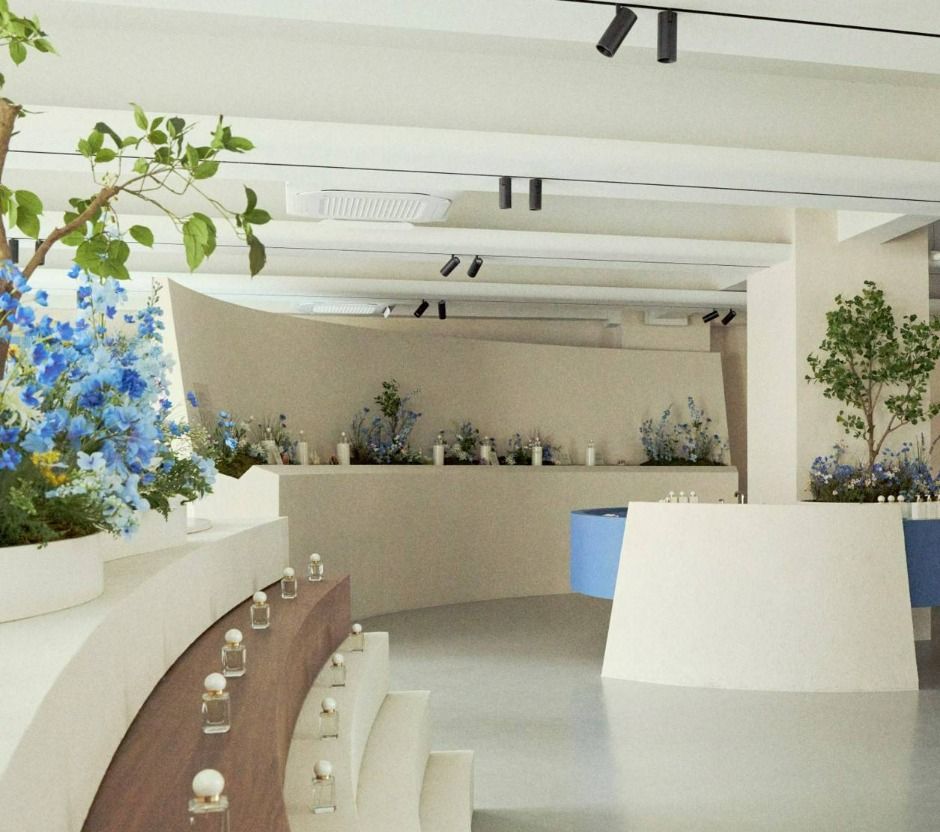
Matthew Chang Anguk flagship store uses the whole space to bring the brand's philosophy to life through fragrance. Located in Anguk, the heart of Korea's tradition and aesthetics, the store's tranquil atmosphere sets the mood for visitors to try on and experiment with the brand's carefully selected perfume collection. The staff provides assistance in recommending the perfect scent according to visitor's preference, mood, and nostalgia. The store also has a section dedicated to body care products, such as hand wash and body lotion.
Seoul Museum of Craft Art (SeMoCA) (서울공예박물관)
2.1Km 2025-06-19
4 Yulgok-ro 3-gil, Jongno-gu, Seoul
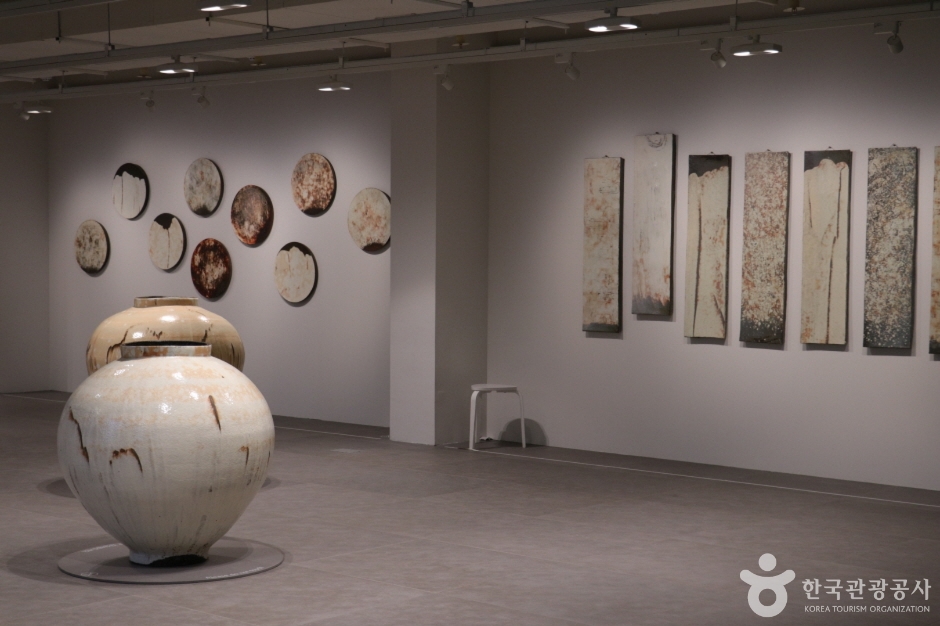
The Seoul Museum of Craft Art (SeMoCA), the first public museum of craft art in Korea, opened its doors in Anguk-dong, Jongno-gu, in July 2021 after renovating five buildings of the former Pungmoon Girls’ High School. SeMoCA studies and shares not only works, but also information, records, people, and environment related to craft art with the goal of becoming a dynamic platform for experiencing the technical, practical, artistic, and cultural values of craft.
SeMoCA holds a collection that comprises various crafts and craft materials covering multiple fields and eras from the traditional to the present. SeMoCA also holds exhibitions that feature the history of craft from traditional to contemporary art as well as local and children’s crafts, along with programs that utilize the museum’s craft installations, craft archives, craft library, and craft resource management system.
The site of the museum has deep historical roots as it is also the Andong Secondary Palace Site, where a detached palace was constructed as a royal residence for King Sejong’s son Prince Yeongeung, and served as a venue for royal celebrations, such as the wedding of King Sunjong. The site is also at the center of Jongno-gu, where Joseon-era master artisans (“gyeonggongjang”) of the royal palace produced and delivered craft works.
 English
 한국어
한국어 日本語
日本語 中文(简体)
 Deutsch
 Français
 Español
 Русский


