HILLS & EUROPA (힐즈앤유로파)
2.6Km 2025-11-05
35 Sinheung-ro, Yongsan-gu, Seoul
Haebangchon's Hot Place
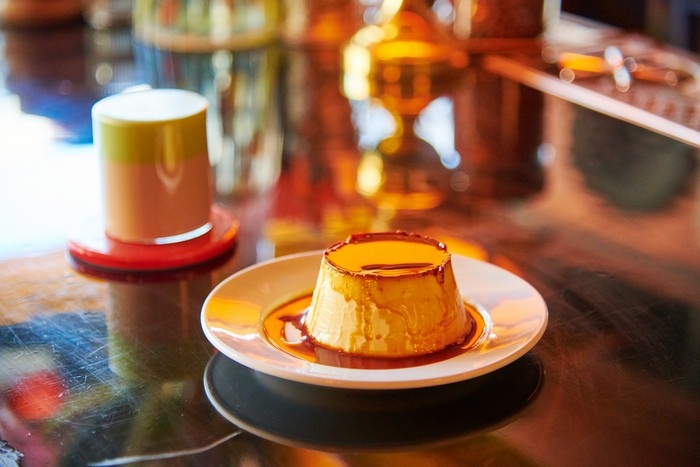
Singer Lee Hyori's OTT entertainment program 'Seoul Check-in' was filmed, and you can enjoy the atmosphere of Haebangchon properly. The low wooden ceiling and walls filled with unique objects and LPs from all over the world create a unique and cozy atmosphere. It is always full of customers as you can enjoy great visual cocktails and delicious dishes against the backdrop of various genres of music. During the day, it is good to enjoy coffee and dessert like a cafe. It is famous for its delicious cream caramel pudding, along with coffee that makes use of the taste of coffee beans from each region of origin. There are also various types of signature cocktails, but we recommend the unique visual 'Cigar in a Glass' that Lee Hyori and Park Narae drank.
Dongdaemun History & Culture Park (동대문역사문화공원)
2.6Km 2024-11-27
281 Eulji-ro, Jung-gu, Seoul
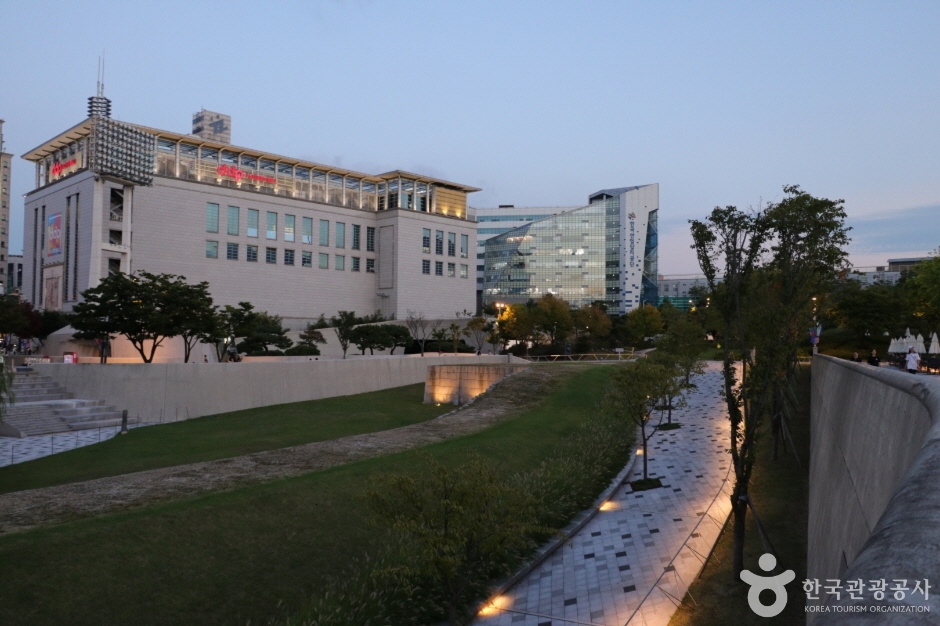
Dongdaemun History & Culture Park is a park established on the former site of the Dongdaemun Stadium. It serves as a thematic park showcasing the history and culture of Seoul, while also providing a space to experience modern design and culture. During the park's development in 2008, numerous artifacts from the Joseon dynasty, including The Two Floodgates, the Chiseong Castle, Military Training Agency, and over 1,000 relics from the Joseon era, were excavated. Alongside the park, there is the Dongdaemun Design Plaza (DDP) and the Relic area.
Daraenamu Tree in Changdeokgung Palace (창덕궁 다래나무)
2.6Km 2025-01-13
99, Yulgok-ro, Jongno-gu, Seoul
+82-2-3668-2300
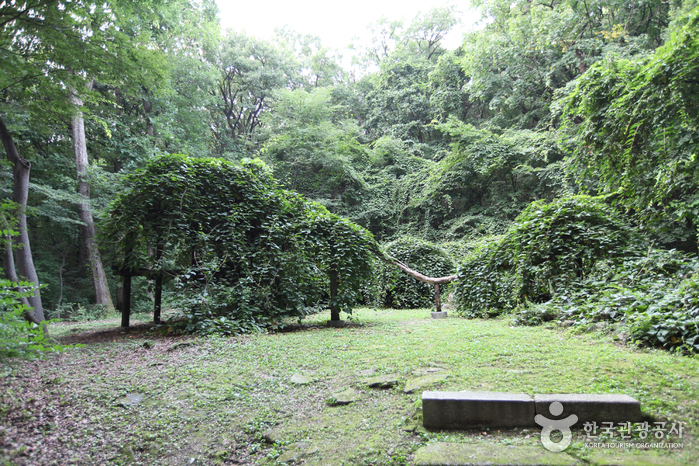
Daraenamu Tree in Changdeokgung Palace is estimated to be 600 years old, meaning it had likely been planted before the palace was built. The tree stands 19m in x_height, and has six separate trunks sprawling in all directions. It is the biggest and the oldest in Korea. It is designated and protected as a National Natural Monument.
![Innisfree - Daehangno Branch [Tax Refund Shop] (이니스프리 대학로)](http://tong.visitkorea.or.kr/cms/resource/84/2878184_image2_1.jpg)
Innisfree - Daehangno Branch [Tax Refund Shop] (이니스프리 대학로)
2.6Km 2024-04-19
51, Daehak-ro 11-gil, Jongno-gu, Seoul
-

Olive Young - Daehakro Branch [Tax Refund Shop] (올리브영 대학로점)
2.6Km 2024-06-27
1F~3F, 237, Changgyeonggung-ro, Jongno-gu, Seoul
-
Marronnier Park (마로니에공원)
2.6Km 2021-07-14
104, Daehak-ro, Jongno-gu, Seoul
+82-2-2148-4158
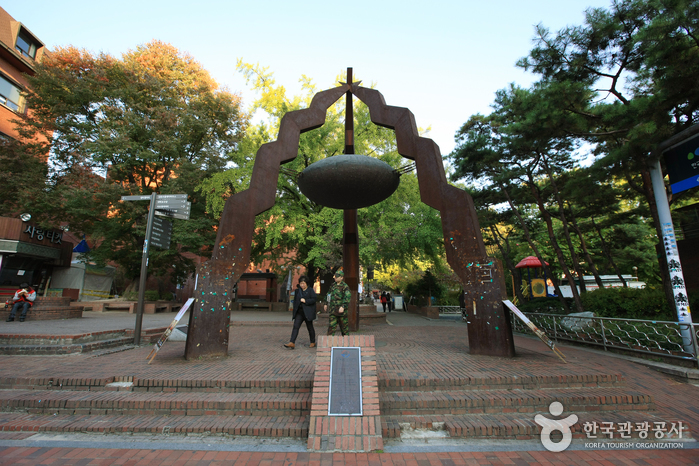
Marronnier Park was given its name due to the marronnier trees, or horse chestnut trees, growing within the area. The location where Seoul National University's College of Liberal Arts & Science and School of Law once stood, it is now a park dedicated to culture and arts open to the public. In addition to a variety of outdoor performances that take place throughout the area, exhibitions and cultural centers create a romantic atmosphere unique to the park.
Seodaemun Prison History Museum (서대문형무소역사관)
2.6Km 2024-12-02
251 Tongil-ro, Seodaemun-gu, Seoul
Seodaemun Prison was built under the Japanese administration to imprison independence movement activists. It first opened on October 21, 1908 under the name Gyeongseong Prison. Eventually, so many activists were imprisoned that the building had to be expanded. At that time, the name changed to Seodaemun Prison on September 3, 1912. Eighty years later, the prison was turned into Seodaemun Independence Park on August 15, 1992 to commemorate the Korean patriots who were tortured in prison, giving their lives for freedom. Of the many buildings, only seven were preserved for their historical significance, among which three prison buildings and the execution site were designated as a Historic Site. In 1998, the park underwent another transformation into today's Seodaemun Prison History Hall to educate the public on the importance of Korea's independence and the sacrifices of those who fought to achieve it.
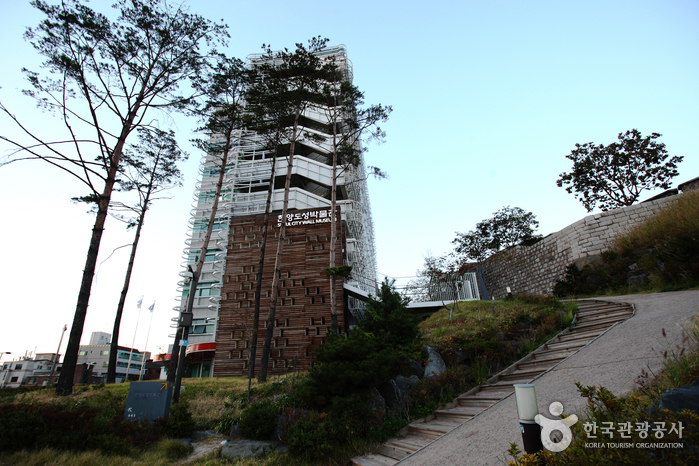
Seoul City Wall Museum (한양도성박물관)
2.6Km 2023-12-22
283, Yulgok-ro, Jongno-gu, Seoul
+82-2-724-0243
Hanyangdoseong, the Seoul City Wall, built in 1396, was the city fortress wall that protected the capital city Seoul for over 600 years. The fortress wall was built along the terrains and although it became partially damaged during the modernization process, its original form remains well to this day, making it a cultural heritage that coexists with the modern city. The Seoul City Wall Museum, located in Heungjinjimun Park, is a museum containing the history and culture of city wall from the Joseon dynasty to the present. It is a cultural space with a permanent exhibition hall, special exhibition hall, city wall information center, and study room.
Dongnimmun Gate (독립문)
2.6Km 2022-12-15
251, Tongil-ro, Seodaemun-gu, Seoul
Dongnimmun stands at the location originally known as Yeongeun, where envoys were once treated. When a Chinese envoy visited, the King would go out through this door to greet. In 1898, to announce the independence from Japan, Dongnimun was constructed with the fund collected by the citizens. The traces of the past still remain on Dongnimmun with two pillars in front of Dongnimmun being the remains of Yeongeunmun.
The Arc de Triomphe in France can be recalled in comparison to Dongnimmun. Dongnimmun was built using granite with a passageway x_height of 14.28 meters. On the top it is written ‘Dongnimmun’ in Korean with the national flag drawn on each side. On the inner-left side there are stone stairs leading to the attic. The national flower Mugunghwa are planted around Dongnimmun. Now it is surrounded by roads and it is eye-catching to view when passing by.
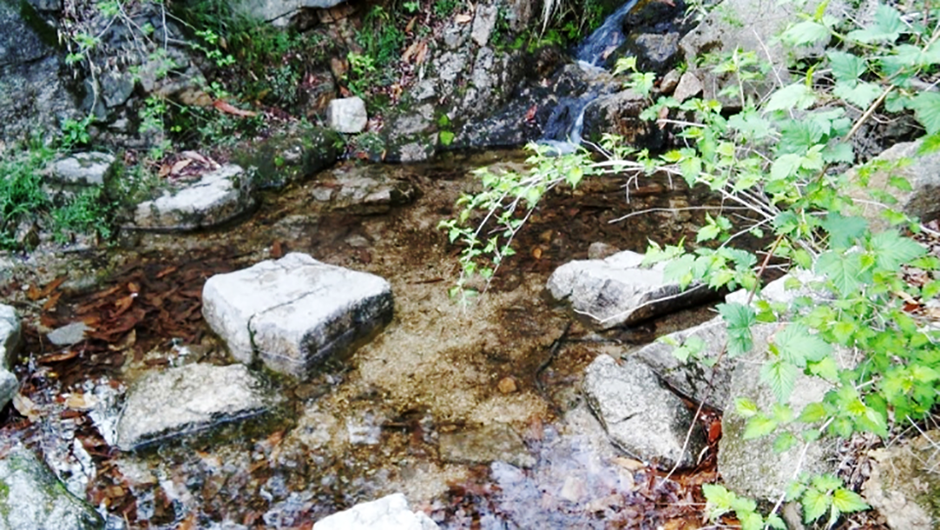
Suseongdonggyegok Valley (수성동계곡)
2.6Km 2023-08-17
185-3, Ogin-dong, Jongno-gu, Seoul 서울특별시 종로구 옥인동
Suseong-dong Valley's stream runs down from Inwangsan Mountain and joins Cheonggyecheon Stream, and it is said that the name of the village was called Suseong-dong during the Joseon dynasty due to the loud and clear sound of the flowing water. It appears in the painting "Jangdong Palgyeongcheop," which is Jangdong Eight Scenic Views, that depicts the eight scenic views of Bugaksan Mountain and Inwangsan Mountain as well as in other historical books of the Joseon dynasty as a place of scenic beauty. The valley was so famous for its beauty, that Prince Anpyeong of the Joseon dynasty built his house "Bihaedang" to fully enjoy the view, and the valley and its stone bridge were designated as a cultural property of Seoul in 2010.
 English
 한국어
한국어 日本語
日本語 中文(简体)
 Deutsch
 Français
 Español
 Русский


