![M-piecemall [Tax Refund Shop] (엠피스몰)](http://tong.visitkorea.or.kr/cms/resource/63/3314763_image2_1.jpg)
![Refurb Stock [Tax Refund Shop] (리퍼브스톡)](http://tong.visitkorea.or.kr/cms/resource/96/3313396_image2_1.jpg)
![189 shop [Tax Refund Shop] (189#(189샵))](http://tong.visitkorea.or.kr/cms/resource/01/3313501_image2_1.jpg)
![Lepitta [Tax Refund Shop] (르피타)](http://tong.visitkorea.or.kr/cms/resource/71/3313871_image2_1.jpg)

![Hoopcity Dongdaemun [Tax Refund Shop] (HOOPCITY 동대문)](http://tong.visitkorea.or.kr/cms/resource/51/2878751_image2_1.jpg)
Hoopcity Dongdaemun [Tax Refund Shop] (HOOPCITY 동대문)
2.5Km 2024-04-18
1F, 324, Toegye-ro, Jung-gu, Seoul
-
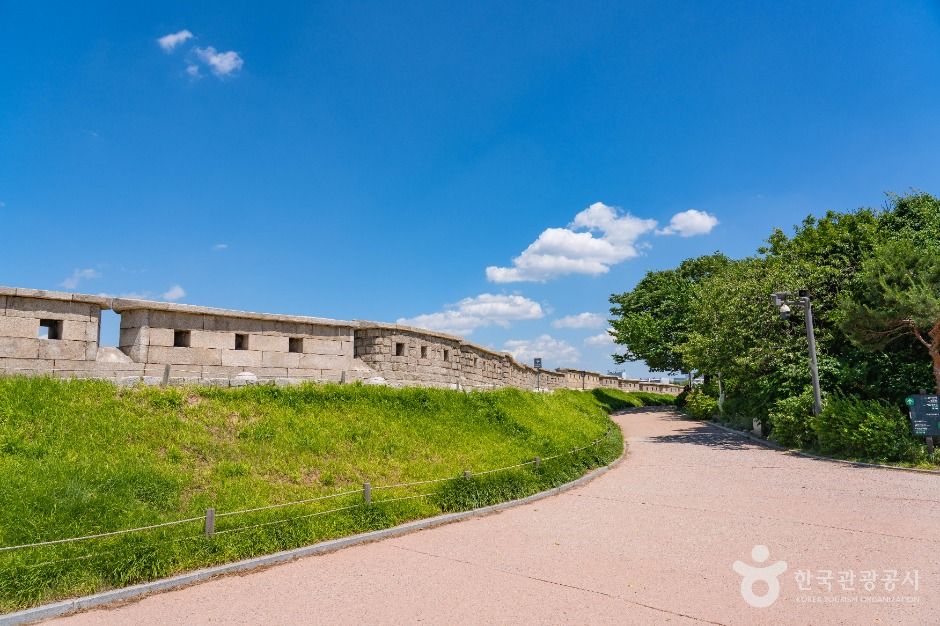
Naksan Park (낙산공원)
2.5Km 2025-12-16
41 Naksan-gil, Jongno-gu, Seoul
+82-2-743-7985
Naksan Mountain (alt. 125 meters) is one of the four inner mountains of Seoul, and can be accessed by following the road leading to the mountain entrance from Daehangno and Dongdaemun. It was also called Naktasan Mountain, which can be translated to Camel Mountain, because the terrain resembled a camel's back. It also had another name, Taraksan Mountain, “tarak” meaning fermented milk, because there was a royal ranch in the area that supplied milk to the palace. After the 1960s, the original appearance of Naksan Mountain disappeared due to apartments and dense housing, and the Seoul Metropolitan Government established a restoration plan. As part of this plan, a park project was carried out, and it opened Naksan Park in July 2002. Currently, Naksan Park has established itself as a resting place for citizens to feel the beautiful atmosphere of Hanyangdoseong, or the Seoul City Wall, and green forests. It has gained much popularity as a place for seeing the most beautiful night view in Seoul.
◎ Travel Information to Discover Hallyu’s Charm - Netflix Series "KPop Demon Hunters (2025)"
The fortress walls at Naksan Park served as the backdrop for Rumi and Jinu’s conversation in the Netflix series "KPop Demon Hunters." The view of the walls and the cityscape beyond adds to the unique atmosphere of the show, and visiting Naksan Park in person offers an expansive and memorable view of Seoul’s city center.

Leather Craft Shop (손놀림공방)
2.5Km 2025-10-30
19-1 Naksanseonggwakseo 1-gil, Jongno-gu, Seoul
The leather workshop featured in the drama 'Boyfriend'
It is a leather workshop that appeared in the scene where Cha Soohyeon (Song Hyekyo) and Kim Jinhyeok (Park Bogum) reunite in the drama 'Boyfriend'. It is run by leather craft artist Kim Yeongae and is known for its many cute items. You can experience making leather knotted string bracelets and rings at a low cost.
National Memorial of Korean Provisional Government (국립대한민국임시정부기념관)
2.5Km 2023-01-16
279-24, Tongil-ro, Seodaemun-gu, Seoul
The National Memorial of Korean Provisional Government was established to shine a light on the proud history of the Korean Provisional Government's independence and the spirit of a democratic republic and to pass it on to future generations. The four-story memorial building with three underground floors houses three permanent exhibits, one special exhibit, Larchiveum, Symbol Plaza, storage, multi-purpose hall, and rooftop garden over a total area of 3,656 square meters, a total floor area of 9,703 square meters and a total exhibition space of 2,240 square meters. The permanent exhibits consist of a series of historic events from the March 1st Movement, which served as a turning point for the formation of the Provisional Government, to the foundation of the Korean Government that succeeded the mantle of the provisional government, while the special exhibit on the 1st floor currently hosts a special opening exhibition under the title of 『The Return of the Provisional Government of the Republic of Korea』. Moreover, a symbolic wall installation under the theme of "Waves of History" is displayed in the outdoor plaza on the 1st floor of the memorial expressing the Provisional Government’s desire for independence and the dynamics of the past, present, and future of Korea.
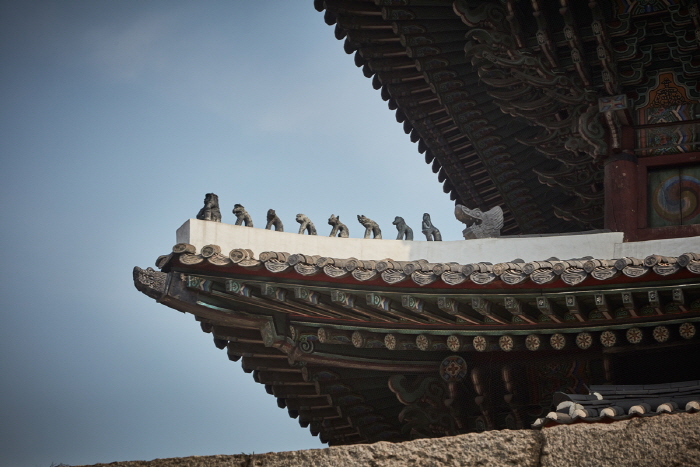
Heunginjimun Gate - Dongdaemun Gate (흥인지문)
2.5Km 2025-10-23
288, Jong-ro, Jongno-gu, Seoul
+82-2-2148-1842
Heunginjimun Gate was built to protect Hanseongbu, which historically housed essential government facilities. Heunginjimun Gate was the gate on the east side of the outer wall of Seoul Fortress among eight gates. It is referred to as Dongdaemun Gate as well. The gate was constructed during King Taejo’s 5th year in 1396, remodeled during the reign of King Danjong in 1453, and was newly built in 1869 during the sixth year of King Gojong’s reign in 1869.
The gate features a hipped roof with five front and two side compartments on a two-storied building. The thin and weak bracket system supports the eaves and is excessively decorated, reflecting the construction features of the late Joseon period. Also, outside of the fortress is the half-circle-shaped Ongseong, a small wall, to protect the gate.
One of the unique factors of Heunginjimun Gate is that it is the only gate among Seoul’s eight to have Ongseong, further exhibiting the style of construction used during the late Joseon period.
 English
 한국어
한국어 日本語
日本語 中文(简体)
 Deutsch
 Français
 Español
 Русский


