
Dalgaebi (달개비)
649.4M 2024-03-15
16 Sejong-daero 19-gil, Jung-gu, Seoul
+82-82-2-765-2035, 2068
Dalgaebi is a restaurant specializing in Korean table d'hote, using fresh seasonal ingredients. Its flagship menu is the teukseon sangcharim jeongsik (special set menu), which includes porridge, seasonal dishes, main courses, and desserts. The galbi sangcharim (galbi course), featuring premium Korean beef galbi grilled over charcoal and served with soybean paste jjigae, is also popular. Known for its private dining spaces and upscale ambiance, reservations can be made via phone.
Seoul Plaza (서울광장)
669.4M 2024-06-19
110 Sejong-daero, Jung-gu, Seoul
+82-2-2133-5640
Seoul Plaza in front of Seoul City Hall is a historic site where the March 1, 1919 (Samil) Independence Movement and the pro-democracy movement in June 1987 were held. It is also a well-known place where tens of thousands of Korean soccer fans gathered together to watch the 2002 World Cup Games. Being located within the center of the city and surrounded by many historic attractions, including Deoksugung Palace, Seoul Plaza has become a representative attraction of Seoul.
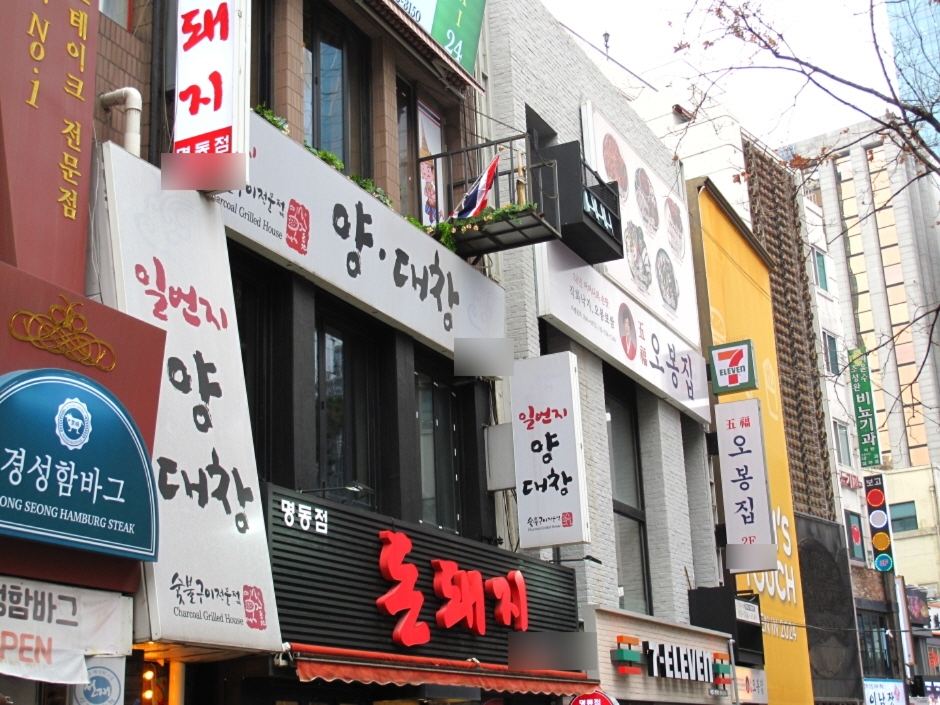
Ilbeonji Yang Daechang Myeongdong Branch (일번지양대창 명동)
680.9M 2024-03-15
2F, 33 Myeongdong 9-gil, Jung-gu, Seoul
+82-2-773-3150
Ilbeonji Yang Daechang is a specialty restaurant for grilled beef or pork small intestines located on Myeongdong Street. Its main menu features various intestines of beef or pork, including large and small intestines, grilled in the Korean barbecue style. Additionally, they offer options like grilled beef and pork galbi, as well as small intestine hot pot.
![Olive Young - Jongno YBM Branch [Tax Refund Shop] (올리브영 종로YBM)](http://tong.visitkorea.or.kr/cms/resource/27/2878227_image2_1.jpg)
Olive Young - Jongno YBM Branch [Tax Refund Shop] (올리브영 종로YBM)
685.1M 2024-04-19
104, Jong-ro, Jongno-gu, Seoul
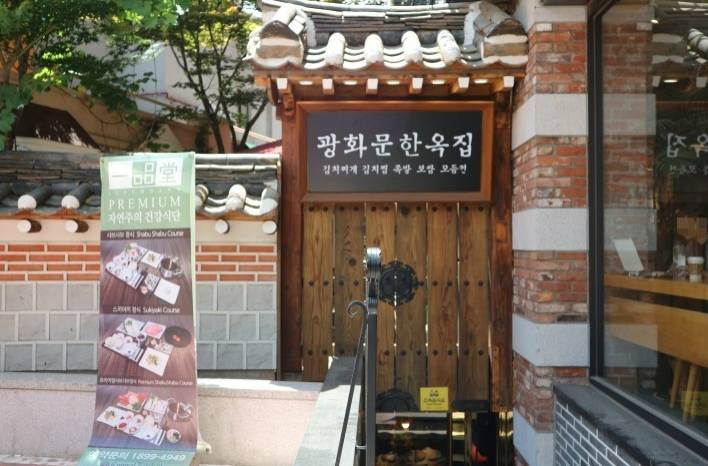
Gwanghwamun Hanokjip (광화문한옥집)
691.9M 2024-10-15
7, Saemunanro5ga-gil, Jongro-gu, Seoul
+82-2-731-2500
A store with rooms reproducing a traditional kitchen. The best menu at this restaurant is napa wraps with pork. This is a Korean cuisine located in Gwanghwamun Gate, Seoul.
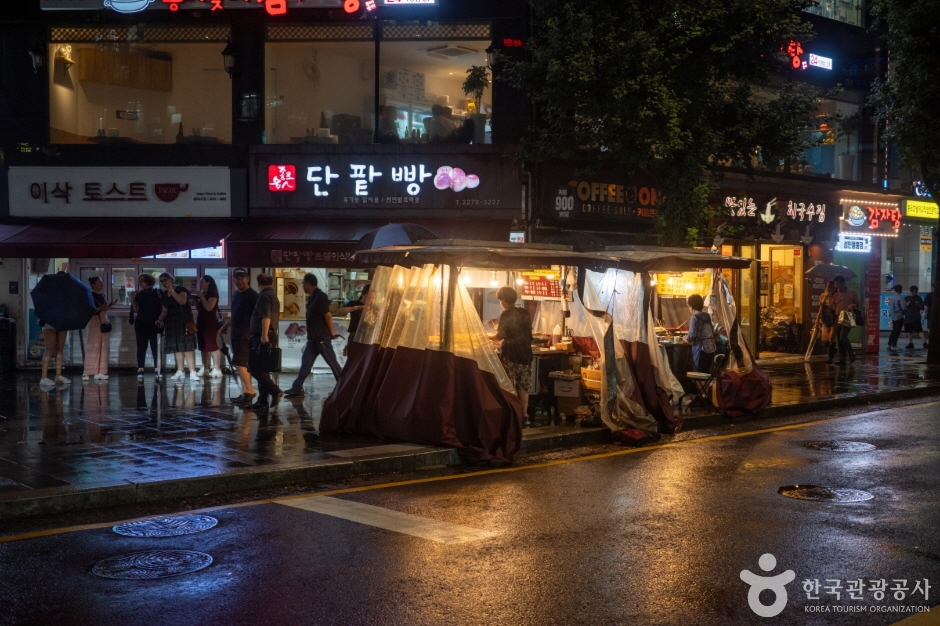
Jongno 3 (sam)-ga Pocha Street (종로3가 포장마차 거리)
694.6M 2025-11-06
12-1, Gwan-su-dong, Jongno-gu, Seoul
It is one of Seoul's representative Pocha Streets boasting history and tradition. When you come out of Jongno 3-ga Station, exit 6 (toward the Nakwon Music Mall), you will find a lot of food stalls with a crowded atmosphere. There are vinyl covered areas and open areas, so you can choose according to your taste. It is a heaven for snacks such as Chicken feet, Octopus, Udon Kimchi Pancakes, and Rolled Omelet.
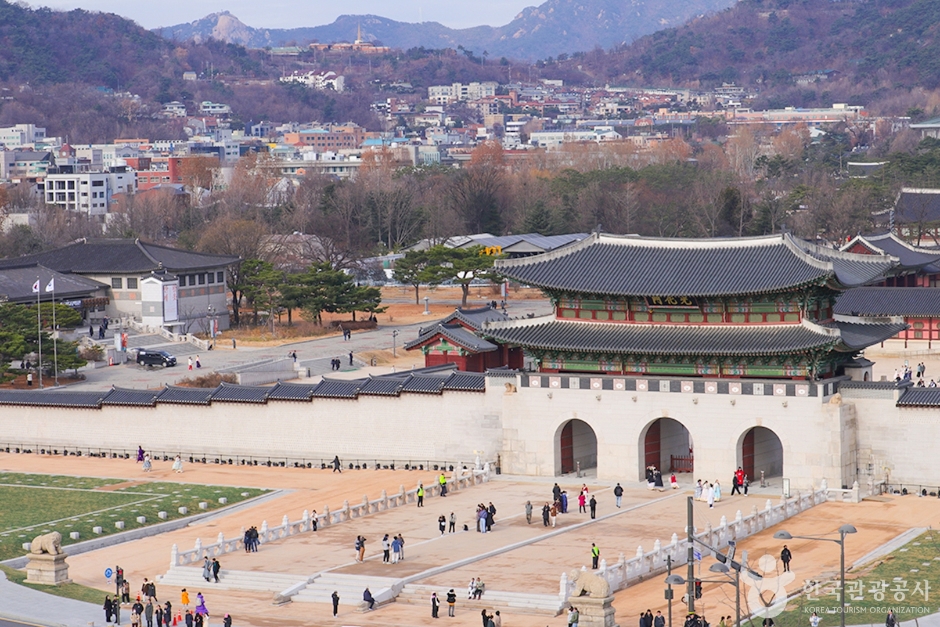
Gwanghwamun Gate (광화문)
695.8M 2024-12-04
161 Sajik-ro, Jongno-gu, Seoul
+82-2-3700-3900
Built in 1395 under the reign of King Taejo, the first king of the Joseon dynasty, Gwanghwamun Gate is the southern gate of Gyeongbokgung Palace. It is also the main gate of the palace, therefore larger and fancier in comparison to the other gates. Gwanghwamun Gate consists of three arched gates; the center gate was used by the king, while the other two were used by the crown prince and royal officials. The tall granite walls of the gate serve as a platform for the wooden gate tower that watches over the city. The gate has a sign with its name written at the top center of the gate tower.
Gwanghwamun Gate went through several damages and restorations over the course of history. It was first severely damaged during the Imjin War (1592-1598) and was not restored until the reconstruction of Gyeongbokgung Palace in 1864. Under the Japanese administration, the gate was demolished and relocated to the north of the palace's eastern gate, followed by series of damages during the Korean War (1950-1953). In 1968, Gwanghwamun Gate was relocated back to the south of the palace and was rebuilt using concrete; however, the gate’s position was shifted a few meters away from its original location. In 2006, a major reconstruction project took place to restore Gwanghwamun Gate to its original state and location, disassembling the structure completely and replacing concrete with granite and wood. After three years and eight months of construction, Gwanghwamun Gate was fully restored to its original form and was open to the public on August 15, 2010.
![Golden Dew - Lotte Main Branch [Tax Refund Shop] (골든듀 롯데본점)](http://tong.visitkorea.or.kr/cms/resource/32/2888332_image2_1.jpg)
Golden Dew - Lotte Main Branch [Tax Refund Shop] (골든듀 롯데본점)
696.8M 2024-04-17
81, Namdaemun-ro, Jung-gu, Seoul
-
![Coach - Lotte Main Branch [Tax Refund Shop] (코우치 롯데본점)](http://tong.visitkorea.or.kr/cms/resource/97/2888597_image2_1.jpg)
Coach - Lotte Main Branch [Tax Refund Shop] (코우치 롯데본점)
696.8M 2024-04-18
81, Namdaemun-ro, Jung-gu, Seoul
-
 English
 한국어
한국어 日本語
日本語 中文(简体)
 Deutsch
 Français
 Español
 Русский


