
Lotte World Tower SEOUL SKY (롯데월드타워 서울스카이)
13.3Km 2024-11-28
300 Olympic-ro, Songpa-gu, Seoul
+82-1661-2000
SEOUL SKY is located on floors 117-123 of Lotte World Tower, the nation's tallest and the world's fifth tallest building. The observatory offers a panoramic view of the entire capital city, beautiful both day and night. SEOUL SKY is comprised of an exhibition zone, observation deck, sky deck, dessert cafe, sky terrace, lounge, and more.
To get to Seoul Sky, visitors have to take the Sky Shuttle, a double-deck elevator that reaches a speed of 600 meters per minute. The one-minute ride feels quite short while watching the videos playing on the walls and ceiling. While waiting for the elevator up, visitors can enjoy art in the exhibition zone in basement levels 1-2. The exhibition includes artwork displaying the history, culture, and pride of Korea's foundation and success over the centuries. Visitors can also purchase Seoul Sky merchandise from the gift shop to remember their trip or give as a souvenir.
The observation deck has two story-high glass windows for an uninterrupted view. The Sky Deck, located at 478 meters, holds the Guinness World Record as the highest glass-floored observatory in the world. On days when visibility is limited, visitors can still enjoy a clear sky through the Sky Theater. The 120 floor holds the Sky Terrace, open to the elements.
Visitors looking for refreshments can enjoy the one-of-a-kind menu served at the dessert cafe Sky Friends Cafe on level 119, or refreshing wine sold at the premium lounge on floor 123. This cozy space is the highest lounge in Seoul and is perfect for taking in the view in a relaxing ambiance.
The House of Yehbon (예본의 집)
13.3Km 2024-08-05
64 , Gaepo-ro 118-gil, Gangnam-gu, Seoul
+82-10-3908-1617
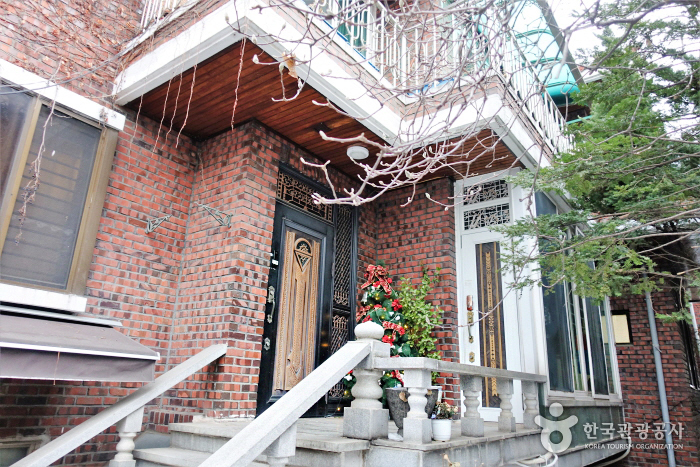
Yebonui House is a detached house, in Gangnam-gu, Seoul, whose first floor is operated as a guest house. The space consists of two rooms plus living room, kitchen facilities, and two bathrooms, and is popular with visiting overseas Koreans and travelers from north America and Europe. Guests will find antique furniture, mother-of-pearl cabinets, and hand-knitted covers, all redolent of Korean history and culture. The Gangnam location makes it super convenient for transport.
Dobongsan Mountain (도봉산)
13.3Km 2021-06-29
Dobong-dong, Dobong-gu, Seoul
+82-2-954-2566
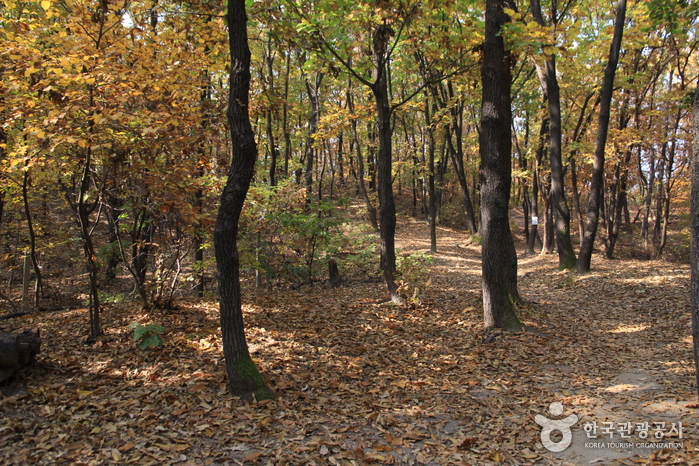
Dobongsan Mountain, located in the northeastern section of Bukhansan National Park, is known for the magnificent rock formations of the main peak, Jaunbong Peak (740.2 m), as well as Manjangbong, Seoninbong, Jubong, Obong Peaks and Uiam Rock. Seoninbong Peak in particular has 37 hiking courses, including the famous Bakjwi (Bat) Course.
The mountain is also home to Cheonchuksa Temple, the oldest temple in the region, and several other temples including Mangwolsa and Hoeryongsa Temples, as well as a number of beautiful valleys such as Dobonggyegok, Songchugyegok, Obonggyegok and Yeongeocheongyegok Valleys. Dobongsan Mountain is easily accessible by public transportation, making it a popular attraction for people living in Seoul.
Pungnap-dong Toseong Fortress (서울 풍납동 토성)
13.4Km 2025-01-10
Pungnap-dong, Songpa-gu, Seoul
+82-2-2147-2800
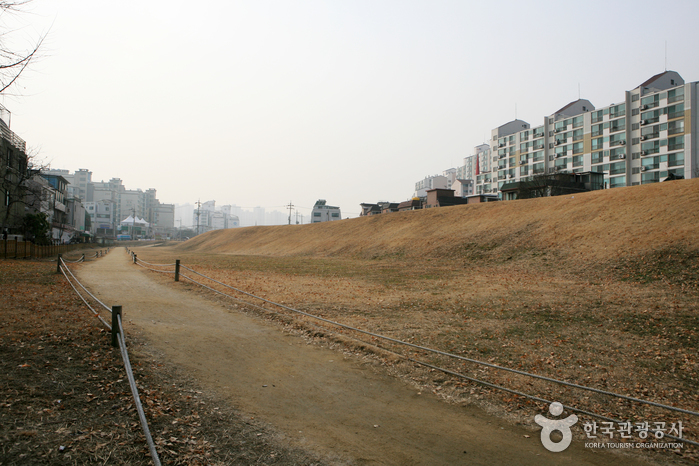
Onjo, the progenitor of Kingdom Baekje, first settled in Wiryeseong Hanam. But exact location is still unknown. One thing for sure, however, is that Pungnaptoseong Fortress, Mongchontoseong Fortress, Bangidong Ancient Tombs of Baekje, Seokchondong Stone Mound Tomb of Early Baekje are the remains of Baekje. Pungnaptoseong Fortress faces Hangang River to its west and connects to Mongchontoseong Fortress to the south. To the northwest faces Achasanseong Fortress over Hangang River and far to the southeast is Namhansanseong Fortress.
Pungnaptoseong Fortress, located at the south end of Cheonhodaegyo Bridge over Hangang River, is one of the remains of Early Baekje. Originally, the fortress was 4km in circumference, but due to massive overflowing of Hangang River during flood season in 1925, most of the fortress was lost and only 2.7km of it remains. To the east of the fortress are 4 vestiges of the fortress gates. The remains from the prehistoric era through the Samguk (Three States) era have been unearthed, indicating that this place was a residential area well before the Baekje Era. Through vigorous excavation, some people suggest that there used to be a palace located here during the Baekje Era.
![[Seoul Trail Course 1] Suraksan · Buramsan Mountain Course ([서울 둘레길 1코스] 수락 · 불암산 코스)](http://tong.visitkorea.or.kr/cms/resource/16/2658216_image2_1.jpg)
[Seoul Trail Course 1] Suraksan · Buramsan Mountain Course ([서울 둘레길 1코스] 수락 · 불암산 코스)
13.4Km 2025-01-06
Junggye-dong, Nowon-gu, Seoul, Republic of Korea
Seoul Trail is a walking trail that encompasses the entire city of Seoul, with a total length of 157km and 8 courses. It weaves together the history, culture, and natural ecology of Seoul through various stories. The 1st course is a gentle path from Suraksan Mountain to Buramsan Mountain, covering 18.6km and taking approximately 8 hours and 10 minutes. This trekking course around Buramsan Mountain passes through Iris Garden, Deongneung-gogae, Information Center, Taereung Royal Tomb, Suamsa Temple, and Hakdoam Temple.
YONSEI HEAL DENTAL CLINIC (연세힐치과의원)
13.4Km 2025-11-24
1st–2nd Floor, Ujangsan Harrington Tower, 231 Gangseo-ro, Gangseo-gu, Seoul
Yonsei Heal Dental Clinic has upheld the values of trust and healing since its founding in 2014. Guided by a patient-centered philosophy, a team of ten specialized doctors works collaboratively to deliver precise and safe treatments using world-class digital systems. With expertise spanning implants, digital restorative care, and laminates, the clinic pursues excellence in both function and aesthetics. Built on integrity and meticulous care, Yonsei Heal Dental restores not only smiles but also the quality of life.
Amsa-dong Prehistoric Site Museum (암사동선사유적박물관)
13.5Km 2023-12-22
875 Olympic-ro, Gangdong-gu, Seoul
The archaeological sites in Amsa-dong, Seoul, were a collective settlement where people lived during the Neolithic Age about 6,000 years ago and became known to the world after the sand dunes along the Hangang River caved in during the great flood of 1925, exposing numerous pieces of comb-patterned pottery. The area designated as a historic site in 1979, and excavation of the site took place from 1981 to 1988. The cultural heritage protection area was expanded to a total area of 78,133㎡. Currently, nine Neolithic dugout huts and one experiential dugout hut have been restored. The exhibitions currently open to the public are Exhibition Hall 1, which displays a restoration of a Neolithic Age dugout, and Exhibition Hall 2, which displays various panels and models to help understand the prehistoric era as a whole.
Netmarble Game Museum (넷마블게임박물관)
13.5Km 2025-05-14
38 Digital-ro 26-gil, Guro-gu, Seoul
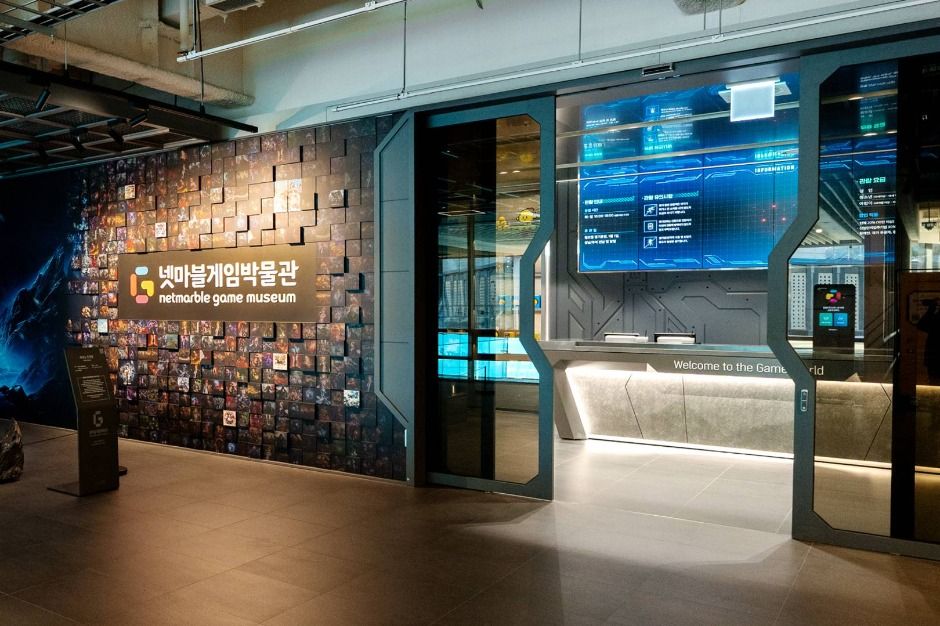
The Netmarble Game Museum offers visitors an opportunity to explore the history and culture of games and discover their social and cultural values. The museum features an exhibition space showcasing a diverse collection of domestic and international, a learning space with various gaming education materials, and a gaming space where visitors can enjoy playing different types of games. The exhibition space is organized around three main themes: game history, game world, and gaming culture. In particular, the Play Collection zone includes classic arcade games, console games, and PC games, allowing children to have fun and adults to reminisce about their memories.
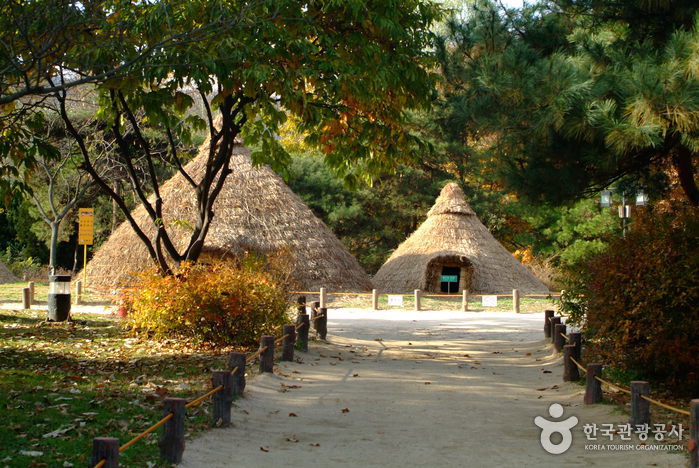
Archaeological Site in Amsa-dong, Seoul (서울 암사동 유적)
13.6Km 2021-07-27
875, Olympic-ro, Gangdong-gu, Seoul
+82-2-3425-6520
The Archaeological Site in Amsa-dong reproduces the lifestyle of the Neolithic Era. Even the entrance gate is shaped like a huge dolmen and the trash cans are ancient diagonal-line patterned earthenware. Archaeological Site in Amsa-dong was excavated in 1925 when a flood washed away the soil on the banks of the Hangang River and exposed a large number of diagonal-line patterned earthenware. After several excavations, the Archaeological Site in Amsa-dong was established.
The site was a location for a massive colony, thus many ancient buildings, stone axes and stone arrows have been uncovered as well as countless diagonal-line patterned earthenware. The housing site is round with a spot in the center for fire. The site is colossal and possesses nine mud huts, two exhibition halls displaying ancient artifacts and an open mud hut where visitors can experience life in the Neolithic Era. The site offers many attractions such as mud huts and promenades. Archaeological Site in Amsa-dong is also very educational for children and families who want to learn and experience the Neolithic Age.
 English
 한국어
한국어 日本語
日本語 中文(简体)
 Deutsch
 Français
 Español
 Русский


