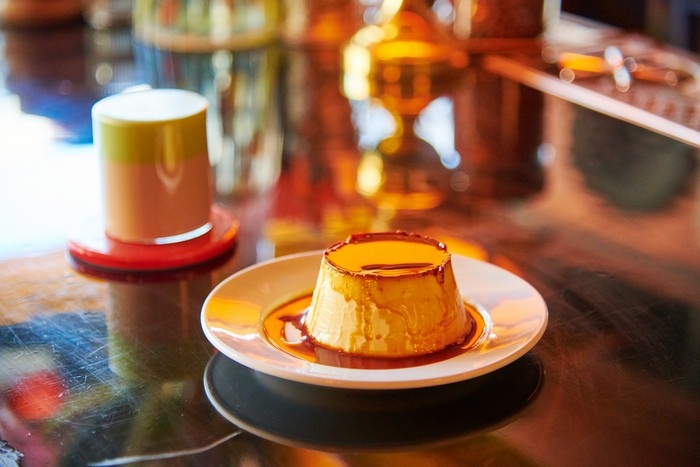
HILLS & EUROPA (힐즈앤유로파)
2.1Km 2025-11-05
35 Sinheung-ro, Yongsan-gu, Seoul
Haebangchon's Hot Place
Singer Lee Hyori's OTT entertainment program 'Seoul Check-in' was filmed, and you can enjoy the atmosphere of Haebangchon properly. The low wooden ceiling and walls filled with unique objects and LPs from all over the world create a unique and cozy atmosphere. It is always full of customers as you can enjoy great visual cocktails and delicious dishes against the backdrop of various genres of music. During the day, it is good to enjoy coffee and dessert like a cafe. It is famous for its delicious cream caramel pudding, along with coffee that makes use of the taste of coffee beans from each region of origin. There are also various types of signature cocktails, but we recommend the unique visual 'Cigar in a Glass' that Lee Hyori and Park Narae drank.

Sejong Village Food Street (세종마을 음식문화거리)
2.1Km 2025-06-17
Chebu-dong, Jongno-gu, Seoul
Previously known as Geumcheongyo Market, it was officially named Sejong Village Food Street in 2011, as King Sejong was born in this village. The street is full of lively energy and features both long-standing restaurants, also known as nopo in Korean, and recently established trendy eateries. Its convenient location and inviting atmosphere make it a popular place to visit.
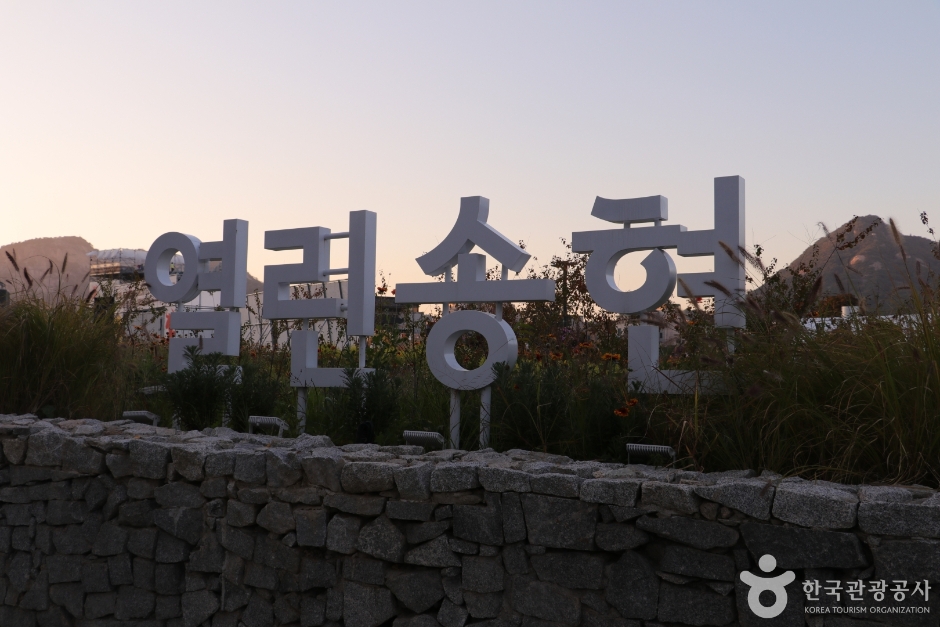
Songhyeon Green Plaza (열린송현 녹지광장)
2.1Km 2025-11-11
Songhyeon-dong, Jongno-gu, Seoul
Songhyeon Green Plaza, located between Gyeongbokgung Palace and Jongno, is a space for culture and rest. The site was formerly used as housing for Shiksan Bank during Japanese rule. After Korea’s liberation, it served as a residence for the US Embassy and military personnel. Later in 1997, it was returned to the Korean government but remained unused for years. In 2022, the ownership was transferred to the Korean House and Land Corporation and then to the Seoul Metropolitan Government, which redeveloped it into a green plaza and opened it to the public. Upon entering the plaza, visitors are greeted by a spacious lawn adorned with flowers during the blooming season. The plaza is connected to the nearby tourist attractions through shortcuts cutting through it, including Cheong Wa Dae (Blue House), Gwanghwamun Plaza, Insa-dong, and Bukchon Hanok Village.

Unhyeongung Royal Residence (서울 운현궁)
2.1Km 2024-03-04
464, Samil-daero, Jongno-gu, Seoul
+82-2-766-9090
Located near the Gyeongbokgung Palace, Unhyeongung Palace was a residence of royalty in Joseon period. It was the place where Gojong (1582-1919, reign 1864-1907), king of Joseon (1392-1897) and emperor of the Korean Empire (1897-1910), was born in, as well as the place where Heungseon Daewongun (1821-1898), his father, had resided in. Buildings include Noandang Hall, Norakdang Hall, and Irodang Hall. The Royal Residence offers programs like traditional weddings and traditional culture experiences, while the exhibition hall showcases Joseon-era artifacts.
Lee Ri-Ja Hanbok Museum (이리자 한복전시관)
2.1Km 2022-08-08
20, Samcheong-ro, Jongno-gu, Seoul
+82-2-734-9477
The Lee Ri-Ja Hanbok Museum displays the traditional clothing worn in Korea from birth to death. All hanbok displayed at the museum are created by the hanbok designer Lee Ri-Ja herself, who has over 40 years of experience.
Chebudong Janchijip Dwaejigalbi (체부동잔치집돼지갈비)
2.1Km 2024-03-18
24 Jahamun-ro 1-gil, Jongno-gu, Seoul
+82-2-722-3555
Chebudong Janchijip Dwaejigalbi is a restaurant where marinated pork galbi are grilled over charcoal fire. It offers various side dishes along with rich soybean paste jjigae. Enjoying cold buckwheat noodles with the tender marinated pork galbi, which are well-aged, is also recommended. Additionally, there are individual menu items such as dubu jeongol (bean curd hot pot), hoe naengmyeon (cold buckwheat noodles with raw fish), bibimbap, and gamjajeon (potato pancake).
![Rawrow - Kwangjang Market Branch [Tax Refund Shop] (로우로우 광장시장)](http://tong.visitkorea.or.kr/cms/resource/29/2878229_image2_1.jpg)
Rawrow - Kwangjang Market Branch [Tax Refund Shop] (로우로우 광장시장)
2.1Km 2024-04-19
Store #239, Gwangjang Market, 88, Changgyeonggung-ro, Jongno-gu, Seoul
-
Seoul Hyochang Park (서울 효창공원)
2.1Km 2024-07-09
177-18 Hyochangwon-ro, Yongsan-gu, Seoul
+82-2-2199-7608
Hyochang Park covers 122,245 square meters spanning across Hyochang-dong and Cheongpa 2-dong. It is a historic landmark that once contained several royal tombs, and was known at that time as Hyochangwon. The cemeteries that were originally located in Hyochangwon belonged to Crown Prince Munhyo, King Jeongjo’s first son who died at the age of five; Royal Noble Consort Uibin of the Seong Clan, King Jeongjo’s royal concubine and Crown Prince Munhyo’s mother; Royal Noble Consort Sugui of the Park Clan, King Sunjo’s royal concubine; and her daughter Princess Yeongon. The royal tombs were moved to Seooreung Tombs in the waning months of the Japanese colonial period. The Japanese empire began the development of Hyochangwon into a park in 1924, and the Japanese governor-general officially assigned the site as a park in 1940.
Presently, several of Korea’s greatest leaders are buried in Hyochang Park. The remains mostly belong to independence activists including Yoon Bong-gil, Lee Bong-chang, and Baek Jeong-gi, whose graves are collectively known as Samuisa Tomb. A statue of Lee Bong-chang has been built in the graveyard. Among the other patriotic martyrs who are interred in the park are Kim Gu and some of the key figures of the provisional government such as Lee Dong-nyeong, Cha I-seok, and Cho Seong-hwan. An ancestral shrine named Uiyeolsa has been built along the main gate and holds the portraits of the deceased independence activists.
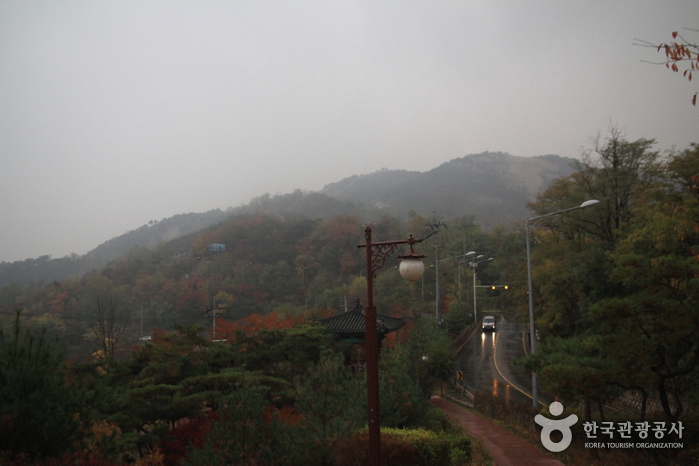
Inwangsan Mountain (인왕산)
2.1Km 2024-03-04
San 2-1, Muak-dong, Jongno-gu, Seoul
+82-2-2148-2834
Inwangsan Mountain is a rocky mountain located to the northwestern side of Seoul. It stands 338m tall. The Seoul City Wall is built along its ridge, connecting to the Baegak Mountain Trail. From the summit, one can see the three mountains of Naksan Mountain, Namsan Mountain, and the Bugaksan Mountain surrounding the historical center of Hanyang, the historical name for Seoul in Joseon period, with the Gyeongbokgung Palace at the center. There are five hiking trails, all taking about two hours to complete. It takes about three hours if you want to visit all the peaks of the mountain.
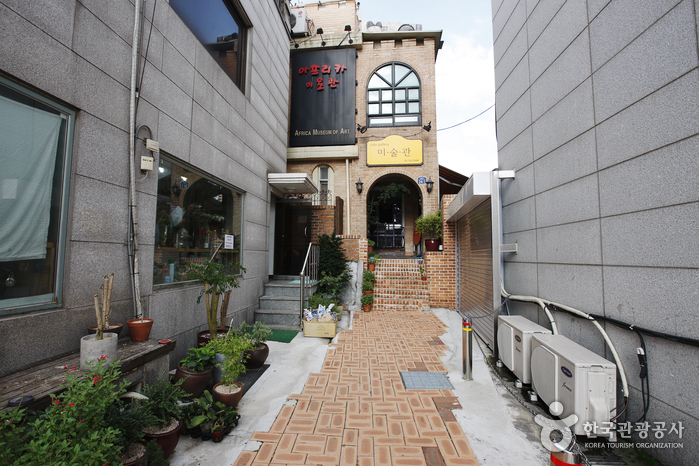
Africa Museum of Art (아프리카미술관)
2.1Km 2022-10-26
24-1, Samcheong-ro, Jongno-gu, Seoul
+82-2-730-2430
The Africa Museum of Art was established with the purpose of hosting various art festivals and providing the grounds for researching various art themes. A major principle of the gallery is to promote works of art that actively attempt to explore the human mind.
 English
 한국어
한국어 日本語
日本語 中文(简体)
 Deutsch
 Français
 Español
 Русский


