
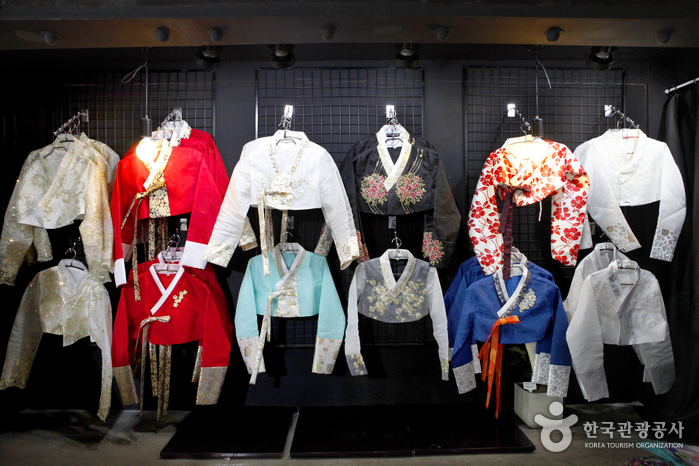
Hanboknam (한복남)
2.4Km 2021-01-27
17, Bukchon-ro 5ga-gil, Jongno-gu, Seoul
+82-10-6485-8507
Started in Jeonju in 2012, Hanboknam strived to promote the beauty of hanbok, earning recognition by the Ministry of Culture, Sports and Tourism in 2015. Following this, Hanboknam opened a hanbok exhibition and rental shop in the Bukchon area of Seoul in 2016. The shop provides customers with numerous styles of hanbok, from royalty to beggars. The rental shop also offers various accessories to pair with the different hanbok for a complete look.
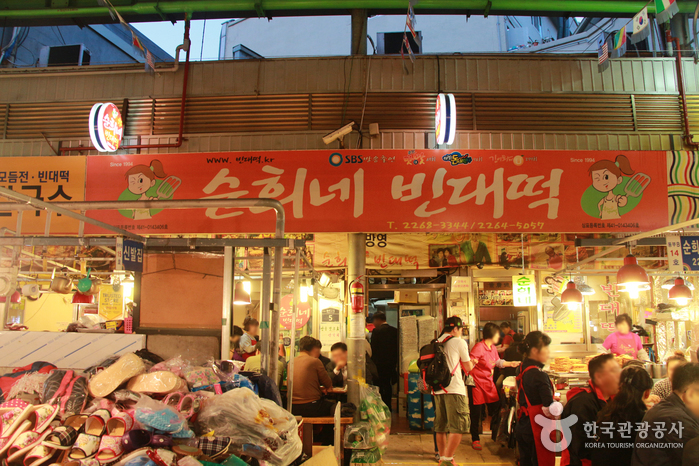
Soonheenae Bindaetteok (순희네빈대떡)
2.4Km 2024-03-20
5 Jong-ro 32-gil, Jongno-gu, Seoul
+82-2-2264-5057
Soonheenae Bindaetteok is a stall located in Gwangjang Market known for its mung bean pancakes and meatballs. Bindaetteok (mung bean pancake) is a dish made by grinding mung beans and mixing them with kimchi, bracken, and ground pork, then flattening and frying the mixture. Here, they grind mung beans on a millstone and fry the bindaetteok on the spot, resulting in a crispy and savory taste. The secret soy sauce dip complements the bindaetteok perfectly. Situated within the traditional market, the atmosphere is lively.
Jalppajin Memil Seochon Main Store (잘빠진메밀 서촌)
2.4Km 2024-03-18
4 Jahamun-ro 11-gil, Jongno-gu, Seoul
+82-70-4142-1214
Jalppajin Memil is a traditional Korean restaurant in Seochon where you can enjoy buckwheat noodles, boiled pork slices, and unrefined rice wine. They use 100% buckwheat for their noodles, which are kneaded using a cold water machine and served either mixed with seasoning and sprouts or dipped in broth. Pairing "Jalppajin sulsang" with unrefined rice wine is recommended for a delightful dining experience.
Vestis - Gyeongbokgung Branch [Tax Refund Shop] (베스티스 경복궁)
2.4Km 2024-04-18
1F, 17, Jahamun-ro 12-gil, Jongno-gu, Seoul
-
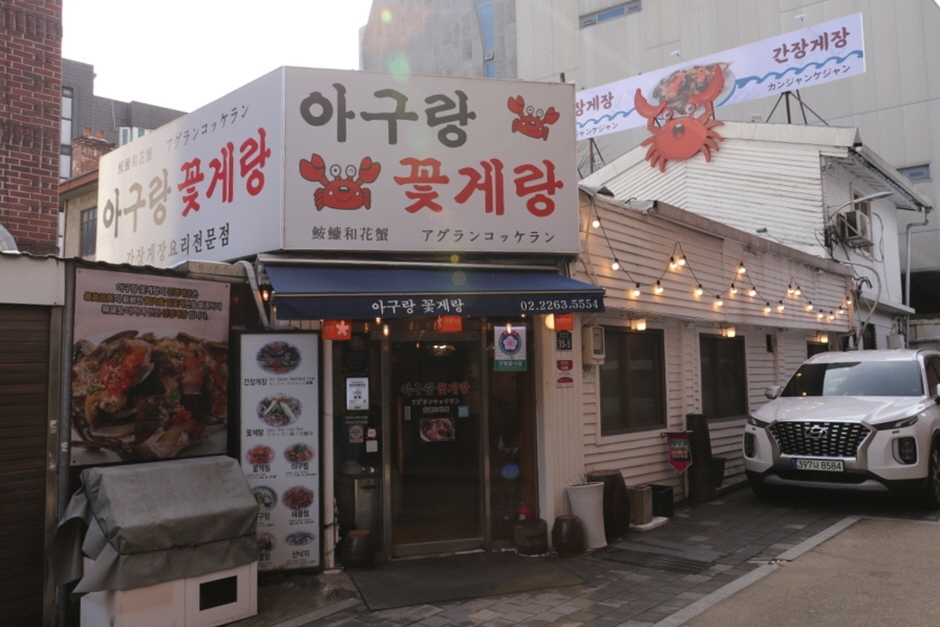
Agurang Kkotgerang (아구랑꽃게랑)
2.4Km 2024-03-08
35-7, Dongho-ro 24-gil, Jung-gu, Seoul
+82-2-2263-5554
This is a seafood restaurant specializing in Ganjanggejang (Soy sauce marinated crab). The crab is plump and seasoned to perfection, making it an excellent accompaniment to steamed rice. The restaurant’s Gulgukbap (Oyster and rice soup), a winter favorite, is enhanced with seaweed fulvescens, which is rich in vitamins and iron, making it beneficial for those suffering from anemia. Side dishes include Cheongpomukmuchim (Mung bean jelly salad), Kimchi, and Kongnamulmuchim (Bean sprout salad). Another popular item on the menu is the spicy Agutang (Monkfish soup), filled with springy monkfish.
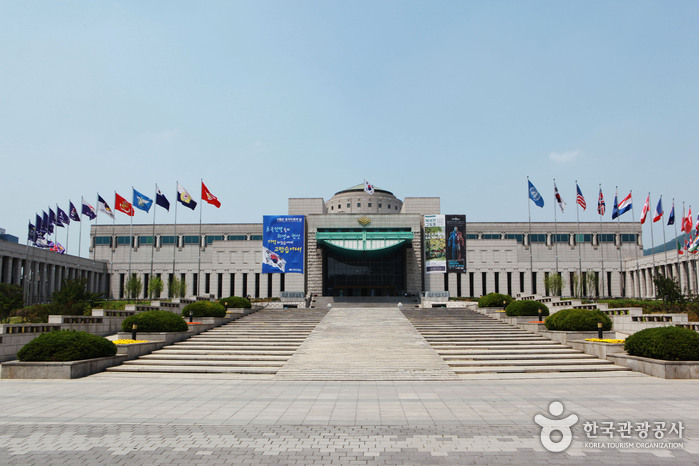
The War Memorial of Korea (전쟁기념관)
2.4Km 2022-12-29
29, Itaewon-ro, Yongsan-gu, Seoul
+82-2-709-3144
The War Memorial of Korea, located in Yongsan-gu, Seoul, exhibits and preserves materials related to the Korean War and serves as a national moral educational venue. It was established on June 10, 1994 by the War Memorial Service Korea Society to commemorate the noble sacrifice of patriotic martyrs. The museum houses approximately 33,000 artifacts with about 10,000 on display at indoor and outdoor exhibitions. There are six separate indoor halls, including Expeditionary Forces Room, Patriotic Memorial Room, War History Room, 6·25 Korean War Room, Development Hall and Large Machinery Room. The outdoor exhibition showcases large-sized weapons. Visitors of all ages from children to adults can also participate in 20 various educational programs and diverse cultural events such as military music and honor guard events, drawing contest, cultural event and more. The character of War Memorial of Korea is ‘Mudori’ featuring a helmet symbolizing the protection of the nation and a bay leaf meaning peace.
Song Won (송원)
2.4Km 2024-03-15
35-4 Dongho-ro 24-gil, Jung-gu, Seoul
+82-2-2275-3118
Song won is a Korean restaurant located in Jangchung-dong Gourmand Alley. They specialize in high-quality Korean beef barbecue such as bulgogi and galbi, seasoned with a variety of 20 different natural ingredients. Additionally, they offer traditional Korean dishes like hot stone pot rice and noodles. Across the street, visitors can find Jangchung-dong Jokbal Street, and both Jangchungdan Park and Jangchung Gymnasium are within walking distance.
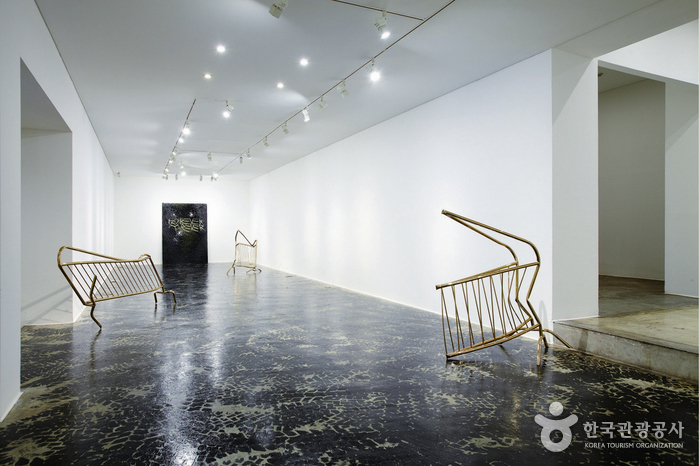
Kukje Gallery (국제갤러리)
2.4Km 2021-07-29
54, Samcheong-ro, Jongno-gu, Seoul
+82-2-735-8449
The Kukje Galley has been committed to presenting the work of significant Korean and international contemporary artists to the public since 1982. The gallery has established itself as a leading venue for international exhibits such as Helen Frankenthaler, Sam Francis, Jim Dine, Frank Stella, Robert Mangold, Anthony Caro, Cy Twombly, Edward Ruscha, Anselm Kiefer, Joseph Beuys, and Bill Viola, attracting enthusiastic responses from both the public and the media.
The gallery has placed emphasis on collaborations between artists, galleries, and art dealers around the world and nurturing upcoming artists by sponsoring their artwork and giving them international exposure.
JaneDMCKorea (주)제인디엠씨코리아)
2.4Km 2025-10-23
(4th Floor), 51 Mallijae-ro, Mapo-gu, Seoul
Jane DMC Korea is an inbound travel agency and international patient recruitment organization established in 2006. Headquartered in Seoul, with branch offices in Busan, Indonesia, and India, the company develops and sells programs for international clients in 40 countries while also attracting international patients.
 English
 한국어
한국어 日本語
日本語 中文(简体)
 Deutsch
 Français
 Español
 Русский


