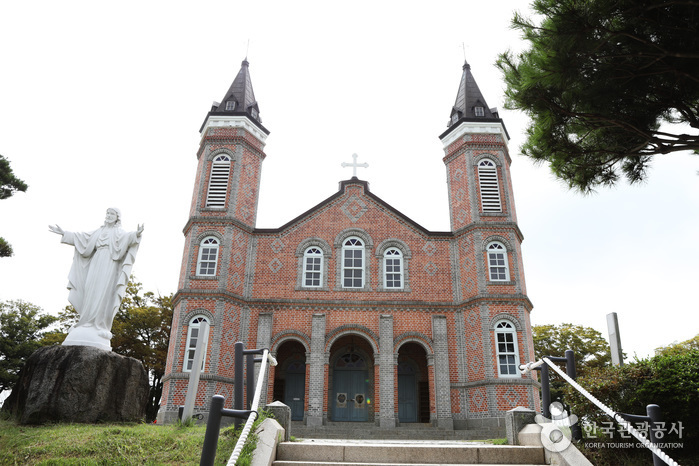
Hamdeok Catholic Church (합덕성당)
18.2Km 2023-06-22
16 , Hapdeokseongdang 2-gil, Dangjin-si, Chungcheongnam-do
Hamdeok Catholic Church was built in 1929 in the gothic style. The church started out as Yangchon Catholic Church in Sanggung-ri, but was moved to the current location by the priest, and renamed Hamdeok Catholic Church. The name was later changed to New Apdeok Catholic Church before being returned to the current Hamdeok Catholic Church.

Hapdeokje Reservoir (합덕제)
18.3Km 2023-07-17
395 Hapdeok-ri, Hapdeok-eup, Dangjin-si, Chungcheongnam-do
Hapdeokje is a reservoir located in Dangjin, Chungcheongnam-do. Designated as a Chungcheongnam-do Monument in 1989, it is known to have been built in the late Unified Silla period for the irrigation of Yedang Plain (Sodeulgangmun Gate). It attracts many tourists in spring with cherry blossoms and canola flower blossoms and in summer with lotus flowers in full bloom. The Hapdeokje Ecotourism Experience Center (opened in 2021) and Hapdeok Folk Irrigation Museum are located nearby, so you can stop by when traveling in the area.
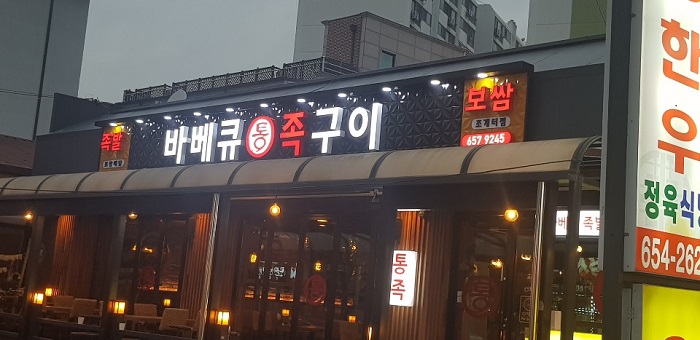
Jeongseoktong Barbeque Tongjokgui Jogaeteo(정석통바베큐통족구이 조개터)
18.7Km 2024-10-15
133, Jungang, 2-ro, Pyeongtaek-si, Gyeonggi-do
It is a barbecue-flavored Jokbal (pig’s feet) restaurant. This Korean dishes restaurant is located in Pyeongtaek-si, Gyeonggi-do. The most famous menu is braised pigs' feet.
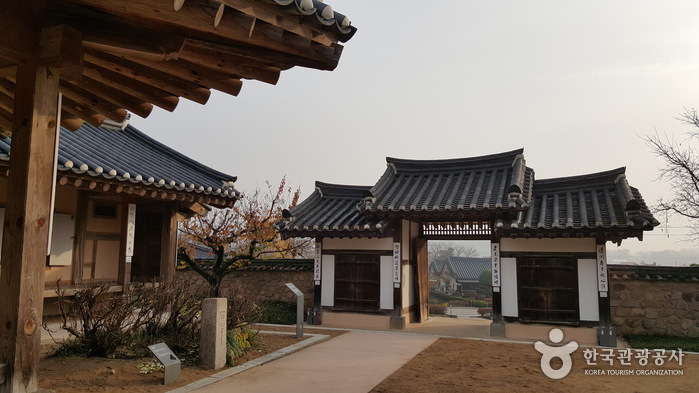
House of Chusa (추사고택)
19.7Km 2022-12-28
261, Chusagotaek-ro, Yesan-gun, Chungcheongnam-do
House of Chusa, Chusa Gotaek in Korean, is the traditional Korean house of the renowned scholar and calligrapher Chusa, also known as Kim Jeong-hui. This old house is known to have been constructed by the great-grandfather of Chusa, Kim Han-Sin.
The Korean-style house compound (266.11 m²) consists of munganchae (a guesthouse), soseuldaemun (a high gate), sarangchae (ㄱ-shaped men's quarters), anchae (ㅁ-shaped women’s quarters) and a shrine where the remains of Chusa are enshrined. Theㄱ-shaped Sarangchae stretches for one kan (traditional measuring unit) to the south and 2 kans to the east and is comprised of two rooms and a daecheongmaru (living area). The Anchae consists of a six-kan daecheongmaru and two one-kan rooms.
Located on the ground is a tomb where Chusa’s great-grandfather (Kim Han-Sin) and his wife (Hwasun Princess) are buried. Nearby, visitors will see a gate that was constructed to commemorate Princess Hwasun’s faithfulness to her husband.
Located approximately 600 meters to the north of the old house is a lacebark pine tree, which was designated as a Natural Monument. The lacebark pine tree, originally from northern China, is among the few of its kind in Korea. It is said that Chusa snuck the pine across the border from China (formerly, the Qing dynasty) into the country when he was 25 years old and planted it at the tomb of his great-grandfather. Originally, the tree had three branches, but two were broken and the third branch was damaged. In 1980, the damaged branch was treated and since then, the tree has been kept under strong protection.
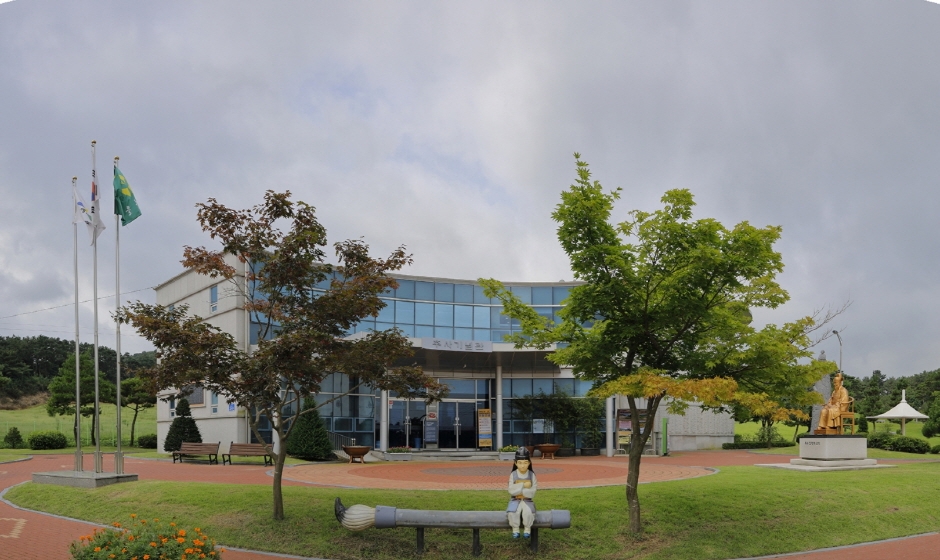
Chusa Memorial Hall (추사기념관)
19.7Km 2024-12-27
Chusa Memorial Hall opened in 2008, holds works of Chusa Gim Jeong-hui including his arts, epigraphy, calligraphy and more. The memorial hall preserves and exhibits Chusa Gin Jeong-hui's works to show future generations about his achievements.
House and Tomb of Kim Jeong-hui (추사김정희선생고택·묘)
19.7Km 2024-02-21
261, Chusagotaek-ro, Sinam-myeon, Yesan-gun, Chungcheongnam-do
This house and tomb are where Kim Jeong-hui (pen name: Chusa, 1786-1856), a Joseon-era scholar and artist, lived and was laid to rest. Chusa Memorial Hall and Chusa Experience Center are found next to the house. After studying in Qing China, Kim Jeong-hui served in multiple government posts. He is best known for his unique calligraphical style, which bears his courtesy name (Chusa), and many works of art that survive to this day. The Experience Center offers traditional art experiences inspired by Kim Jeong-hui’s works.
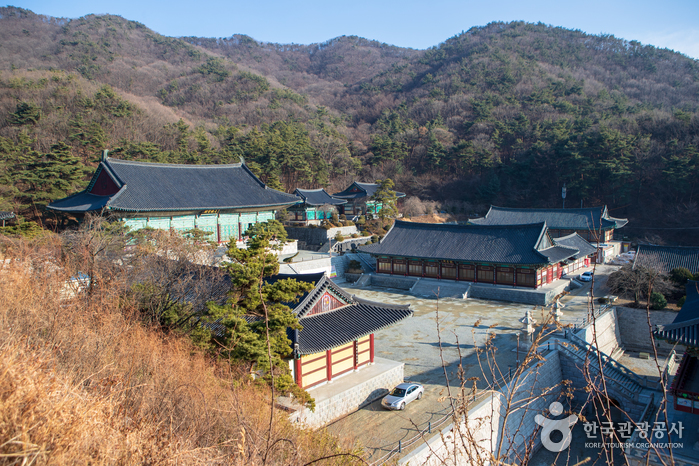
Gakwonsa Temple (각원사)
20.0Km 2024-03-15
245 Gagwonsa-gil, Dongnam-gu, Cheonan-si, Chungcheongnam-do
Gakwonsa Temple, nestled midway up Taejosan Mountain in Cheonan, stands as a beacon of hope for the peaceful reunification of Korea. The temple's most renowned feature is the immense bronze statue of the seated Amitabha Buddha, which measures 15 meters in x_height, 30 meters in circumference, and weighs 60 tons. Additionally, Gakwonsa Temple is distinguished by its Daeungjeon Hall, the largest Dharma Hall in Korea. The temple's Gaesan Memorial Hall houses a collection of artifacts associated with the temple.
 English
 한국어
한국어 日本語
日本語 中文(简体)
 Deutsch
 Français
 Español
 Русский


