
Ohkims Dermatology Clinic (오킴스피부과의원)
18.9Km 2025-10-23
(10th Floor, New Samchang Building), 123 Gangseok-ro, Ilsandong-gu, Goyang-si, Gyeonggi-do
Ohkims Dermatology Clinic is a hospital that continues to strive, study, and stay ahead of the curve with a constant touch of care so that you can enjoy every moment as the best time of your life.
We are staffed exclusively by dermatology specialists.
Dr. Cho Hang-rae is a board-certified dermatologist and doctor of dermatology with a specialty in hair transplantation surgery. During his international residency in cosmetic dermatology at Mount Sinai University Hospital in Manhattan, New York City, he studied hair transplantation under Dr. Unger, a world-renowned hair transplantation expert.
Ohkims Dermatology Clinic also winds back time.
Our “Secret Well Aging Program” is different.
With over 20 years of experience in the field of wellness aesthetic treatments, we are committed to achieving constant innovation based on our 20 years experience and delivering a sophisticated touch of skin science masters under the leadership of Dr. Cho Hang-rae.
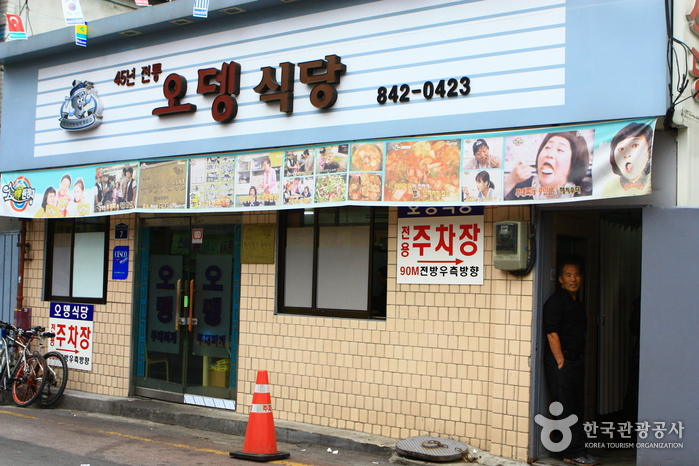
Odeng Sikdang Uijeongbu Main Branch (오뎅식당)
19.1Km 2024-12-06
7, Hoguk-ro 1309beon-gil, Uijeongbu-si, Gyeonggi-do
The origins of Uijeongbu’s budaejjigae (Sausage Jjigae) tradition trace back to a humble food stall, now operated by the third generation. As budaejjigae grew in popularity, this modest stall evolved into a dedicated restaurant specializing in the iconic dish.
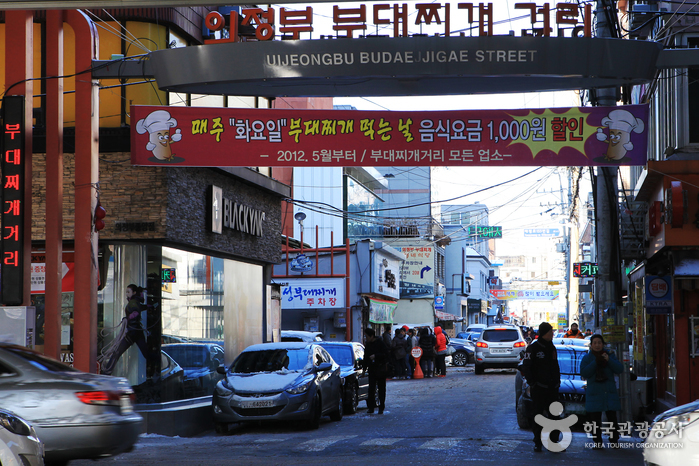
Uijeongbu Budaejjigae Street (의정부 부대찌개거리)
19.1Km 2023-10-27
7, Hoguk-ro 1309beon-gil, Uijeongbu-si, Gyeonggi-do
The word “budaejjigae” has two parts: “budae”, or military unit, and “jjigae,” a dish made by boiling ingredients and stock in a pot. It originates from the post-Korean War period, where processed meat from US Army bases was made into a jjigae with vegetables, glass noodles, ramyeon, and the like. While the exact origin of the dish is difficult to establish, a strong tradition of sausage jjigae was established in Uijeongbu, thanks to its proximity to US Army bases. These geographical characteristics created today’s Uijeongbu Budaejjigae Street. Starting with Odeng Sikdang, the origin of the street, restaurants specializing in sausage jjigae entered the area, creating a specialized street and a landmark of Uijeongbu.
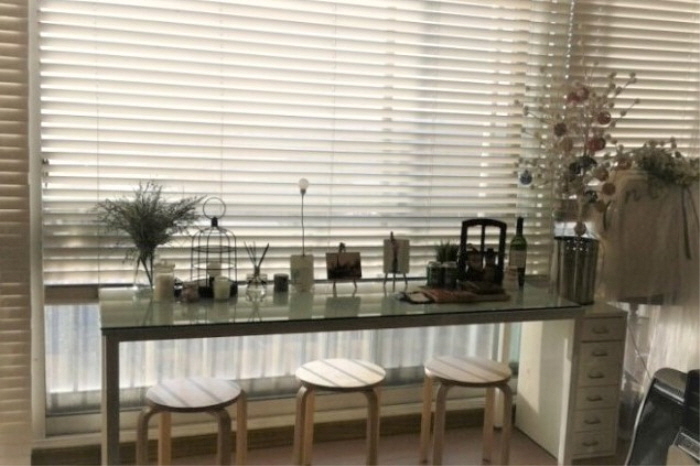
House of Flowers and Lake / 꽃과 호수의 집
19.1Km 2025-03-05
79 , Norumok-ro, Ilsandong-gu, Goyang-si, Gyeonggi-do
The House of Flowers and Lakes is a homestay in an apartment in Ilsan, Seoul Capital Area. There are two rooms: Narcissus has a double bed, private bathroom, and a terrace, while Moss Rose has two single beds and simpler furniture. The owner loves travelling, and souvenirs from around the world are on show in the shared kitchen and living room. A simple breakfast is provided free of charge. The apartment is close to Madu Station on Subway Line 3 and Baekma Station on the Gyeongui-Jungang Line. Nearby destinations such as KINTEX and Haengjusan Fortress are a 20-minute drive away.
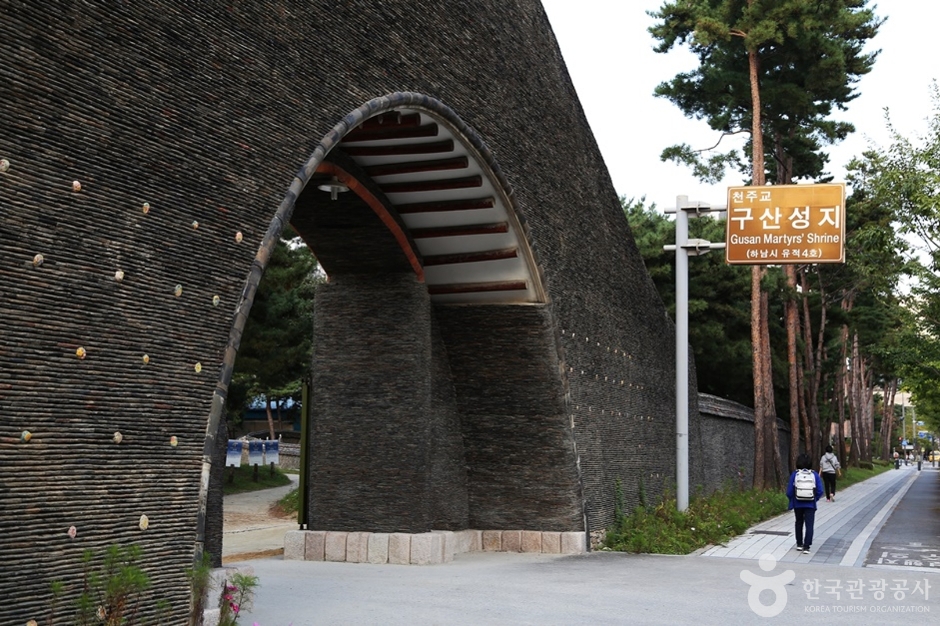
Gusan Martyrs' Shrine (구산성지)
19.2Km 2024-02-08
387-16 Mangwol-dong, Hanam-si, Gyeonggi-do
Gusan Martyrs' Shrine, located in Gusan Village, named for its turtle-shaped mountain, is a Catholic holy site. It houses the graves of nine martyrs, including Kim Seongwoo Antonio. The history of the martyrs, their persecution, and their lives, imbued with a spirit of martyrdom, attract Catholic pilgrims to the site. The area's picturesque landscaping also makes it a favored location for TV drama, commercial, and film productions.
The Catholic University of Korea Bucheon St. Mary’s Hospital (가톨릭대학교 부천성모병원)
19.2Km 2025-10-23
327 Sosa-ro, Wonmi-gu, Bucheon-si, Gyeonggi-do
The Catholic University of Korea Bucheon St. Mary's Hospital is the first university hospital in Bucheon. Since its opening in 1958, it has used leading medical technology and has contributed to the local community healthcare development and health promotion.
We will expand our multidisciplinary medical treatment so that patients' emotions can be embraced, and we will showcase our advanced patient-centered hospital.
Chung-Ang University Gwangmyeong Hospital (중앙대학교광명병원)
19.3Km 2025-11-06
110 Deokan-ro (Iljik-dong), Gwangmyeong-si, Gyeonggi-do
Chung-Ang University Gwangmyeong Hospital is a general medical institution with approximately 700 beds. Opened in March 2022, the hospital has a total floor area of 97,000㎡ and consists of 14 floors above ground and 8 floors underground.
The hospital operates around six specialized clusters for critical care: Cancer Hospital, Cardiovascular & Cerebrovascular Hospital, Respiratory & Allergy Center, Digestive Disease Center, Spine Center, and Joint Center. With leading specialists in each field and state-of-the-art medical equipment, it provides advanced treatments and multidisciplinary care.
Recognized as a “hospital specializing in surgery,” Chung-Ang University Gwangmyeong Hospital plays a central role in the metropolitan critical care system. It leads the digital transformation of healthcare by harmonizing digital healthcare with public health services, strengthening its position as a highly competitive medical institution. Moving forward, the hospital will continue to pursue patient-centered medical innovation and strive to become a next-generation hospital that represents not only the Seoul metropolitan area but also the Republic of Korea.
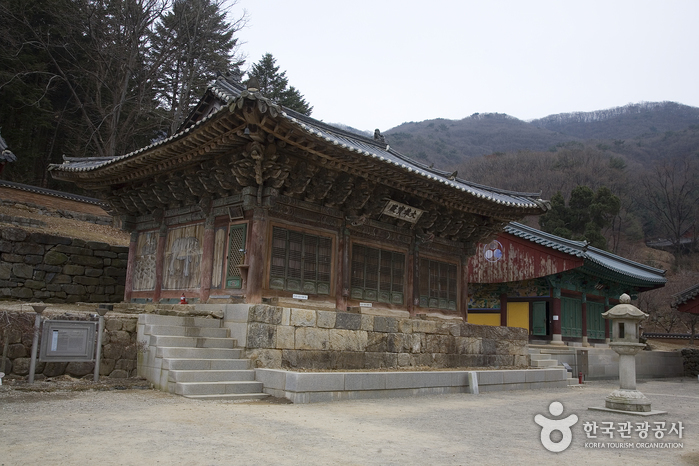
Paju Bogwangsa Temple (보광사(파주))
19.4Km 2021-09-10
87, Bogwang-ro 474beon-gil, Paju-si, Gyeonggi-do
Bogwangsa Temple is a traditional temple located on the foothills of Goryeongsan Mountain in Paju. It was built by Great Monk Doseonguksa during the Silla Kindom period under the order of Queen Jinseong in AD 894. At the time, it was considered a hidden national treasure and one of the six grand temples located on the northern side of the Hangang River. In was once ruined during the Imjin War, and reconstructed in 1622 by Monk Seolmi and Monk Deogin. In 1667, Monk Jigan and Monk Seok Ryeon reconstructed Daeungbojeon Hall and Gwaneumjeon Hall.
Songa Myeonok (손가면옥)
19.4Km 2024-10-15
313 Sinheung-ro, Wonmi-gu, Bucheon-si, Gyeonggi-do
Established in 1994, Songa Myeonok is a renowned naengmyeon (cold buckwheat noodles) restaurant in Bucheon. Its signature dishes include bibim naengmyeon (spicy buckwheat noodles) and hoe naengmyeon (cold buckwheat noodles with raw fish). These dishes are celebrated for their chewy noodles and a refreshing blend of sweet and sour seasonings. Boasting a spacious parking lot and a comfortable interior, the restaurant is a popular choice for family outings and group gatherings.
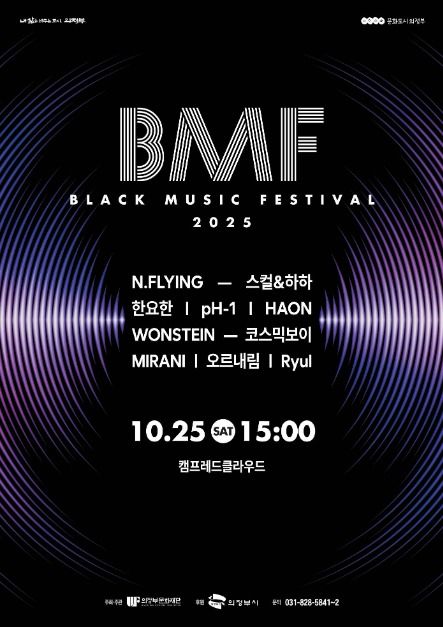
Black Music Festival (BMF) (2025 제7회 BMF(블랙뮤직페스티벌))
19.5Km 2025-10-23
Ganeung-dong, Uijeongbu-si, Gyeonggi-do
+82-31-828-5841
The Black Music Festival feature performances across various genres, including hip hop, R&B, soul form both local artists and international artists. Along with performances, visitors can enjoy various cultural events and hands-on experience programs.
 English
 한국어
한국어 日本語
日本語 中文(简体)
 Deutsch
 Français
 Español
 Русский


