Bugeogukjip (북어국집)
1.8Km 2024-12-27
38, Eulji-ro 1-gil, Jung-gu, Seoul
+82-2-777-3891
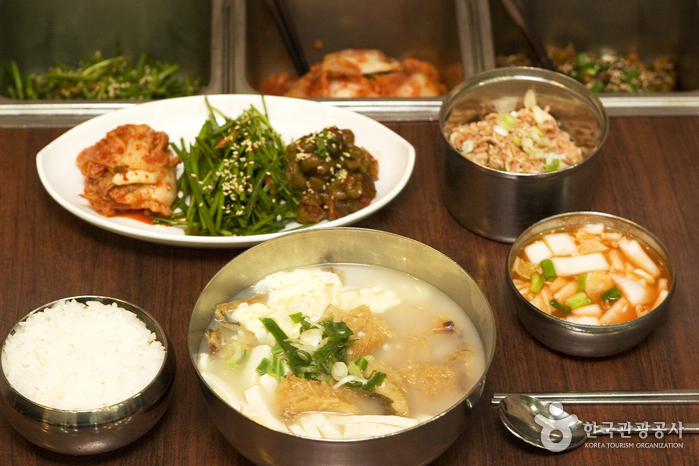
Bugeogukjip (formerly “Teojutgol”) is a restaurant behind City Hall in Seoul that has been serving up authentic dried Pollack soup since 1968. Despite a name change, the restaurant has proudly stood in this same location for decades, earning a strong reputation for its dried Pollack soup made using traditional cooking methods.
Since the restaurant only serves one thing—dried Pollack soup—there are few preparations to be made and the meal arrives on your table in minutes. Customers are free to serve themselves basic side dishes such as kimchi and can have as many servings of rice as they’d like, allowing diners to enjoy a hearty meal at a low price. While the restaurant’s design and menu may be simple, Bugeogukjip takes pride in its long history and the careful efforts that have earned it a reputation as one of the most notable restaurants in Seoul.
Nakseonjae Hall (낙선재)
1.8Km 2021-09-30
99, Yulgok-ro, Jongno-gu, Seoul
+82-2-2148-1822
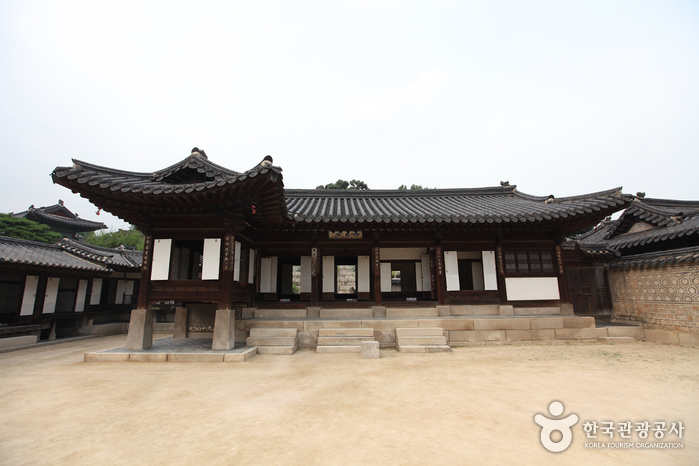
Located inside Changdeokgung Palace, Nakseonjae Hall is a one-story structure built in ikgong style (bird wing-shaped eaves placed on top of the pillars) with a hip tiled and gable roof. It has 6 kan in the front and 2 kan (traditional unit of measurement of the space between pillars) to the sides. It originally belonged to the nearby Changgyeonggung Palace, but came to be considered a part of Changdeokgung Palace in more recent years.
The hall was constructed in 1846 (12th year of King Heonjong’s reign) and it is collectively called Nakseonjae together with the adjacent Seokbokheon Hall and Sugangjae Hall.
Behind the building is a flower garden made of stacked large stones. The chimney, the flowers, and the oddly shaped stones harmoniously blend into one another to create an outstanding landscape gardening.

Bukjeong Village (북정마을)
1.9Km 2024-02-15
132-3 Seongbuk-ro 23-gil, Seongbuk-gu, Seoul
Bukjeong Village, situated along the slopes of Seongbuk-dong, offers a glimpse into Korea's old alleyways. The village expanded as refugees from the Korean War (1950–1953) and people from various regions settled, building houses under the collapsed walls of Hanyang doseong (Seoul City Wall). Presently, the village is home to young artists, and the broad street in front of the village bus stop hosts various community events.
Ojugine (오죽이네)
1.9Km 2024-12-10
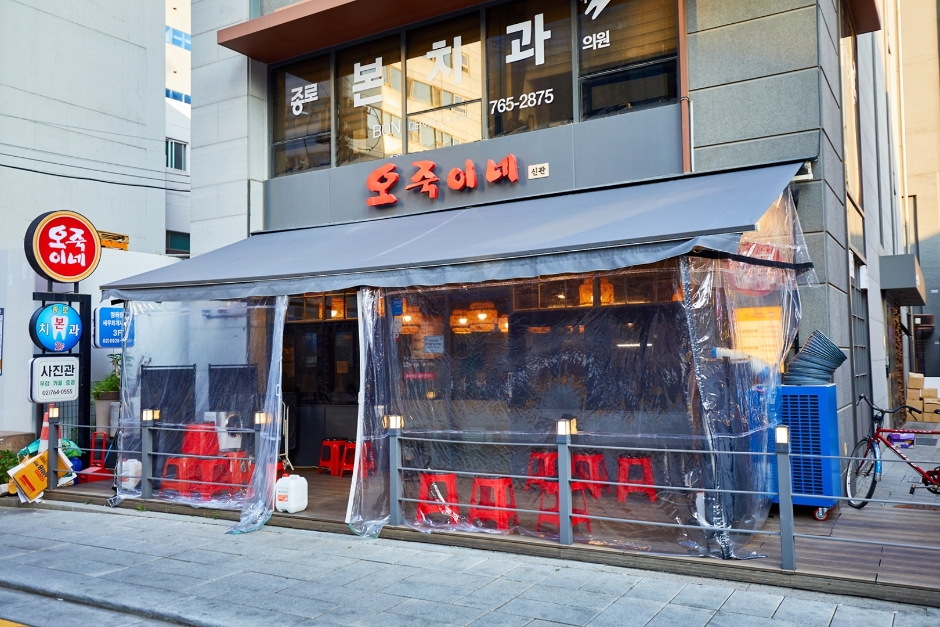
Ojugine is a restaurant that specializes in dak maeuntang, a spicy chicken stew that is different from dak bokkeumtang (spicy braised chicken), as the former has more soup than the latter. The stew is served whilst boiling, so one just needs to let it sit for a bit on the table before digging in. The spicy sauce and chicken are a match made in heaven, and the same goes for this dish. Interestingly, Ojugine uses smaller chickens to prepare their dishes, so the flesh braises in the stock faster. The resulting combination is sure to offer a memorable meal. Any remaining soup can be reused as a sauce for fried rice after the main meal, so visitors are advised to leave some space in their stomach.
Jungmyeongjeon Hall (중명전)
1.9Km 2025-01-09
41-11, Jeongdong-gil, Jung-gu, Seoul
+82-2-752-7525
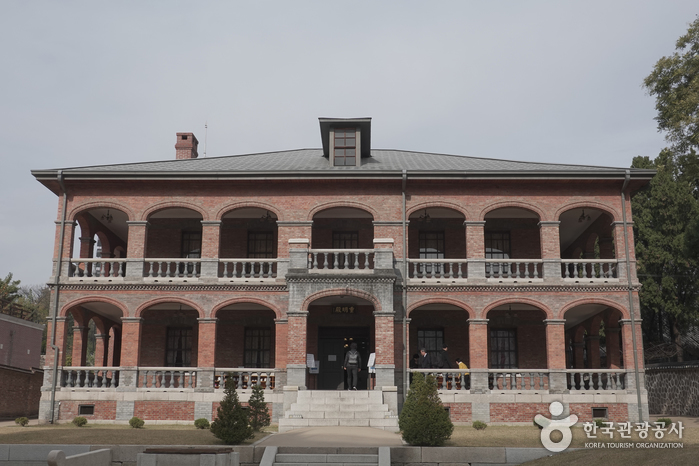
Located near Deoksugung Palace, Jungmyeongjeon Hall is a red-brick modern Western-style building. It was built in 1899 as the imperial library of the Korean Empire. After Deoksugung Palace caught on fire in 1904, the place became the temporary residence of Emperor Gojong. It also witnessed the tragic part of history in which the infamous Eulsa Treaty (Japan-Korea Protectorate Treaty), an illegal treaty forced by Japan, was signed in 1905. Its exhibition hall serves as a place for historical education.
Dongnimmun Gate (독립문)
1.9Km 2022-12-15
251, Tongil-ro, Seodaemun-gu, Seoul
Dongnimmun stands at the location originally known as Yeongeun, where envoys were once treated. When a Chinese envoy visited, the King would go out through this door to greet. In 1898, to announce the independence from Japan, Dongnimun was constructed with the fund collected by the citizens. The traces of the past still remain on Dongnimmun with two pillars in front of Dongnimmun being the remains of Yeongeunmun.
The Arc de Triomphe in France can be recalled in comparison to Dongnimmun. Dongnimmun was built using granite with a passageway x_height of 14.28 meters. On the top it is written ‘Dongnimmun’ in Korean with the national flag drawn on each side. On the inner-left side there are stone stairs leading to the attic. The national flower Mugunghwa are planted around Dongnimmun. Now it is surrounded by roads and it is eye-catching to view when passing by.
Tapgol Park (탑골공원)
1.9Km 2024-03-04
99, Jong-ro, Jongno-gu, Seoul
+82-2-731-0534
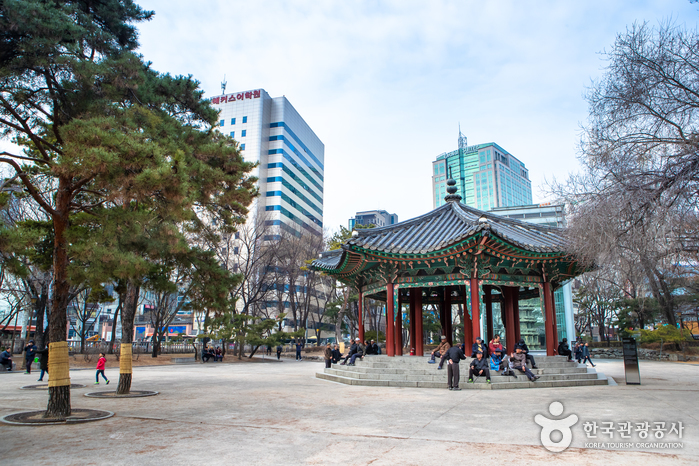
Tapgol Park is the first modern park in Seoul. Having been the site of the Buddhist temple of Wongaksa Temple since 1467, the land was turned into a park in 1897. The park has a significant presence in Korean history, being the place where the March 1 Independence Movement began in 1919. One can find historical sites that hearken back to the struggle, such as the Palgakjeong Pavilion, the center of the movement; cultural heritage sites such as the Ten-story Stone Pagoda of Wongaksa Temple Site and the Stele for the Construction of Daewongaksa Temple at Wongaksa Temple Site; and monuments such as the independence movement relief plate, murals, the statue of Son Byeong-hee, and the statue of Han Yong-un.
Changgyeonggung Palace Honghwamun Gate (창경궁 홍화문)
1.9Km 2021-05-27
99, Yulgok-ro, Jongno-gu, Seoul
+82-2-762-4868
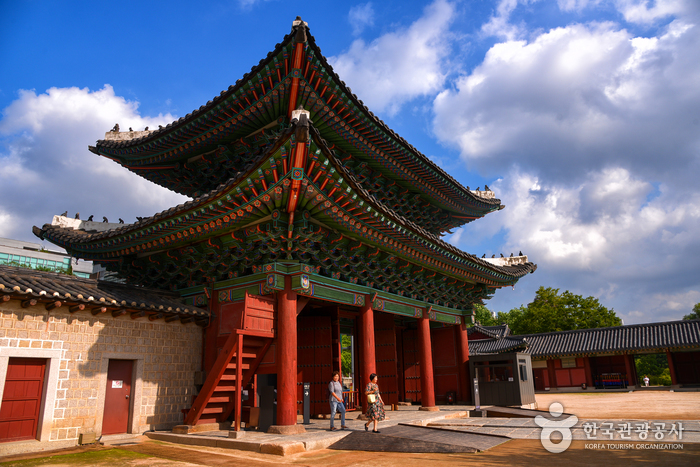
Honghwamun Gate is the main gate of Changgyeonggung Palace. It has three opening gates in the front and two to the side with a sophisticated locking mechanism.
Seodaemun Prison History Museum (서대문형무소역사관)
1.9Km 2024-12-02
251 Tongil-ro, Seodaemun-gu, Seoul
Seodaemun Prison was built under the Japanese administration to imprison independence movement activists. It first opened on October 21, 1908 under the name Gyeongseong Prison. Eventually, so many activists were imprisoned that the building had to be expanded. At that time, the name changed to Seodaemun Prison on September 3, 1912. Eighty years later, the prison was turned into Seodaemun Independence Park on August 15, 1992 to commemorate the Korean patriots who were tortured in prison, giving their lives for freedom. Of the many buildings, only seven were preserved for their historical significance, among which three prison buildings and the execution site were designated as a Historic Site. In 1998, the park underwent another transformation into today's Seodaemun Prison History Hall to educate the public on the importance of Korea's independence and the sacrifices of those who fought to achieve it.
 English
 한국어
한국어 日本語
日本語 中文(简体)
 Deutsch
 Français
 Español
 Русский


