
Boan1942 (보안1942)
215.7M 2023-08-17
33 , Hyoja-ro, Jongno-gu, Seoul
Prior to becoming an art space in 2007, Tongui-dong Boan served as a place for rest for travelers from 1942 to 2005. After a short suspension, the place was renovated into a cultural space in 2017 to carry on the historical legacy and provide creative inspiration under the concept of "Boanstay."
Boan1942 is divided into a cultural space consisting of a cafe, project workshop, book shop, and exhibition area, and Boanstay on the 3rd and 4th floors that offer temporary lodging services to the cultural nomads. Located in Seochon, the center of culture, history, and convenient traffic in Seoul, Boanstay offers a splendid view of Seoul's historical and cultural assets such as Gyeongbokgung Palace, Cheong Wa Dae, and Seochon Hanok Village.
<Credit: Boanstay>
![Seochon Guest House [Korea Quality] / 서촌게스트하우스 [한국관광 품질인증]](http://tong.visitkorea.or.kr/cms/resource/86/2998986_image2_1.jpg)
Seochon Guest House [Korea Quality] / 서촌게스트하우스 [한국관광 품질인증]
294.3M 2023-09-05
28-3 , Jahamun-ro 7-gil, Jongno-gu, Seoul
+82-2-473-9680
Seochon Guest House in Seochon, Jongno, Seoul, consists of a 90 year-old hanok and a two-story Western-style house. A 6-cheop table is provided for meals, and travelers can use the 1st floor rooms and hall at any time. In the yard, Pansori performances are held twice a year, and residents can sample traditional music, wearing hanbok, and making Korean food; the guesthouse’s other name is Pleasure Valley (Jaeminan Gol)! There are programs for visiting Inwangsan-Bukaksan fortress trail, Gyeongbokgung and other royal palaces, and nearby traditional markets.
Jalppajin Memil Seochon Main Store (잘빠진메밀 서촌)
332.0M 2024-03-18
4 Jahamun-ro 11-gil, Jongno-gu, Seoul
+82-70-4142-1214
Jalppajin Memil is a traditional Korean restaurant in Seochon where you can enjoy buckwheat noodles, boiled pork slices, and unrefined rice wine. They use 100% buckwheat for their noodles, which are kneaded using a cold water machine and served either mixed with seasoning and sprouts or dipped in broth. Pairing "Jalppajin sulsang" with unrefined rice wine is recommended for a delightful dining experience.
Vestis - Gyeongbokgung Branch [Tax Refund Shop] (베스티스 경복궁)
332.5M 2024-04-18
1F, 17, Jahamun-ro 12-gil, Jongno-gu, Seoul
-
Gwanghwamun Gate (광화문)
360.7M 2024-12-04
161 Sajik-ro, Jongno-gu, Seoul
+82-2-3700-3900
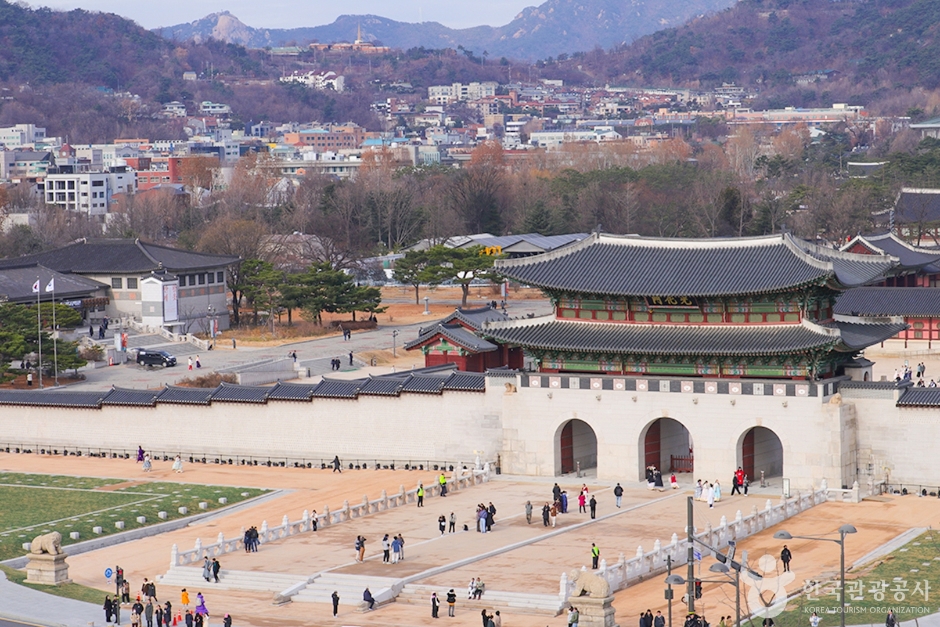
Built in 1395 under the reign of King Taejo, the first king of the Joseon dynasty, Gwanghwamun Gate is the southern gate of Gyeongbokgung Palace. It is also the main gate of the palace, therefore larger and fancier in comparison to the other gates. Gwanghwamun Gate consists of three arched gates; the center gate was used by the king, while the other two were used by the crown prince and royal officials. The tall granite walls of the gate serve as a platform for the wooden gate tower that watches over the city. The gate has a sign with its name written at the top center of the gate tower.
Gwanghwamun Gate went through several damages and restorations over the course of history. It was first severely damaged during the Imjin War (1592-1598) and was not restored until the reconstruction of Gyeongbokgung Palace in 1864. Under the Japanese administration, the gate was demolished and relocated to the north of the palace's eastern gate, followed by series of damages during the Korean War (1950-1953). In 1968, Gwanghwamun Gate was relocated back to the south of the palace and was rebuilt using concrete; however, the gate’s position was shifted a few meters away from its original location. In 2006, a major reconstruction project took place to restore Gwanghwamun Gate to its original state and location, disassembling the structure completely and replacing concrete with granite and wood. After three years and eight months of construction, Gwanghwamun Gate was fully restored to its original form and was open to the public on August 15, 2010.
![CheongKwanJang - Gwanghwamun Branch [Tax Refund Shop] (정관장 광화문)](http://tong.visitkorea.or.kr/cms/resource/93/2889693_image2_1.jpg)
CheongKwanJang - Gwanghwamun Branch [Tax Refund Shop] (정관장 광화문)
370.3M 2024-04-22
20, Sajik-ro 8-gil, Jongno-gu, Seoul
-
Gyeongbokgung Palace (경복궁)
390.5M 2025-10-23
161 Sajik-ro, Jongno-gu, Seoul
+82-2-3700-3900
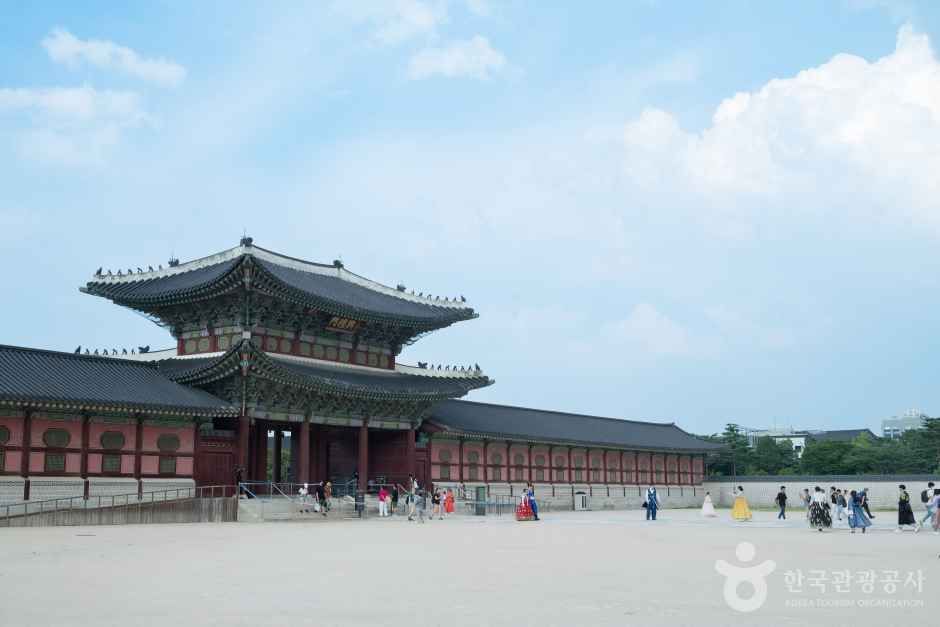
Gyeongbokgung Palace was built in 1395 as the official palace of the Joseon dynasty by Yi Seong-gye, the future King Taejo and founder of the new regime. Gyeongbokgung Palace is commonly referred to as the Northern Palace because of its location to the north, comparied to Changdeokgung Palace in the east and Gyeonghuigung Palace in the west. Gyeongbokgung Palace is arguably the most beautiful and is the largest of all five palaces. Many Joseon kings were crowned here. The premises were once destroyed by fire during the Imjin War (1592-1598). However, all of the palace buildings were later restored under the leadership of Heungseondaewongun during the reign of King Gojong. The assassination of Empress Myeongseong, however, resulted in Gyeongbokgung Palace losing its function as a royal palace, eventually witnessing the downfall of the Joseon dynasty. Gyeongbokgung Palace retains the original Gyeonghoeru Pavilion, a prime example of Joseon architecture, and the Hyangwonjeong Pavilion and pond. The sculptures in the Geunjeongjeon Hall exemplify Joseon-era sculpture techniques. The west side of the area outside Heungnyemun Gate is occupied by the National Palace Museum of Korea, while the eastern side of Hyangwonjeong Pavilion within the Gyeongbokgung Palace is occupied by the National Folk Museum of Korea.
K-Royal Culture Festival (궁중문화축전)
390.5M 2025-07-29
161 Sajik-ro, Jongno-gu, Seoul
+82-1522-2295
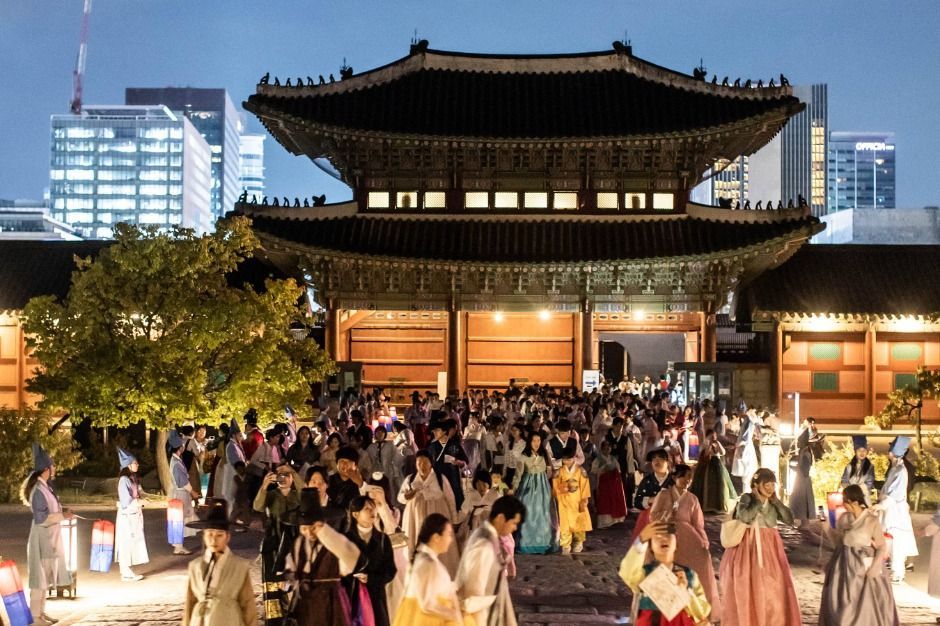
The K-Royal Culture Festival is held at the five Royal Palaces and Jongmyo Shrine. The festival first began in 2014 and provides visitors with first-hand knowledge of these important cultural heritages through unique performances, exhibitions, experiences and programs. The festival expanded in 2021 to be hosted twice a year, in spring and in fall.
Of one book and stay (일독일박)
421.5M 2024-12-23
11-1 , Pirundae-ro 3-gil, Jongno-gu, Seoul
+82-504-0904-2340
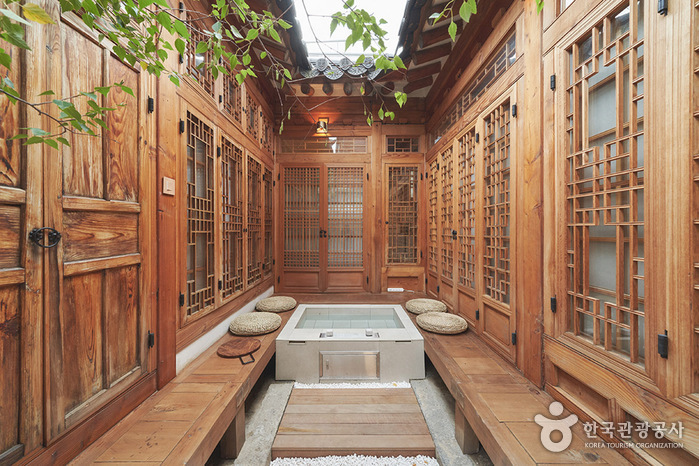
Ildogilbak in Seochon Village, Seoul, is a private hanok stay that has been stylishly renovated with modern facilities. The bedroom, kitchen and dining room are located around the courtyard. Tired travellers can soak their feet in the small courtyard footbath while sitting on the veranda. There’s a queen size bed in the bedroom, and a large table in the dining room where you can read a book and chat. There is also an attic space where you can fall asleep looking at the stars through a small skylight. The kitchen is well equipped, and there’s a tub in the bathroom.
Hanok Guesthouse Dongchonchae (한옥 게스트하우스 동촌재)
424.8M 2024-12-23
21-10 , Jahamun-ro 11-gil, Jongno-gu, Seoul
+82-10-8561-5227, +82-10-9127-5227
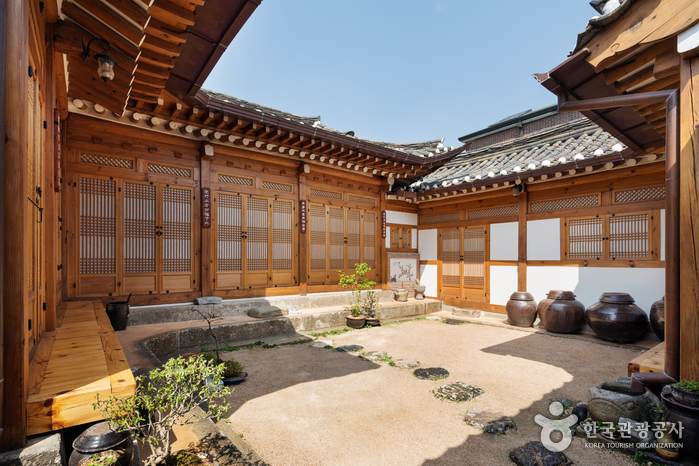
Dongchonjae is a hanok guesthouse in Seochon, Jongno, Seoul. The the Anchae(women's quarters) consists of four sleeping rooms and a cheongmaru lounge space, plus kitchen and toilet. (There are also shared toilets in the yard.) Cooking is not allowed, but guests are welcome to bring in prepared food. A free breakfast is provided. Guests can watch movies in the yard or main hall, and can use the refrigerator and washing machine. A guided night tour of Seoul City Wall is offered, as is a tea ceremony, and rice-cake making experience.
 English
 한국어
한국어 日本語
日本語 中文(简体)
 Deutsch
 Français
 Español
 Русский


