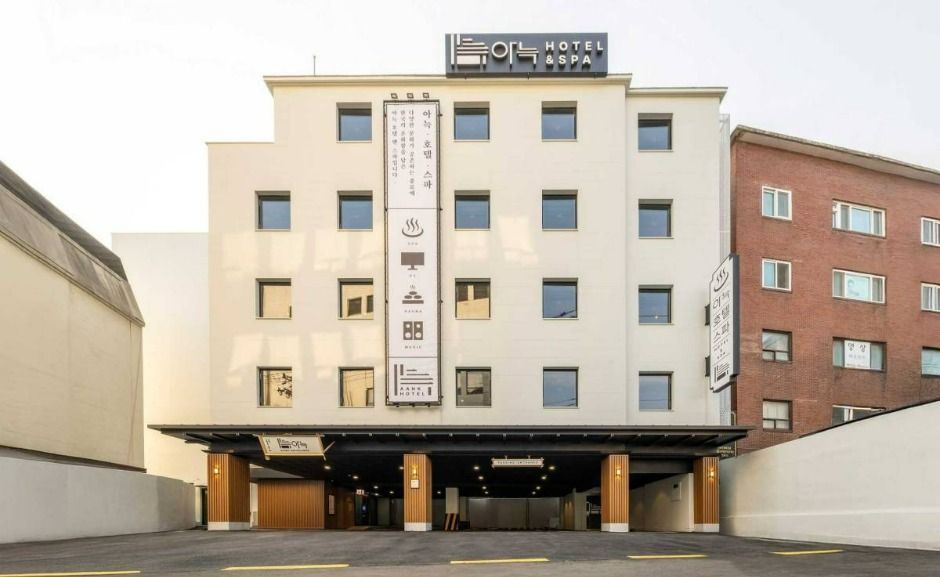
Aank Hotel & Spa Jongno Unni Branch (아늑호텔 앤 스파 종로운니점)
1.5Km 2025-04-24
89 Donhwamun-ro 11ga-gil, Jongno-gu, Seoul
Aank Hotel & Spa Jongno Unni Branch embodies the warmth and charms of Korea. Guests are welcome to unwind with diverse room options to choose from such as the msuic room, signature spa room, desktop 2-PC room, and standard room. It's location in the heart of Seoul makes it a great place for tourists as well as well.
![SAERAN OPTICAL[Korea Quality]/세란안경[한국관광 품질인증]](http://tong.visitkorea.or.kr/cms/resource/23/2498023_image2_1.JPG)
SAERAN OPTICAL[Korea Quality]/세란안경[한국관광 품질인증]
1.5Km 2024-06-25
30 , Eulji-ro, Jung-gu, Seoul
+82-10-8746-2715
Seran Optical Center is a specialty eyewear store on the 1st basement floor of the Lotte Hotel in Jung-gu, Seoul, and opened in 1979 along with the Lotte Department Store and Hotel in Myeong-dong. Drawing on long-standing expertise, Seran optometrists offer a 1:1 customer-centered service, providing high-quality glasses and precision processing to suit customers’ lifestyle. There is also post-tax exemption for foreigners, and thorough post-sales support. Featured brands include LINDBERG, Cartier, CHROME HEARTS, and Berlin.

Fendi - Lotte Main Branch [Tax Refund Shop] (펜디 롯데 본점)
1.5Km 2024-04-18
81, Namdaemun-ro, Jung-gu, Seoul
-
![Sulwhasoo SPA - Lotte Hotel Seoul Branch [Tax Refund Shop] (설화수스파롯데호텔서울점)](http://tong.visitkorea.or.kr/cms/resource/38/3314438_image2_1.jpg)
Sulwhasoo SPA - Lotte Hotel Seoul Branch [Tax Refund Shop] (설화수스파롯데호텔서울점)
1.5Km 2024-06-27
30, Eulji-ro, Jung-gu, Seoul
-
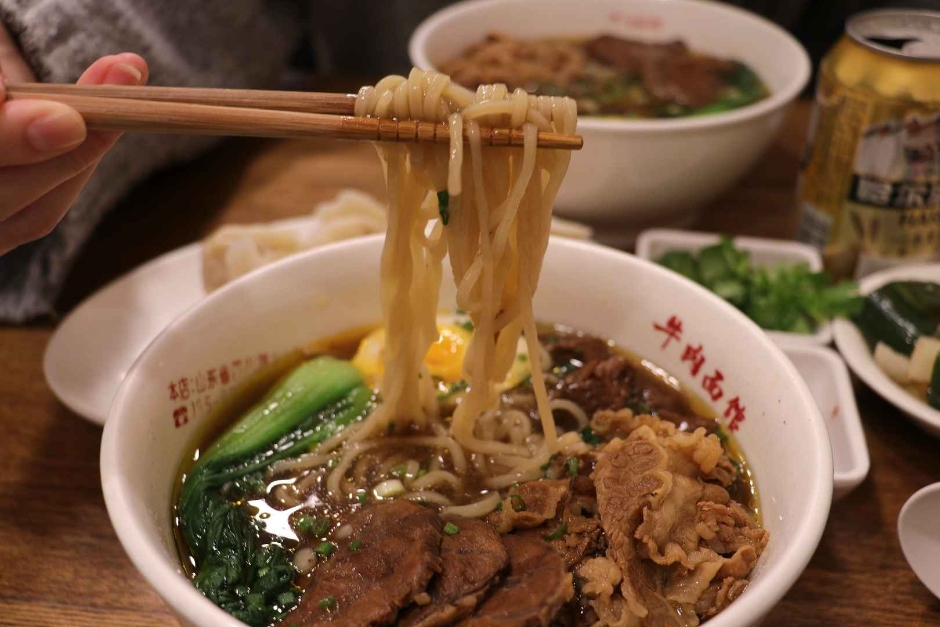
Uyungmyeongwan Cheonggyecheon Main Store (우육면관청계천점)
1.5Km 2024-04-19
75-2 Cheonggyecheon-ro, Jongno-gu, Seoul
Uyungmyeongwan is a noodle restaurant specializing in uyungmyeon (beef noodle soup) located near Cheonggyecheon Stream. Its flagship dish is the uyungmyeon, which harmonizes tender meat with rich broth. In addition, they also sell freshly made sugyo (Chinese-style boiled mandu) filled with shrimp, pork, and young cabbage daily. Loved by locals and tourists alike for its clean yet flavorful broth and chewy noodles.
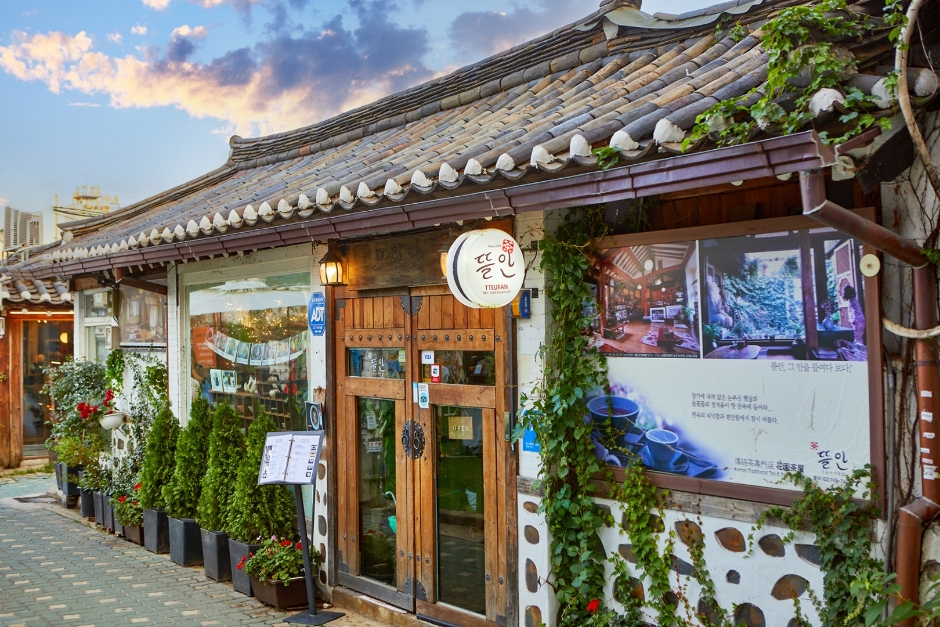
Tteulan Teahouse (뜰안)
1.5Km 2024-12-10
Tteulan Teahouse is a cafe that really allows one to feel the tradition and flair of Korea. Tteulan has two entrances: one facing the wide alley and the other facing the smaller one. The smaller entrance is decorated like a garden, so it feels as if one is stepping into a land of fairy-tales. The café has a floor seating tables with traditional items like gadari soban (a table with legs that curve like a dog's legs), and jogakbo (a textile woven from several pieces of scrap cloth), all of which add to the traditional Korean aesthetic. The menu features ssanghwacha (medicinal herb tea known to help the immune system), a favorite among middle-aged and elderly Koreans; omija tea (omija is a tart berry that grows in East Asia known to be good for lung and bronchial health and boosts immunity); citrus tea (usually made with yuzu which is rich in vitamin C and said to help mitigate fatigue); and pour-over coffee. Traditional desserts include mugwort rice cake (rice cake with mugwort added for herbal flavor, best enjoyed with malt syrup), pumpkin rice cake, and roasted grain powder (a nutritious beverage made with a variety of powdered grain). It can be hard to find seating in the afternoon, so visitors are advised to avoid these hours if they seek to enjoy their drink in peace.
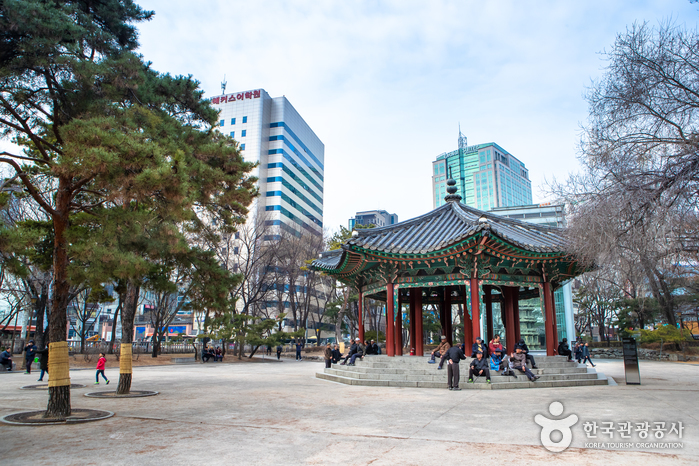
Tapgol Park (탑골공원)
1.5Km 2024-03-04
99, Jong-ro, Jongno-gu, Seoul
+82-2-731-0534
Tapgol Park is the first modern park in Seoul. Having been the site of the Buddhist temple of Wongaksa Temple since 1467, the land was turned into a park in 1897. The park has a significant presence in Korean history, being the place where the March 1 Independence Movement began in 1919. One can find historical sites that hearken back to the struggle, such as the Palgakjeong Pavilion, the center of the movement; cultural heritage sites such as the Ten-story Stone Pagoda of Wongaksa Temple Site and the Stele for the Construction of Daewongaksa Temple at Wongaksa Temple Site; and monuments such as the independence movement relief plate, murals, the statue of Son Byeong-hee, and the statue of Han Yong-un.
Samsung Mobile Store SVC - Eulji-ro Branch [Tax Refund Shop] (삼성모바일SVC 을지로점)
1.5Km 2024-04-18
5F, 51, Eulji-ro, Jung-gu, Seoul
-
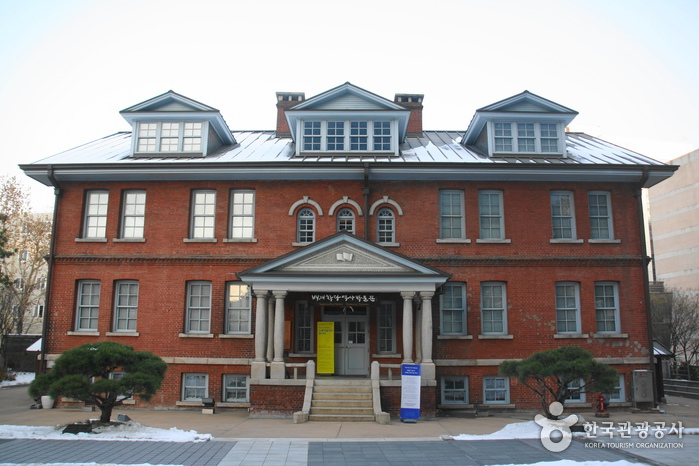
Appenzeller Noble Memorial Museum (배재학당 역사 박물관)
1.5Km 2022-10-14
19, Seosomun-ro 11-gil, Jung-gu, Seoul
+82-2-319-5578
The Appenzeller Noble Memorial Museum is dedicated to Henry Gerhart Appenzeller, the missionary who opened the first Western-style educational institution in Korea in 1885. The school started with English and core subjects, but expanded into the Pai Chai University, Pai Chai High School, and Pai Chai Middle School and has many famous alumni, including Rhee Syng-man. The memorial hall opened in 2008 in the east wing of the original school building, which was built in 1916 and designated as a Seoul Monument. With dynamically arranged permanent exhibitions, annual special exhibitions and special lectures, the museum offers a unique learning experience to visitors and people with an interest in the history of education in Korea.
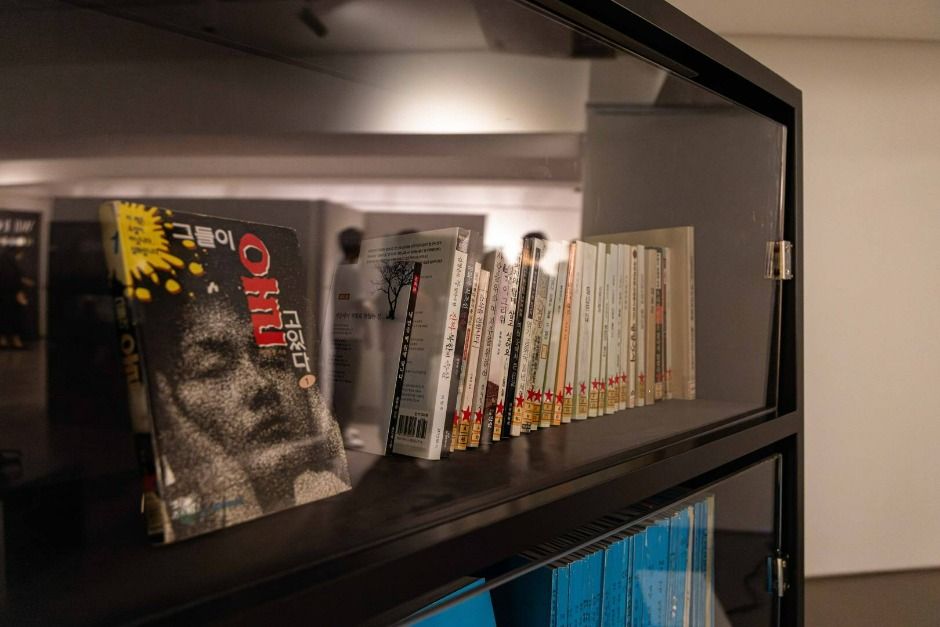
NKDB North Korean Human Rights Exhibition Hall (북한인권전시실)
1.5Km 2025-11-13
393 Samil-daero, Jongno-gu, Seoul
The NKDB North Korean Human Rights Exhibition Hall is a permanent exhibition space dedicated to North Korean human rights. Although it is a small space, it resonates deeply and serves as a "dark tourism" site that records and testifies to the ongoing reality of human rights violations in North Korea. The North Korean Human Rights Information Center (NKDB), which operates this exhibition hall, is the organization that collects and archives the most extensive records of human rights concerning North Korean residents in the world. The testimonies and records presented here represent a living history, a story unfolding in the present, unavailable elsewhere. Through donated North Korean artifacts, including these records, visitors can glimpse the present-day North Korea and encounter artwork by North Korean defectors.
 English
 한국어
한국어 日本語
日本語 中文(简体)
 Deutsch
 Français
 Español
 Русский


