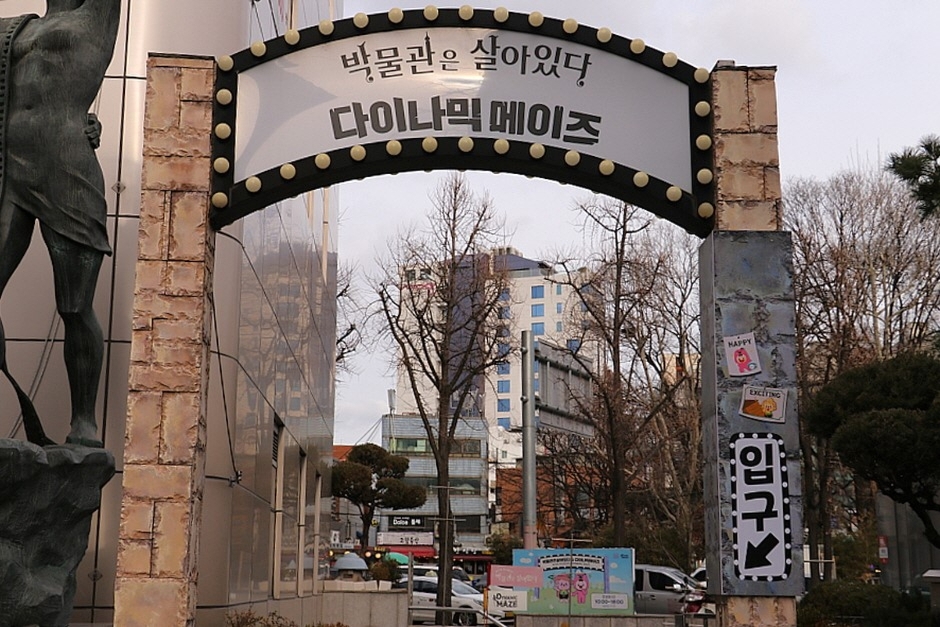
Dynamic Maze (Insa-dong) (다이나믹 메이즈 (서울 인사동점))
1.5Km 2024-03-15
12, Insadong-gil, Jongno-gu, Seoul
Dynamic Maze is an indoor space in Insa-dong dedicated to an exciting adventure: A maze filled with obstacles, requiring participants to work together and overcome the barriers through quickness and focus. Go through the hall of mirrors, climb the wall, and cross the suspension bridge to finally escape from the maze.

National Memorial of Korean Provisional Government (국립대한민국임시정부기념관)
1.6Km 2023-01-16
279-24, Tongil-ro, Seodaemun-gu, Seoul
The National Memorial of Korean Provisional Government was established to shine a light on the proud history of the Korean Provisional Government's independence and the spirit of a democratic republic and to pass it on to future generations. The four-story memorial building with three underground floors houses three permanent exhibits, one special exhibit, Larchiveum, Symbol Plaza, storage, multi-purpose hall, and rooftop garden over a total area of 3,656 square meters, a total floor area of 9,703 square meters and a total exhibition space of 2,240 square meters. The permanent exhibits consist of a series of historic events from the March 1st Movement, which served as a turning point for the formation of the Provisional Government, to the foundation of the Korean Government that succeeded the mantle of the provisional government, while the special exhibit on the 1st floor currently hosts a special opening exhibition under the title of 『The Return of the Provisional Government of the Republic of Korea』. Moreover, a symbolic wall installation under the theme of "Waves of History" is displayed in the outdoor plaza on the 1st floor of the memorial expressing the Provisional Government’s desire for independence and the dynamics of the past, present, and future of Korea.
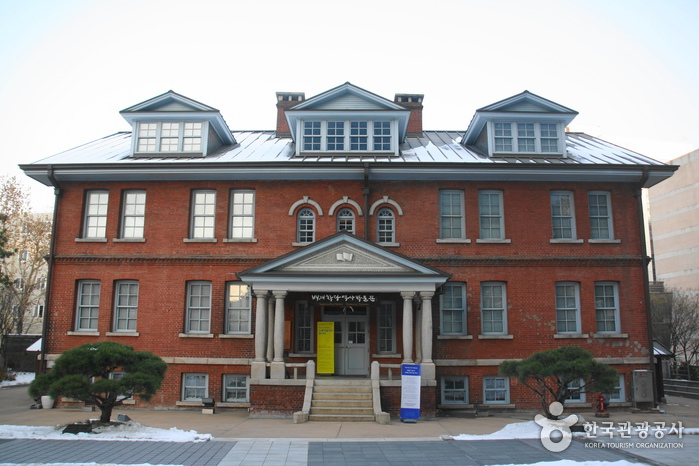
Appenzeller Noble Memorial Museum (배재학당 역사 박물관)
1.6Km 2022-10-14
19, Seosomun-ro 11-gil, Jung-gu, Seoul
The Appenzeller Noble Memorial Museum is dedicated to Henry Gerhart Appenzeller, the missionary who opened the first Western-style educational institution in Korea in 1885. The school started with English and core subjects, but expanded into the Pai Chai University, Pai Chai High School, and Pai Chai Middle School and has many famous alumni, including Rhee Syng-man. The memorial hall opened in 2008 in the east wing of the original school building, which was built in 1916 and designated as a Seoul Monument. With dynamically arranged permanent exhibitions, annual special exhibitions and special lectures, the museum offers a unique learning experience to visitors and people with an interest in the history of education in Korea.
Samcheong Park (삼청공원)
1.6Km 2024-03-18
44, Insadong-gil, Jongno-gu, Seoul
Samcheong Park is a park that blooms in cherry blossoms in spring and fall colors in fall near Gyeongbokgung Palace. The park is home to a forest library and a café, and visitors can follow the trails to find acupressure trails, exercise equipment, badminton court, tennis court, playground, and a convenience store. The area surrounding the park is home to many galleries and restaurants, so it is a popular destination for walking among the people of Seoul.
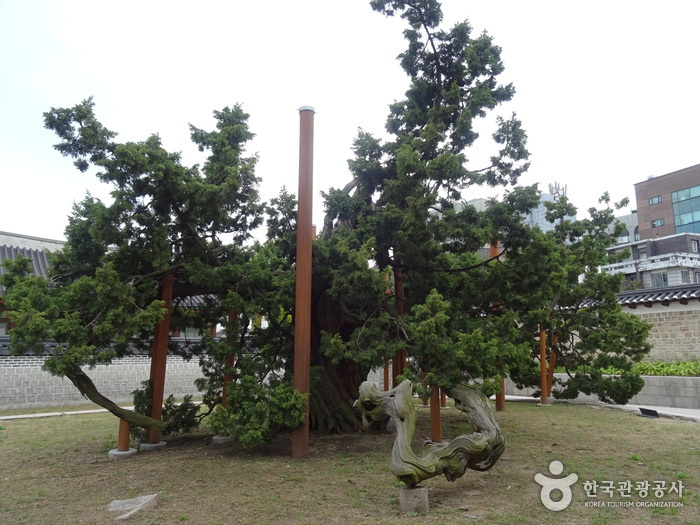
Hyangnamu Tree in Changdeokgung Palace (창덕궁 향나무)
1.6Km 2025-01-13
99, Yulgok-ro, Jongno-gu, Seoul
Hyangnamu or 'Aromatic Tree' in Changdeokgung Palace is estimated to be about 700 years old, meaning it had likely been planted before the palace was built. It stands 12m in x_height, measures 5.9m in girth around the roots, and has branches spreading in all four directions. It is designated and protected as a National Natural Monument.
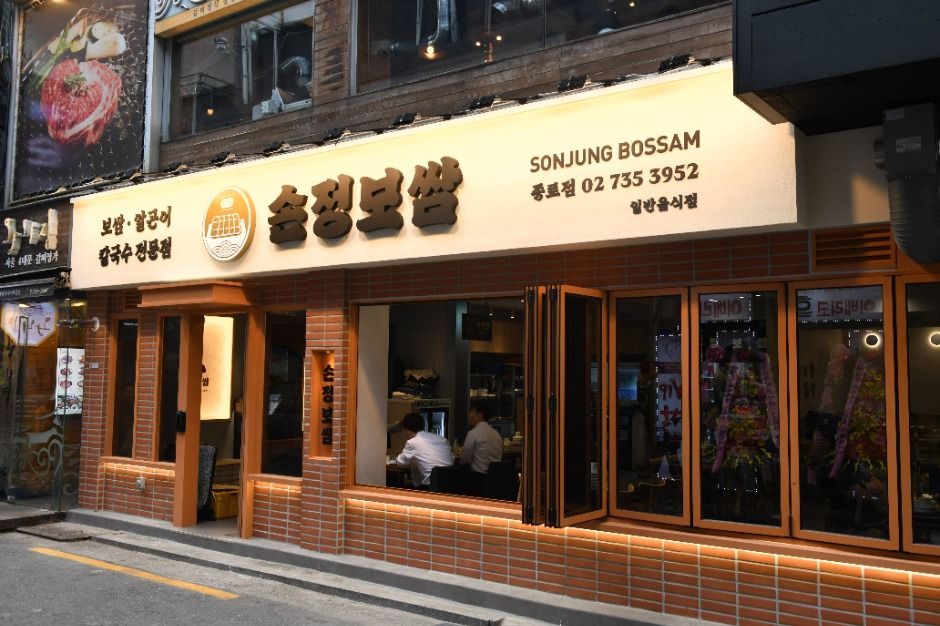
Sonjung Bossam (손정보쌈)
1.6Km 2025-07-25
24 Samil-daero 15-gil, Jongno-gu, Seoul
Sonjung Bossam offers dishes with a modern touch by reinterpreting traditional meals. Passed down for three generations, this restaurant values sincerity and careful attention in food making in order to serve every customer a heartwarming meal. Sonjung Bossam's signature dish Premium Gabri Bossam takes only the rarest pork cut, the blade-end fatback called "gabri" in Korean, and boils the meat using the restaurant's secret recipe for tender, juicy meat. The restaurant also serves their own special version of spicy stir-fried fish roe and intestines and haemultang (spicy seafood stew), boasting a generous amount of various seafood and rich broth. All meals are prepared wholeheartedly as if they are being served to a family.
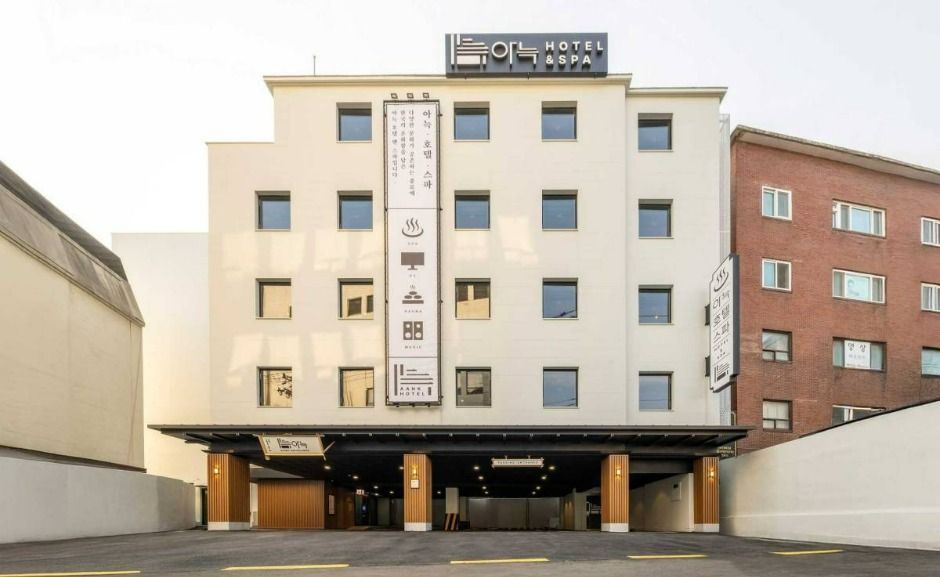
Aank Hotel & Spa Jongno Unni Branch (아늑호텔 앤 스파 종로운니점)
1.6Km 2025-04-24
89 Donhwamun-ro 11ga-gil, Jongno-gu, Seoul
Aank Hotel & Spa Jongno Unni Branch embodies the warmth and charms of Korea. Guests are welcome to unwind with diverse room options to choose from such as the msuic room, signature spa room, desktop 2-PC room, and standard room. It's location in the heart of Seoul makes it a great place for tourists as well as well.
Korea Samgyetang (고려삼계탕)
1.6Km 2024-06-19
1 Seosomun-ro 11-gil, Jung-gu, Seoul
Located near City Hall Station, Korea Samgyetang specializes in samgyetang. Samgyetang is a traditional healthy dish made by simmering cleaned young chicken in a broth with ginseng, jujube, and glutinous rice. The light and tender texture of the stewed chicken and the ginseng-flavored glutinous rice porridge is excellent. Ogolgye tang (silkie chicken soup) and jeonbok samgye tang (abalone and ginseng chicken soup) are also favorites among patrons. This restaurant was selected for the Michelin Guide Seoul in 2023.
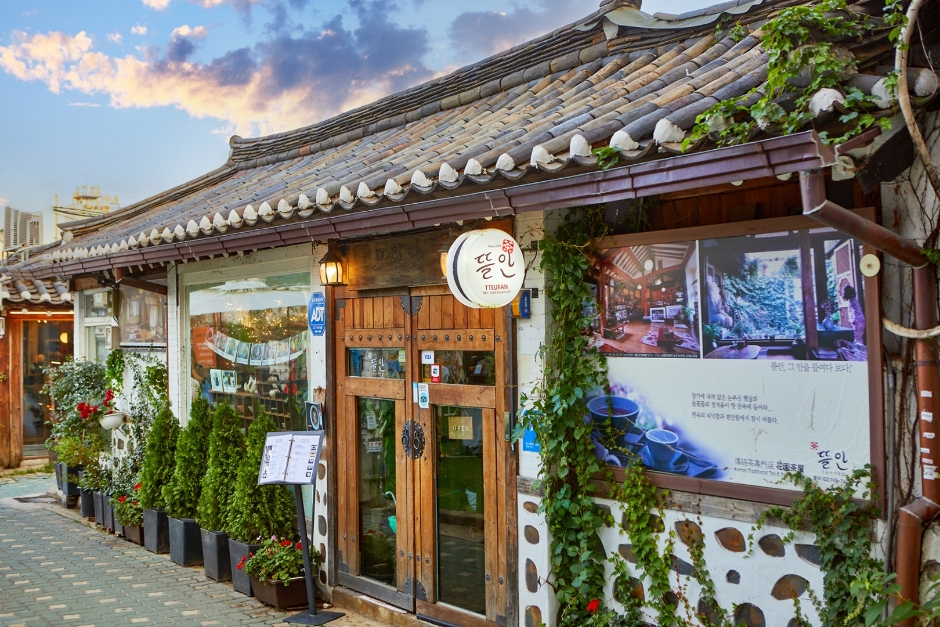
Tteulan Teahouse (뜰안)
1.6Km 2024-12-10
Tteulan Teahouse is a cafe that really allows one to feel the tradition and flair of Korea. Tteulan has two entrances: one facing the wide alley and the other facing the smaller one. The smaller entrance is decorated like a garden, so it feels as if one is stepping into a land of fairy-tales. The café has a floor seating tables with traditional items like gadari soban (a table with legs that curve like a dog's legs), and jogakbo (a textile woven from several pieces of scrap cloth), all of which add to the traditional Korean aesthetic. The menu features ssanghwacha (medicinal herb tea known to help the immune system), a favorite among middle-aged and elderly Koreans; omija tea (omija is a tart berry that grows in East Asia known to be good for lung and bronchial health and boosts immunity); citrus tea (usually made with yuzu which is rich in vitamin C and said to help mitigate fatigue); and pour-over coffee. Traditional desserts include mugwort rice cake (rice cake with mugwort added for herbal flavor, best enjoyed with malt syrup), pumpkin rice cake, and roasted grain powder (a nutritious beverage made with a variety of powdered grain). It can be hard to find seating in the afternoon, so visitors are advised to avoid these hours if they seek to enjoy their drink in peace.
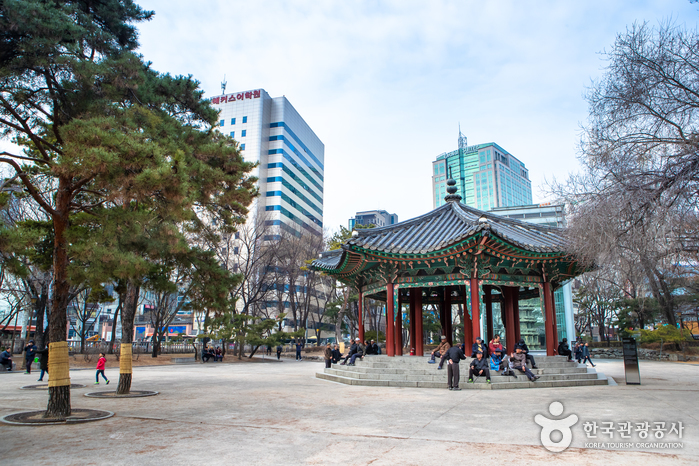
Tapgol Park (탑골공원)
1.7Km 2024-03-04
99, Jong-ro, Jongno-gu, Seoul
Tapgol Park is the first modern park in Seoul. Having been the site of the Buddhist temple of Wongaksa Temple since 1467, the land was turned into a park in 1897. The park has a significant presence in Korean history, being the place where the March 1 Independence Movement began in 1919. One can find historical sites that hearken back to the struggle, such as the Palgakjeong Pavilion, the center of the movement; cultural heritage sites such as the Ten-story Stone Pagoda of Wongaksa Temple Site and the Stele for the Construction of Daewongaksa Temple at Wongaksa Temple Site; and monuments such as the independence movement relief plate, murals, the statue of Son Byeong-hee, and the statue of Han Yong-un.
 English
 한국어
한국어 日本語
日本語 中文(简体)
 Deutsch
 Français
 Español
 Русский


