
Olive Young - Plus Branch [Tax Refund Shop] (올리브영 플러스점)
2.8Km 2024-06-27
#B114~#B115, 372, Hangang-daero, Yongsan-gu, Seoul
-
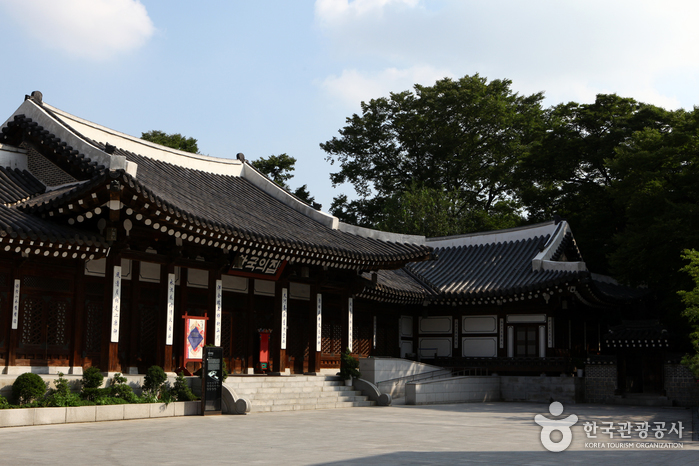
Korea House (한국의집)
2.8Km 2025-10-23
10, Toegye-ro 36-gil, Jung-gu, Seoul
The Korea House was opened in 1981. It is a traditional Korean building that introduces the culture and lifestyle of Koreans, where you can experience traditional architecture and a classical atmosphere. The building was built in the style of the Joseon Dynasty's Jagyeong-jeon building at the Gyeongbok Palace. It is the only building built in the traditional architectural style. You will feel its antiquity as you enter the building.
It is divided into the Haerin-gwan (a space for people to get acquainted with each other), the Traditional Theater, and three annex buildings (Munhyang-ru, Nokeum-jeong and Cheongwu-jeong). At Haerin-gwan, you can enjoy traditional music at Garak-dang and try traditional food at Sohwa-dang. In the square of Garak-dang you can view a traditional wedding (on the weekends) or people playing folk games. Also, at the Traditional Theater, about 156 seats are available, and in the afternoons Human Cultural Assets or members of the National Center for Korean Traditional Performing Arts and the National Corps members present traditional music and dances. Sinayui, Salpuri, Pansori, the Drum Dance and the Bongsan Mask Dance are the most popular programs for foreigners. The programs are all explained in English and Japanese.
In the Cultural Gift Shop you can view various crafts made by traditional craftsmen. It is always open and the crafts are for sale as well. There are pottery, ceramics, golden crafts, knots and embroidery etc; approximately 500 pieces of artwork made by craftsmen from 20 different fields. Next to the House of Korea is the Namsan-gol Hanok Village where visitors can explore traditional houses.
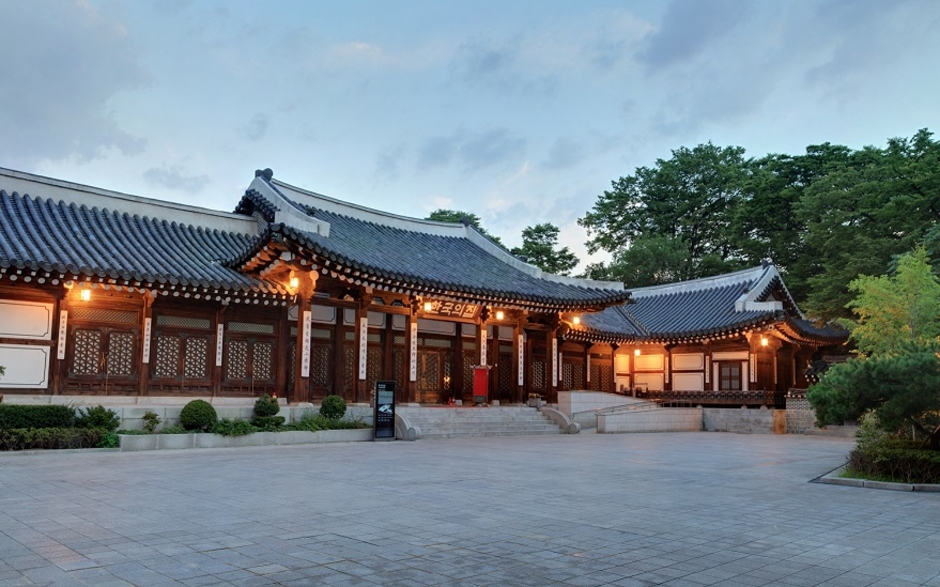
Korea House (한국의집)
2.8Km 2024-03-05
10 Toegye-ro 36-gil, Jung-gu, Seoul
+82-2-2266-9101
Located in the center of Seoul, Korea House is a must-visit tourism spot as a high-end cultural complex offering Hanjeongsik (Korean table d'hote), traditional refreshments, traditional performance arts, and traditional weddings, allowing visitors to feel the beauty of Korean culture and the taste of Korea. Guests can also enjoy the elegant beauty of hanok.
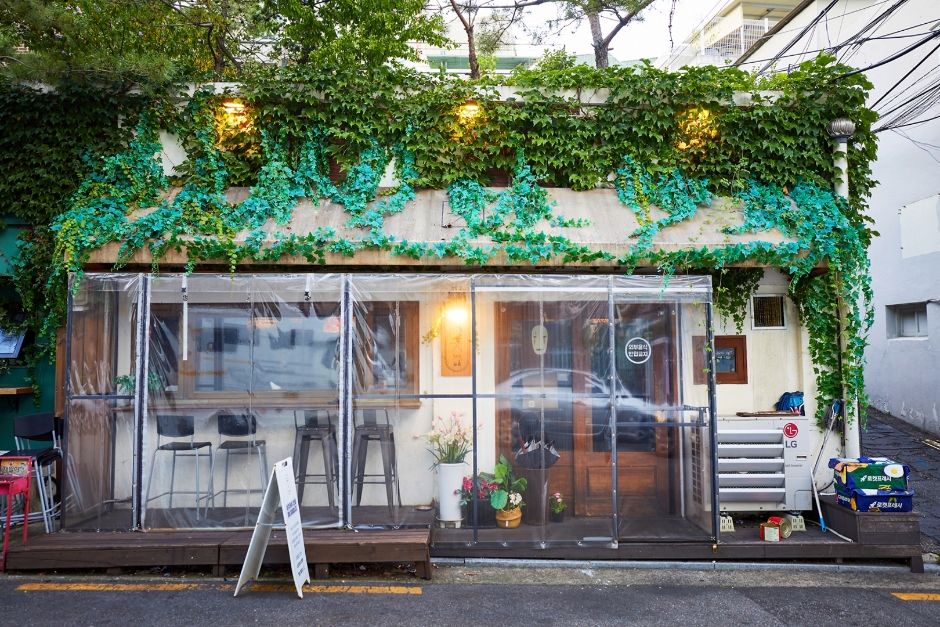
Anjjang (안짱)
2.8Km 2024-03-15
32 Tongil-ro 39-gil, Seodaemun-gu, Seoul
This Japanese-style bar and restaurant is run by a chef who studied abroad in Japan and serves delicious snacks that go well with alcoholic drinks. Spicy stir-fried soba, Japanese-style fried noodles with beef loin and vegetables, and grilled chicken, skewered chicken thighs grilled over a charcoal fire, are amazing. Be sure to check out today's menu, which changes every day. Some people try to order ramen because the restaurant was featured as a ramen restaurant in a K-drama, but ramen is not actually available. Besides highballs and sake, diners can also order a sour, which allows you to enjoy the freshness of lemon, citrus, and passion fruit. There is a cozy atmosphere created by unique props like cute dolls and mirror balls, making it a great place for a conversation.
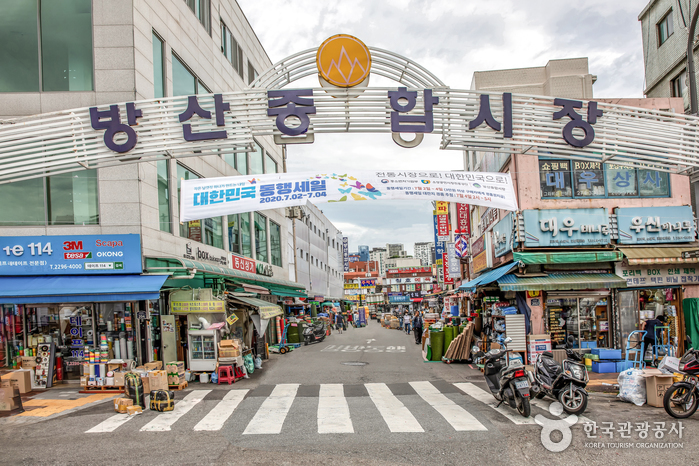
Bangsan Wholesale Market (방산 종합시장)
2.8Km 2025-10-23
20, Dongho-ro 37-gil, Jung-gu, Seoul
+82-2-2268-6691
Bangsan Market is a wholesale market with approximately 250 stores that sells packaging and promotional materials. The market was popular with patissiers in the past and is currently more famous for being a bakery street.
Seoul National University Hospital (서울대학교병원)
2.8Km 2025-10-23
101 Daehak-ro, Jongno-gu, Seoul
Seoul National University Hospital, a national central hospital that has led Korean medicine for over 130 years, is a top-tier hospital equipped with world-class medical professionals and cutting-edge systems. For 25 consecutive years, it has ranked first in brand power in the hospital sector. The hospital is renowned for its cancer research, the most comprehensive pediatric care in the country, and treatments for rare and intractable diseases. Through patient-centered, personalized services, it has established itself as a trusted healthcare institution.
![Olive Young - Twin City Branch [Tax Refund Shop] (올리브영 트윈시티)](http://tong.visitkorea.or.kr/cms/resource/04/2889104_image2_1.jpg)
Olive Young - Twin City Branch [Tax Refund Shop] (올리브영 트윈시티)
2.8Km 2024-04-18
Store #B109, #B110, GF Twin City Bldg., 366, Hangang-daero, Yongsan-gu, Seoul
-
![Olive Young - Chungmuro Station Branch [Tax Refund Shop] (올리브영 충무로역)](http://tong.visitkorea.or.kr/cms/resource/68/2888868_image2_1.jpg)
Olive Young - Chungmuro Station Branch [Tax Refund Shop] (올리브영 충무로역)
2.8Km 2024-04-18
222, Toegye-ro, Jung-gu, Seoul
-
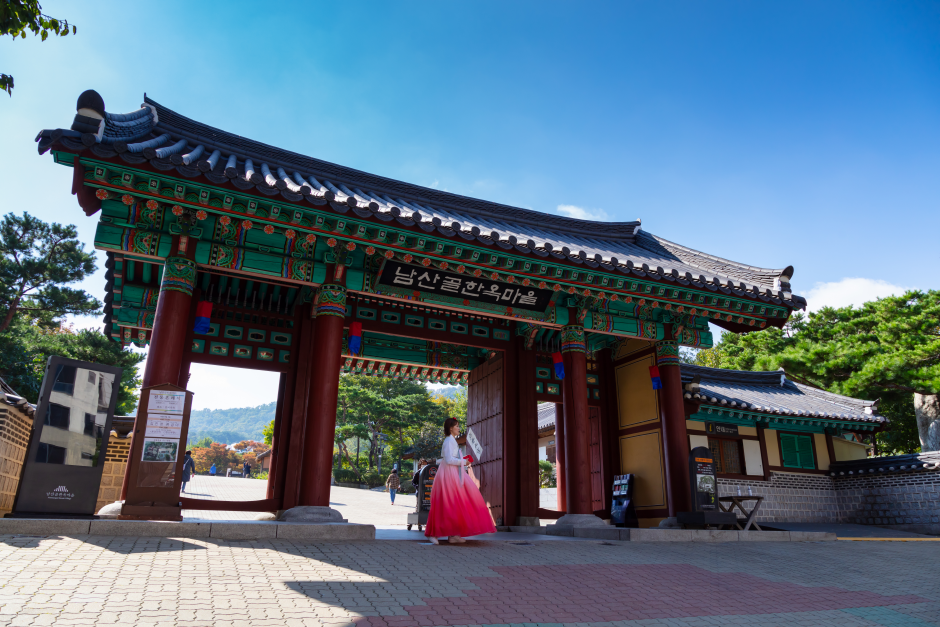
Namsangol Hanok Village (남산골한옥마을)
2.8Km 2025-07-14
28 Toegye-ro 34-gil, Jung-gu, Seoul
Namsangol Hanok Village opened in 1998 on the northern side of Namsan Mountain in the center of the capital. This village has five restored hanok (traditional Korean house) premises, a pavilion, a traditional garden, a performance art stage, and a time capsule plaza, making it a perfect spot for locals and tourists to take a leisure walk. Upon entering from the front gate, visitors will get a taste of Korea's traditional life while escaping from bustling city life. The traditional garden with its pavilion and old houses creates a peaceful ambiance before the forested Namsan Mountain. A time capsule commemorating Seoul’s 600th anniversary was buried in 1994 at the highest point of the village and is scheduled to be reopened 400 years later in 2394.
The five hanok premises at Namsangol Hanok Village once belonged to aristocrats and government officials of the Joseon dynasty. Each house was originally located in a different neighborhood, but they were all moved to this area and restored to their original form. The houses were rebuilt using their original materials, except for one house, where the materials were too old and deteriorated to be reused. The premises were carefully restored and replicated according to their original form to depict the owners’ social class and personality. These buildings are now used as an exhibit to portray the living environment during the Joseon dynasty and as a venue for educational and cultural programs for children and tourists.
Some of the unique programs and activities to participate in include wearing hanbok, folding hanji (traditional Korean paper), writing in Korean, traditional tea ceremony, traditional etiquette school, and herbal medicine experience. There are also taekwondo demonstrations and other various performances held around the village. Visitors can also try traditional games such as yunnori (traditional board game), or understand more about the area through a guided tour.
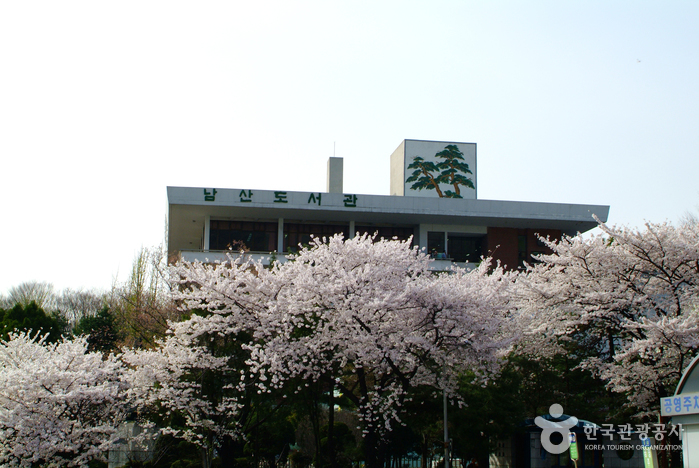
Namsan Library (서울특별시교육청 남산도서관)
2.8Km 2021-07-07
109, Sowol-ro, Yongsan-gu, Seoul
+82-2-754-7338
Namsan Library opened as Kyeongseong Prefectural Library in 1922 as a public library in Myeong-dong, Jung-gu, Seoul. The library was moved to the current site in 1964 with a newly built building and its name changed to Namsan Library in 1965. This concrete building was built in 1964 and was designed by architect Lee Haeseong. It was designated as Seoul Future Heritage in 2013, credited for its preservation value.
It is comprised of 19 rooms and educational areas including the Humanity and Social Science Hall, Nature Science Hall, Language and Literature Hall, Electronic Information Room and more. Since opening, the library has collected nearly 500,000 books, 16,000 non-book materials, 700 continuing resources, and other special materials like old books, oriental books (including Japanese books), and more. Namsan Library also operates a reading treatment program unique to this library that began in 2005. The program includes remodeling of reading consultation room, training for people in charge of reading treatment, workshops, programs for individuals and groups. Also, various exhibitions, lectures, shows, cultural classes and other events are available all year long to enhance lifelong education.
 English
 한국어
한국어 日本語
日本語 中文(简体)
 Deutsch
 Français
 Español
 Русский


