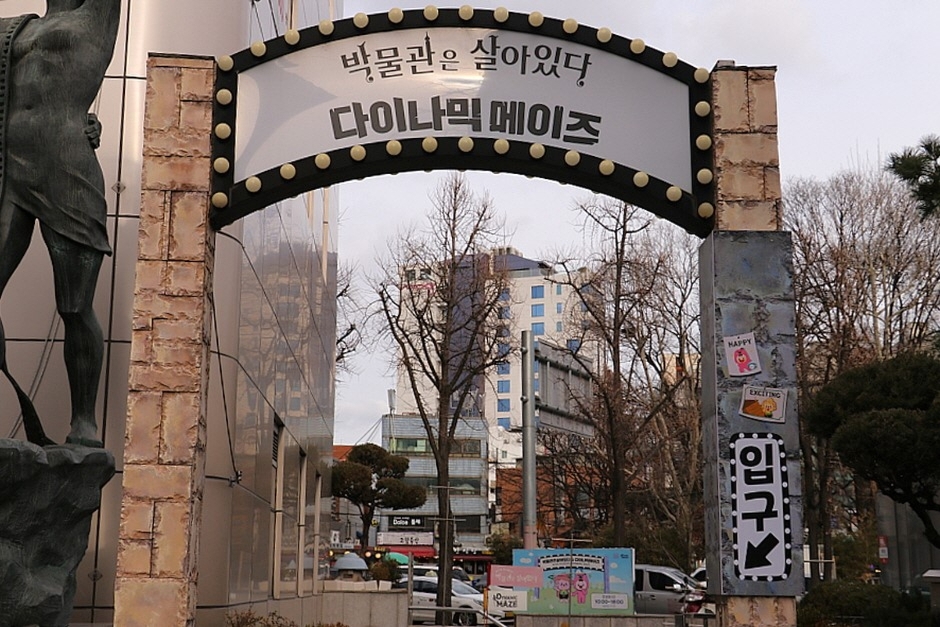
Dynamic Maze (Insa-dong) (다이나믹 메이즈 (서울 인사동점))
2.2Km 2024-03-15
12, Insadong-gil, Jongno-gu, Seoul
+82-1544-8506
Dynamic Maze is an indoor space in Insa-dong dedicated to an exciting adventure: A maze filled with obstacles, requiring participants to work together and overcome the barriers through quickness and focus. Go through the hall of mirrors, climb the wall, and cross the suspension bridge to finally escape from the maze.
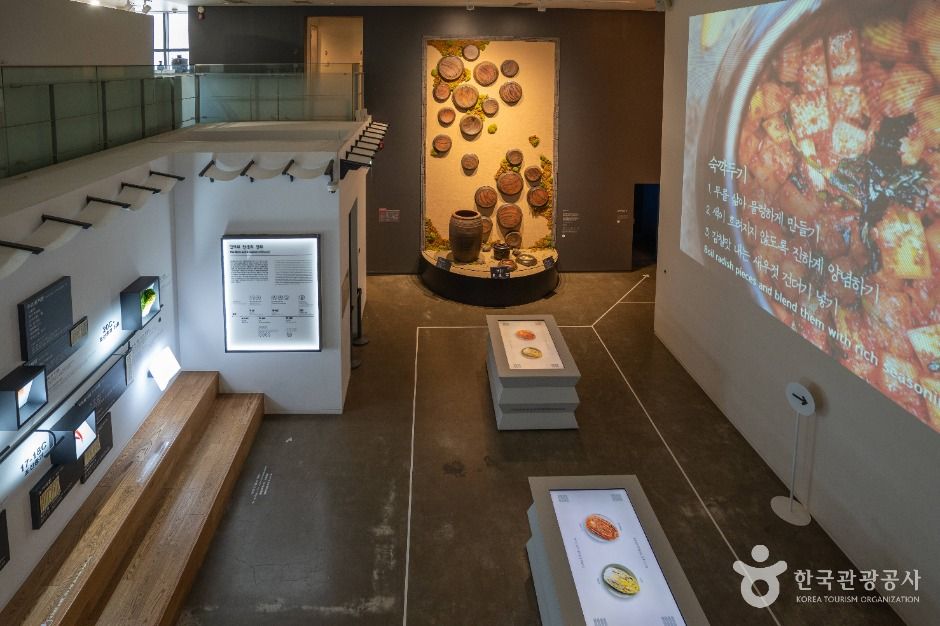
Museum Kimchikan (뮤지엄 김치간)
2.2Km 2025-06-19
(4-6th floor, Maru Art Center), 35-4 Insadong-gil, Jongno-gu, Seoul
Museum Kimchikan is a museum dedicated to kimchi in Insa-dong’s Maru Art Center. The exhibition details the culture, history, trajectory, and efficacy of kimchi and teaches the visitors how to make kimchi through videos. Visitors can also sample different types of kimchi. The museum offers both individual and group experience programs.
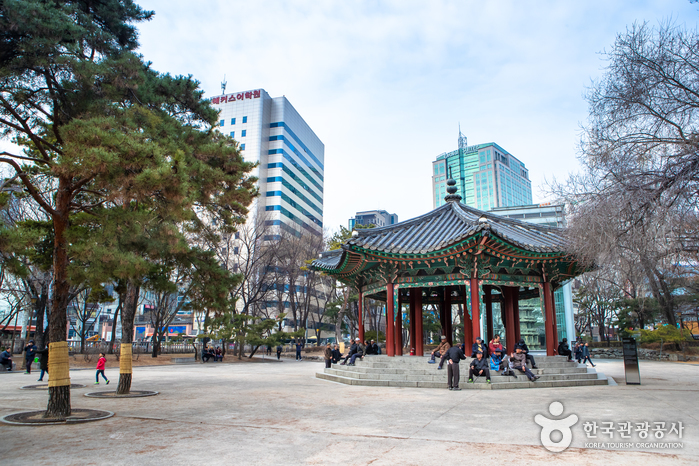
Tapgol Park (탑골공원)
2.2Km 2024-03-04
99, Jong-ro, Jongno-gu, Seoul
+82-2-731-0534
Tapgol Park is the first modern park in Seoul. Having been the site of the Buddhist temple of Wongaksa Temple since 1467, the land was turned into a park in 1897. The park has a significant presence in Korean history, being the place where the March 1 Independence Movement began in 1919. One can find historical sites that hearken back to the struggle, such as the Palgakjeong Pavilion, the center of the movement; cultural heritage sites such as the Ten-story Stone Pagoda of Wongaksa Temple Site and the Stele for the Construction of Daewongaksa Temple at Wongaksa Temple Site; and monuments such as the independence movement relief plate, murals, the statue of Son Byeong-hee, and the statue of Han Yong-un.
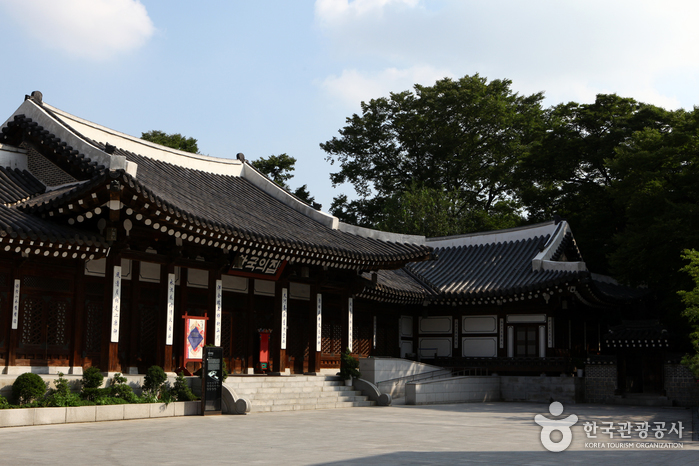
Korea House (한국의집)
2.2Km 2025-10-23
10, Toegye-ro 36-gil, Jung-gu, Seoul
The Korea House was opened in 1981. It is a traditional Korean building that introduces the culture and lifestyle of Koreans, where you can experience traditional architecture and a classical atmosphere. The building was built in the style of the Joseon Dynasty's Jagyeong-jeon building at the Gyeongbok Palace. It is the only building built in the traditional architectural style. You will feel its antiquity as you enter the building.
It is divided into the Haerin-gwan (a space for people to get acquainted with each other), the Traditional Theater, and three annex buildings (Munhyang-ru, Nokeum-jeong and Cheongwu-jeong). At Haerin-gwan, you can enjoy traditional music at Garak-dang and try traditional food at Sohwa-dang. In the square of Garak-dang you can view a traditional wedding (on the weekends) or people playing folk games. Also, at the Traditional Theater, about 156 seats are available, and in the afternoons Human Cultural Assets or members of the National Center for Korean Traditional Performing Arts and the National Corps members present traditional music and dances. Sinayui, Salpuri, Pansori, the Drum Dance and the Bongsan Mask Dance are the most popular programs for foreigners. The programs are all explained in English and Japanese.
In the Cultural Gift Shop you can view various crafts made by traditional craftsmen. It is always open and the crafts are for sale as well. There are pottery, ceramics, golden crafts, knots and embroidery etc; approximately 500 pieces of artwork made by craftsmen from 20 different fields. Next to the House of Korea is the Namsan-gol Hanok Village where visitors can explore traditional houses.

Dongnimmun Gate (독립문)
2.3Km 2022-12-15
251, Tongil-ro, Seodaemun-gu, Seoul
Dongnimmun stands at the location originally known as Yeongeun, where envoys were once treated. When a Chinese envoy visited, the King would go out through this door to greet. In 1898, to announce the independence from Japan, Dongnimun was constructed with the fund collected by the citizens. The traces of the past still remain on Dongnimmun with two pillars in front of Dongnimmun being the remains of Yeongeunmun.
The Arc de Triomphe in France can be recalled in comparison to Dongnimmun. Dongnimmun was built using granite with a passageway x_height of 14.28 meters. On the top it is written ‘Dongnimmun’ in Korean with the national flag drawn on each side. On the inner-left side there are stone stairs leading to the attic. The national flower Mugunghwa are planted around Dongnimmun. Now it is surrounded by roads and it is eye-catching to view when passing by.
Myungbo Art Hall (명보아트홀)
2.3Km 2025-04-15
47 Mareunnae-ro, Jung-gu, Seoul
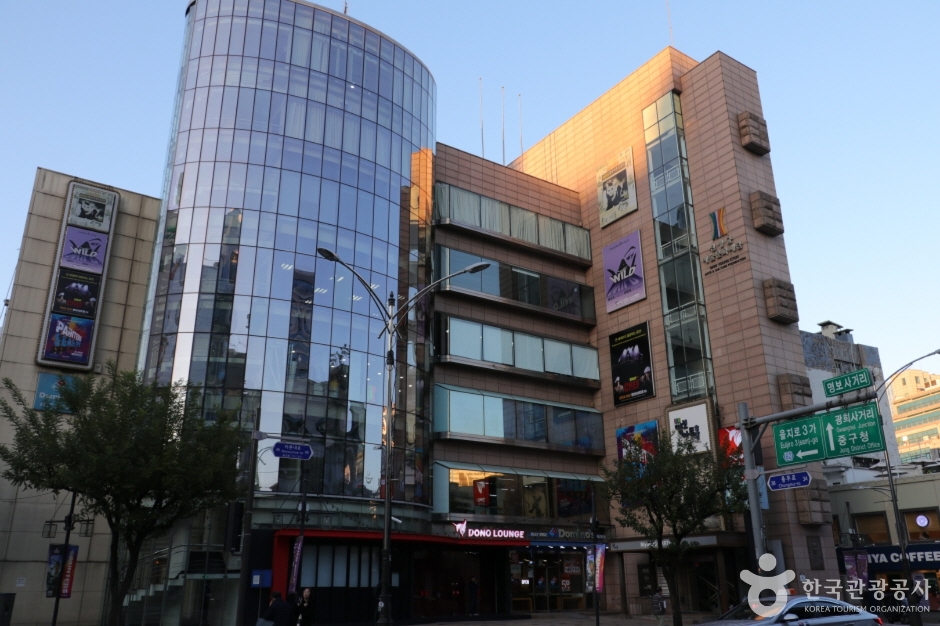
Located in Euljiro 3(sam)-ga, the heart of Seoul, Myungbo Art Hall is a cultural complex that consists of a professional theatre hall. Renovated from Myungbo Theater in 2009, Myungbo Art Hall is equipped with state-of-the-arts lighting and sound equipment that guarantees high-quality theatre experience for the audience. In addition, the hall also has comfortable seats along with other amenities for the audience's convenience. Myungbo Art Hall aims to globalize Korean performance culture by creating a variety of content that incorporate Korean theatre with tourism. This area is also where the house of Admiral Yi Sun-sin was located, which is honored with a memorial plaque listing his accomplishments.
Insa-dong Antique Art Street (인사동 고미술거리)
2.3Km 2025-03-16
29 Insadong-gil, Jongno-gu, Seoul
+82-2-732-2235
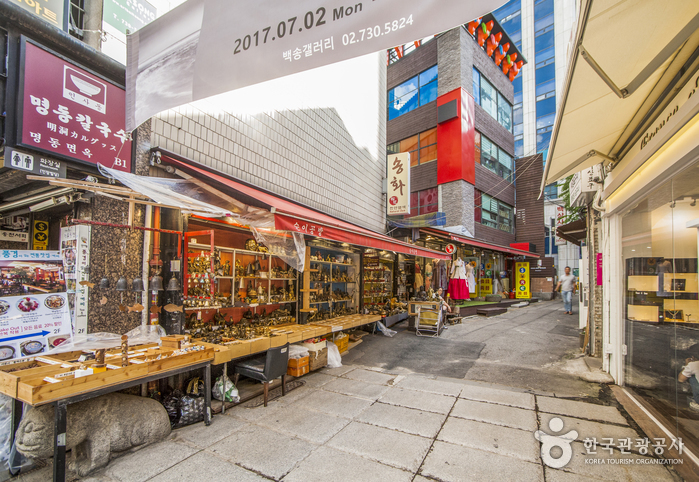
As of today, there are approximately 70 shops in the Insa-dong area that sell antique arts. Some of the products they sell include antique artworks, porcelains, woodcrafts, and metalwork. Visitors may even find rare and valuable products such as earthenware from the Silla period or white porcelain used in the Joseon dynasty. Each shop is a specialty store, authorized to sell product types that are of their expertise, ranging from antique furniture and traditional artworks to handcrafted items.
Ground Seesaw Seochon (그라운드시소 서촌)
2.3Km 2023-01-17
18-8, Jahamun-ro 6-gil, Jongno-gu, Seoul
Ground Seesaw is a cultural complex located in Seochon, Jongno presented by Media & Art, an exhibition production company, and designed by SoA, an architecture firm, and Loci Studio, a landscaping studio. Visitors are able to check out a variety of exhibits at Ground Seesaw Seochon.
Seoul Art Center Gongpyeong Gallery (서울아트센터 공평갤러리)
2.3Km 2021-06-19
24, Insadong-gil, Jongno-gu, Seoul
+82-70-4214-0070
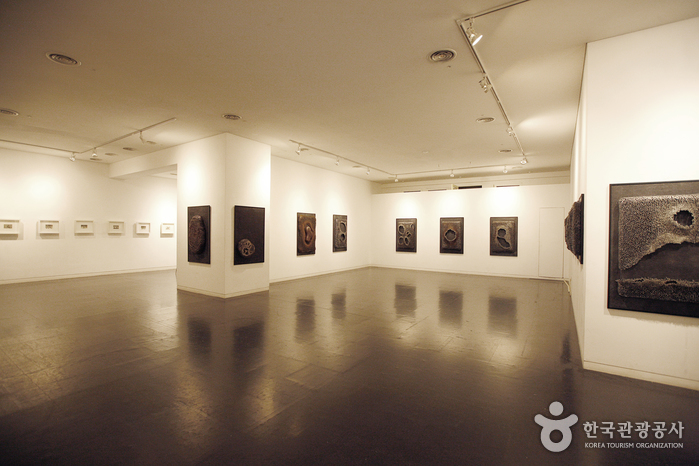
Opened in 1992, Seoul Art Center Gongpyeong Gallery is a 17,791㎡, two-story building with four exhibition halls. It is one of the main galleries of Insa-dong, displaying diverse artwork ranging from Western and Korean paintings to sculptures. Due to the great interest in Korean paintings, 2~3 of the annual long-term exhibitions focus solely on them.
 English
 한국어
한국어 日本語
日本語 中文(简体)
 Deutsch
 Français
 Español
 Русский


