![Muji - Mecenatpolis Branch [Tax Refund Shop] (무지 메세나점)](http://tong.visitkorea.or.kr/cms/resource/58/2891058_image2_1.jpg)
Muji - Mecenatpolis Branch [Tax Refund Shop] (무지 메세나점)
2.1Km 2024-04-19
45, Yanghwa-ro, Mapo-gu, Seoul
-

Olive Young - MECENATPOLIS Branch [Tax Refund Shop] (올리브영 메세나점)
2.1Km 2024-04-19
45, Yanghwa-ro, Mapo-gu, Seoul
-
Olive Young - MECENATPOLIS Branch [Tax Refund Shop] (올리브영 합정메세나폴리스)
2.1Km 2024-04-18
B1, 45, Yanghwa-ro, Mapo-gu, Seoul
-
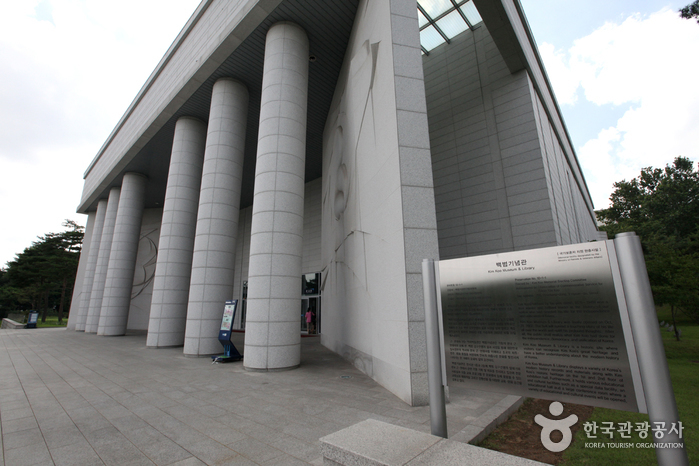
Kim Koo Museum & Library (백범김구기념관)
2.2Km 2022-08-30
26, Imjeong-ro, Yongsan-gu, Seoul
+82-2-799-3400
Kim Koo Museum & Library was built in Yongsan-gu, Seoul to commemorate Baekbeom Kim Koo (1876-1949), a highly respected Korean independence activist. It opened on October 22, 2002 to commemorate Kim Koo's efforts and achievements in Korean history. The main hall is comprised of two floors, exhibiting relics related to his entire life. A statue of a seated Kim Koo is situated in the central space of the first hall.
Gyeongui Line Forest Park (Yeontral Park) (경의선숲길(연트럴파크))
2.2Km 2023-08-11
133, Donggyo-ro 51-gil, Mapo-gu, Seoul
Gyeongui Line Forest Park is a linear city park located in Mapo-gu and is also called Yeontral Park. It includes Daeheung-dong, Yeonnam-dong, Saechanggogae Pass, Changjeon-dong, Sinsu-dong, and Wonhyo-ro, which were opened in this order. Gyeongui Line Forest Park is established atop the Gyeongui railroad line and the Gyeongui Line and Airport Railroad Express are constructed as a double track underground. Gyeongui Line Forest Park was designed to be incomplete on purpose to invite the citizens in completing the park. The area which could have been left empty and neglected has turned into a meaningful green park for the citizens by the citizens.
![Africa Eyewear - Hapjeong Kyobo Book Centre Branch [Tax Refund Shop] (아프리카안경원 합정교보문고점)](http://tong.visitkorea.or.kr/cms/resource/09/2878309_image2_1.jpg)
Africa Eyewear - Hapjeong Kyobo Book Centre Branch [Tax Refund Shop] (아프리카안경원 합정교보문고점)
2.3Km 2024-04-22
B2 13-1, 2, 14, World Cup-ro 1-gil, Mapo-gu, Seoul
-
![Hottracks - Hapjeong Branch [Tax Refund Shop] (핫트랙스 합정점)](http://tong.visitkorea.or.kr/cms/resource/12/2878312_image2_1.jpg)
Hottracks - Hapjeong Branch [Tax Refund Shop] (핫트랙스 합정점)
2.3Km 2024-04-22
14, World Cup-ro 1-gil, Mapo-gu, Seoul
-
![Olive Young - KYOBO BOOK CENTRE Hapjeong Branch [Tax Refund Shop] (올리브영 합정교보)](http://tong.visitkorea.or.kr/cms/resource/24/2888424_image2_1.jpg)
Olive Young - KYOBO BOOK CENTRE Hapjeong Branch [Tax Refund Shop] (올리브영 합정교보)
2.3Km 2024-04-22
14, World Cup-ro 1-gil, Mapo-gu, Seoul
-
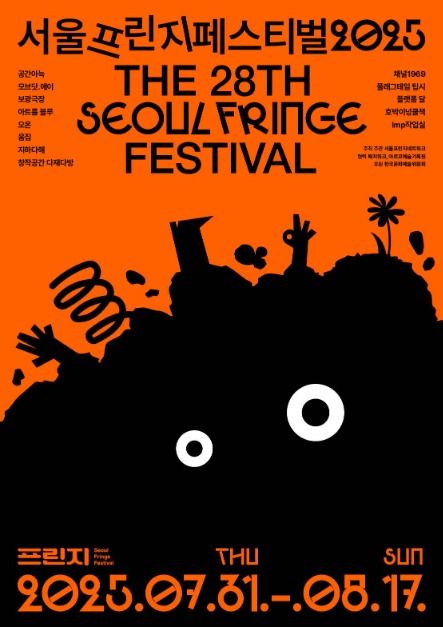
Seoul Fringe Festival (서울프린지페스티벌)
2.3Km 2025-07-24
84-3 Seongmisan-ro 13-gil, Mapo-gu, Seoul
+82-2-325-8150
Seoul Fringe Festival has been held every summer annually since 1998. The festival is open to artists of all genres, from dance to music and media art. Due to the open style and non-competitive element of the festival, artists and festival-goers alike are free to express themselves however they choose.
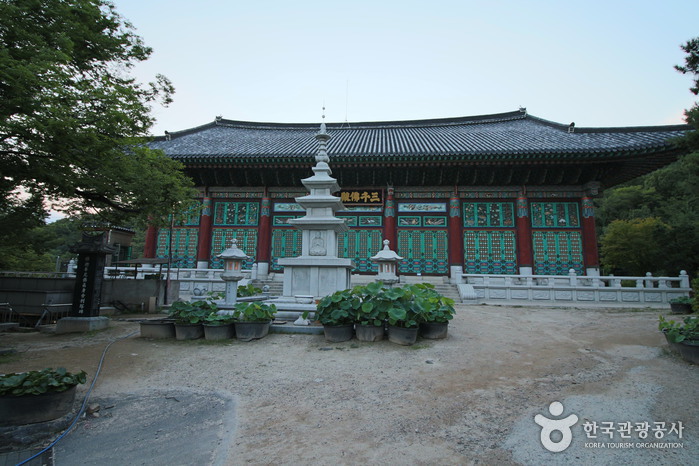
Bongwonsa Temple (봉원사)
2.3Km 2023-03-13
120, Bongwonsa-gil, Seodaemun-gu, Seoul
+82-2-392-3007
Located on the outskirts of Ansan Mountain in Bongwon-dong, Seodaemun-gu, Seoul, Bongwonsa Temple, as the center of Korean Buddhism Taego, is a thousand-year-old temple with a long history and tradition. In 889 (3rd year of Shilla Queen Jinseong’s reign), Monk Doseon founded it at the ground of Yeonhui Palace (now Yonsei Univ.) and named it Banyasa temple. It was destroyed during the Imjin War in 1592, and later in 1748 (the 24th year of Joseon King Yeongjo’s reign), it was rebuilt and renamed “Bongwonsa” by two Buddhist monks, Chanjeup and Jeungam.
“Yeongsanjae,” one of the Buddhist rituals and also a National Intangible Cultural Property, takes place at Bongwonsa on June 6 every year wishing for world peace and the reunification of North and South Korea. It was designated as one of the Intangible Cultural Heritage of Humanity by UNESCO in 2009. During Yeongsanjae, visitors can enjoy the Buddhist arts such as Beompae (Buddhist temple music for rituals) and dancing. Also, during summertime, Seoul Lotus Flower Culture Festival takes place, where visitors can enjoy the beautiful lotus flowers which are a symbol of Buddhism.
 English
 한국어
한국어 日本語
日本語 中文(简体)
 Deutsch
 Français
 Español
 Русский


