
Seoul Hyochang Park (서울 효창공원)
3.7Km 2024-07-09
177-18 Hyochangwon-ro, Yongsan-gu, Seoul
Hyochang Park covers 122,245 square meters spanning across Hyochang-dong and Cheongpa 2-dong. It is a historic landmark that once contained several royal tombs, and was known at that time as Hyochangwon. The cemeteries that were originally located in Hyochangwon belonged to Crown Prince Munhyo, King Jeongjo’s first son who died at the age of five; Royal Noble Consort Uibin of the Seong Clan, King Jeongjo’s royal concubine and Crown Prince Munhyo’s mother; Royal Noble Consort Sugui of the Park Clan, King Sunjo’s royal concubine; and her daughter Princess Yeongon. The royal tombs were moved to Seooreung Tombs in the waning months of the Japanese colonial period. The Japanese empire began the development of Hyochangwon into a park in 1924, and the Japanese governor-general officially assigned the site as a park in 1940.
Presently, several of Korea’s greatest leaders are buried in Hyochang Park. The remains mostly belong to independence activists including Yoon Bong-gil, Lee Bong-chang, and Baek Jeong-gi, whose graves are collectively known as Samuisa Tomb. A statue of Lee Bong-chang has been built in the graveyard. Among the other patriotic martyrs who are interred in the park are Kim Gu and some of the key figures of the provisional government such as Lee Dong-nyeong, Cha I-seok, and Cho Seong-hwan. An ancestral shrine named Uiyeolsa has been built along the main gate and holds the portraits of the deceased independence activists.
CM Hospital (CM병원)
3.7Km 2026-01-02
CM Chungmu Hospital, 13 Yeongdeungpo-ro 36-gil, Yeongdeungpo-gu, Seoul
Founded in 1949, this general hospital specializes in orthopedics and joint care. It is a nationally certified general hospital and a government-designated joint specialty hospital. As a third-generation institution, it is now led by Director Lee Sang-hoon, who has been appointed as the Chairman of the Medical Committee of the Korean Sport & Olympic Committee (KSOC) and is recognized as a pioneer in sports medicine in Korea. He is also the first IOC-certified specialist in Korea and serves as a Vice Chairman of the Olympic Council of Asia (OCA).
Haneul Park (하늘공원)
3.9Km 2024-11-28
95 Haneulgongwon-ro, Mapo-gu, Seoul
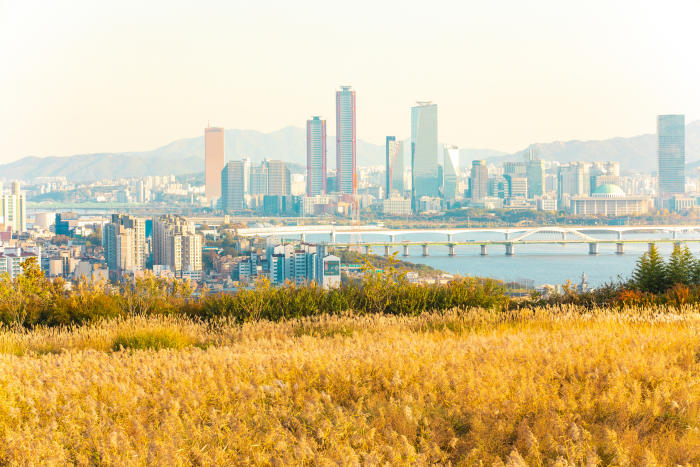
Haneul Park is one of five parks that make up World Cup Park, together with Peace Park, Nanjicheon Park, Nanji Hangang Park, and Noeul Park. It was established for the purpose of restoring the ecological environment so operates its facilities by using natural energy. It features a silver grass field, mixed grassland, rock garden, sunflower field, observatory rest area, and wind power generator. Among the various parts of the World Cup Park, it is located the closest to the sky and shows the transformation from a barren landfill restored to nature. In fall, silver grass forms a spectacle, and, here, visitors can get a clear, panoramic view of Seoul including Bukhansan Mountain and the Hangang River. It is also known as a place for beautiful sunsets and nightscapes.
Sealala Water Park (씨랄라 워터파크)
3.9Km 2024-03-20
(2nd underground floor), 164, Mullae-ro, Yeongdeungpo-gu, Seoul
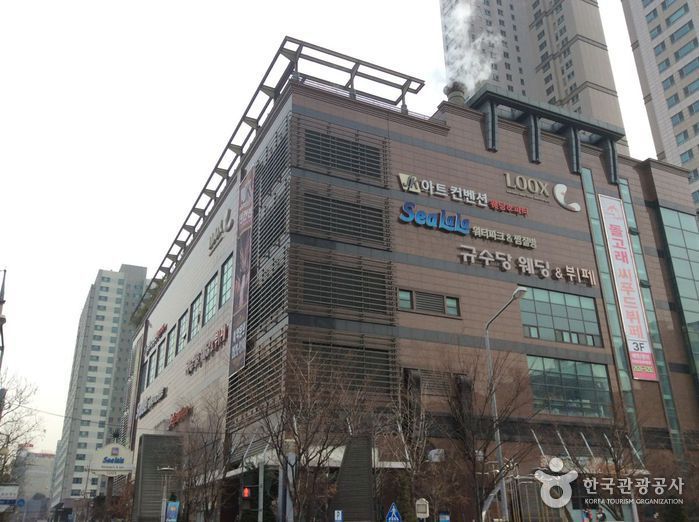
Sealala Water Park is a water park at the heart of the city where one can enjoy water activities across the four seasons. Its name is a portmanteau of the sea and lala, symbolizing the fun one can have in the water park. Inspired by the Mediterranean, the water park has water flowing pool, slides, beach pools, the Kids Land, bath pools, and rotating slides. Amenities onsite include convenience stores, manhwa cafe, and a swimming equipment store. Nearby tourist sites include the Yeongdeungpo Park, The National Assembly Building, and the Yeouido Park.
SEVEN LUCK CASINO - Seoul Dragon City Branch (세븐럭카지노(서울드래곤시티점))
4.1Km 2023-07-21
95, Cheongpa-ro 20-gil, Yongsan-gu, Seoul
A special experience at the center of Seoul
Seven Luck Casino in Seoul Dragon City is located in Yongsan, Seoul, the center of Korean tradition and culture. This casino branch presents a grand x_height and wide space, decorated with a sensual interior design for elegance and comfort on a site of 3,146.96 m2. It is full of up-to-date casino facilities, such as Baccarat, Blackjack, Roulette, Tai-Sai, Seven Luck Poker, Casino War, Electronic Table Games (ETG), and slot machines. There are many famous hotels, tourist sites, and cultural heritage sites nearby Seven Luck Casino in Seoul Dragon City. Besides the casino, visitors can experience various traditional and contemporary cultures of South Korea.
* Seven Luck Casino is exclusively for the use of foreigners.
* Must be 19 years of age or older to enter.
* Passports are required to verify the age and nationality of patrons.
* Metal detectors are used as an added safety precaution.
Seodaemun Prison History Museum (서대문형무소역사관)
4.1Km 2024-12-02
251 Tongil-ro, Seodaemun-gu, Seoul
Seodaemun Prison was built under the Japanese administration to imprison independence movement activists. It first opened on October 21, 1908 under the name Gyeongseong Prison. Eventually, so many activists were imprisoned that the building had to be expanded. At that time, the name changed to Seodaemun Prison on September 3, 1912. Eighty years later, the prison was turned into Seodaemun Independence Park on August 15, 1992 to commemorate the Korean patriots who were tortured in prison, giving their lives for freedom. Of the many buildings, only seven were preserved for their historical significance, among which three prison buildings and the execution site were designated as a Historic Site. In 1998, the park underwent another transformation into today's Seodaemun Prison History Hall to educate the public on the importance of Korea's independence and the sacrifices of those who fought to achieve it.
Dongnimmun Gate (독립문)
4.1Km 2022-12-15
251, Tongil-ro, Seodaemun-gu, Seoul
Dongnimmun stands at the location originally known as Yeongeun, where envoys were once treated. When a Chinese envoy visited, the King would go out through this door to greet. In 1898, to announce the independence from Japan, Dongnimun was constructed with the fund collected by the citizens. The traces of the past still remain on Dongnimmun with two pillars in front of Dongnimmun being the remains of Yeongeunmun.
The Arc de Triomphe in France can be recalled in comparison to Dongnimmun. Dongnimmun was built using granite with a passageway x_height of 14.28 meters. On the top it is written ‘Dongnimmun’ in Korean with the national flag drawn on each side. On the inner-left side there are stone stairs leading to the attic. The national flower Mugunghwa are planted around Dongnimmun. Now it is surrounded by roads and it is eye-catching to view when passing by.
Mokdong Stadium (목동운동장(목동아이스링크,사격장)
4.1Km 2022-09-14
939, Anyangcheon-ro, Yangcheon-gu, Seoul
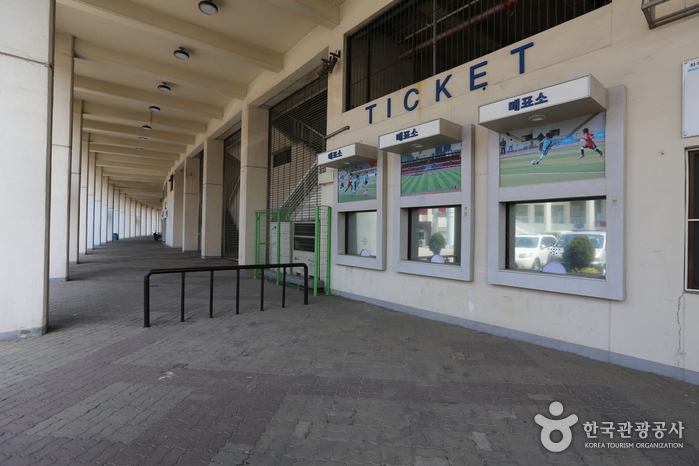
Mokdong Stadium was opened in 1989 with a stadium, a baseball field and an indoor ice rink and added footsal field in 2008 to improve Korea’s sports culture. The soccer field was used as the home field for K-league teams in the past. The ice rink hosts hockey matches and figure skating competitions as well as ice ballet performances. Other facilities include a main square, an indoor shooting range and a gym for residents to enjoy.
National Memorial of Korean Provisional Government (국립대한민국임시정부기념관)
4.2Km 2023-01-16
279-24, Tongil-ro, Seodaemun-gu, Seoul
The National Memorial of Korean Provisional Government was established to shine a light on the proud history of the Korean Provisional Government's independence and the spirit of a democratic republic and to pass it on to future generations. The four-story memorial building with three underground floors houses three permanent exhibits, one special exhibit, Larchiveum, Symbol Plaza, storage, multi-purpose hall, and rooftop garden over a total area of 3,656 square meters, a total floor area of 9,703 square meters and a total exhibition space of 2,240 square meters. The permanent exhibits consist of a series of historic events from the March 1st Movement, which served as a turning point for the formation of the Provisional Government, to the foundation of the Korean Government that succeeded the mantle of the provisional government, while the special exhibit on the 1st floor currently hosts a special opening exhibition under the title of 『The Return of the Provisional Government of the Republic of Korea』. Moreover, a symbolic wall installation under the theme of "Waves of History" is displayed in the outdoor plaza on the 1st floor of the memorial expressing the Provisional Government’s desire for independence and the dynamics of the past, present, and future of Korea.
e-Sports Hall of Fame (e스포츠 명예의 전당)
4.2Km 2025-11-17
31 Maebongsan-ro, Mapo-gu, Seoul
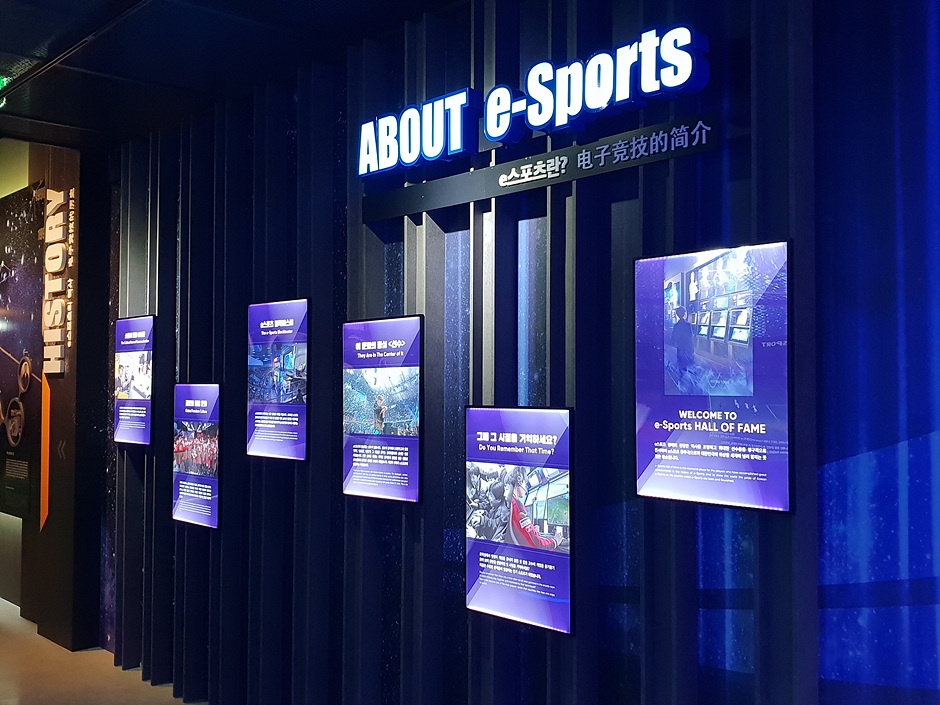
The e-Sports Hall of Fame is operated by the Ministry of Culture, Sports and Tourism and the Korea e-Sports Association to exhibit and honor the esports athletes who have made history for their amazing skills, making Korea synonymous with esports. Visitors can see the athletes' uniforms, gaming materials, trophies, and more, as well as try their hand at playing famous esports games firsthand.
 English
 한국어
한국어 日本語
日本語 中文(简体)
 Deutsch
 Français
 Español
 Русский


