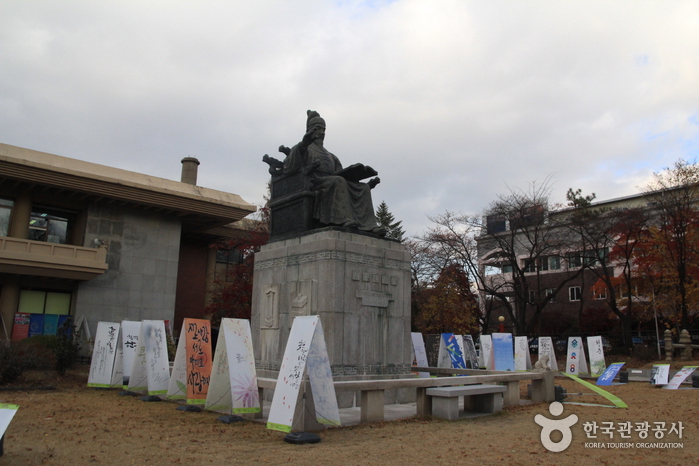
King Sejong The Great Museum (세종대왕박물관)
11.5Km 2024-03-08
56, Hoegi-ro, Dongdaemun-gu, Seoul
King Sejong The Great Museum is a cultural complex located in the heart of Seoul, near Gwanghwamun Plaza.The Hangeul Room exhibits documents published during the reign of King Sejong, the Science Room displays Cheugugi and celestial planisphere, and the Korean Traditional Music Room showcases various traditional Korean musical instruments. The Biography Room features Portrait of King Sejong and paintings depicting scenes from his life. Outdoors, there are statues of King Sejong, the scahe sundial, the clepsydra, and Cheugugi.
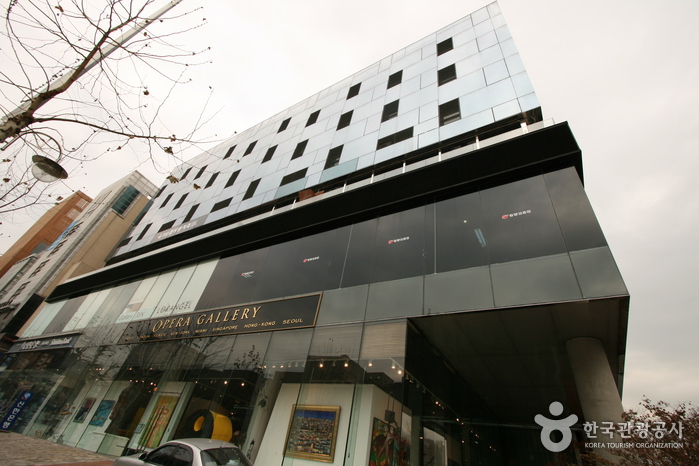
Park Ryu Sook Gallery (박여숙화랑)
11.5Km 2025-01-08
461, Apgujeong-ro, Gangnam-gu, Seoul
Soon after its opening in 1983, the Park Ryu Sook Gallery moved to Cheongdam-dong, an uncharted territory back in 1988. Ever since, the gallery has played a significant role in turning the region into one of the most representative art places in Korea. The Park Ryu Sook Gallery mainly deals with modern art, and contributes to the development of Korea's modern art scene by recruiting and supporting talented rookies in the field, and by introducing artwork of major modern artists from abroad. Moreover, the gallery works to promote Korean art worldwide by joining major art fairs such as the Chicago, Koln, and Basel art fairs.
Through these and similar activities, the Park Ryu Sook Gallery works to provide the public the invaluable opportunity to enjoy quality artwork, maximize their own creativity, and take a moment out of their hectic lives to indulge in a little self-reflection.

Banobagi Plastic Surgery (바노바기성형외과의원)
11.5Km 2025-10-23
517 Nonhyeon-ro, Gangnam-gu, Seoul
Since 2009, BANOBAGI Plastic Surgery has been dedicated to creating a comprehensive medical system tailored to the needs of international patients. We continuously strive to deliver top-tier medical services alongside a range of convenience services designed to meet the expectations of our global clientele.
To ensure seamless communication and personalized care, we have specialized beauty counselors fluent in multiple languages, including Mongolian, English, Thai, Indonesian, Japanese, Vietnamese, Chinese, Russian, and Burmese. These counselors provide customized and confidential consultations, along with additional services such as airport transfers and accommodation arrangements.
BANOBAGI Plastic Surgery excels in facial contouring, two-jaw surgery, anti-aging treatments (lifting), eye and nose surgery, breast and body procedures, and stem cell therapies. Beyond plastic surgery, we offer dermatology, non-invasive petit treatments, dental care, wellness programs, and cosmetic solutions, making us a comprehensive medical group capable of delivering one-stop care.
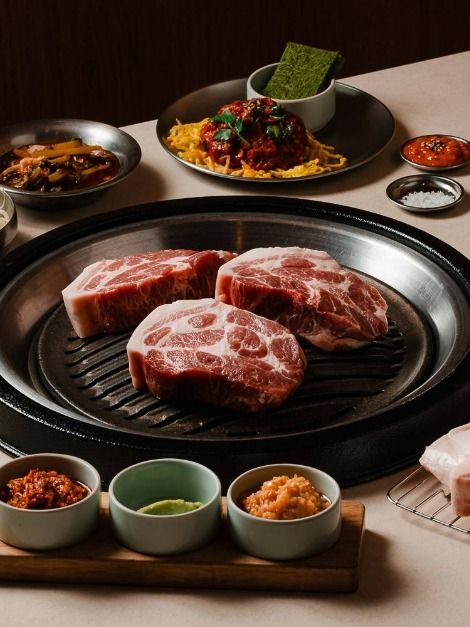
BBQ Yul (고깃집열)
11.5Km 2025-12-16
48 Seocho-daero 78-gil, Seocho-gu, Seoul
BBQ Yul, a Korean barbecue restaurant in Gangnam, boasts deep flavors of pork aged for 336 hours and charcoal. All meats are sourced domestically and cooked by the skilled staff to ensure optimal cooking and flavor. The interior is composed of warm lighting and wooden decor, and opening the folding door reveals an open space like a terrace.
Hangaram Art Museum in Seoul Arts Center (예술의전당 한가람미술관)
11.5Km 2022-12-16
2406, Nambusunhwan-ro, Seocho-gu, Seoul
Hangaram Art Museum, located in the left wing of the Seoul Arts Center, displays a unique exhibition of formative arts. Established in 1990, the museum has a total area of 15,540 ㎡ and contains 6 exhibition halls (including one for oversized artwork), a storage area, and an art shop. The building features a lighting system that controls the humidity and temperature and is equipped with a luminous ceiling system that captures natural sunlight and feeds it into the museum, allowing visitors to enjoy a brightly lit viewing area.
The Art Square in front of the museum houses a wide range of exclusive artwork and serves as a venue for various events such as the Cloz Art Market. Visitors may also enjoy the open-air café right in front of the building or dine at “Yehyang,” a traditional Korean restaurant right down the stairs.
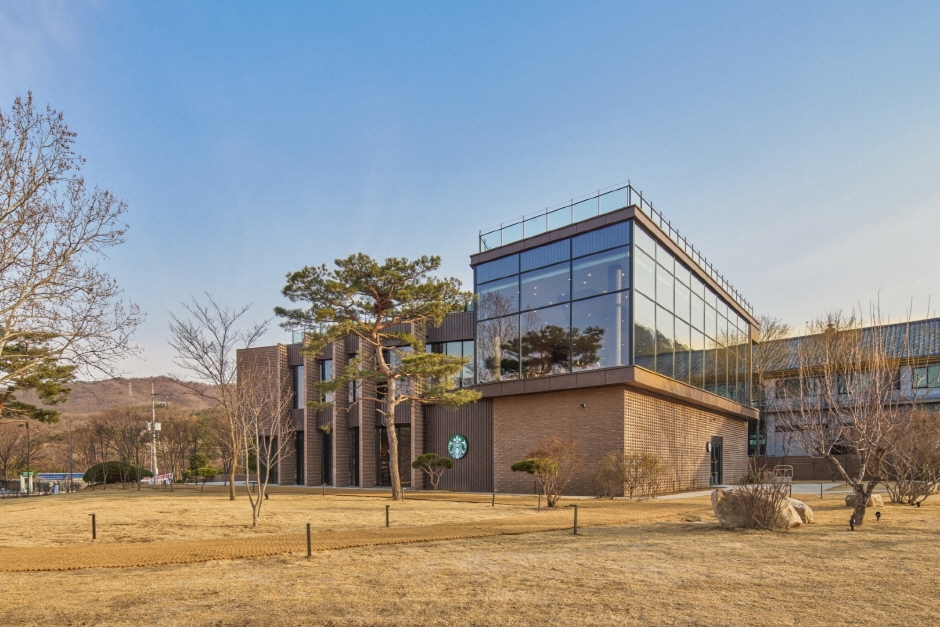
Starbucks Buckhansan (스타벅스 더북한산)
11.6Km 2024-12-27
24-11 Daeseomun-gil, Eunpyeong-gu, Seoul
'"The" store, panoramic view of Bukhansan Mountain and garden
Starbucks Bukhansan is the third Destination Store by Starbucks. It features a “Healing in Nature” concept that beautifully combines the natural beauty of Bukhansan Mountain with various landscape spaces and offers breathtaking views of Bukhansan Mountain.
Starbucks Bukhansan store is currently the most loved and trending place in Korea, and it ranked first in the “2023 Best Restaurants Voted by Locals VS Foreigners” list announced by the Korea Tourism Organization.
Starbucks Bukhansan proudly offers the store's exclusive Bukhansan Lemon Earl Grey Blended beverage, and Crafted Food available only at some Starbucks stores. There is a photo zone on the 3F rooftop to take memorable pictures. These are the reasons why many customers consider it one of the top locations to have a special Starbucks experience.
Yeson Voice Center (예송이비인후과 음성센터)
11.6Km 2025-10-23
773 Samseong-ro, Gangnam-gu, Seoul
Yeson Voice Center is the only center of its kind in Korea that implements various high-tech treatment methods.
It provides multilaryngeal muscle Botox injection tailored to patients with spasmodic dysphonia to significantly increase the length of their normal voice period, while increasing the possibility of curing the disease. As such, the center provides patients with spasmodic dysphonia, a disease previously considered incurable, with renewed hope.
Additionally, the center uses advanced surgical techniques, including microflap laryngomicrosurgery, to treat various diseases such as vocal cord nodules, vocal cord polyps, Reinke's edema or vocal fold cyst, allowing patients to recover their clean and clear voices.
The center also provides laryngoplasty, enabling transgender individuals to change their voices to their preferred gender identity, for a thorough transition.
Yeson Voice Center has created a new healthcare treatment culture. It is committed to steadfastly conducting research to provide patients in Korea with new medical services they have not experienced before and to get closer to its patients.
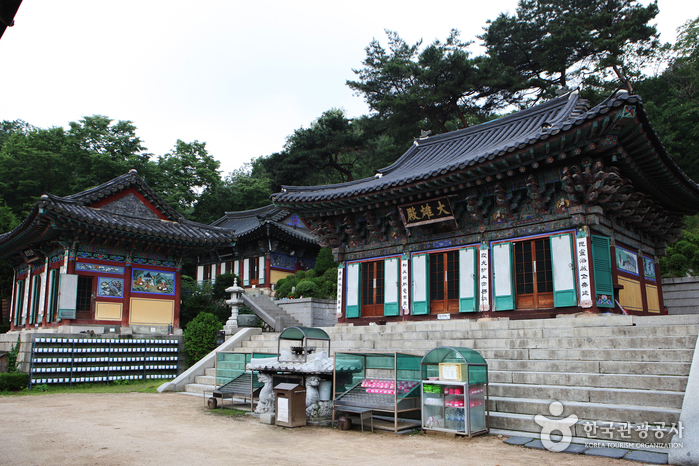
Seoul Hwagyesa Temple (화계사(서울))
11.6Km 2021-11-02
117, Hwagyesa-gil, Gangbuk-gu, Seoul
Hwagyesa Temple was built in 1522 (the seventeenth year of the reign of King Jungjong of the Joseon dynasty) by monk Shinwol, but was destroyed in a fire in 1618. It was rebuilt the following year, and expanded In 1866 through the efforts of Monks Yongseon and Beomun.
The temple also has various templestay programs for visitors. Hwagyesa Temple is located not too far from the city but also provides a natural environment.
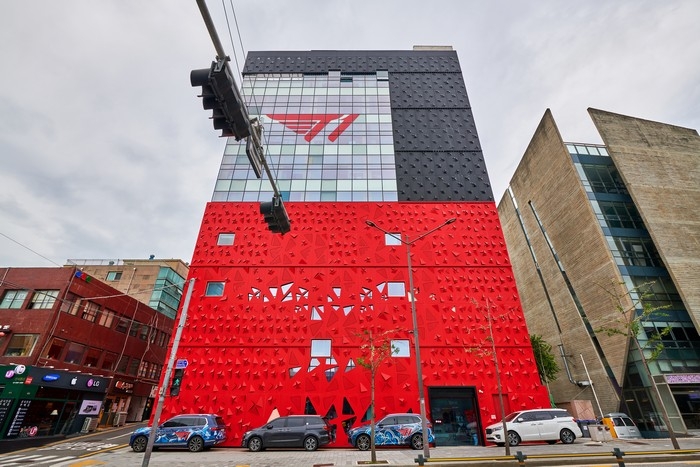
T1 (T1)
11.6Km 2025-11-05
627 Seolleung-ro, Gangnam-gu, Seoul
Perfect place for T1 fans
It is a space and goods shop for fans of the LoL pro game team T1 who enjoy e-sports. A life-sized figure of the legendary pro gamer Faker is at the entrance, and trophies won in previous LoL-related competitions are on display. It is a place where you can enjoy T1 up close by engraving your name on the same uniform as the players.
Himedi, Inc. (하이메디)
11.6Km 2025-11-21
4th Floor, 6-9 Teheran-ro 25-gil, Gangnam-gu, Seoul
Your Health, Your Journey. World-class medical tourism in South Korea, on your terms.
We only work with best clinics in Korea.
Our curated check up packages use Korea's most advanced diagnostic to give you answer beyond a typical exam, from full body check up to hormon test. Every packages comes with Himedi's concierge support.
We also provide a complete range of wellness and aesthetic services—including advanced skin care, hair restoration, dental treatments, vision correction, stem cell therapy, plastic surgery, and body sculpting—to help you look and feel your best.
 English
 한국어
한국어 日本語
日本語 中文(简体)
 Deutsch
 Français
 Español
 Русский


