Sinteuri Park (신트리공원)
18.0Km 2021-07-08
21, Sinteuri-ro, Bupyeong-gu, Incheon
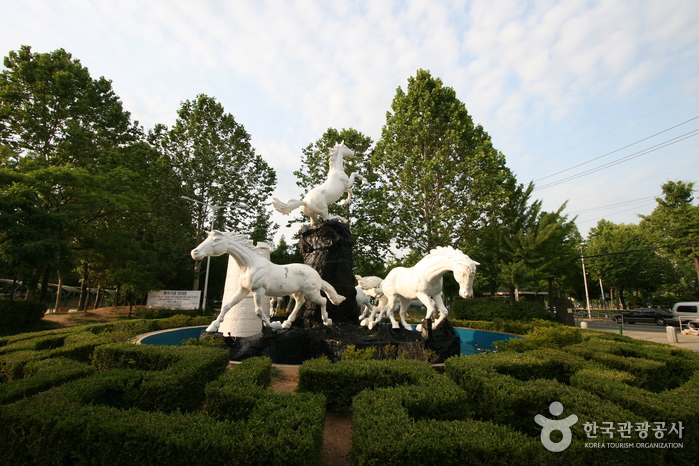
The city of Bupyeong is surrounded by Gyeyangsan Mountain, Cheolmasan Mountain, and Manwolsan Mountain, which all form a basin-shaped area in the center. Bupyeong slowly began to establish itself as a city after the opening of Gyeongin railway and the U.S. Army base established right after the Korean War. Sinteuri Park in Bupyeong 4(sa)-dong neighborhood is equipped with outdoor recreational facilities including a soccer field, tennis court, badminton court, children's playground, walking trail, and water fountain, spanning an impressive 58,594 ㎡. It also has a library with 1,500 seats, and a floor area of 7,869 ㎡. The park serves as a main recreational area for Bupyeong residents.
Gyeyangsan Mountain Trail (계양산둘레길)
18.1Km 2024-02-15
Danam-dong, Gyeyang-gu, Incheon
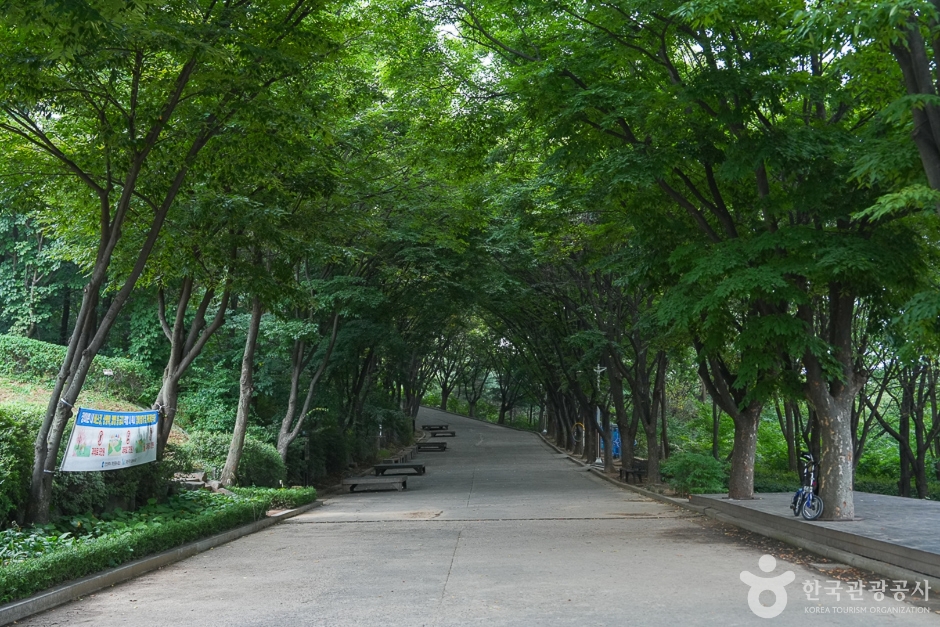
The Gyeyangsan Mountain Trail, spanning 7.29 kilometers, is set around Gyeyangsan Mountain, which stands at 395 meters above sea level in Incheon. The journey begins at the Gyeyangsan Outdoor Theater and winds through several notable points including Imhak Ogeori, Mudanggol Mineral Spring, Pigogae Pass, Jingmaeigogae Pass, the Rose Garden, and the Gyeyang Cultural Center, before circling back to the starting point. The trek, which takes approximately two hours to complete, is facilitated by a decked path that extends throughout the route, making it accessible and enjoyable for hikers.
Seoul Bangidong Ancient Tombs (서울 방이동 고분군)
18.1Km 2022-12-29
219, Ogeum-ro, Songpa-gu, Seoul
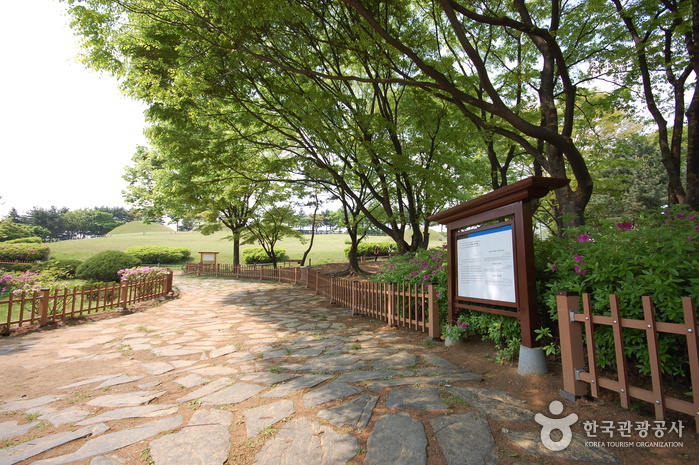
The ancient tombs in Bangi-dong were discovered during the land readjustment project of Jamsil-jigu District in 1975. A total of eight ancient tombs were excavated until 1976, and the site was restored into a park in 1983. The Bangi-dong area was originally a low line of hills with an altitude of 30-50 meters above sea level, but it has been made into flatland for urban development purposes. Tomb numbers 1 to 6 lie on the same hill, while tomb no. 7 and 8 are located on another hill a short distance away.
All eight tombs have circular burial mounds. The insides of the a tomb feature a square or rectangular-shaped burial chamber with earthen ground and stone walls, and a passage leading from the tomb entrance to the chamber. However, details of the burial chambers vary by tomb. Most of the tombs had been robbed before the investigation, but a few relics such as plates and pots have been excavated. At the time of excavation, the relics were presumed to have come from the Baekje dynasty (18 BC-660 AD), but it is now estimated that they date back to the Unified Silla Period (676-935 AD).
![Taereung and Gangneung Royal Tombs [UNESCO World Heritage] (서울 태릉과 강릉 [유네스코 세계문화유산])](http://tong.visitkorea.or.kr/cms/resource/16/2658216_image2_1.jpg)
Taereung and Gangneung Royal Tombs [UNESCO World Heritage] (서울 태릉과 강릉 [유네스코 세계문화유산])
18.1Km 2022-09-19
681, Hwarang-ro, Nowon-gu, Seoul
Designated as a Historic Site, Taereung & Gangneung Royal Tombs is comprised of two tombs. Taereung Royal Tomb houses the burial mound of Queen Munjeong who was the second queen of King Jungjong, the 11th King of the Joseon dynasty, and Gangneung Royal Tomb houses the burial mounds of King Myeongjong, the 13th King of Joseon dynasty, and Queen Insun. King Myeongjong ascended the throne after his elder brother, King Injong, when he was twelve years old at Geunjeongjeon Hall in Gyeongbokgung Palace in 1545. The king’s mother, Queen Munjeong ruled behind the scenes, acting as guardian for eight years.

Olympic Park (올림픽공원)
18.2Km 2023-10-19
424 Olympic-ro, Songpa-gu, Seoul
Olympic Park is an impressive leisure facility in which historic remains from the Baekje era share space with modern, state-of-the-art sports stadiums, an eco-friendly forest, and spacious grass fields. The legacy of the 1988 Seoul Olympics, the park not only houses the country’s largest sports arena, but has also become a place where Seoul residents come to relax and unwind.
Spread across approximately 1.45 million square meters, Olympic Park encompasses the land that was once Mongchontoseong Fortress and Mongchonhaeja (manmade lake) from the early Baekje period. The park is divided into several zones, including a leisure sports park, a cultural art park, an eco-park, and the History Experience Park dedicated to the area’s rich historic heritage.
Because Olympic Park is so large and takes over three hours to explore, visitors are advised to familiarize themselves with entrances and exits and travel routes before they start. To further save time, visitors can ride the Road Train (“Hodori Train”) located next to Peace Square.
Soma Museum of Art (소마미술관)
18.2Km 2023-04-13
424, Olympic-ro, Songpa-gu, Seoul
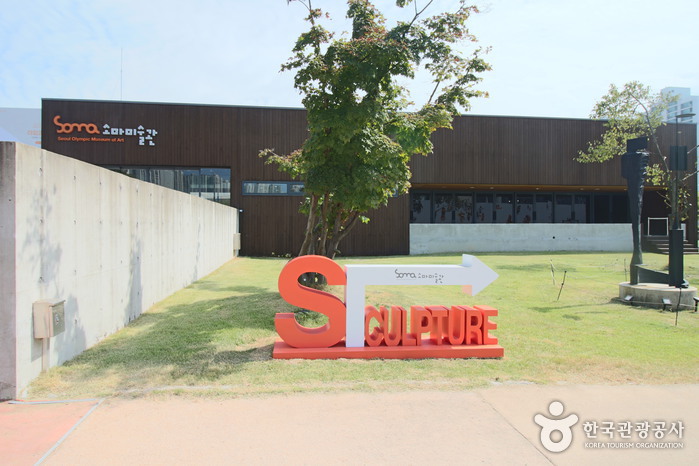
Soma Museum of Art was opened in September 2004 as a cultural space amid the nature of Seoul Olympic Park. The museum displays over 222 sculptures, and offers a variety of cultural and educational programs, including the nation's first drawing center and archive.
Olympic Park Stadium (올림픽공원 경기장)
18.2Km 2021-06-11
424, Olympic-ro, Songpa-gu, Seoul
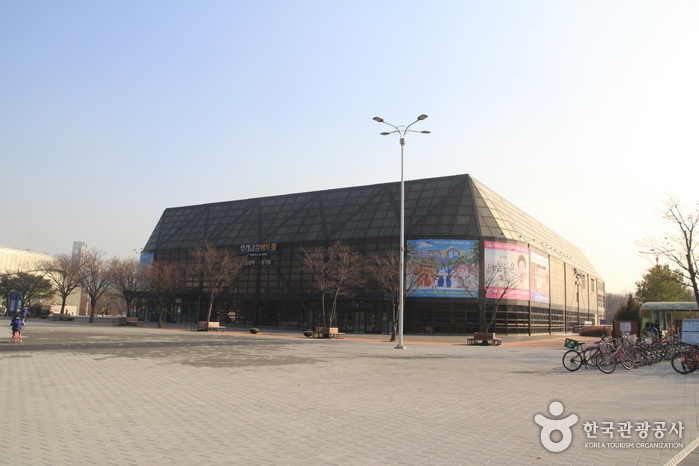
Olympic Park is an expansive outdoor area for Seoul residents to enjoy, offering facilities and venues for a range of events including athletic competitions, concerts and other performances. The park houses athletic facilities including the gymnasium of the ’88 Seoul Olympic Games, a fencing stadium, weightlifting stadium, swimming pool and tennis courts. Moreover, those venues are multi-purpose facilities that can host a wide range of events and performances.
Seoul Mongchontoseong Earthen Fortification (서울 몽촌토성)
18.2Km 2024-03-12
424, Olympic-ro, Songpa-gu, Seoul
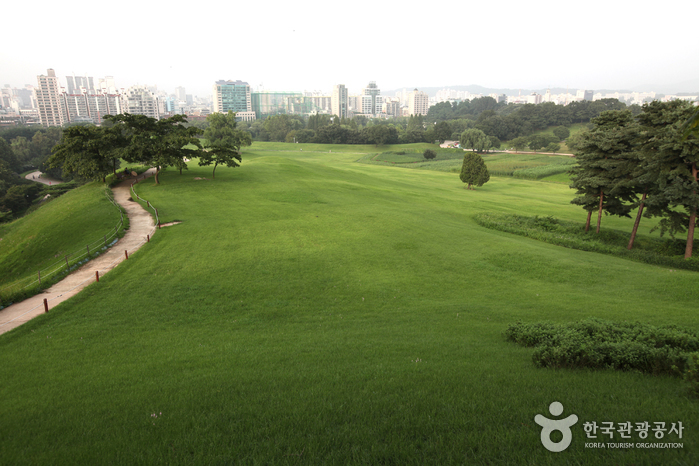
Mongchontoseong Earthen Fortification is an ancient earthen fortress built during the Hanseong period of the ancient Korean kingdom of Baekje (BC 18-AD 660). It is believed to have been constructed in the 3rd to 4th centuries. Utilizing the natural advantages of the Hangang River, it served defensive purposes with its trench and log barrier. Excavated relics from the Baekje era are on display at the Seoul Baekje Museum. The site is situated within the Olympic Park in Songpa, Seoul.
Bupyeong Haemultang (Seafood Stew) Street (부평 해물탕거리)
18.2Km 2022-10-26
113, Bupyeongmunhwa-ro, Bupyeong-gu, Incheon
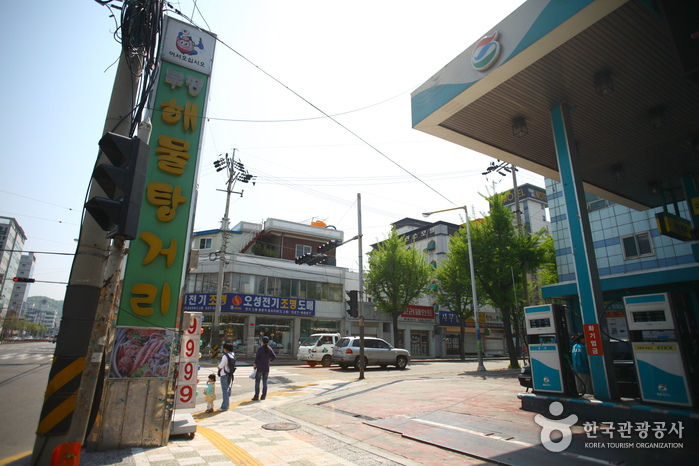
The history of Bupyeong Haemultang Street began 30-40 years ago, when there were just three restaurants on the street. Over the years, the street gained a reputation for serving delicious haemultang (seafood stew), and there are now ten seafood restaurants on the street. Each restaurant offers a rich, yet distinctly different flavored seafood stew prepared with aromatic vegetables and fresh seafood purchased from the marketplace every morning. The Haemultang Street has become so popular that many people travel the long distance from Seoul just for a satisfying meal of seafood stew. The restaurants specialize in stew and steamed seafood dishes, but also continue to develop new fusion menus to please all taste buds.
Buramsan Butterfly Garden (불암산나비정원)
18.3Km 2024-07-19
51-27 Hangeulbiseok-ro 12-gil, Nowon-gu, Seoul
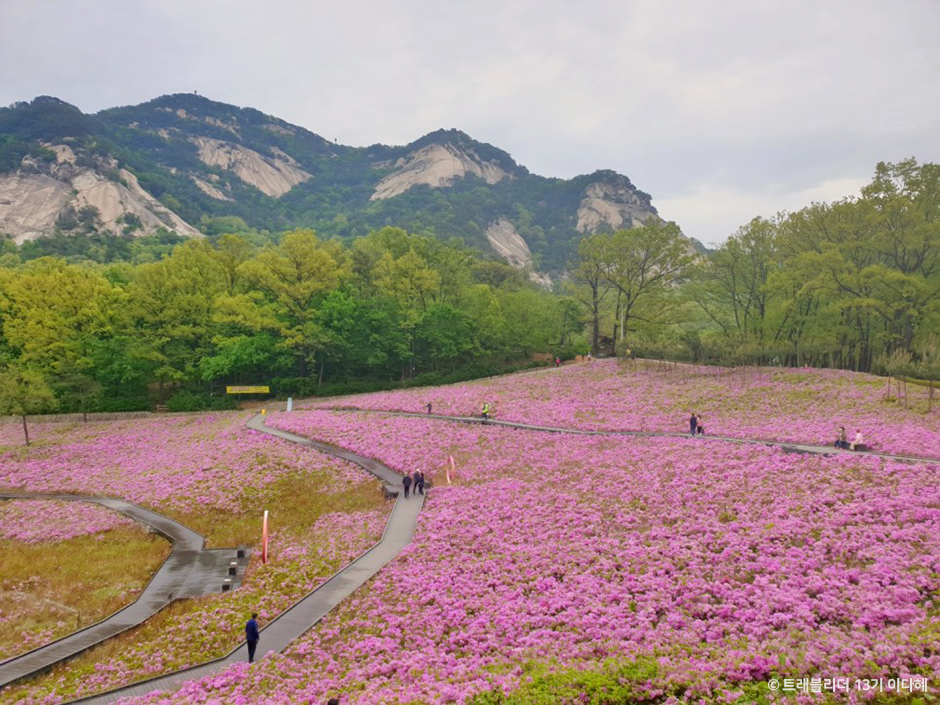
Buramsan Butterfly Garden is located within Buramsan Healing Town in Nowon. It is an exhibition garden where one can observe live butterflies all year round. The main building's first floor comprises an incubation center, a breeding center, and a butterfly greenhouse while the second floor is used as an insect education center. At the insect education center, visiors can observe materials related to and specimens of endangered insect species. Groups require a reservation in advance.
 English
 한국어
한국어 日本語
日本語 中文(简体)
 Deutsch
 Français
 Español
 Русский


