![JDX - Savezone Gwangmyeong Branch [Tax Refund Shop] (JDX 세이브존 광명점)](http://tong.visitkorea.or.kr/cms/resource/59/3313759_image2_1.jpg)
JDX - Savezone Gwangmyeong Branch [Tax Refund Shop] (JDX 세이브존 광명점)
7.3Km 2024-06-27
87, Cheolmangsan-ro, Gwangmyeong-si, Gyeonggi-do
-
![Lux Genie - Savezone Gwangmyeong Branch [Tax Refund Shop] (룩스지니 세이브존 광명점)](http://tong.visitkorea.or.kr/cms/resource/15/3314215_image2_1.jpg)
Lux Genie - Savezone Gwangmyeong Branch [Tax Refund Shop] (룩스지니 세이브존 광명점)
7.3Km 2024-06-27
87, Cheolmangsan-ro, Gwangmyeong-si, Gyeonggi-do
-

Youngpoong Bookstore - Jongno Branch [Tax Refund Shop] (영풍문고 종로점)
7.3Km 2024-04-18
41, Cheonggyecheon-ro, Jongno-gu, Seoul
-
![Olive Young - Bangbae Isu Branch [Tax Refund Shop] (올리브영 방배이수)](http://tong.visitkorea.or.kr/cms/resource/77/2889677_image2_1.jpg)
Olive Young - Bangbae Isu Branch [Tax Refund Shop] (올리브영 방배이수)
7.4Km 2024-04-18
118, Dongjak-daero, Seocho-gu, Seoul
-
![Seochon Guest House [Korea Quality] / 서촌게스트하우스 [한국관광 품질인증]](http://tong.visitkorea.or.kr/cms/resource/86/2998986_image2_1.jpg)
Seochon Guest House [Korea Quality] / 서촌게스트하우스 [한국관광 품질인증]
7.4Km 2023-09-05
28-3 , Jahamun-ro 7-gil, Jongno-gu, Seoul
+82-2-473-9680
Seochon Guest House in Seochon, Jongno, Seoul, consists of a 90 year-old hanok and a two-story Western-style house. A 6-cheop table is provided for meals, and travelers can use the 1st floor rooms and hall at any time. In the yard, Pansori performances are held twice a year, and residents can sample traditional music, wearing hanbok, and making Korean food; the guesthouse’s other name is Pleasure Valley (Jaeminan Gol)! There are programs for visiting Inwangsan-Bukaksan fortress trail, Gyeongbokgung and other royal palaces, and nearby traditional markets.
![Beaker - Hannam Branch [Tax Refund Shop] (비이커 한남점)](http://tong.visitkorea.or.kr/cms/resource/73/2890173_image2_1.jpg)
Beaker - Hannam Branch [Tax Refund Shop] (비이커 한남점)
7.4Km 2024-04-18
241, Itaewon-ro, Yongsan-gu, Seoul
-
![On The Spot [Tax Refund Shop] (온더스팟)](http://tong.visitkorea.or.kr/cms/resource/13/2891113_image2_1.jpg)
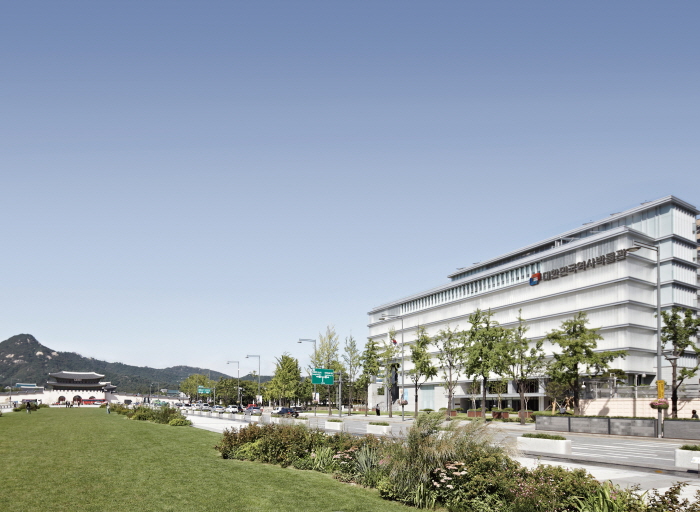
National Museum of Korean Contemporary History (대한민국역사박물관)
7.4Km 2022-12-27
198, Sejong-daero, Jongno-gu, Seoul
+82-2-3703-9200
The National Museum of Korean Contemporary History opened on December 26, 2012, and showcases Korea's modern history, from the opening of Incheon Port to current times. The museum provides an in-depth look at the changes in the nation through exhibitions and educational programs, as well as researching, developing, and collecting materials. The museum is comprised of four exhibition halls; Prelude to the Republic of Korea, Foundation of the Republic of Korea, Development of the Republic of Korea, and Modernization of South Korea, toward the World. In addition, the Korean History Dream Village features a hands-on program hall for children to learn modern and contemporary history. In addition to special exhibitions, the museum also offers educational and cultural programs for children.
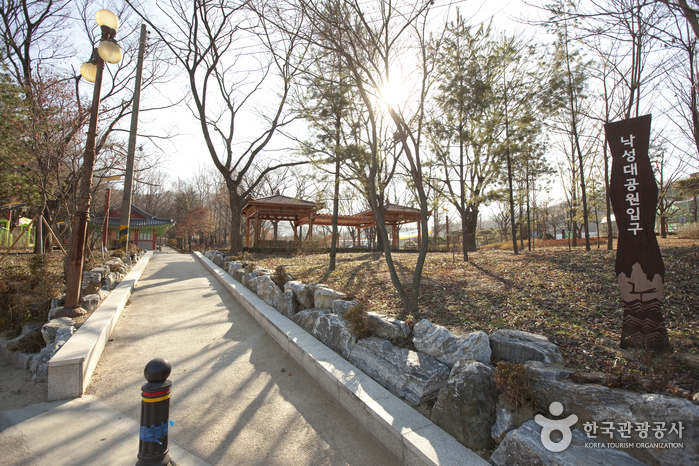
Gwanaksan Mountain Nakseongdae Park (관악산 낙성대공원)
7.4Km 2021-07-16
77, Nakseongdae-ro, Gwanak-gu, Seoul
+82-2-879-6525
Nakseongdae Park was built as a tribute to General Kang Gam-chan (948-1031) of the Goryeo dynasty. In 1973, the city of Seoul reorganized the birthplace of General Kang, resulting in changes to the park. Located inside the park are Anguksa Shrine, the general’s birthplace, and a three-story stone pagoda, which was made during the Goryeo dynasty. The 4.48-meter-high pagoda is made of granite, and is called “Kang Gam-chan Tap (pagoda)” or “Kang Gam-chan Nakseongdae Tap”.
*Anguksa Shrine
Anguksa is a shrine built in 1974 emulating the wooden architecture style of the Goryeo era. The shrine has high ceilings and houses the portrait of General Kang Gam-chan. The shrine is located on the road leading to the back gate of Seoul National University and has become a popular place in the area.
*Nakseongdae Yuji
Nakseongdae Yuji is the birthplace of General Kang Gam-chan and the original location of the three-story pagoda. During the maintenance of Nakseongdae area in 1973, the pagoda was moved into the vicinity of Anguksa Shrine, and a two-meter tall monument was erected in its original location to mark the historical significance of the site.
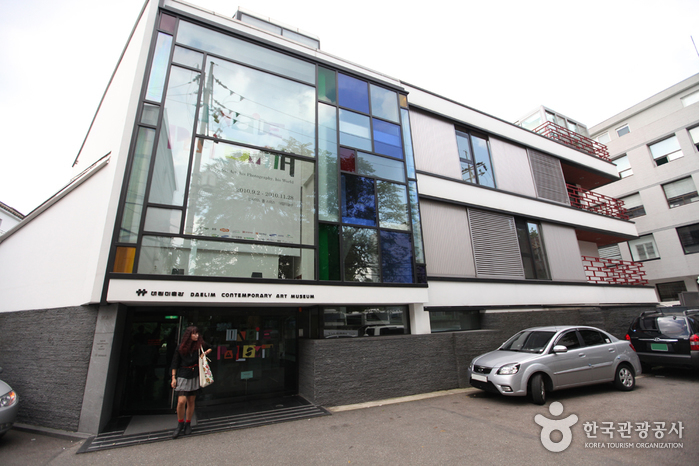
Daelim Museum (대림미술관)
7.4Km 2022-07-29
21, Jahamun-ro 4-gil, Jongno-gu, Seoul
+82-2-720-0667
The Daelim Museum, built by the Daelim Group, was first established in Daejeon in 1996 and later moved to Jongno, Seoul in 2002. The art gallery studies, analyzes, and presents modern art through the lens of photography and holds exhibitions centered around photo media.
The museum is located in the residential area of Tongui-dong, near the time-honored Gyeongbokgung Palace. The museum, which was designed by French architect, Vincent Cornu, and built by the Daelim Corporation, opened its door to the public in late May 2002.
On the first floor, there is a garden, parking lot, reception desk, storage area, and conference room. On the second and third floor are offices and exhibition hall approximately 595 m² in size, consisting of small and large rooms, a long gallery, and a special high-ceilinged exhibition space. On the fourth floor, there is a seminar room that can seat up to 120 guests and a balcony with a beautiful view. From the balcony of the seminar room, Visitors can also enjoy a wide open view of Inwangsan Mountain and Bukhansan Mountain. The stained glass panels (designed to reflect the beauty of traditional Korean wrapping cloth) and the scenic lounges on the 2nd and 3rd floors of the building add to the overall charm.
Above all else, the museum was designed with consideration of the photos, which are very sensitive to humidity, light, and temperature.
 English
 한국어
한국어 日本語
日本語 中文(简体)
 Deutsch
 Français
 Español
 Русский


