![Kolping - Happy Department Store Branch [Tax Refund Shop] (콜핑행복한백화점점)](http://tong.visitkorea.or.kr/cms/resource/26/2880126_image2_1.jpg)
Kolping - Happy Department Store Branch [Tax Refund Shop] (콜핑행복한백화점점)
13.2Km 2024-04-22
309, Mokdongdong-ro, Yangcheon-gu, Seoul
-
![JDX - Happy Department Store Branch [Tax Refund Shop] (제이디엑스행복한백화점점)](http://tong.visitkorea.or.kr/cms/resource/27/2880127_image2_1.jpg)
JDX - Happy Department Store Branch [Tax Refund Shop] (제이디엑스행복한백화점점)
13.2Km 2024-04-19
309, Mokdongdong-ro, Yangcheon-gu, Seoul
-
![Passardi - Happy Department Store Branch [Tax Refund Shop] (파사디행복한백화점점)](http://tong.visitkorea.or.kr/cms/resource/28/2880128_image2_1.jpg)
Passardi - Happy Department Store Branch [Tax Refund Shop] (파사디행복한백화점점)
13.2Km 2024-04-22
309, Mokdongdong-ro, Yangcheon-gu, Seoul
-

Innisfree - Happy Department Store Branch [Tax Refund Shop] (이니스프리행복한백화점점)
13.2Km 2024-04-19
309, Mokdongdong-ro, Yangcheon-gu, Seoul
-
Farbe - Happy Department Store Branch [Tax Refund Shop] (파르베행복한백화점점)
13.2Km 2024-04-19
309, Mokdongdong-ro, Yangcheon-gu, Seoul
-
![Lecaf - Happy Department Store Branch [Tax Refund Shop] (르까프행복한백화점점)](http://tong.visitkorea.or.kr/cms/resource/29/2880129_image2_1.jpg)
Lecaf - Happy Department Store Branch [Tax Refund Shop] (르까프행복한백화점점)
13.2Km 2024-04-22
309, Mokdongdong-ro, Yangcheon-gu, Seoul
-
![Olive Young - Sookmyung Women’s Univ. Branch [Tax Refund Shop] (올리브영 숙대)](http://tong.visitkorea.or.kr/cms/resource/25/2889625_image2_1.jpg)
Olive Young - Sookmyung Women’s Univ. Branch [Tax Refund Shop] (올리브영 숙대)
13.2Km 2024-04-18
19, Cheongpa-ro 45-gil, Yongsan-gu, Seoul
-
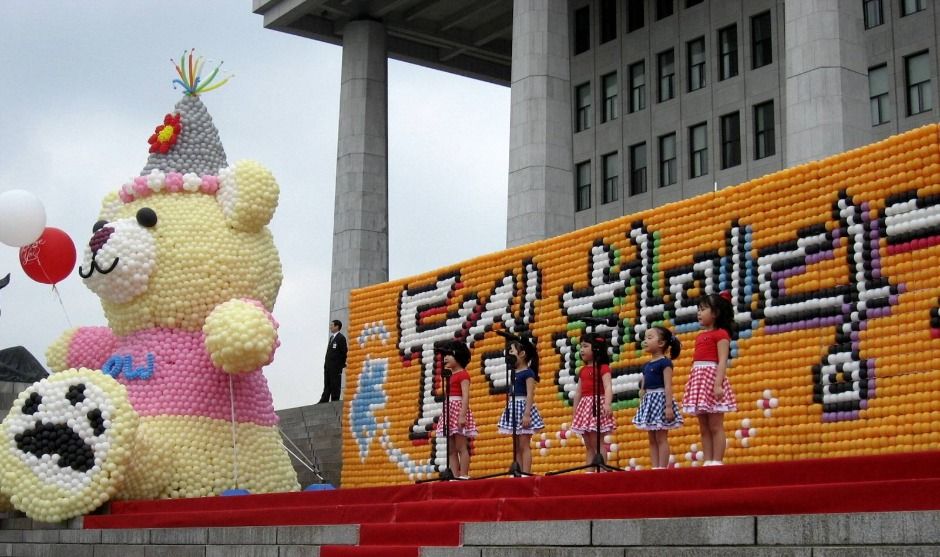
National Assembly Dongsim Festival (국회동심한마당)
13.2Km 2025-04-18
1 Uisadang-daero, Yeongdeungpo-gu, Seoul
+82-2-595-3325
The National Assembly Dongsim Festival started in 2005 by the Pumassi Movement, aiming to revive the tradtional Korean concept of sharing and helping one another. The festival allows youth to meet with and experience adults working in the fields they dream of joining in the future. The festival is attended by over 100 facilities and groups, providing a wide range of experiences, performances, and fun activites for all visitors to enjoy for free.
![Mary Jane [Tax Refund Shop] (메리제인)](http://tong.visitkorea.or.kr/cms/resource/33/2878733_image2_1.jpg)
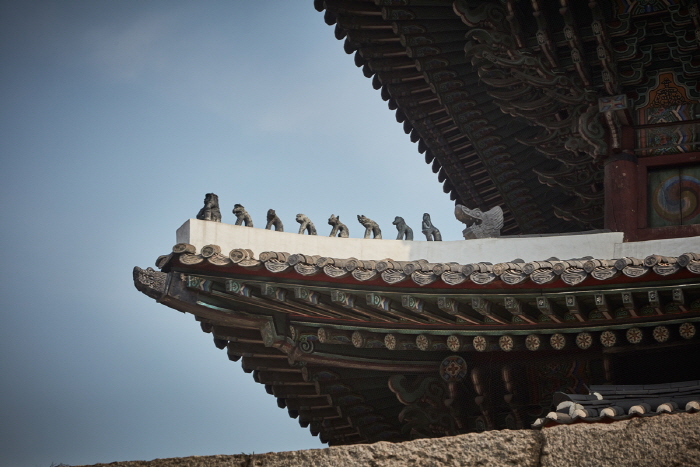
Heunginjimun Gate - Dongdaemun Gate (흥인지문)
13.2Km 2025-10-23
288, Jong-ro, Jongno-gu, Seoul
+82-2-2148-1842
Heunginjimun Gate was built to protect Hanseongbu, which historically housed essential government facilities. Heunginjimun Gate was the gate on the east side of the outer wall of Seoul Fortress among eight gates. It is referred to as Dongdaemun Gate as well. The gate was constructed during King Taejo’s 5th year in 1396, remodeled during the reign of King Danjong in 1453, and was newly built in 1869 during the sixth year of King Gojong’s reign in 1869.
The gate features a hipped roof with five front and two side compartments on a two-storied building. The thin and weak bracket system supports the eaves and is excessively decorated, reflecting the construction features of the late Joseon period. Also, outside of the fortress is the half-circle-shaped Ongseong, a small wall, to protect the gate.
One of the unique factors of Heunginjimun Gate is that it is the only gate among Seoul’s eight to have Ongseong, further exhibiting the style of construction used during the late Joseon period.
 English
 한국어
한국어 日本語
日本語 中文(简体)
 Deutsch
 Français
 Español
 Русский


