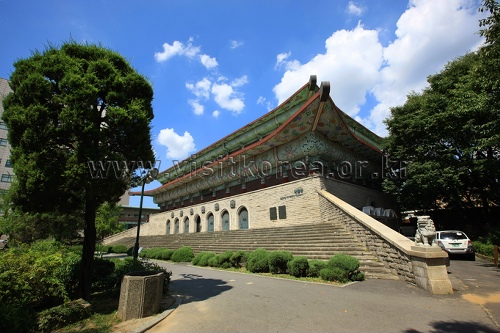
Sejong University Museum (세종대학교 박물관)
17.2Km 2022-09-16
209, Neungdong-ro, Gwangjin-gu, Seoul
+82-2-3408-3876
Sejong University Museum exhibits folk art, wooden crafts, clothing, accessories, pottery, paintings and calligraphy collected for over 40 years by the couple who founded the present day Sejong University, Dr. Ju Young-ha and Dr. Choi Ok-ja. This museum has its origins in the Soodo Gallery, which was built in Chungmuro, the campus’ original location, in 1959. Needing more space to house additional artifacts, the museum moved to its current location, which first opened on May 5, 1973 in a four-story concrete building inspired by traditonal tower design from the Baekje era. This building was later expanded on May 20, 1977.
After the university’s name was changed to Sejong University in 1979, the museum was also renamed the Sejong University Museum. The museum showcases unique artifacts to both scholars and students from home and abroad in contribution to the research of Korea’s culture, arts, and archeology.

SEOUL SHINSEGAE EYE CENTER (서울신세계안과의원)
17.2Km 2025-10-23
3rd–4th Floors, Y-Square, 52 Dobong-ro, Gangbuk-gu, Seoul
SEOUL SHINSEGAE EYE CENTER is a premium clinic with specialists from Korea’s top hospitals. With AI-based precision systems and an advanced surgical center, we offer safe, customized care. Sterile ORs, 7-stage purification, and age-specific checkups ensure lifelong family eye health.
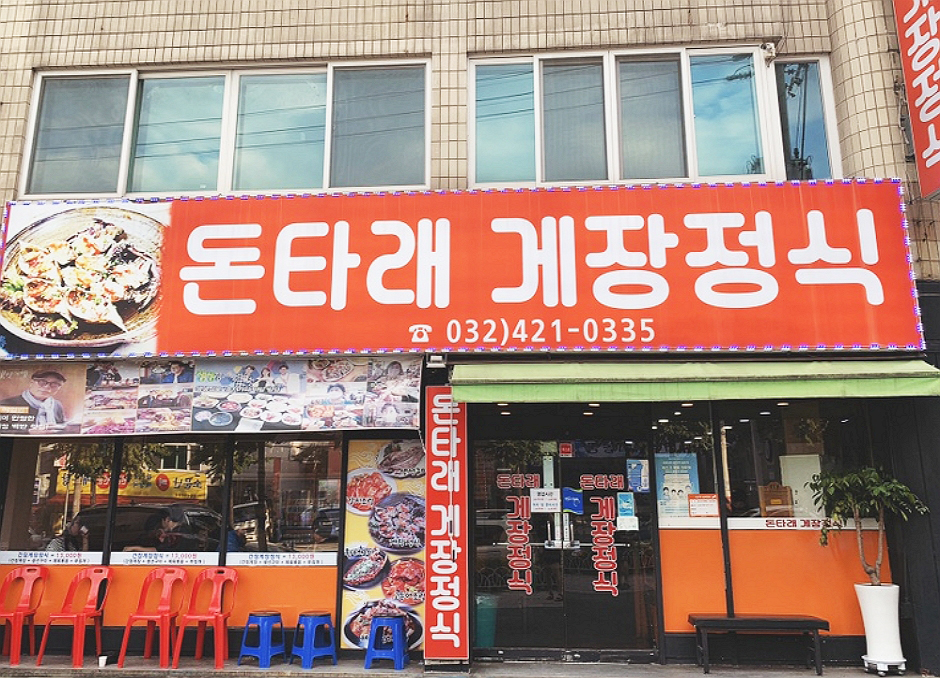
Dontarae Gejang Jeongsik (돈타래게장정식)
17.2Km 2024-12-02
인천광역시 부평구 열우물로 59
This restaurant offers ganjang gejang(Soy Sauce Marinated Crab) at affordable prices. Ganjang gejang Jeongsik features marinated crabs accompanied by a generous array of side dishes, such as saengseon-gui (grilled fish), jeyuk-bokkeum (spicy stir-fried pork), jeon (Korean pancake), japchae (stir-fried glass noodles), and miyeok-guk (seaweed soup).
![Goyang West Three Royal Tombs (The tomb of Queen Janggyeong) [UNESCO World Heritage] (고양 서삼릉(장경왕후) [유네스코 세계문화유산])](http://tong.visitkorea.or.kr/cms/resource/85/1150385_image2_1.jpg)
Goyang West Three Royal Tombs (The tomb of Queen Janggyeong) [UNESCO World Heritage] (고양 서삼릉(장경왕후) [유네스코 세계문화유산])
17.4Km 2024-02-07
233-126 Seosamneung-gil, Deogyang-gu, Goyang-si, Gyeonggi-do
+82-31-962-6009
Goyang West Three Royal Tombs is a significant historical site comprising three major royal burial grounds in the western area. Huireung Royal Tomb is dedicated to Queen Janggyeong (1491-1515), the consort of King Jungjong during the Joseon dynasty. Hyoreung Royal Tomb is the resting place of King Injong (1515-1545) and his queen, Inseong. Yereung Royal Tomb holds the remains of King Cheoljong (1831-1864) and his queen, Cheorin. This area is home to numerous tombs and relics belonging to various members of the Joseon royal family.
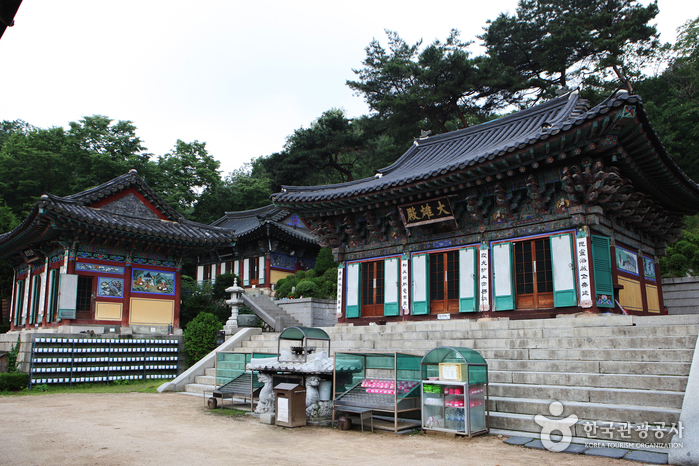
Seoul Hwagyesa Temple (화계사(서울))
17.4Km 2021-11-02
117, Hwagyesa-gil, Gangbuk-gu, Seoul
+82-2-902-2663
Hwagyesa Temple was built in 1522 (the seventeenth year of the reign of King Jungjong of the Joseon dynasty) by monk Shinwol, but was destroyed in a fire in 1618. It was rebuilt the following year, and expanded In 1866 through the efforts of Monks Yongseon and Beomun.
The temple also has various templestay programs for visitors. Hwagyesa Temple is located not too far from the city but also provides a natural environment.
Kyung Hee University Medical Center (경희의료원)
17.4Km 2025-10-23
23 Kyungheedae-ro, Dongdaemun-gu, Seoul
KYUNG HEE UNIVERSITY MEDICAL CENTER is the world's only academic medical center where six medical fields including medicine, dentistry, oriental medicine, East-West integrated medicine, pharmacy, and nursing coexist. We have established new treatment systems by complementing the strengths of each field, and have strived to protect humanity from diseases for more than 50 years.
We make all efforts to return the love received from our patients and their guardians. Our innovative medical treatment systems further improve the effectiveness of disease treatment and provide top-class medical services to help all patients recover quickly. We will continue to work hard to fulfill our role as a center for research and academics and make a contribution to the health of the community and the nation.
With the ‘Kyung Hee Family Spirit,’ we promise to become Kyung Hee Medical Center that always thinks and acts on the patient’s side.
Ceramic Palace Hall (세라믹 팔레스 홀)
17.4Km 2024-03-04
90 Irwon-ro, Gangnam-gu, Seoul
Ceramic Palace Hall, situated on the second basement floor of the Milal Art Center, is adorned with aesthetically pleasing pastel-colored ceramic walls. Designed for acoustic excellence, it ensures that every instrument played is heard with clarity. Primarily, it serves as a venue for various concerts, with a particular emphasis on classical music, including piano recitals, chamber music festivals, and violin concerts. Additionally, it offers venue rental services, catering to a range of events.
GSam Hospital (지샘병원)
17.4Km 2025-10-23
591 Gunpo-ro, Gunpo-si, Gyeonggi-do
Opened in June 2013 in Gunpo, Gyeonggi-do, G SAM Hospital is a global general hospital with 400 beds, 35 medical departments, and more than 20 specialty centers and clinics providing patient-centered care.
Our medical staff is composed of top-notch specialists with extensive clinical experience across all departments, offering a high-quality medical care. They have outstanding clinical expertise in cancer, and cerebrovascular, circulatory, digestive, joint/spine diseases.
In particular, we provide excellent treatment regarding metastatic cancer through our targeted therapy (LHIPEC, ET, etc.), NK cell therapy, and immunotherapy, which have attracted many international patients to our hospital.
We are certified by the Korean Accreditation Program for Hospitals Serving Foreign Patients (KAFH) and a Leading Institution for Medical Tourism, and operate an international healthcare center for overseas patients. Specialized coordinators fluent in English, Russian, and other languages provide interpretation for appointments and follow-up care.
NHIS Ilsan Hospital (국민건강보험 일산병원)
17.4Km 2025-10-23
100 Ilsan-ro, Ilsandong-gu, Goyang-si, Gyeonggi-do
NHIS Ilsan Hospital, opened in March 2000, is the nation's only insurer-run hospital and one of the most trusted and frequently visited hospitals in Korea. The International Healthcare Center, established in August 2012, is currently headed by a professor of neurosurgery and operated by a staff of three. In particular, the center is dedicated to providing the best hospital services for Russian-speaking patients. Through partnerships with more than 50 organizations both in Korea and abroad, the hospital actively engages in monitoring local healthcare trends, promoting Korean medical services, and enhancing international patient care. It also conducts annual medical training programs for healthcare professionals from target countries (e.g., Kazakhstan, Mongolia) while providing charitable medical services to financially disadvantaged international patients.
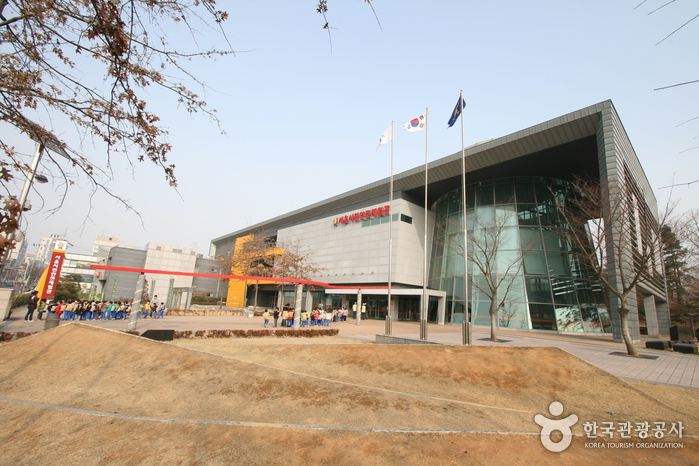
Gwangnaru Safety Experience Center (광나루안전체험관)
17.4Km 2025-03-29
238, Neungdong-ro, Gwangjin-gu, Seoul
+82-2-2049-4061
Gwangnaru Safety Experience Center was founded in 1999 after two fire accidents in which many children lost their lives. These tragedies emphasized the necessity of establishing a disaster training center for common citizens.
Gwangnaru Safety Experience Center is a three-story building with one basement floor, covering an area of more than 5,000 m². The basement floor includes a small theater. The first floor is set up for natural disaster training and consists of an orientation hall, storm simulation training room, earthquake simulation room, computer tests on fire safety knowledge and others. The second floor is a place for artificial catastrophe training. It consists of a smoke escape training room, fire extinguisher training room, first-aid (CPR) training room and practice place for calling 119. The third floor is used for rescue training and consists of a rescue training room, screening room, training for professionals and video examples of the five biggest disasters that have occurred in Seoul. Overall there are about 20 training areas established, so citizens can experience the imitation of a disaster by themselves and learn easily and in an interesting way how to cope with a disaster.
 English
 한국어
한국어 日本語
日本語 中文(简体)
 Deutsch
 Français
 Español
 Русский


