Sinyang Seopji Beach (신양 섭지해수욕장) - Area information - Korea travel information

Sinyang Seopji Beach (신양 섭지해수욕장)

Sinyang Seopji Beach (신양 섭지해수욕장)

12.2Km    2022-08-10

107, Seopjikoji-ro, Seogwipo-si, Jeju-do
+82-64-740-6000

Sinyang Seopji Beach is not yet a popular tourist attraction, leaving the fine-grained, sandy beach relatively untouched. Thanks to its quiet atmosphere, the beach gives visitors a calmer, more secluded beach experience than some of the larger beaches on Jeju.

The 80-meter-wide, crescent-shaped beach stretches for a total length of 300 meters. Bordered by waters that are only an average of one meter deep, the beach gently slopes at a five degree angle. Known for its small waves, the beach is the perfect spot for children.

Windsurfing is available nearby and popular tourist attractions such as Seongsan Ilchulbong Tuff Cone and Seopjikoji are located in the area.

Honinji Pond (혼인지)

12.5Km    2022-12-26

39-22, Honinji-ro, Seogwipo-si, Jeju-do
+82-64-710-6798

Honinji Pond is connected to a myth of how agriculture and farming started on Jeju Island. Despite its small size, the pond is said to have been the location of the wedding between the Samsinin (three founding demi-gods) and three princesses of the East Kingdom. Next to the pond is Samseonghyeol, three caves that served as bridal homes. Honinji Pond and Samseonghyeol are great places to trace the origin of the founders of Jeju Island. In the summer, the area is in full bloom with red lotus flowers.

Yumin Art Nouveau Collection (유민미술관)

Yumin Art Nouveau Collection (유민미술관)

12.5Km    2025-10-27

107 Seopjikoji-ro, Seongsan-eup, Seogwipo-si, Jeju-do

The Yumin Art Nouveau Collection, renowned for its French Art Nouveau glass art and the beauty of the space itself, is a popular attraction. Visiting Seopjikoji Cape, where the building is located, is also recommended.

The Phoenix Jeju Glass House (글라스하우스)

The Phoenix Jeju Glass House (글라스하우스)

12.6Km    2025-10-28

107 Seopjikoji-ro, Seongsan-eup, Seogwipo-si, Jeju-do

◎ Travel information to meet Hallyu’s charm - "The Witch: Part 2. The Other One"
The Phoenix Jeju Glass House, located on Seopjikoji Cape, served as a filming location for the mysterious mansion of the head chief in the Witch project. In the Glass House's Floyeast Bakery Cafe, visitors can enjoy expansive sea views from any spot, making it a unique and scenic dining experience.

Jas de Bouffan (자드부팡)

Jas de Bouffan (자드부팡)

12.7Km    2024-02-20

385-216 Bukheul-ro, Jocheon-eup, Jeju-si, Jeju-do

Café Jas de Bouffan is nestled within Dongbaek-Dongsan forest, featuring a European-style building that, along with the surrounding forest, creates stunning scenery. The signature item on the menu is the coconut cream latte. Guests can savor a range of desserts and drinks amidst the café's exotic atmosphere. Nearby attractions such as Gimnyeong Beach, Bijarim Forest, and Manjanggul Lava Tube enhance the appeal of visiting this unique spot.

Coogee Holiday (쿠지홀리데이)

Coogee Holiday (쿠지홀리데이)

13.3Km    2024-12-13

100 , Nansan-ro, Seogwipo-si, Jeju-do
+82-10-5347-8733

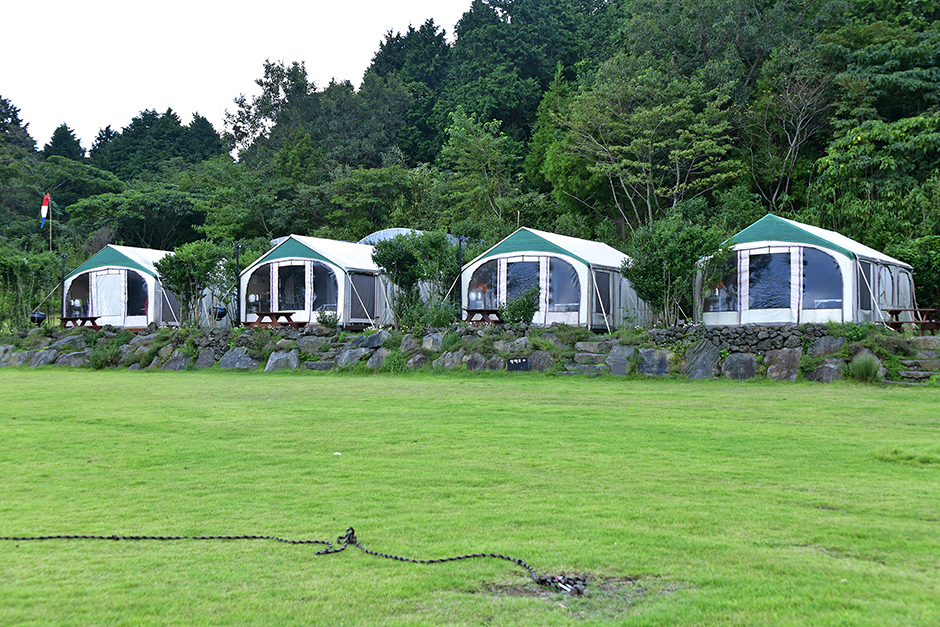
Coogee Holiday is a private pool villa pension located near Seopjikoji, Jeju, reserved exclusively for one group at a time. On the first floor, there is an ondol (underfloor heated) room and bathroom, and on the second floor, there are two bedrooms, a living room and three bathrooms. There are five types of guest rooms at Coogee. Coogee A type occupies the entire first and second floors, Coogee B type occupies the entire second floor, Coogee E type occupies the entire first floor, and Coogee C and D types occupy a portion of the second floor. There is also a shelf full of comic books, PlayStation VR, washing machine, cooking facilities, outdoor swimming pool, barbecue area, and karaoke machine. Guests are provided with a complimentary breakfast.

Changkkom (창꼼)

Changkkom (창꼼)

14.0Km    2025-10-29

393 Bukchon-ri, Jocheon-eup, Jeju-si, Jeju-do

Changkkom is a unique rock formation with a window-shaped hole, popular among tourists for taking photos.

Bengdwigul Cave [UNESCO World Natural Heritage Site] (제주 선흘리 벵뒤굴 [유네스코 세계자연유산])

14.1Km    2022-12-27

Jocheon-eup, Jeju-si, Jeju-do
+82-1600-0064

With a total length of 4,481 meters, Bengdwigul Cave is shaped like a maze and has one of the most complex lava tube structures in the world. For geologists, this cave is invaluable since it demonstrates how lava continuously flowed over the surface of the ground and the complex route it took to eventually form a tube deep underground. Created particularly close to the earth’s surface, this cave has a number of entrance holes to the tunnel. Inside, the complex structure of the cave unfolds in the form of double-tiered or triple-tiered rooms. A range of lava formations such as lava columns and lava bridges have developed inside this mystical tube.

* The UNESCO World Heritage designated Geomunoreum Lava Tube System of Bengdwigul, Manjanggul Cave, Gimnyeonggul, Yongcheondonggul and Dangcheomuldonggul Caves.

Jeju World Natural Heritage Center (제주 세계자연유산센터)

14.3Km    2021-05-31

569-36, Seongyo-ro, Jeju-si, Jeju-do
+82-1800-2002

The Jeju World Natural Heritage Center was established to acknowledge Jeju Island’s value as the sole UNESCO World Natural Heritage in Korea. It is comprised of various facilities including a 4D video room, lava tunnel experience, origins of Jeju-do, and many other activities that visitors can experience first-hand. Jeju World Natural Heritage Center is located in the Geomunoreum Lava Tube System, which was designated as a UNESCO World Natural Heritage in 2007, one of the 20 ecological tourism spots selected by the Ministry of Environment of Korea in 2009, as well as a Korean-style ecological tourism model.

* Opening date: September 4, 2012

Geomunoreum Lava Tube [UNESCO World Natural Heritage Site] (거문오름 [유네스코 세계자연유산])

Geomunoreum Lava Tube [UNESCO World Natural Heritage Site] (거문오름 [유네스코 세계자연유산])

14.3Km    2025-03-13

569-36 Seongyo-ro, Jocheon-eup, Jeju-si, Jeju-do
+82-64-710-8981

Geomunoreum Lava Tube stands out as one of the distinct oreum (the Jeju language term for parasitic cones) on Jeju Island, marked by its extensive network of around 20 lava tubes running through the volcanic structure. This site is not only a geological marvel but also a sanctuary for diverse biological species. Visitors begin their journey at the Jeju World Natural Heritage Center, from where a path leads directly to the Geomunoreum Lava Tube. It is important to note that prior reservations are required to visit. The significance of this location as a key geological feature was recognized when it was designated as a UNESCO World Natural Heritage Site in 2007. Additionally, an international trekking event is hosted annually to celebrate its global importance.