![Gimnyeongsagul Cave [UNESCO World Heritage] (김녕사굴 [유네스코 세계자연유산])](http://tong.visitkorea.or.kr/cms/resource/37/1618237_image2_1.jpg)
Gimnyeongsagul Cave [UNESCO World Heritage] (김녕사굴 [유네스코 세계자연유산])
7.3Km 2022-12-29
34, Manjanggul-gil, Jeju-si, Jeju-do
Gimnyeongsagul Cave is located close to Manjanggul Cave in the northeastern part of Jeju Island. The name of the cave, "Sagul," comes from the snake-like formation of the cave ("sa" meaning serpent). The entrance of the cave is wide like a serpent holding its mouth wide open, but once inside, the tunnel narrows resembling the body of a snake. Gimnyeongsagul Cave is a highly protected area and has been designated as Natural Monument along with Manjanggul Cave.
![Manjanggul Lava Tube [National Geopark] (만장굴 (제주도 국가지질공원))](http://tong.visitkorea.or.kr/cms/resource/55/3354155_image2_1.jpg)
Manjanggul Lava Tube [National Geopark] (만장굴 (제주도 국가지질공원))
7.4Km 2025-03-31
182 Manjanggul-gil, Jeju-si, Jeju-do
Manjanggul Lava Tube, located in Gimnyeong-ri, Jeju, is part of the Geomunoreum Lava Tube system. The lava tube stretches roughly 7,400 meters, with a maximum x_height of 25 meters and x_width of 18 meters. These measurements make it one of the largest lava tubes in the world. Manjanggul holds great value for science and conservation studies, having well-maintained formations despite being formed over one hundred thousand years ago.
The majority of the cave is closed off, with only 1 kilometer being open to tourists. Within this open section, visitors can see a variety of lava tube and cave topographical features, including stalagtites, stalagmites, and stone pillars. Among these, the 7.6-meter-tall stone pillar at the end of the open section is recorded as the largest in the world.

Gimnyeong Maze Park (김녕미로공원)
7.4Km 2024-03-13
122 Manjanggul-gil, Gujwa-eup, Jeju-si, Jeju-do
Gimnyeong Maze Park is intricately designed with towering evergreen trees, each reaching up to three meters in x_height, creating an natural labyrinth. The pathways are paved with scoria, a natural volcanic rock characteristic of Jeju, enhancing the authentic island feel. As visitors navigate the maze, the refreshing scent of evergreen trees fills the air, providing a sense of clarity and rejuvenation. Along the route, visitors can encounter unique dolmens and their feline residents. The park also features an observatory and a suspension bridge, offering breathtaking panoramic views. Gimnyeong Maze Park is a favorite destination for families, children and couples alike, providing a memorable experience for all.
Udo Sanho Beach (Seobinbaeksa) (우도 산호해변 (서빈백사))
8.4Km 2023-10-16
252, Udohaean-gil, Jeju-si, Jeju-do
Udo Sanho Beach, often referred to as Seobinbaeksa Beach, is a red algal nodule beach. The ocean here varies in colors, from bright emerald to deep sapphire according to its depth for a view incomparable to any other ocean views.
Udo Island (Udo Maritime Park) [우도(해양도립공원)]
9.1Km 2025-03-31
1 Samyanggosumul-gil, Udo-myeon, Jeju-si, Jeju-do
Udo Island is celebrated for its stunning natural beauty, characterized by its unique status as a single volcanic structure. It is renowned for its eight scenic views, offering tourists a variety of attractions including the expansive coral sand beach and clear waters of Hagosudong Beach. Activities available for visitors include fishing, bicycle hiking, submarine rides and cruises. It is conveniently accessible, with a short ferry ride of about 15 minutes from Seongsan or Jongdal Ports.
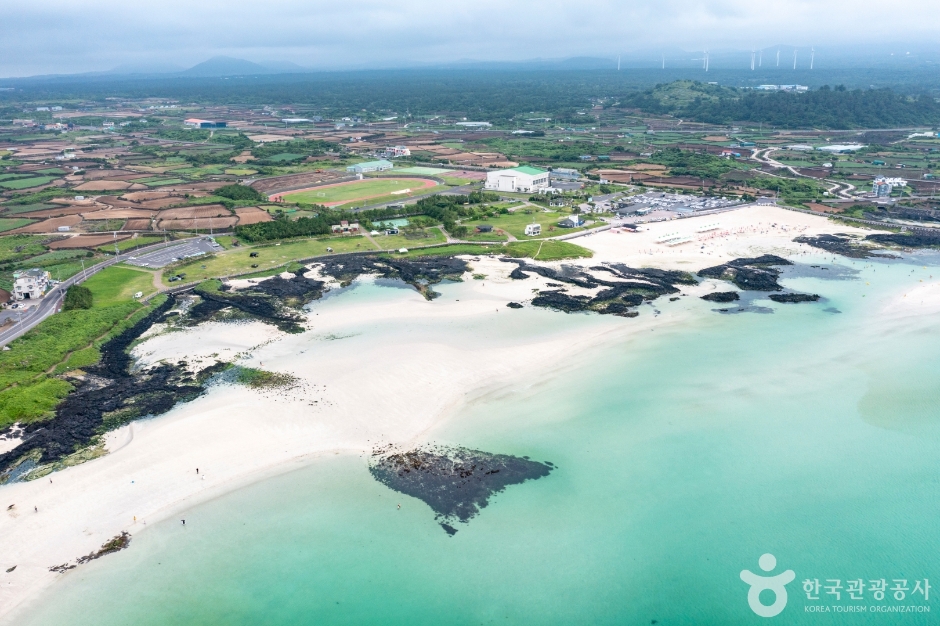
Gimnyeong Seongsegihaebyeon Beach (김녕성세기해변 (김녕해수욕장))
9.1Km 2024-11-14
237 Gujwahaean-ro, Jeju-si, Jeju-do
The clear waters that are highlighted with cobalt-blue and the clean white sand of Gimnyeong Seongsegihaebyeon Beach steal the hearts of visitors every year. The beach is also popular with fishermen, who enjoy rope fishing from the rocks. This area is known to be good for catching striped beakfish and spotty belly greenlings. Not far from the beach is Manjanggul Cave, which offers a welcome escape from the daytime heat.
Cheonjin Port (천진항)
9.3Km 2023-02-16
1737-15, Yeonpyeong-ri, Jeju-si, Jeju-do
Udo Island is the largest of all the smaller islands near Jeju and where the sun rises before anywhere else. It is located at the eastern end of Jeju Island and a popular tourist spot that is always crowded with visitors as there are numerous things to see, eat and enjoy. The island is a bit too big to tour on foot so it is better to enter the island by car, rent an electric scooter or a small electric vehicle once on the island or travel by bus. Udo has two docks located at Cheonjin Port and Haumokdong Port. Cheonjin Port is the gate port into Udo with several electric scooter rental shops, so many tourists get off here. It takes about 10 to 15 minutes from Seongsan Port or Jongdal Port to Cheonjin Port.
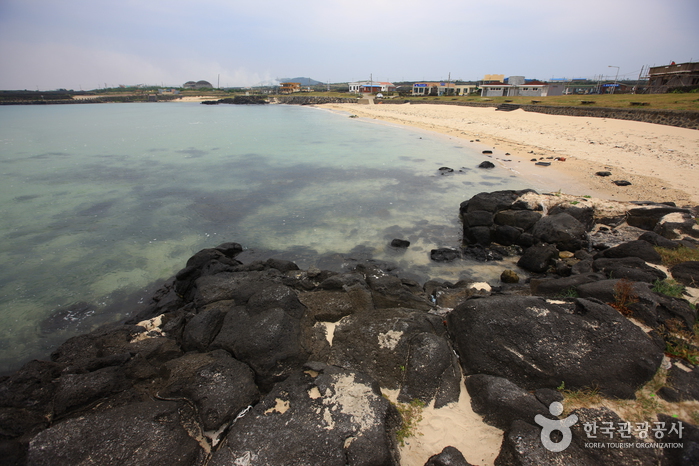
Hagosudong Beach (하고수동해변)
9.3Km 2022-07-28
Yeonpyeong-ri, Jeju-si, Jeju-do
Hagosudong Beach, often referred to as "The Saipan of Korea" with its sandy beach and spectacular formation of rocks and cliffs, is located on Udo Island off the coast of Jeju Island. Although all beaches surrounding Jeju are beautiful, Hagosudong is more exotic and distinctive in nature. With a fairly shallow sea level and soft sand, visitors of all ages can enjoy relaxing and walking along the shore while gazing out at the pristine ocean vistas. During the summer season visitors can enjoy watching a firework-like nighttime view of the fishing boats lighting up the ocean.
Jeju Olle Trail - Route 1-1 (Udo Island Olle) ([제주올레 1-1코스] 우도-올레)
9.3Km 2021-07-02
1737-1, Yeonpyeong-ri, Jeju-si, Jeju-do
Shaped like a cow lying down, Udo Island with its clean green fields, stonewalls, and striking lighthouse presents some of the best scenery in the Jeju area. Udo is the largest of the 62 islands that surround Jeju, and boasts indigo blue sea throughout the year. Visitors can enjoy beautiful views as they walk the Olle trail that includes seaside, plantation fields, green pastures, and Undobong Peak.
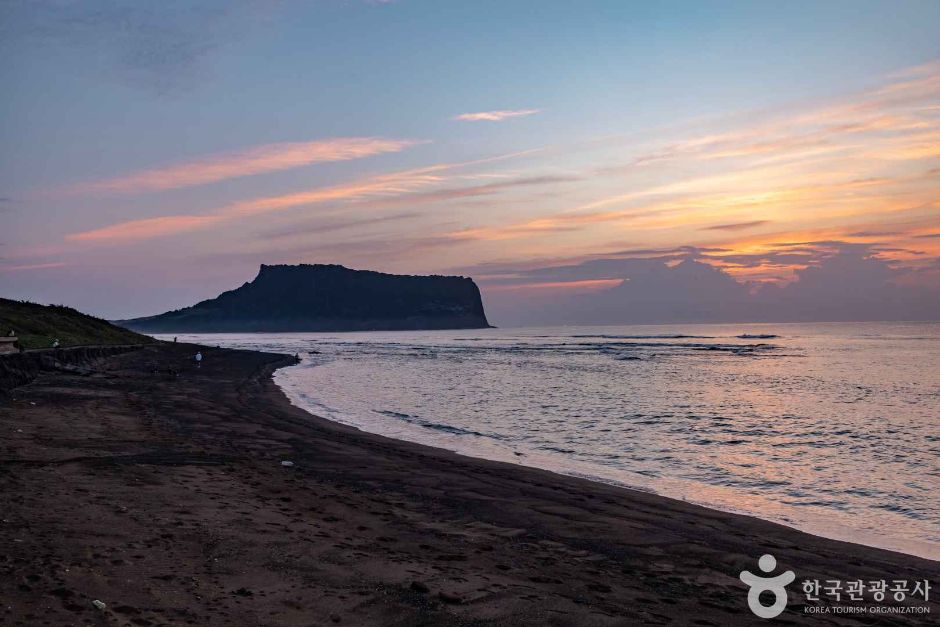
Gwangchigi Beach (광치기해변)
9.4Km 2025-04-07
Goseong-ri, Seongsan-eup, Seogwipo-si, Jeju-do
Located on the way from Seongsan Ilchulbong Tuff Cone to Seopjikoji, Gwangchigi Beach marks the end point of Jeju Olle Trail Route 1 and the starting point of Route 2. It is known for its unique geological formation, where hot lava cools down immediately upon meeting the sea. During low tides, visitors can see hidden scenic spots. The frozen lava covered with green moss, creates a spectacular view. In particular, the stunning sunrise view with Seongsan Ilchulbong Tuff Cone in the backdrop attracts a lot of visitors. The beach is also known for its black sand. (Information courtesy: Visit Jeju)
 English
 한국어
한국어 日本語
日本語 中文(简体)
 Deutsch
 Français
 Español
 Русский


