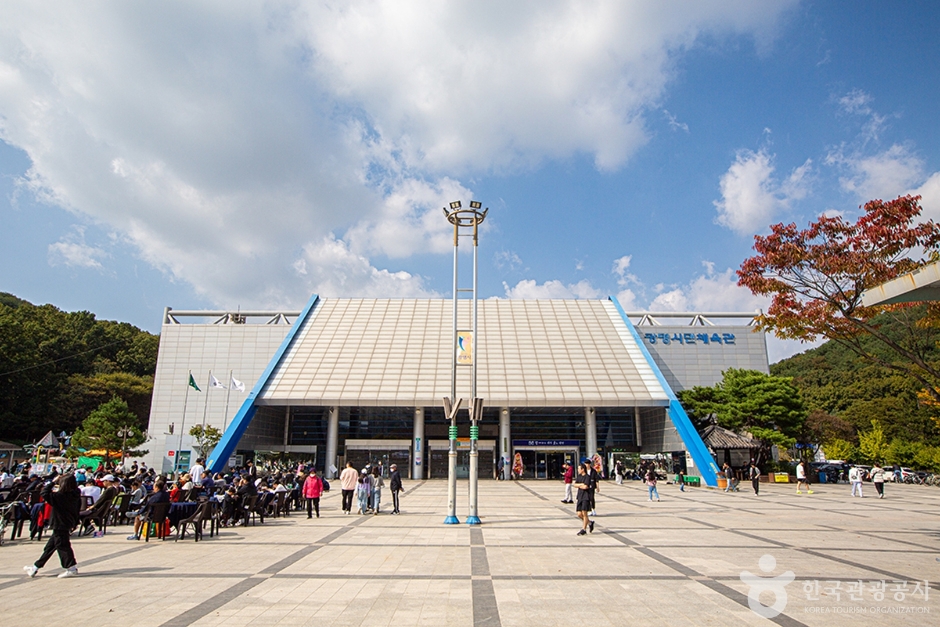
Gwangmyeong Indoor Gymnasium (광명시민체육관)
17.2Km 2024-02-20
703 Ori-ro, Gwangmyeong-si, Gyeonggi-do
Gwangmyeong Indoor Gymnasium is a stadium equipped with seating for 3,000 spectators. It houses facilities for physical training, including golf, fitness, and table tennis. The spacious and vibrant lawn plaza immediately draws attention. This complex includes an open art hall for performances, sports facilities like an inline bicycle track and basketball courts, and amenities such as a children's playground and an outdoor water play area. Additionally, it features a 16-meter-high artificial rock-climbing wall.

Wolhwawon Garden (월화원)
17.2Km 2024-03-20
399 Dongsuwon-ro, Paldal-gu, Suwon-si, Gyeonggi-do
+82-31-228-4181
Wolhwawon Garden is nestled in Hyowon Park of Suwon and features elements that are heavily influenced by Chinese culture. The garden was established as a result of a special memorandom of agreement (MOU) signed in 2003 between the provincial governments of Gyeonggi-do in Korea and Guangdong in China, in appreciation of the two city's cooperative relationship. It boasts traditional gardens and architecture, man-made lakes and waterfalls designed in the Cantonese style.
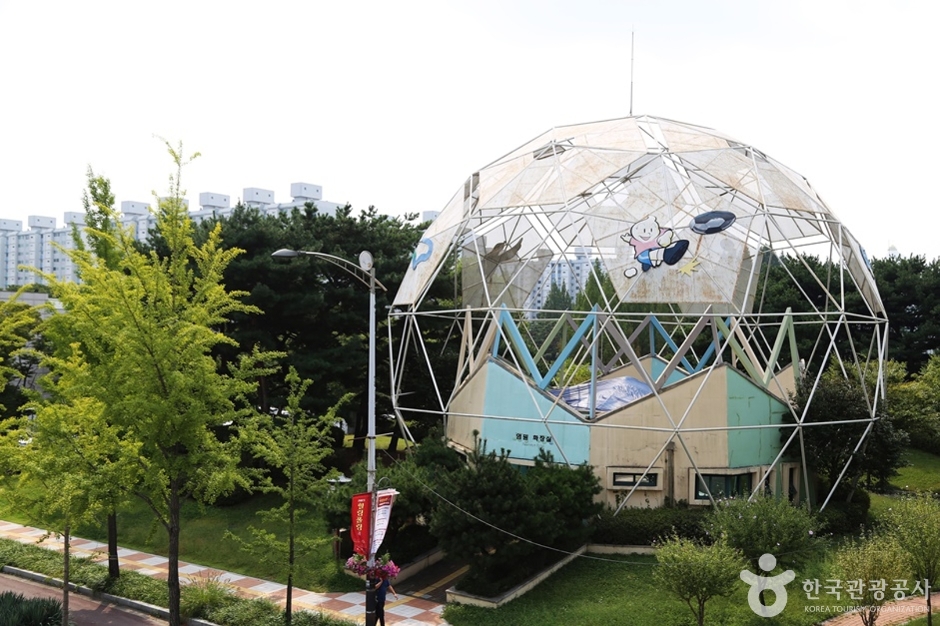
First Suwon Outdoor Concert Hall (수원 제1야외음악당)
17.2Km 2024-02-19
335 Dongsuwon-ro, Paldal-gu, Suwon-si, Gyeonggi-do
The First Suwon Outdoor Concert Hall, situated in Ingye Art Park and recipient of the Korean Architecture Award in 1996, functions as an open-air performance venue. It features 799 fixed seats and a grassy plaza that can accommodate around 15,000 people, making it a notable space. Renowned for its high-quality facilities that provide an indoor-level sound experiences, it has become a beloved relaxation spot for the city's residents.
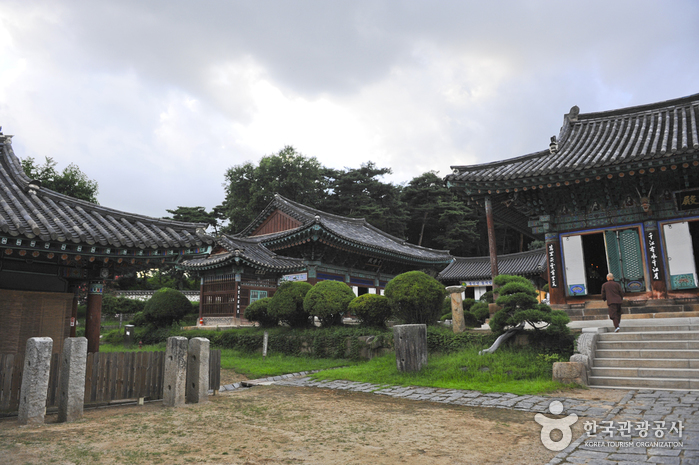
Hwaseong Yongjusa Temple (용주사(화성))
17.2Km 2021-12-21
136, Yongju-ro, Hwaseong-si, Gyeonggi-do
+82-31-234-0040
Yongjusa Temple is located near Yungneung and Geolleung Royal Tombs. This site was originally the location of Garyangsa Temple, which was constructed in 854, during the 16th year of King Munseong of the Silla Kingdom. The temple was very famous as it was surrounded by beautiful mountains and crystal clear waters. However, the temple was destroyed by fire during the Manchu War of 1636.
During the Joseon dynasty, King Jeongjo moved the tomb of his father to this spot, and built Yongjusa Temple here to pray for the repose of his father’s soul. It is said that one night before the temple was completed, King Jeongjo dreamt of a dragon ascending to the sky holding a magic ball in its mouth. He therefore named the temple “Yongjusa,” which means the temple of a dragon with a magic ball in Korean.
The courtyard of the temple contains the Bronze Bell of Yongjusa Temple, a National Treasure; a stone pagoda; Daeungbojeon (the main hall); and Cheonboru Pavilion. Visitors to Yongjusa Temple can also find the “Bumoeunjunggyeong” books, which were written by King Jeongjo on the subject of filial affection and respect for one’s parents. These days, Yongjusa Temple and the Yungneung and Geolleung Royal Tombs are highly valued for their cultural heritage.
Korea Medical Institute Suwon Branch ((재)한국의학연구소 수원분사무소)
17.4Km 2025-10-23
1F-2F, 232 Dongsuwon-ro, Gwonseon-gu, Suwon-si, Gyeonggi-do
Korea Medical Institute (KMI), a leader in 'K-health checkups,' operates health checkup centers across eight locations nationwide, from Seoul to Jeju. KMI has been striving to prevent and detect diseases early. It has led the popularization of comprehensive medical examinations in Korea. Based on 40 years of accumulated data and expertise, KMI has enhanced its capabilities in health checkups, services, and brand value.
By utilizing its diagnostic data accumulated over the years, KMI provides accurate test results and follow-up care promptly.
KMI will stay committed to becoming a lifetime health management partner and 'K-health checkup' leader by leveraging its excellence in Korean medicine, beyond health checkups for foreign patients.
Yulam Hot Springs (율암온천)
17.5Km 2025-06-30
434-14 Oncheon-ro, Paltan-myeon, Hwaseong-si, Gyeonggi-do
Yulam Hot Springs, known for keeping a small pond unfrozen even in winter, once served as a communal laundry spot for nearby residents. Revered for its therapeutic properties against eye diseases, skin conditions, and arthritis, it was a popular destination for bathing and healing. The facility includes hot springs, open-air baths, changing rooms, and lounge areas. Accessible through a passage outdoors, the charcoal sauna features high-temperature, medium-temperature, and low-temperature rooms. The site also boasts amenities like a pebble walkway, foot baths, and a convenience store.
Dodeoksan Suspension Bridge (도덕산 출렁다리)
17.7Km 2025-11-06
317-80 Gwangmyeong-dong, Gwangmyeong-si, Gyeonggi-do
Dodeoksan Suspension Bridge is located in Dodeoksan Park, which serves as a resting place and a light hiking course for citizens of Gwangmyeong. Dodeoksan Park has a well-maintained wooden walkway, and the slope is not too steep, so anyone can walk safely there. It is about 400 meters from Dodeoksan Park parking lot to Dodeoksan Suspension Bridge, allowing one to reach the bridge at a leisurely pace on foot. The bridge is in a Y-shape and 82 meters long in total and has an artificial waterfall under the midpoint of the bridge, giving a thrilling yet refreshing experience.
Suwon Gwanggyo Museum (수원광교박물관)
17.7Km 2021-10-23
182, Gwanggyo-ro, Yeongtong-gu, Suwon-si, Gyeonggi-do
+82-31-228-4175
Suwon Gwanggyo Museum features a variety of relics that were discovered during the construction of Gwanggyo New Town. The exhibitions focus on the history and culture of the Gwanggyo area based on artifacts along with materials related to Korea’s modern history, Dokdo Island, and Admiral Yi Sun-sin. Suwon Gwanggyo Museum is located in Gwanggyo History Park near the burial site of Sim On and Prince Hyeryeong, providing a great opportunity for visitors to learn about Korea’s history as well as enjoy a relaxing stroll around the park.
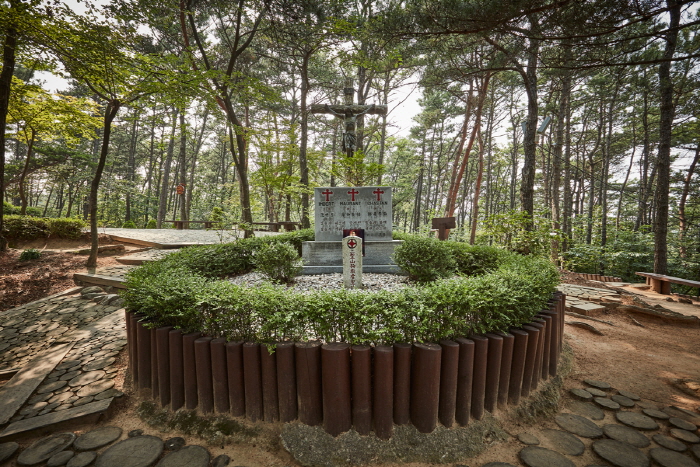
Samseongsan Holy Ground (삼성산성지)
17.9Km 2021-08-17
454-16, Hoam-ro, Gwanak-gu, Seoul
+82-2-875-2271
During the Gihae Persecution of 1839, three French Catholic priests were sentenced to death for spreading Catholicism in Korea. Saint Laurent Joseph Marius Imbert (Bishop), Saint Pierre Philibert Maubant (Priest), and Saint Jacques Honore Chastan (Priest) were beheaded on September 21, 1839 at Saenamteo, currently known as the Saenamteo Catholic Holy Place of the Martyrs, and their bodies were buried at Samseongsan Mountain and later transferred to the grotto of Myeondong Cathedral.
Gwanaksan Mountain (관악산)
18.0Km 2023-01-02
Gwanak-ro, Gwanak-gu, Seoul
+82-2-879-6521
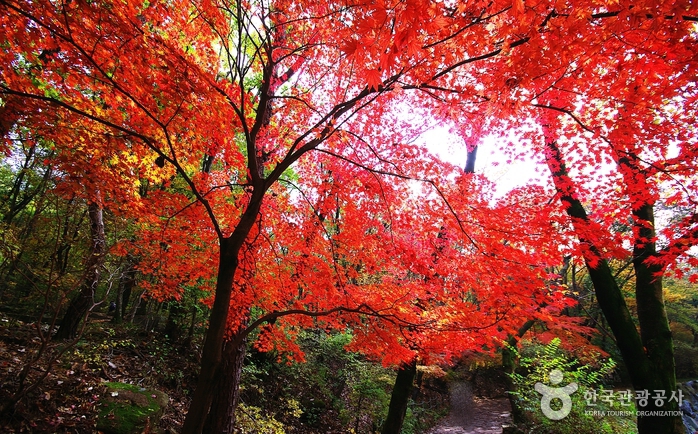
Reaching 632.2 meters in x_height, Gwanaksan Mountain is the symbol and pride of Gwanak-gu district in Seoul. Most of the cultural heritage of the district originates from Gwanaksan Mountain. Since it was designated as a city natural park in 1968, it has continued to serve as a favorite place for relaxation and excursion for Seoul citizens. The various rocky peaks and the deep valleys give the mountain a rugged feel. The mountain's size and close proximity to Seoul make it easy for Seoul residents to make a day trip.
In the spring, cherry blossoms are in full bloom near the entrance to the mountain, and a Rhododendron Festival is held when the rhododendrons are in full bloom. At the mountain's summit are Wongaksa Temple and Yeonjuam Hermitage, which were built by Taejo Yi Seong-gye (the founder of the Joseon dynasty) to ward off misfortune when he decided to move the capital to Seoul. There are also other temples and hermitages, and a ground radar observation post. Yeonjudae Hermitage, located atop a cliff, is where all the hiking trails of Gwanaksan Mountain meet.
 English
 한국어
한국어 日本語
日本語 中文(简体)
 Deutsch
 Français
 Español
 Русский


