
Neulsolgil Park (늘솔길공원)
14.7Km 2024-11-08
771 Aenggogae-ro, Namdong-gu, Incheon
Neulsolgil Park, nestled in Nonhyeon-dong, Incheon, is a park designed with nature in mind. The creation of the park focused on preserving the existing forest as much as possible, resulting in a diverse array of forest trails that lead visitors through cypress, metasequoia, ginkgo, and katsura forests. Additionally, the park offers a variety of amenities and playgrounds. Features include a sheep farm, a rose garden, and a forest playground, making it a versatile destination that caters to visitors of all ages.
Sorae Marsh Ecological Park (소래습지생태공원)
14.7Km 2023-01-12
77, Sorae-ro 154beon-gil, Namdong-gu, Incheon
+82-32-435-7076
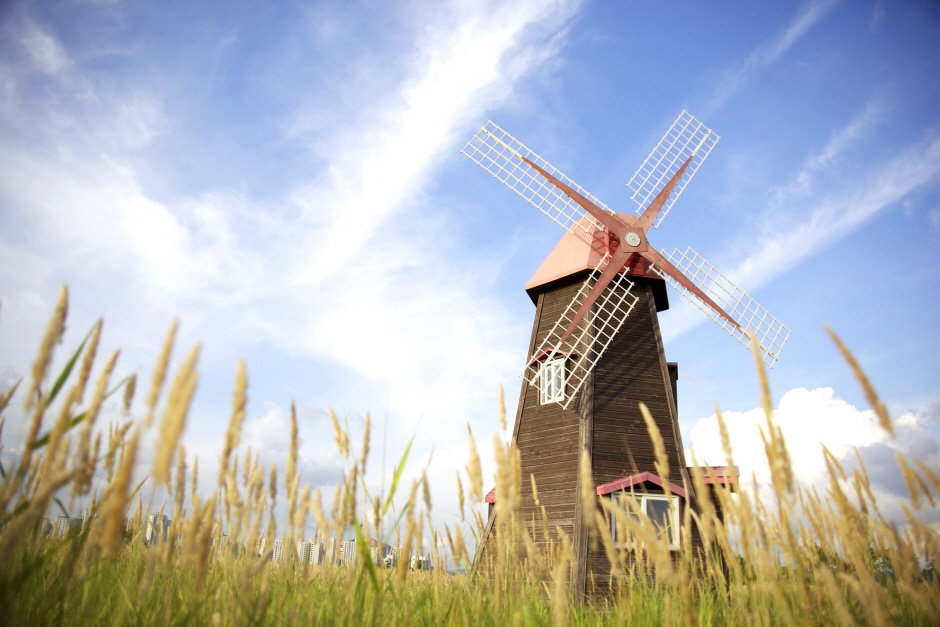
Sorae Marsh Ecological Park is located on a vast plot of land in Incheon. The park first opened in June 1999 at the site of an old saltern on a 660,000 ㎡ plot but has expanded over the years to an area of 3.5 million ㎡. The previous salt storage has been converted into an ecology exhibition space, displaying the history of the area as well as the plants and animals that live here. The park expanded in April 2001 with the addition of the Ecology Hall and Nature Learning Center, offering various educational experience opportunities. The walking paths by the salt storage and the windmill are especially popular photo points. Many people visit in fall for the shimmering silver grass, said to appear in many colors depending on the lighting. The park amenities, including rest areas and benches, make the park a popular destination for families and couples.
Hapy Land (하피랜드)
14.9Km 2025-06-30
888 Sicheong-ro, Paltan-myeon, Hwaseong-si, Gyeonggi-do
Hapy Land is a destination designed for those seeking relaxation through hot springs, saunas, and meals, offering a comprehensive healing experience for both body and mind. The name, inspired by the goddess of water, Hapy, symbolize the abundance of the Nile River in Egypt. It also stands for "Happy Area in Paltan Yulam (HAPY), Hwaseong-si," reflecting its aspirational fuction. The facility provides a variety of amenities, including saunas, a water park, a fountain, a youth pool, a charcoal sauna, foot baths, and an ice sauna, ensuring a wide range of experiences for guests.
Manseokgeo Park (만석거공원)
14.9Km 2024-12-23
1087 Jeongjo-ro, Jangan-gu, Suwon-si, Gyeonggi-do
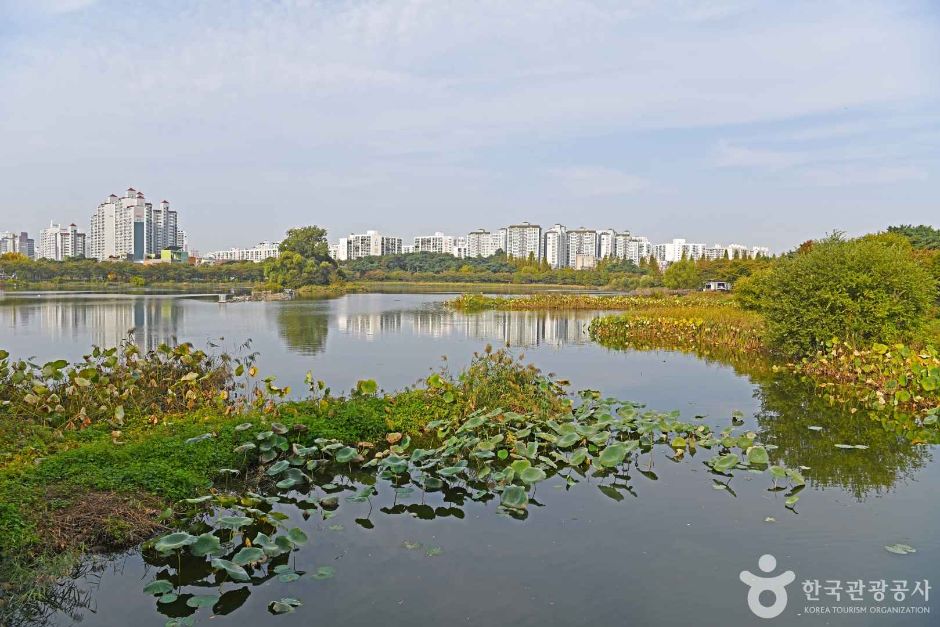
Manseokgeo Park centers around Manseokgeo Reservoir, built in 1795 to combat drought by transforming barren land into a water source. The park features a pavilion, tennis courts, a playground, small convenience store, an outdoor concert hall, and an art museum. In spring, cherry blossoms bloom, while summer brings beautiful lotus flowers to the lake. A well-maintained walking trail encircles the reservoir, and at night, the rainbow-colored musical fountain provides a spectacular view.
Chung-Ang University Gwangmyeong Hospital (중앙대학교광명병원)
15.0Km 2025-11-06
110 Deokan-ro (Iljik-dong), Gwangmyeong-si, Gyeonggi-do
Chung-Ang University Gwangmyeong Hospital is a general medical institution with approximately 700 beds. Opened in March 2022, the hospital has a total floor area of 97,000㎡ and consists of 14 floors above ground and 8 floors underground.
The hospital operates around six specialized clusters for critical care: Cancer Hospital, Cardiovascular & Cerebrovascular Hospital, Respiratory & Allergy Center, Digestive Disease Center, Spine Center, and Joint Center. With leading specialists in each field and state-of-the-art medical equipment, it provides advanced treatments and multidisciplinary care.
Recognized as a “hospital specializing in surgery,” Chung-Ang University Gwangmyeong Hospital plays a central role in the metropolitan critical care system. It leads the digital transformation of healthcare by harmonizing digital healthcare with public health services, strengthening its position as a highly competitive medical institution. Moving forward, the hospital will continue to pursue patient-centered medical innovation and strive to become a next-generation hospital that represents not only the Seoul metropolitan area but also the Republic of Korea.
Hwaseomun Gate (화서문)
15.5Km 2022-12-29
334, Jangan-dong, Paldal-gu, Suwon-si, Gyeonggi-do
+82-31-290-3600
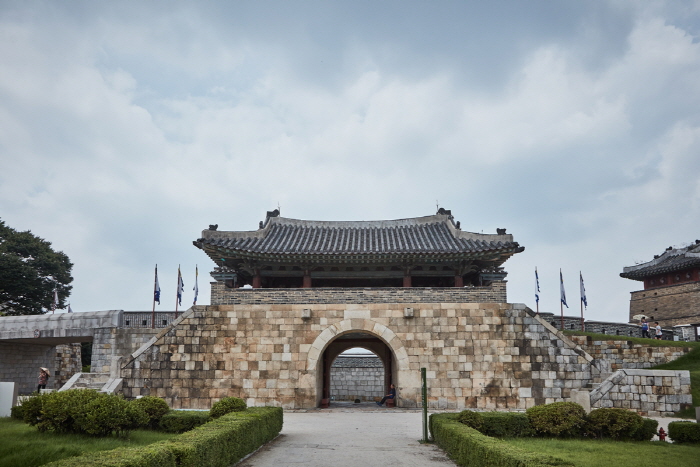
Hwaseomun Gate is the western gate of Hwaseong Fortress, a Treasure. Over the stone mujigae (rainbow) door is a single-story tower gate. Hwaseomun Gate's ongseong (defensive gate) forms a crecent shape, with one side of the ongseong remaining open.
Anyang Art Park (안양예술공원)
15.6Km 2025-10-23
7 Yesulgongwon-ro 131beon-gil, Manan-gu, Anyang-si, Gyeonggi-do
+82-31-8045-7000
Anyang Art Park, formerly known as Anyang Recreational Park, is an easily accessible, well-maintained cultural space. It has been revitalized with updated features such as artificial waterfalls, an outdoor stage, a plaza, walking paths, and enhanced lighting facilities. The park promotes art projects by displaying 50 artworks from renowned Korean and international artists throughout various locations. Nearby, visitors can explore additional local attractions including hiking trails through dense forests, traditional temples such as Anyangsa Temple and Yeomburam Hermitage, the treasure-designated Flagpole Supports at Jungchosa Temple Site, and the Kimchungup Architecture Museum, all of which contribute to a rich area experience.
Suwon Hwaseong Cultural Festival (수원화성문화제)
15.7Km 2025-07-09
825 Jeongjo-ro, Paldal-gu, Suwon-si, Gyeonggi-do
+82-31-228-3920
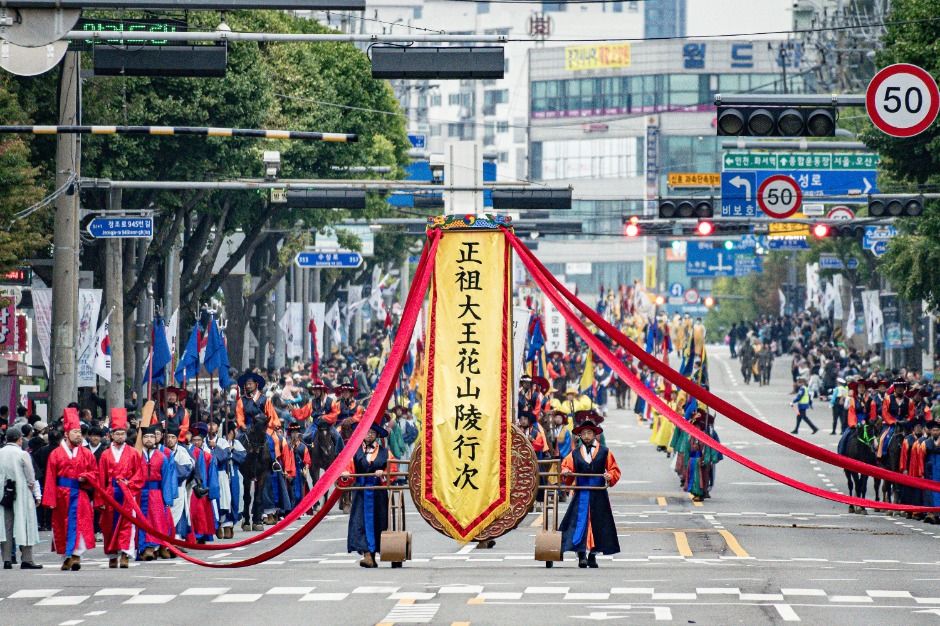
Hwaseong Fortress, a UNESCO World Heritage Site, hosts the Suwon Hwaseong Cultural Festival every autumn. The festival’s main event is the “King Jeongjo’s Royal Parade,” a reenactment of King Jeongjo’s procession to pay respects to his father Crown Prince Sado’s tomb. This spectacular event features over 4,000 participants in traditional Joseon-era costumes marching along a 59km route. The “King Jeongjo’s Dasobangwa” program, offering a taste of royal court cuisine served for the Banquet of Lady Hyegyeong-Gung Hong, is especially popular among international tourists. Additionally, the festival includes fortress-building experiences, night tours, and various reenactment events and performances, all linked to Hwaseong Fortress, Suwon.
◎Hwaseong Fortress, Suwon
This planned city was built by King Jeongjo during the Joseon Dynasty. It is considered a pinnacle of Korean fortress culture, incorporating the advanced technologies of its time.
![Suwon Hwaseong Fortress [UNESCO World Heritage] (수원 화성 [유네스코 세계유산])](http://tong.visitkorea.or.kr/cms/resource/36/2613036_image2_1.jpg)
Suwon Hwaseong Fortress [UNESCO World Heritage] (수원 화성 [유네스코 세계유산])
15.7Km 2025-08-06
Yeonghwa-dong, Jangan-gu, Suwon-si, Gyeonggi-do
+82-31-290-3600
Suwon was one of four main regional government centers during the Joseon dynasty. Hwaseong Fortress, built to protect the city, was designated as a UNESCO World Cultural Heritage Site on December 12, 1997 for its historical value. The fortress offers various performances daily as well as the Suwon Hwaseong Cultural Festival every fall. The walls stretch for 5,700 kilometers, with Paldalsan Mountain at the center. The fortress, constructed from 1794 to 1796, was built as a display of King Jeongjo’s filial piety towards his father and to build a new pioneer city with its own economic power.
Chunghyeon Museum (충현박물관)
15.8Km 2021-08-02
5-6, Ori-ro 347beon-gil, Gwangmyeong-si, Gyeonggi-do
+82-2-898-0505
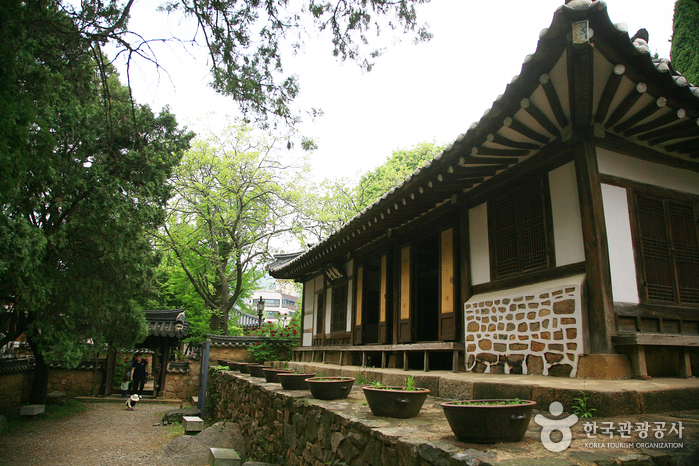
The Chunghyeon Museum preserves the legacy of the respected scholar Ori Lee Wonik. The museum's logo is inspired by the scholar's signature on a letter that he wrote four years before his death, addressed to his son Lee Uijeon, grandson Lee Suyak, and successive descendants. Visitors can see various artifacts and ruins related to Lee Wonik.
 English
 한국어
한국어 日本語
日本語 中文(简体)
 Deutsch
 Français
 Español
 Русский


