
Gyubongam Hermitage (Hwasun) (규봉암(화순))
19.1Km 2026-06-30
40-28 Dowon-gil, Iseo-myeon, Hwasun-gun, Jeonnam-Gwangju Special Metropolitan City
Gyubongam Hermitage is a small hermitage located on Mudeungsan Mountain. It is believed to have been established during the Silla dynasty (B.C. 57-A.D. 935) and underwent renovations in 1959 to attain its current appearance. Renowned for its picturesque scenery, Gyubongam Hermitage is said to be a must-visit spot for those climbing Mudeungsan Mountain. It is particularly famous for its vibrant autumn foliage, and the area around the hermitage is abundant with rocky cliffs.
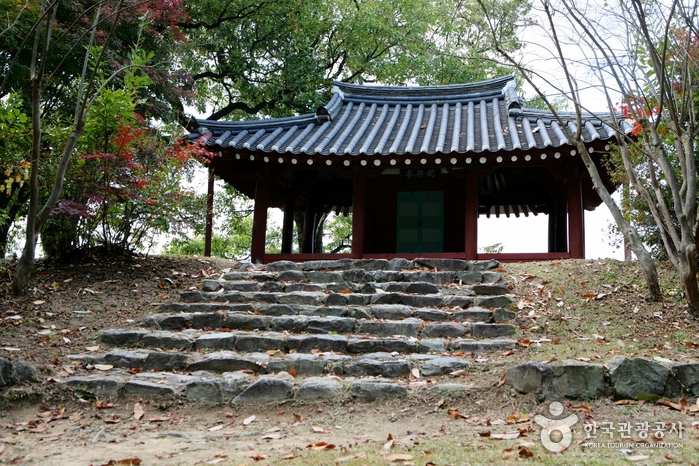
Myeonangjeong Pavilion (면앙정)
19.1Km 2026-06-30
382-11 Myeonangjeong-ro, Damyang-gun, Jeonnam-Gwangju Special Metropolitan City
Myeonangjeong Pavilion is located on the slopes of Jebongsan Mountain in Damyang-gun. The pavilion was constructed in 1533 by Song Sun (1493-1583), who built it as a place for writing poems. After its construction, the pavilion served as a meeting place for scholars and intellectuals and was even frequented by Lee Hwang (1501-1570), a representative Confucian scholar who is pictured on the 1,000 won bill.
The roof of Myeonangjeong Pavilion was originally made of reeds, straw, grass and other materials which could not withstand the elements. After several repairs, the building was developed into the wooden structure that it is today.
From the back of the pavilion, you can see the mountain range and open wide fields; renowned scholars’ poems are engraved on the wooden panels that decorate the pavilion walls.
Mopyeong Village (모평마을)
19.2Km 2026-06-30
80, Sangmo-gil, Hampyeong-gun, Jeonnam-Gwangju Special Metropolitan City
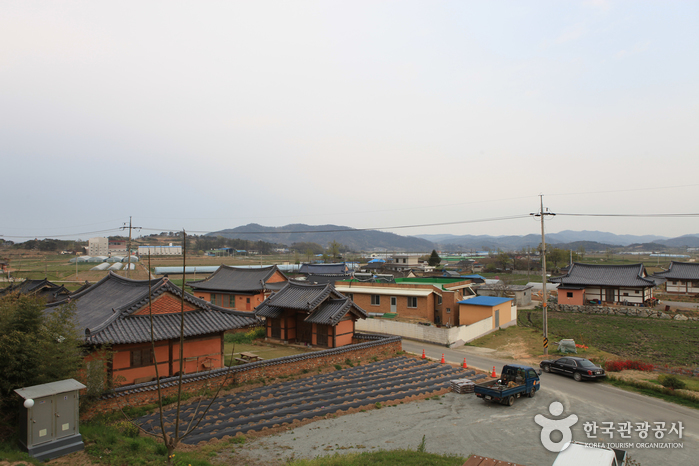
Located in Hampyeong-gun, Jeollanamdo, Mopyeong Village is a scenic farming village that is rich in tradition and history. From the moment you start walking down the stonewall-lined path into town, this small village will capture your heart. The village’s important history (including its title as the origin of Hampyeong-gun of Jeollanam-do Province) is evident in everything you see: from the traditional houses to the 500-year old forest. The area is home to 27 historical and cultural sites and the beautiful Haebochoen Stream, which is shaded by over 40 different types of trees including zelkova trees, nettle trees, and willow trees. Some of the town’s traditional houses, which are about 80 years old, offer guesthouse accommodations to tourists. They include Mopyeongheon, Sopungga and Hisomun (a house made of yellow sod).
In addition to the beautiful country scenery, there is a great selection of available programs that highlight the area’s specialties, including: mulberry-picking, silkworm-feeding and Korean traditional sauce-making. You can also visit a traditional watermill, which has been restored, and swim and splash around in the forest stream. Visitors are encouraged to try their hand at making green tea cakes at the traditional teahouse nearby.
The area of Mopyeong is full of things to entertain visitors, including a number of attractions and special events. Some of the area’s most praiseworthy attractions are the Hampyeong Butterfly Festival, the Cluster Amaryllis Festival in Yongcheonsa Temple, the Chrysanthemum Festival, and the Hampyeong Eco Park and Folk Museum.
Other towns well worth a visit in the Mopyeong area are Hamo Maeul, Ungok Maeul and Wonsan Maeul. A stay at Wonsan Maeul gives visitors a chance to experience firsthand the reality of an agricultural lifestyle by doing some activities like mulberry-picking. For a more low-key trip, make your way over to Ungok Maeul, where you can enjoy the fantastic scenery at the lake or take a relaxing walk along the hiking trails of Mt. Wolyangsan.
 English
 한국어
한국어 日本語
日本語 中文(简体)
 Deutsch
 Français
 Español
 Русский


