
Ewha Womans University Mokdong Hospital (이화의대부속목동병원)
11.5Km 2025-10-23
1071 Anyangcheon-ro, Yangcheon-gu, Seoul
Ewha Womans University Mokdong Hospital, established in 1993, continues the legacy of Pogoonyogoan (1887), Korea’s first women’s hospital. As a 5th-stage tertiary hospital, it delivers advanced care through specialized centers, treating high-complexity diseases such as cancer, cardiovascular and cerebrovascular disorders, and organ transplantation, as well as chronic conditions like hypertension, diabetes, and joint diseases. With the opening of Cancer Center for Women (2009), Urology Institute (2022), and Blood Cancer Hospital (2025), the hospital has expanded its expertise and patient-centered environment, providing trusted, high-quality medical services.
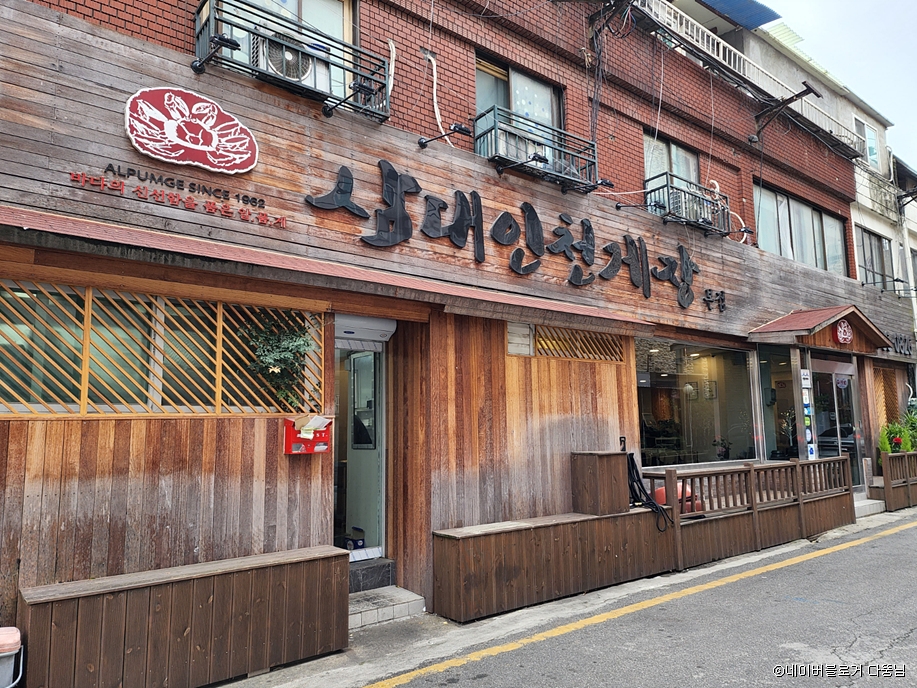
Samdae Incheon Gejang (삼대인천게장)
11.6Km 2025-10-31
22 Geumgok-ro 81beon-gil, Dong-gu, Incheon
Established in 1962, this restaurant has been serving gejang for nearly sixty years and is now in its third generation (“sam-dae“) of family ownership. It uses blue crabs from Yeonpyeongdo Island and traditionally crafted and aged soy sauce. The restaurant employs a low-sodium method in its ganjang gejang (soy sauce marinated crab), highlighting the dish’s savory flavors.
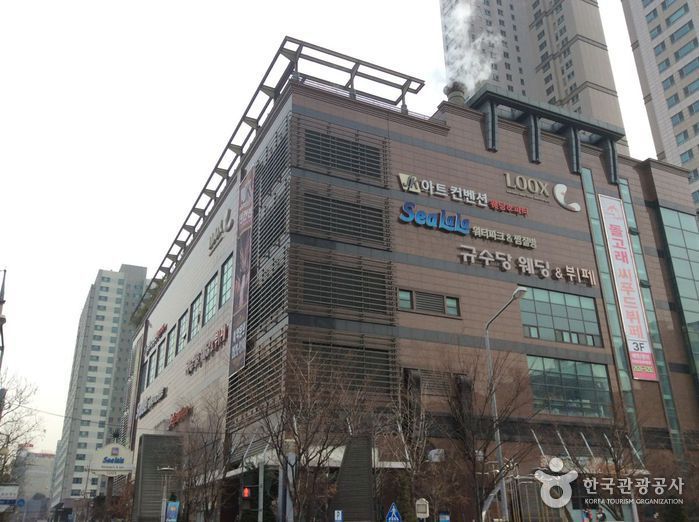
Sealala Water Park (씨랄라 워터파크)
11.7Km 2024-03-20
(2nd underground floor), 164, Mullae-ro, Yeongdeungpo-gu, Seoul
Sealala Water Park is a water park at the heart of the city where one can enjoy water activities across the four seasons. Its name is a portmanteau of the sea and lala, symbolizing the fun one can have in the water park. Inspired by the Mediterranean, the water park has water flowing pool, slides, beach pools, the Kids Land, bath pools, and rotating slides. Amenities onsite include convenience stores, manhwa cafe, and a swimming equipment store. Nearby tourist sites include the Yeongdeungpo Park, The National Assembly Building, and the Yeouido Park.
Aramaru Observatory (아라마루 전망대(아라폭포))
11.8Km 2024-02-15
79-4 Duksil-dong, Gyeyang-gu, Incheon
The Aramaru Observatory, a circular structure perched in the gorge section of Gyeyangsan Mountain, occupies the highest point of the Arabaetgil, a maritime path linking the West Sea with the Hangang River. Renowned for offering the most spectacular vista of the entire Arabaetgil, the observatory features a glass floor that provides a stunning overhead view of the Arabaetgil below. At night, the ambiance is further enhanced by the twinkling lights installed along the railings and floor, creating a mesmerizing atmosphere that captivates visitors.
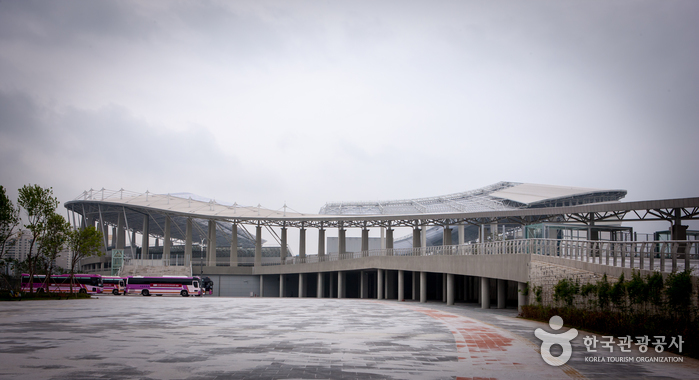
Incheon Asiad Main Stadium (인천아시아드주경기장)
11.9Km 2025-06-09
806 Bongsu-daero, Seo-gu, Incheon
Incheon Asiad Main Stadium is the main stadium used for the 2014 Asian Games in Incheon. Construction began in June 2011 and the stadium opened on June 1, 2014. Built on a 631,975 ㎡ lot, the five-story stadium has a total floor area of 113,620 ㎡ and 61,818 spectator seats (capacity to be reduced by 32,514 seats after the 2014 Asian Games).
The stadium has an oval running track enclosing a regulation-size soccer field. Outside, there's a tennis court, a subsidiary stadium, and the 1,415.13 ㎡ Yeonhui Cricket Ground.
Chung-Ang University Gwangmyeong Hospital (중앙대학교광명병원)
11.9Km 2025-11-06
110 Deokan-ro (Iljik-dong), Gwangmyeong-si, Gyeonggi-do
Chung-Ang University Gwangmyeong Hospital is a general medical institution with approximately 700 beds. Opened in March 2022, the hospital has a total floor area of 97,000㎡ and consists of 14 floors above ground and 8 floors underground.
The hospital operates around six specialized clusters for critical care: Cancer Hospital, Cardiovascular & Cerebrovascular Hospital, Respiratory & Allergy Center, Digestive Disease Center, Spine Center, and Joint Center. With leading specialists in each field and state-of-the-art medical equipment, it provides advanced treatments and multidisciplinary care.
Recognized as a “hospital specializing in surgery,” Chung-Ang University Gwangmyeong Hospital plays a central role in the metropolitan critical care system. It leads the digital transformation of healthcare by harmonizing digital healthcare with public health services, strengthening its position as a highly competitive medical institution. Moving forward, the hospital will continue to pursue patient-centered medical innovation and strive to become a next-generation hospital that represents not only the Seoul metropolitan area but also the Republic of Korea.
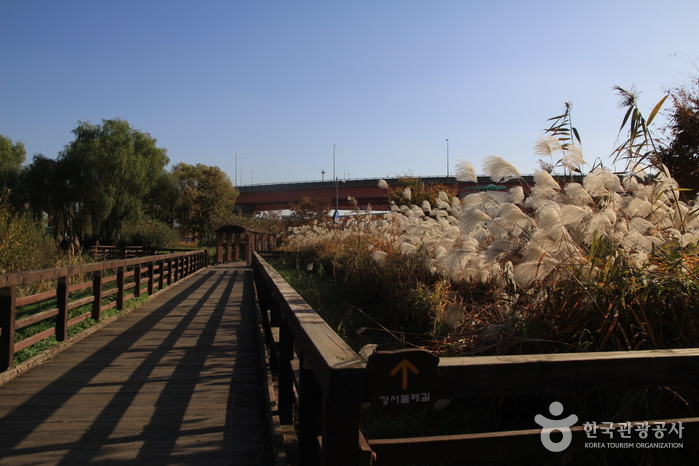
Gangseo Marsh Ecological Park (강서습지생태공원)
11.9Km 2021-06-22
279-23, Yangcheon-ro 27-gil, Gangseo-gu, Seoul
The Gangseo Marsh Ecological Park is an eco-park located on the Hangang River between the southern side of Banghwadaegyo Bridge and southern side of Haengjudaegyo Bridge. Established in July 2007, the park is partly comprised of low wetlands, freshwater lakes, and various aquatic plants. Eco-trails wind around the park through reed areas, around willow trees, and past the migratory bird observation. At the park, visitors can watch and learn about a variety of migratory birds during summer and winter or join one of the park’s organized eco-education programs.
Shinsegae Simon Siheung Premium Outlets (신세계사이먼 시흥 프리미엄 아울렛)
12.1Km 2025-05-08
699 Seohaean-ro, Siheung-si, Gyeonggi-do
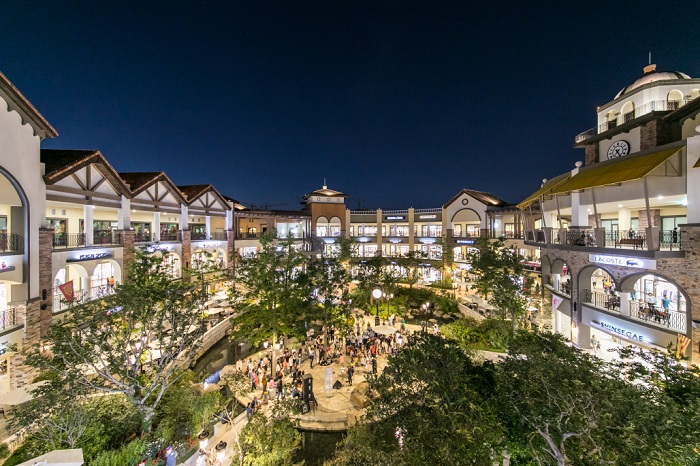
Shinsegae Simon Siheung Premium Outlets can be characterized as a "multi-shopping resort," providing shopping experience where visitors can break away from the busy city life. The store's exquisite exterior is designed to resemble Cadaqués, a town located by the northeastern sea in Spain. The mall offers several convenient facilities, including entertainment and experience programs that visitors can enjoy while shopping. The mall consists of the eco-friendly Central Garden; Sky Garden, where families and friends can enjoy a picnic; a futsal field open to visitors of all ages; and Taste Village that offers cuisines from all over the world.
Sudoguksan Museum of Housing and Living (수도국산달동네박물관)
12.1Km 2022-09-13
51, Solbit-ro, Dong-gu, Incheon
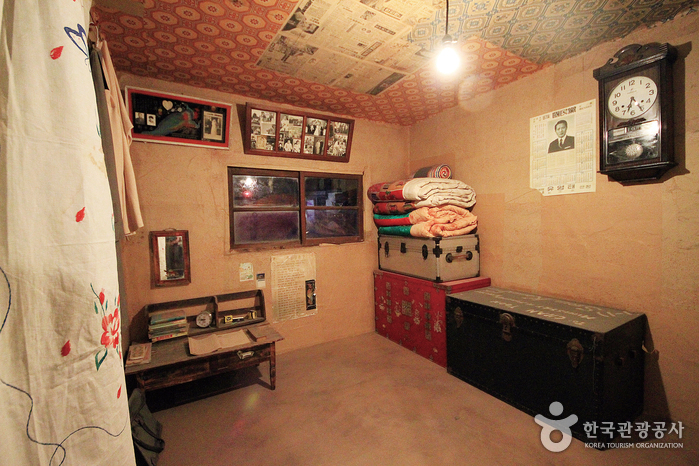
Sudoguksan Museum of Housing and Living, located within Songhyun Park, Dong-gu Incheon, opened on October 25, 2005. Consisting of two floors, the museum exhibits the life of citizens living in Incheon's "daldongne," the impoverished hillside areas. It exhibits reproductions of various scenes of daily life from the 1960s and 1970s.
CM Hospital (CM병원)
12.1Km 2026-01-02
CM Chungmu Hospital, 13 Yeongdeungpo-ro 36-gil, Yeongdeungpo-gu, Seoul
Founded in 1949, this general hospital specializes in orthopedics and joint care. It is a nationally certified general hospital and a government-designated joint specialty hospital. As a third-generation institution, it is now led by Director Lee Sang-hoon, who has been appointed as the Chairman of the Medical Committee of the Korean Sport & Olympic Committee (KSOC) and is recognized as a pioneer in sports medicine in Korea. He is also the first IOC-certified specialist in Korea and serves as a Vice Chairman of the Olympic Council of Asia (OCA).
 English
 한국어
한국어 日本語
日本語 中文(简体)
 Deutsch
 Français
 Español
 Русский


