![SI J.Lindeberg - Shinsegae Paju Branch [Tax Refund Shop] (SI 제이린더버그 신세계파주)](http://tong.visitkorea.or.kr/cms/resource/72/2889172_image2_1.jpg)
SI J.Lindeberg - Shinsegae Paju Branch [Tax Refund Shop] (SI 제이린더버그 신세계파주)
6.9Km 2024-04-18
200, Pilseung-ro, Tanhyeon-myeon, Paju-si, Gyeonggi-do
-
![Le Coq - Shinsegae Paju Branch [Tax Refund Shop] (르꼬끄 신세계파주)](http://tong.visitkorea.or.kr/cms/resource/75/3314375_image2_1.jpg)
Le Coq - Shinsegae Paju Branch [Tax Refund Shop] (르꼬끄 신세계파주)
6.9Km 2024-06-27
#1014, 200 Pilseung-ro, Tanhyeon-myeon, Paju-si, Gyeonggi-do
-
![The Izzat Collection - Shinsegae Paju Branch [Tax Refund Shop] (아이잗컬렉션 신세계파주)](http://tong.visitkorea.or.kr/cms/resource/16/3313416_image2_1.jpg)
The Izzat Collection - Shinsegae Paju Branch [Tax Refund Shop] (아이잗컬렉션 신세계파주)
6.9Km 2024-06-27
200 Pilseung-ro, Tanhyeon-myeon, Paju-si, Gyeonggi-do
-
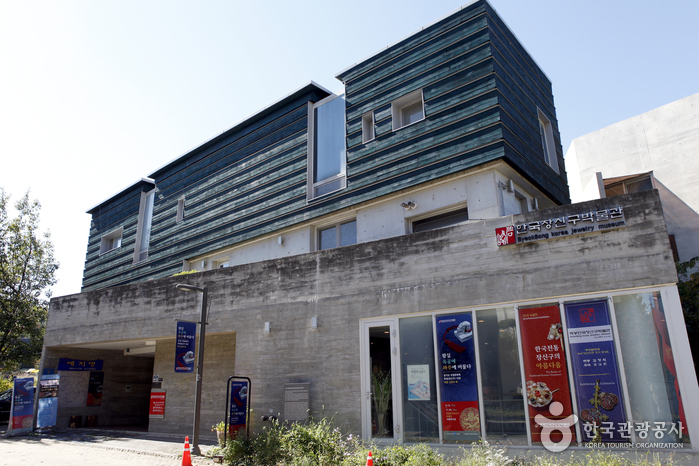
Byeokbong Korea Jewelry Museum (벽봉한국장신구박물관)
7.1Km 2025-01-17
48-38, Heyrimaeul-gil, Paju-si, Gyeonggi-do
+82-31-949-0848
Byeokbong Korea Jewelry Museum was founded by Kim Young-hee, a master in jade jewelry, Gyeonggi-do Intangible Culture No. 18. The museum is dedicated to displaying and promoting the jewelry worn by royalty during the Joseon dynasty. Visitors can learn about the various styles and the meanings behind the designs.

Heyri Art Valley (헤이리 예술마을)
7.2Km 2025-06-30
70-21 Heyrimaeul-gil, Paju-si, Gyeonggi-do
Heyri Art Valley is a neighborhood of inspiration, creative workshops, exhibitions, festivals, and education of all things creative arts. This neighborhood expanded into an art complex when artists from diverse fields of expertise began to gather during the development process of Paju Book City. The village’s name originates from Paju’s local song “Heyri Sound,” sung by farmers while working at the fields. The whole neighborhood is like a masterpiece due to the artworks displayed along the streets in harmony with nature’s beauty. The buildings were carefully designed as to prevent the manmade structures getting in the way from admiring the surrounding nature. For example, the neighborhood’s streets were designed to follow the curves set by nature without using any asphalt.
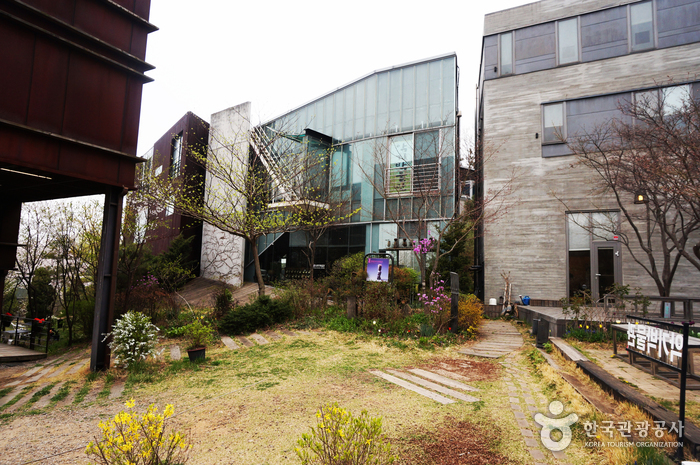
Museum of Musical Instruments of the World (세계민속악기박물관)
7.2Km 2021-12-24
63-26, Heyrimaeul-gil, Paju-si, Gyeonggi-do
+82-31-946-9838
Museum of Musical Instruments of the World is the first Korean museum to collect musical instruments from all over the world. At present, it houses about 500 musical instruments including the balafon, djembe, didgeridoo, and angklung from 70 countries in Africa, the Middle East, Islamic Northeast Asia, and Pacific.
Visitors can try out the instruments in the designated hands-on activity area, and try on traditional costumes, as well as other entertainment activities like pungmul (traditional Korean percussion). Visitors who don’t get enough by just playing and touching the instruments can also take part in folk music lectures. In addition, to provide more knowledge on the regional culture, the museum showcases musical instrument with dolls of respective region's traditional costume, instruments, and painting.
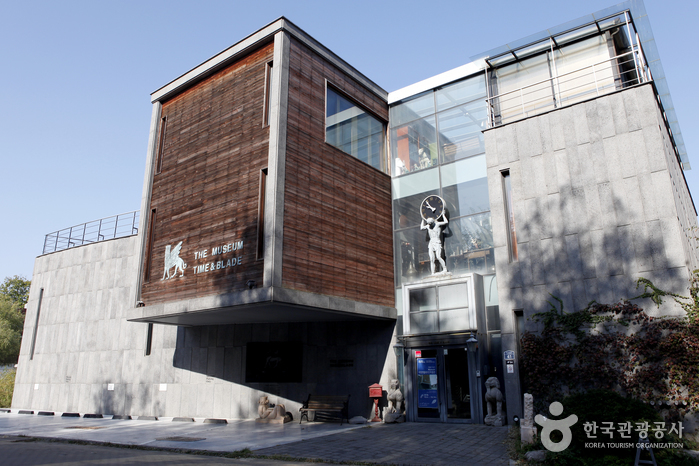
Time & Blade Museum (타임앤블레이드 박물관)
7.3Km 2021-11-30
41, Heyrimaeul-gil, Paju-si, Gyeonggi-do
+82-31-949-5675
The Time & Blade Museum features two floors filled with items that have shaped the development of humankind. There are many clocks and watches on display, with the largest hall dedicated to skeleton clocks. The museum also displays the parts that make up a clock and the tools used to create them.
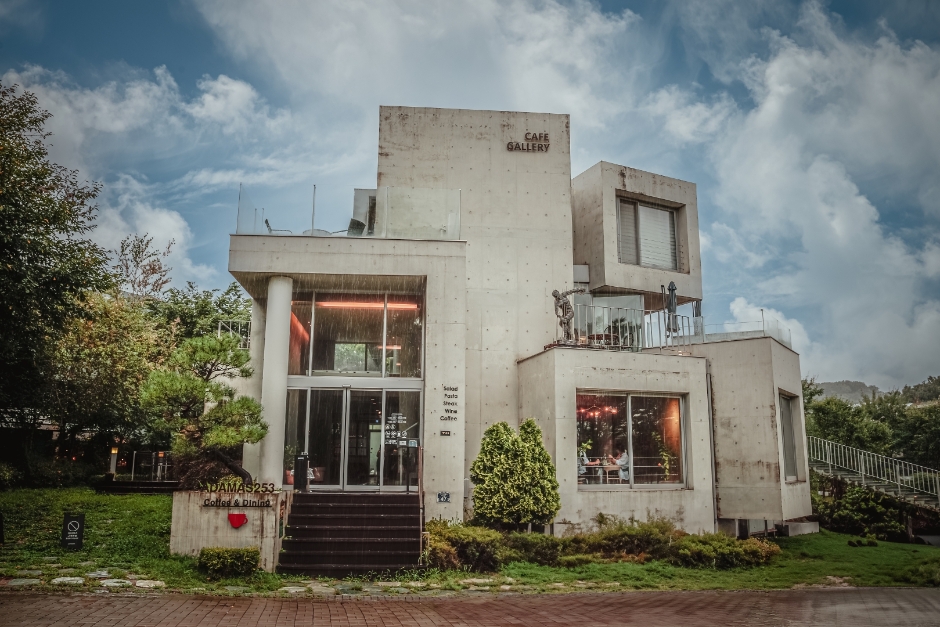
Adamas253 (카페 아다마스253)
7.3Km 2025-10-28
47 Heyrimaeul-gil, Tanhyeon-myeon, Paju-si, Gyeonggi-do
◎ Travel information to meet Hallyu’s charm - "Agency"
A café where Go Ah-in and Choi Jeong-min met in a scene that candidly exposes the realities of the Korean advertising industry. Amidst an interior filled with artistic sculptures, their challenges are evident as they gulp down coffee. The café not only serves coffee but also dishes like pasta and steak. The café provides a view of the surrounding landscape of Heyri Art Village.
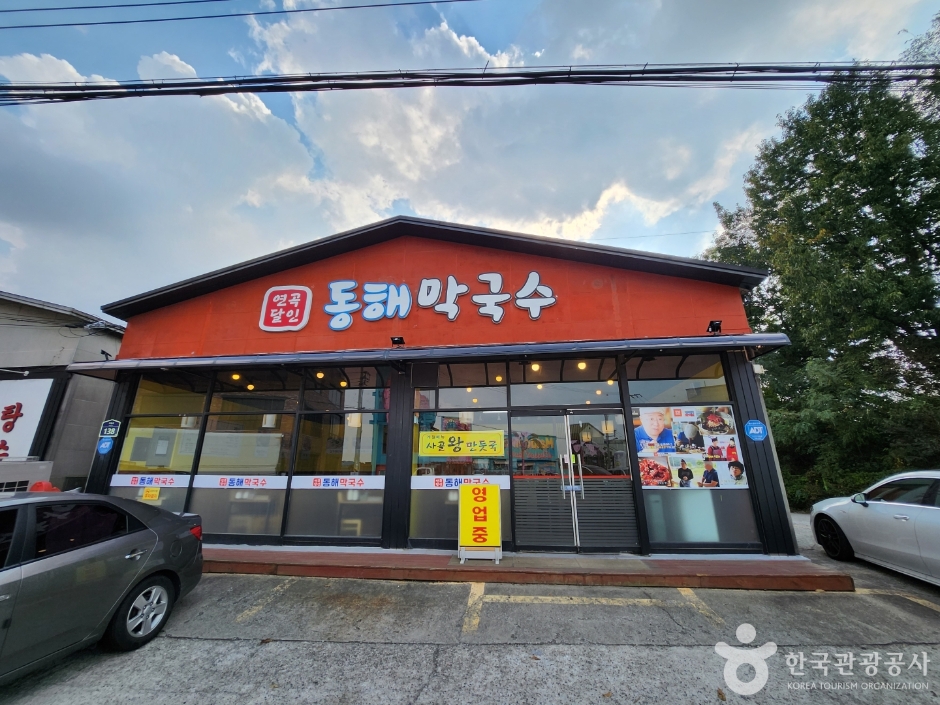
Yeongokdarin Donghae Makguksu (연곡달인 동해막국수)
7.3Km 2024-02-07
138 Jimok-ro, Paju-si, Gyeonggi-do
Yeongokdarin Donghae Makguksu, located near Paju Book City, is a makguksu (buckwheat noodles) specialty restaurant. Their bibim makguksu (spicy buckwheat noodles) is distinctively topped with myeongtae sikhae (salted and fermented pollack), offering a refreshing, sweet, and sour taste. Suyuk (boiled pork slices), gamja jjinmandu (steamed potato mandu), and modubu (bean curd) are excellent dishes that accompany it well. It's important to note that the restaurant may close earlier than the regular business hours if ingredients run out, so it's advisable to check before visiting.
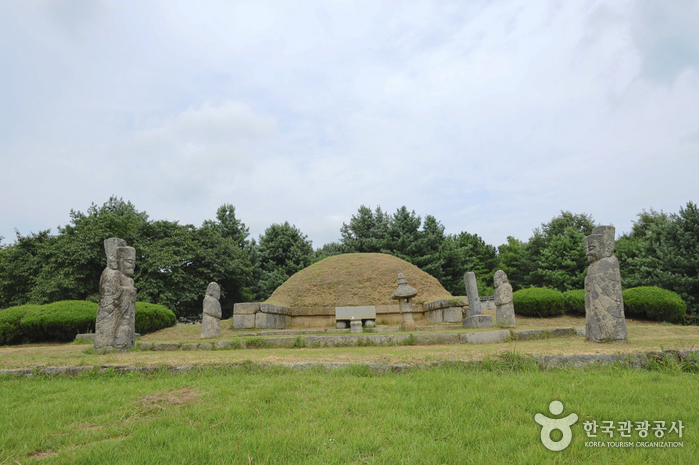
Tomb of Hwang Hui (황희정승묘)
7.3Km 2024-02-07
23-83 Jeongseung-ro 88beon-gil, Tanhyeon-myeon, Paju-si, Gyeonggi-do
Hwang Hui (1363-1452) is a prime minister who played a significant role in the early Joseon dynasty. Constructed in three stages, the tomb's burial mound is notably large. Hwang Hui was an official instrumental in establishing the foundations of Joseon. He served under King Taejong, the 3rd king of Joseon, and King Sejong, the 4th king, making notable contributions in diplomacy, law, science, and national defense. His descendants have continued to honor his legacy by maintaining the tomb.
 English
 한국어
한국어 日本語
日本語 中文(简体)
 Deutsch
 Français
 Español
 Русский


