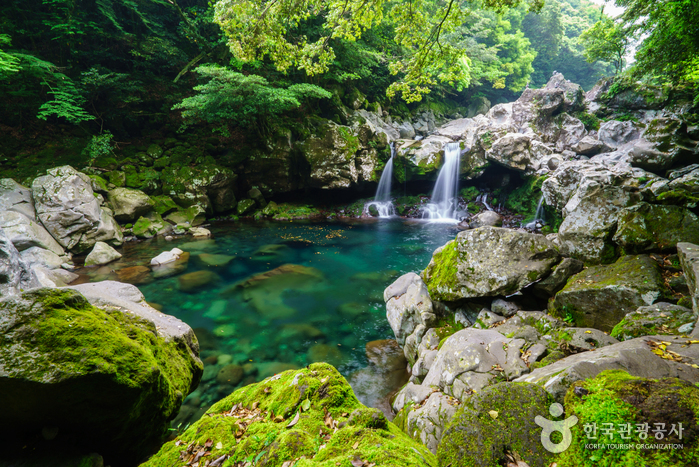
Donnaeko Resort (Wonangpokpo Falls) (돈내코(원앙폭포))
17.8Km 2025-01-14
137, Donnaeko-ro, Seogwipo-si, Jeju-do
With a valley creek hidden by lush green forest leading to a 5-meter-high waterfall falling into a small pool of water, Donnaeko Resort is like a small paradise hidden in nature. The waters, flowing down from Hallasan Mountain, are clear and icy cold even during the hot summer season. The resort's magnificent views and natural pool make the area a popular vacation destination.
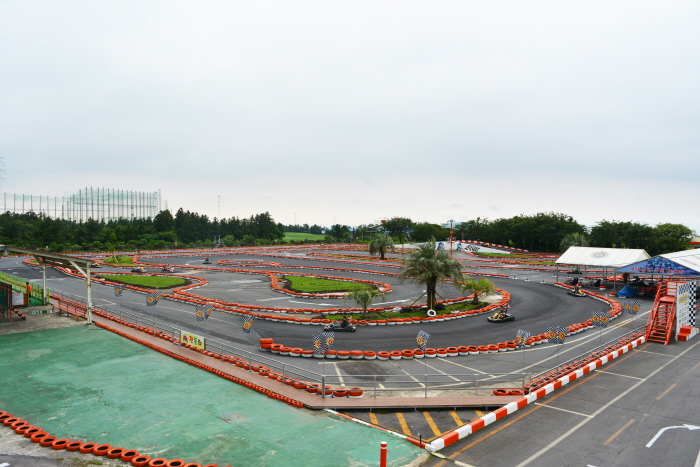
Jeju Leports Land (제주레포츠랜드㈜)
18.6Km 2022-12-29
47 , Waheulsangseo 2-gil, Jeju-si, Jeju-do
Jeju Leports Land is located on the eastern side of Jeju Island and is the country's largest kart experience center. It is a multi-complex leisure experience center with programs such as mountain buggy, zip line, survival field, four season sledding, and more. There are also accommodation facilties such as pensions and guest houses.
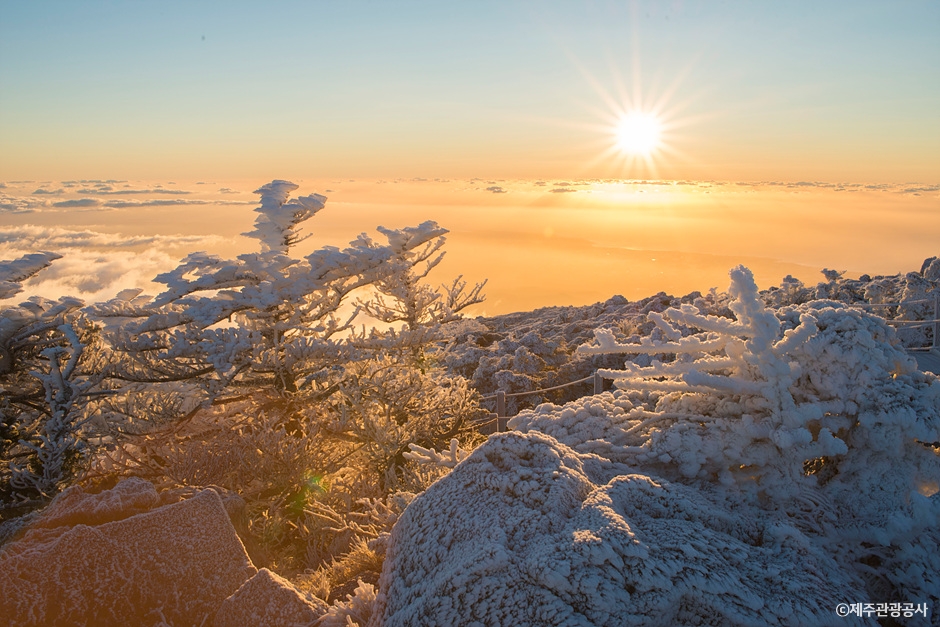
Hallasan Mountain (한라산)
18.7Km 2025-10-31
San 15-1 Topyeong-dong, Seogwipo-si, Jeju-do
Hallasan Mountain stands proudly at the center of Jeju Island and is perhaps the island’s most memorable landmark. Also called Yeongjusan Mountain, meaning "mountain high enough to pull the galaxy," Hallasan Mountain is widely known by scientists for its geological value. Designated as a national park in 1970, there are 368 parasitic cones called "oreum" (Jeju dialect meaning peak) around the main mountain.
Hallasan Mountain is famous for its vertical ecosystem of plants that results from the varying temperatures along the mountainside. Over 1,800 kinds of plants and 4,000 species of animals (3,300 species of insects) have been identified; to explore the mountain's treasures, simply follow one of the well-developed hiking trails.
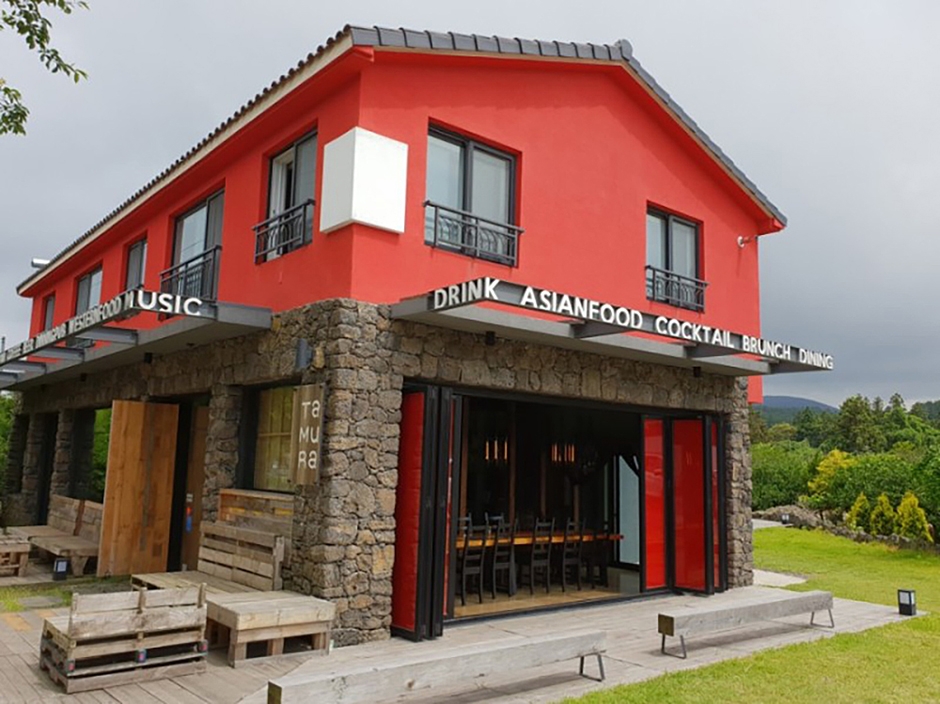
Tamura (타무라)
19.1Km 2025-10-29
670 Jungsangandong-ro, Jocheon-eup, Jeju-si, Jeju-do
Tamura is a Thai restaurant on the eastern side of Jeju Island, offering recreations of popular Thai dishes, including tom yum goong, pad thai, and pu phat pong curry. The restaurant became even more popular after it was visited by singer IU.
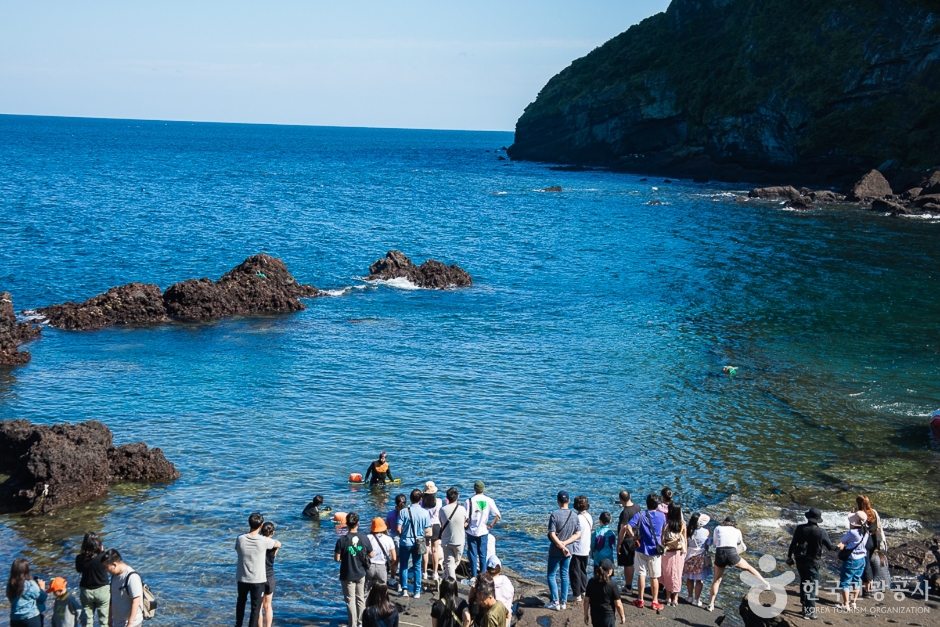
Seongsanpo Haenyeo Gongyeonjang (성산포 해녀물질공연장)
19.2Km 2024-02-19
284-34 Ilchul-ro, Seongsan-eup, Seogwipo-si, Jeju-do
The site refers to Umutgaehaebyeon Beach, a fishing area near Seongsan Ilchulbong Tuff Cone where haenyeo (women divers) demonstrate their skills. The process is as follows: haenyeo introduction, sea diving, collecting seafood, taking pictures, selling seafood, and tasting. Visitors can taste sea cucumbers, sea pineapples, and conch at the Haenyeo's House restaurant run by the haenyeo. The schedule changes depending on the season and weather conditions.
![Manjanggul Lava Tube [National Geopark] (만장굴 (제주도 국가지질공원))](http://tong.visitkorea.or.kr/cms/resource/55/3354155_image2_1.jpg)
Manjanggul Lava Tube [National Geopark] (만장굴 (제주도 국가지질공원))
19.4Km 2025-03-31
182 Manjanggul-gil, Jeju-si, Jeju-do
Manjanggul Lava Tube, located in Gimnyeong-ri, Jeju, is part of the Geomunoreum Lava Tube system. The lava tube stretches roughly 7,400 meters, with a maximum x_height of 25 meters and x_width of 18 meters. These measurements make it one of the largest lava tubes in the world. Manjanggul holds great value for science and conservation studies, having well-maintained formations despite being formed over one hundred thousand years ago.
The majority of the cave is closed off, with only 1 kilometer being open to tourists. Within this open section, visitors can see a variety of lava tube and cave topographical features, including stalagtites, stalagmites, and stone pillars. Among these, the 7.6-meter-tall stone pillar at the end of the open section is recorded as the largest in the world.
 English
 한국어
한국어 日本語
日本語 中文(简体)
 Deutsch
 Français
 Español
 Русский


