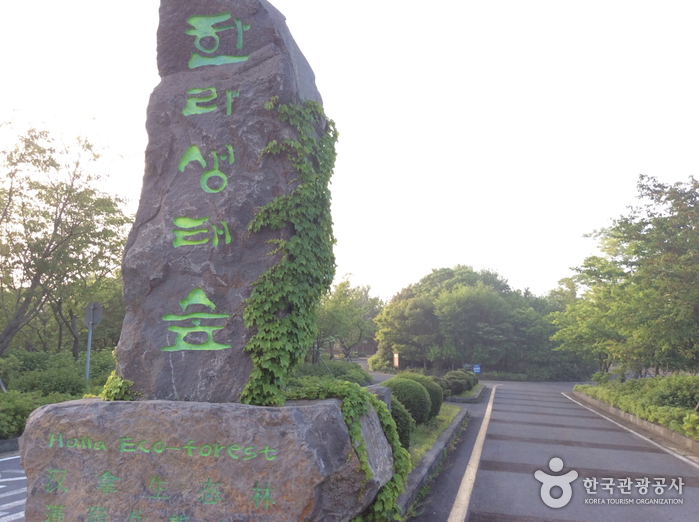
Halla Ecological Forest (한라생태숲)
10.7Km 2021-06-11
2596, 516-ro, Jeju-si, Jeju-do
+82-64-710-8688
Spanning 196 hectares, Halla Ecological (Eco) Forest is home to 288,000 trees representing 333 indigenous plant species. Having been designated as a conservation area, the forest provides plenty of great opportunities to observe and learn about Jeju's diversified ecosystem through various facilities including an observatory, plant nurseries, walking trails, and more. The forest also features 13 themed forests with low-impact facilities to preserve the essence of the forest. Visitors can sign up for the forest experience program to enjoy the walking trails within the forest.

Jeju Railbike (제주레일바이크)
10.9Km 2024-10-31
641 Yongnunioreum-ro, Gujwa-eup, Jeju-si, Jeju-do
Jeju Railbike opened in 2013 and is the only raikbike facility on Jeju Island. While pedaling along, riders can enjoy the views of cows and horses out to pasture in the fields. The full course is 4 kilometers long, and the bikes are all equipped with motors, making it easy for anyone and everyone to complete the full course without breaking a sweat. Jeju Railbike stands out from other railbikes in the use of many up and down sections, as the rails are not previous railroad tracks, but newly created to match the natural terrain of the ranch. After finishing the ride, visitors can enjoy feeding small animals like sheep, goats, and rabbits.
![Gimnyeongsagul Cave [UNESCO World Heritage] (김녕사굴 [유네스코 세계자연유산])](http://tong.visitkorea.or.kr/cms/resource/37/1618237_image2_1.jpg)
Gimnyeongsagul Cave [UNESCO World Heritage] (김녕사굴 [유네스코 세계자연유산])
11.0Km 2022-12-29
34, Manjanggul-gil, Jeju-si, Jeju-do
+82-1600-0064
Gimnyeongsagul Cave is located close to Manjanggul Cave in the northeastern part of Jeju Island. The name of the cave, "Sagul," comes from the snake-like formation of the cave ("sa" meaning serpent). The entrance of the cave is wide like a serpent holding its mouth wide open, but once inside, the tunnel narrows resembling the body of a snake. Gimnyeongsagul Cave is a highly protected area and has been designated as Natural Monument along with Manjanggul Cave.
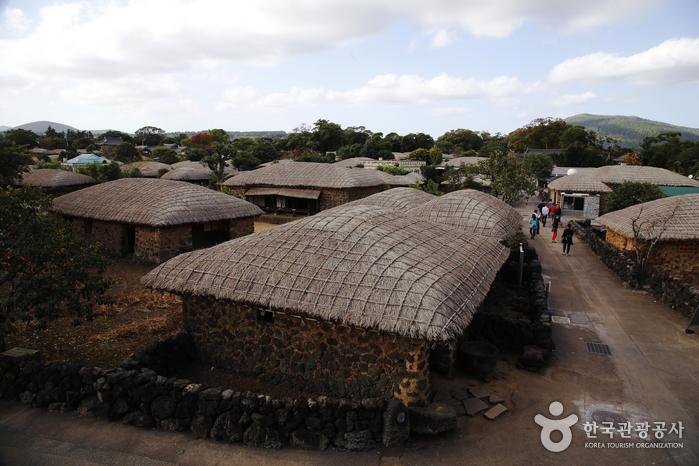
Seongeup Folk Village (성읍민속마을)
11.1Km 2024-03-11
3294, Seongeup-ri, Pyoseon-myeon, Seogwipo-si, Jeju-do
+82-64-710-6797
Seongeup Folk Village has been designated and protected as a folk village, preserving the characteristics of Jeju's old private houses. Various tangible cultural heritage and intangible cultural heritage such as folk songs and games, local foods and craftmanship, and Jeju dialect are being passed down. The village offers traditional culture and traditional house experiences, and holds cultural events every October and November.
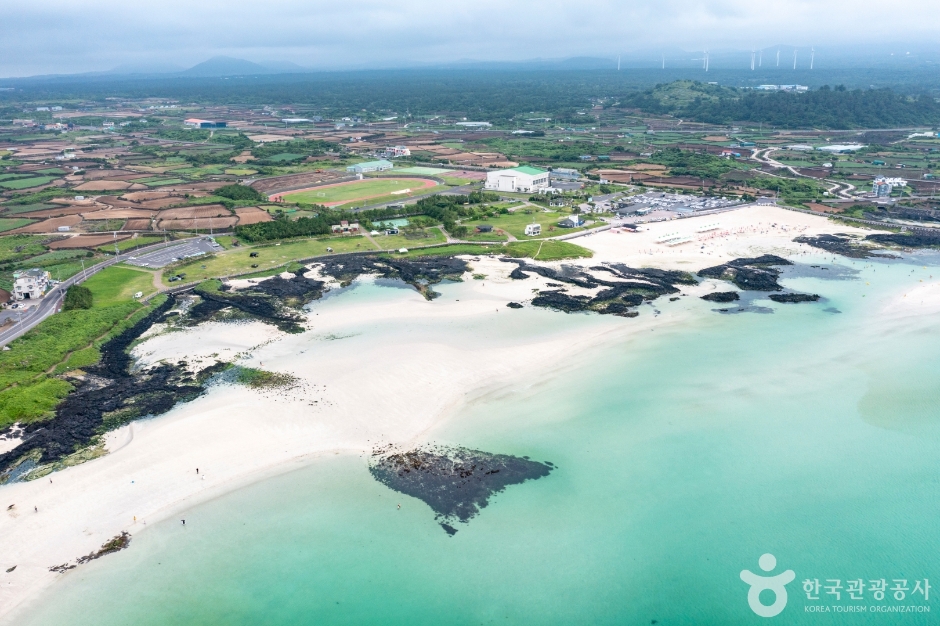
Gimnyeong Seongsegihaebyeon Beach (김녕성세기해변 (김녕해수욕장))
11.8Km 2024-11-14
237 Gujwahaean-ro, Jeju-si, Jeju-do
The clear waters that are highlighted with cobalt-blue and the clean white sand of Gimnyeong Seongsegihaebyeon Beach steal the hearts of visitors every year. The beach is also popular with fishermen, who enjoy rope fishing from the rocks. This area is known to be good for catching striped beakfish and spotty belly greenlings. Not far from the beach is Manjanggul Cave, which offers a welcome escape from the daytime heat.
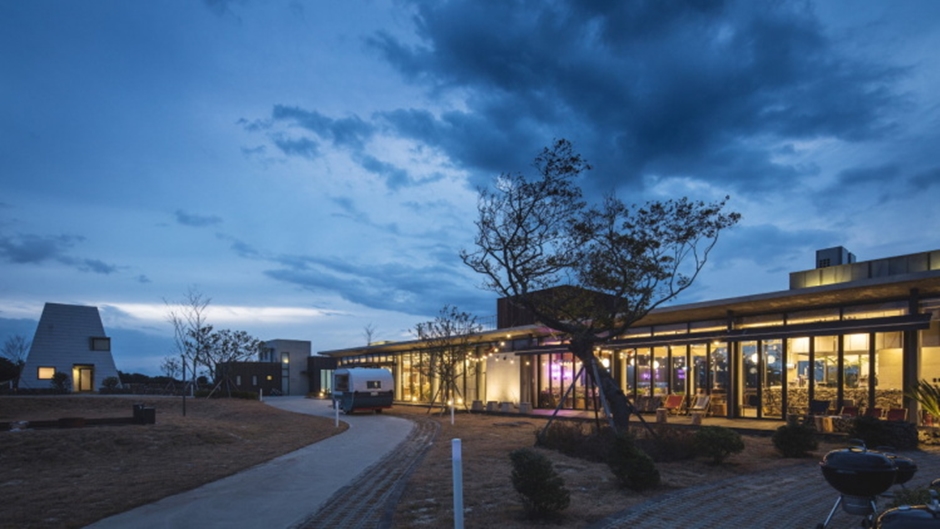
Around Follie (어라운드폴리)
11.8Km 2024-06-05
433 Seoseongil-ro, Seongsan-eup, Seogwipo-si, Jeju-do
Around Follie is a hotel-slash-campground located in Seogwipo-si, Jeju. The campground provides all the camping equipment needed for as few as one person to a whole family of campers, so everyone can enjoy camping with ease.
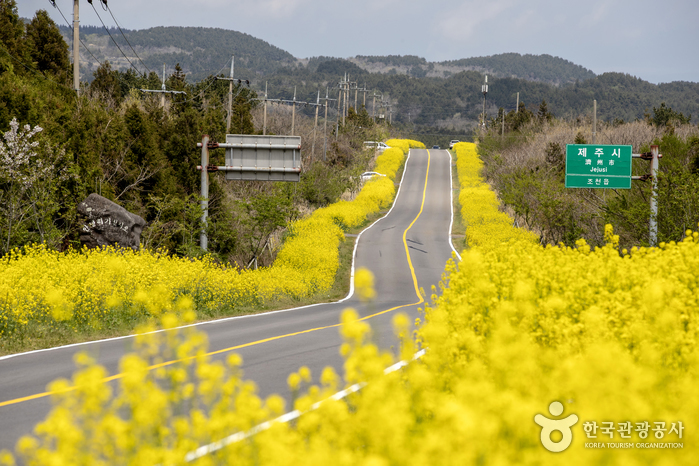
Seogwipo Gasiri Village (Noksan-ro Canola Flower Road) (서귀포 가시리마을 (녹산로 유채꽃도로))
12.6Km 2024-01-09
20 Gasi-ro 565beon-gil, Pyoseon-myeon, Seogwipo-si, Jeju-do
Seogwipo Gasiri Village is where canola flowers and cherry blossoms bloom simultaneously over a 10-kiliometer section from its access road every April, boasting a picturesque driving route. The combination of yellow canola flowers and light pink cherry blossoms is very special. Selected as one of the “100 Beautiful Roads in Korea,” Gasiri Noksan-ro Road is a road that passes through Noksanjang and Gammajang, which were the best horse farms of the Joseon period, and is currently one of the best canola flower roads in Jeju. As such, it is called the "First Sight of the Ten Sights of Gasiri Village." In addition, visitors can enjoy beautiful natural scenery unique to Jeju, such as Ttarabioreum and Keunsaseumioreum Parastic Cones.
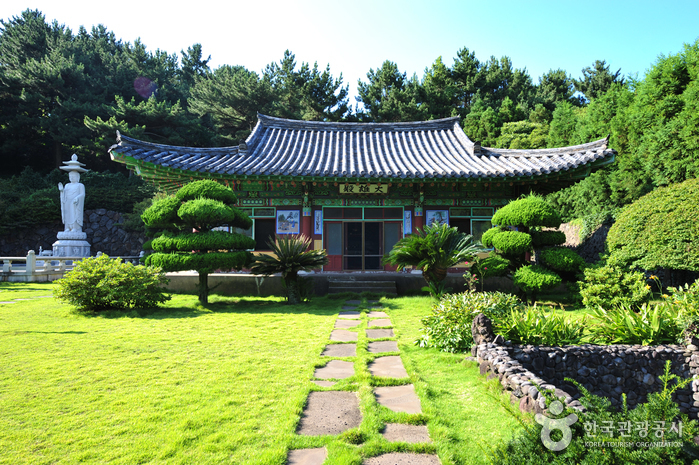
Jeju Bultapsa Temple (불탑사(제주))
13.1Km 2021-06-15
41, Wondang-ro 16-gil, Jeju-si, Jeju-do
+82-64-755-9283
Located in Samyang-dong, Jeju-si, Bultapsa Temple is a branch of Gwaneumsa Temple, the headquarters of the 23rd district of the Jogye Order of Korean Buddhism. The temple is nestled at the foot of Wondangbong Peak (alt. 170.4 meters). The temple started out as the Buddhist shrine Wondangsa, one of three temples in Jeju during the Yuan dynasty. Most of the temple was damaged due to the Jeju Uprising on April 3, 1948 and it was rebuilt in 1953. Later, the temple underwent renovations and extension works to get to the current conditions. Today, the temple has Daeungjeon Hall, Yosachae monk quarters, Jonggak Bell Tower, and Cheonwangmun Gate. The temple's five-story stone pagoda is Jeju's only stone pagoda from the Goryeo dynasty. It was designated Treasure No. 1187 in November 1993.
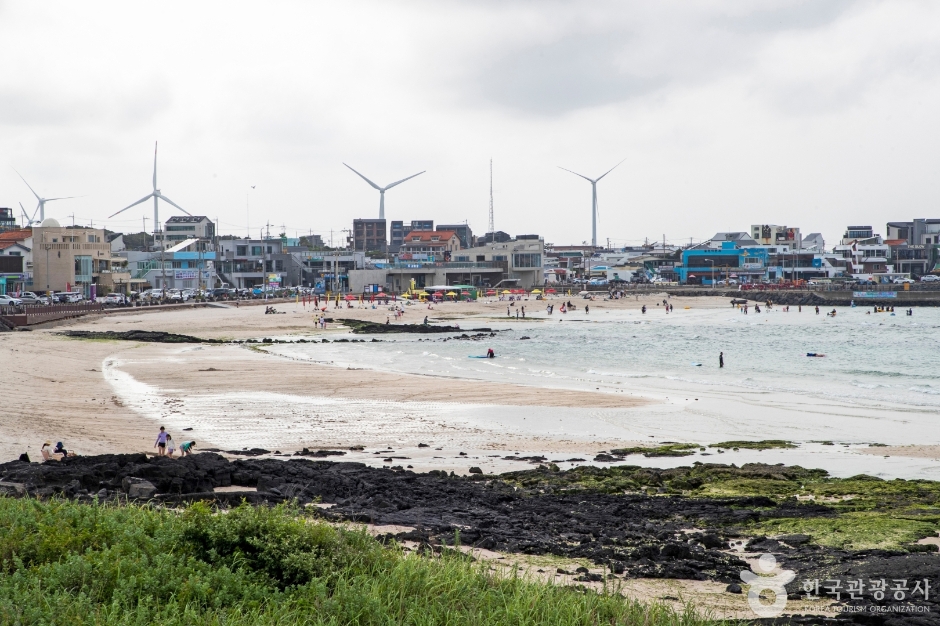
Woljeongri Beach (월정리해변(월정리해수욕장))
13.2Km 2025-03-13
480-1 Haemajihaean-ro, Jeju-si, Jeju-do
+82-64-728-3906
Woljeong-ri, a village located on the east side of Jeju Island, holds the meaning "the moon stays." The beautiful emerald sea spreads out like a picture, and the bright moon shines above it. As more and more travelers visited the beach to appreciate its beauty, many restaurants, cafes, and lodging facilities started to form along the shoreline. Some cafes placed chairs for people to relax in while looking at the sea, which became an iconic photo spot of Woljeongri Beach.
The beach is also a popular location for a variety of water sports such as surfing, snorkeling, and kayaking. Woljeongri Beach is popular among surfers because it has waves with a uniform x_height that are constantly coming in. The beach is also a part of the Gimnyeong-Hado Olle and Gimnyeong-Woljeong Geotrail Course on Jeju Olle Trail Route 20, and a great spot for tourists to take a break while taking in the beautiful scenery and cool scent of the sea.
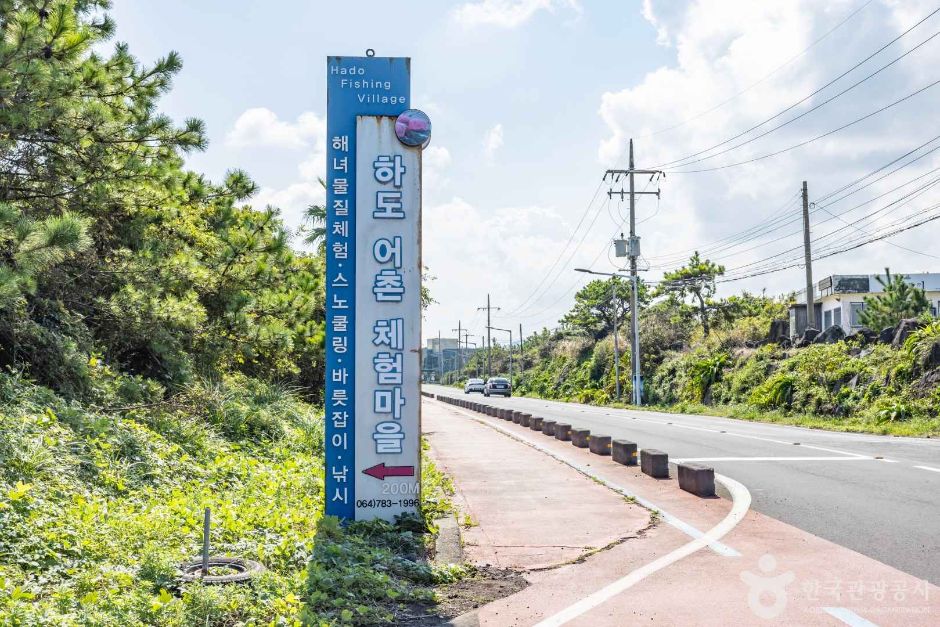
Hado Fishing Experience Village (하도어촌체험마을)
13.2Km 2025-12-18
Haemajihaean-ro, Gujwa-eup, Jeju-si, Jeju-do
Hado Fishing Experience Village is a relatively unknown destination on Jeju Island where visitors can experience the island’s unique maritime culture and coastal scenery. Among other things, it is home to the Haenyeo Museum, which offers a fascinating glimpse into the lives and traditions of Haenyeo (Jeju’s female divers); the Hado-ri Migratory Bird Habitat, where dozens of species of migratory birds, including rare species, gather; and Hado Beach, known for its clean blue waters and white sand.
 English
 한국어
한국어 日本語
日本語 中文(简体)
 Deutsch
 Français
 Español
 Русский


