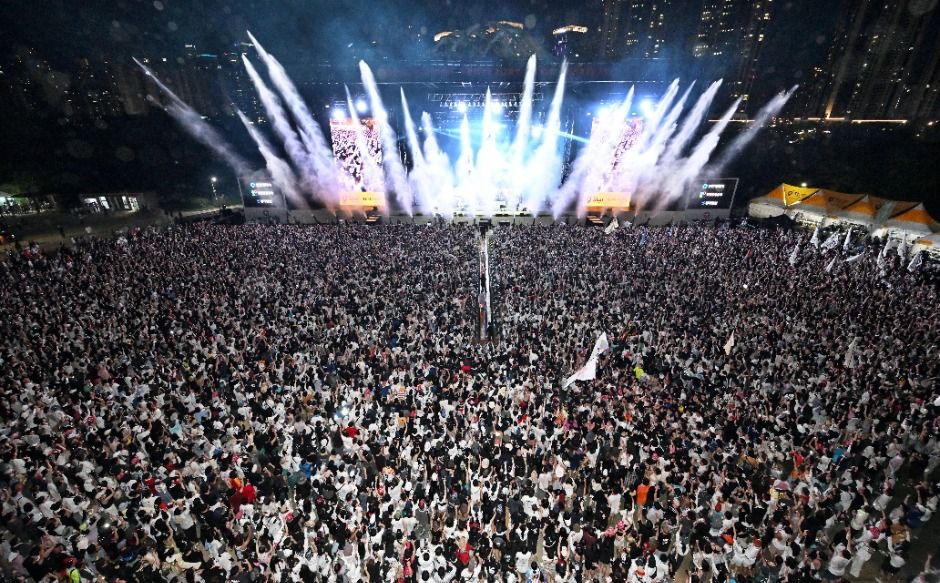
Incheon Pentaport Rock Festival (인천펜타포트 락 페스티벌)
6.4Km 2025-07-10
350 Central-ro, Yeonsu-gu, Incheon
+82-1899-6709
The Incheon Pentaport Rock Festival is Korea’s premier rock festival. It features performances by world-renowned rock bands as well as talented emerging bands. The festival is highly popular because of its exclusive lineup. One of the major highlights of the festival is the outdoor Camping Zone, where attendees can set up tents with a view of the stage and stay for three days. This attracts trendy individuals looking to enjoy both camping and a rock festival. The festival boasts three stages with various artist lineups, enhancing its popularity.
◎ Tip
The Incheon Pentaport Rock Festival offers a paid shuttle bus service known as “Ggoggama.” This service operates round trips on 13 routes nationwide, including seven routes in the metropolitan area.

Incheon Port International Passenger Terminal (인천항 국제여객선터미널)
6.5Km 2023-06-10
57 , Gukjehangman-daero 326beon-gil, Yeonsu-gu, Incheon
The Incheon Port International Passenger Terminal was created to develop Incheon Port into an internationally beautiful port for tourism by constructing an international passenger pier and terminal to resolve user inconvenience caused by dual (inner and coastal) operations and increase port operation efficiency. Construction began in December 2016 and was completed in June 2019, and operations began on June 15, 2020. It has a total floor area of 66,789.62 ㎡ (terminal building 65,421.15 ㎡, gate building 1,368.47 ㎡) and consists of five floors and a rooftop floor.
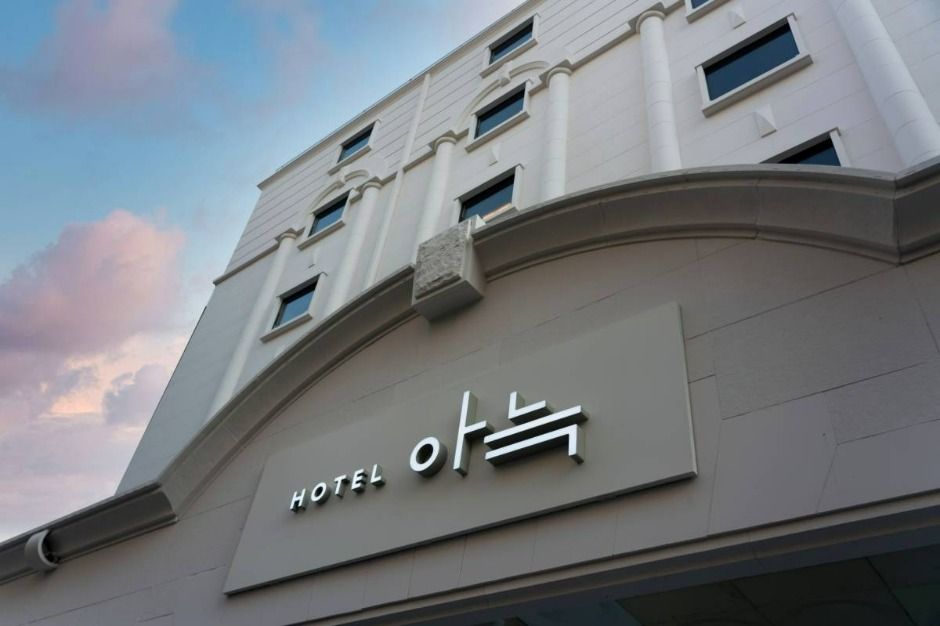
The Hyoosik Aank Hotel Incheon Bupyeong (더휴식 아늑호텔 인천 부평점)
6.7Km 2025-04-08
18-8 Gyeongwon-daero 1417beon-gil, Bupyeong-gu, Incheon
The Hyoosik Aank Hotel Incheon Bupyeong offers a variety of room types focusing on a specific theme for both leisure and relaxation, such as a deep sleep room with a premium massage chair, a singing room with noraebang equipment and soundproof walls, a deluxe couple room with two high-end gaming PCs, a movie room with a beam projector, a spa room with a tile tub, a party room, a twin bedroom, and a regular standard room. The hotel also has a parking lot and a guest lounge.
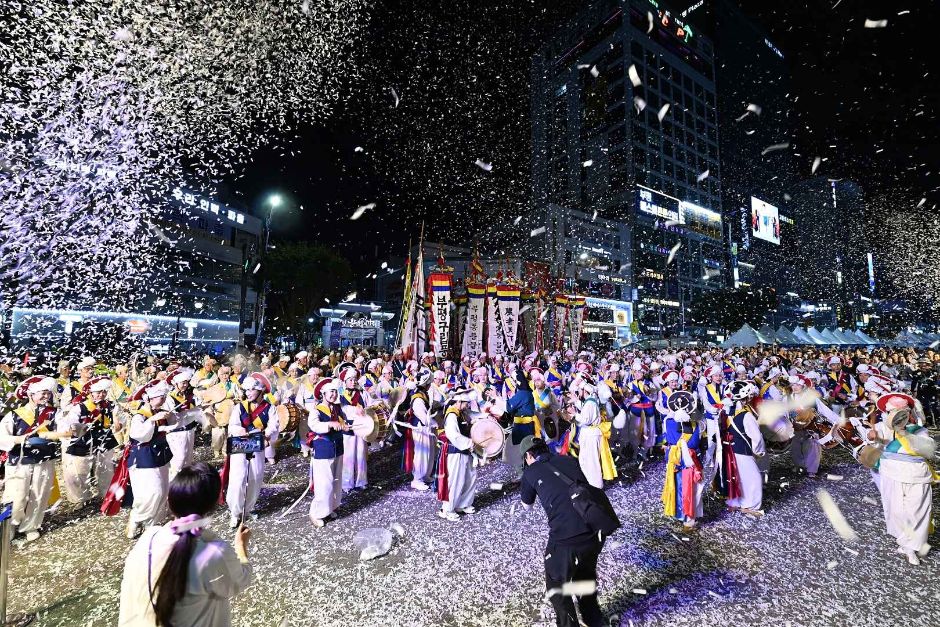
Bupyeong Pungmul Festival (부평풍물대축제)
6.7Km 2025-10-23
60 Bupyeong-daero, Bupyeong-gu, Incheon
+82-32-509-7516
Bupyeong Pungmul Festival is a lively festival dedicated to traditional folk celebration. "Pungmul" is the collective term for instruments and decorations used to play "pungak," a lively entertainment folk music performed to foster excitement during in a traditional celebration. This vibrant festival, which is centered around the joyous theme of pungmul, takes place in the heart of Bupyeong. It is a community festival supported by active participation from local residents, offering a rich taste of local charm. Visitors are advised to explore the Bupyeong Underground Shopping Center, the world’s largest underground shopping center listed in the Guinness World Records, and Bupyeong, the birthplace of Korean jazz.
[Global Zone]
Welcome to the "Global Zone" of Incheon's famous Bupyeong Pungmul Festival!
"A Valuable Pungmul Festival, A Bupyeong Festival Together"
The Bupyeong Pungmul Festival has been selected as a 2024~2025 Cultural Tourism Festival, and is now leaping forward as a festival for the world. At its core is a dedicated platform for international tourists.
Learn More.
http://bpfglobal.kr
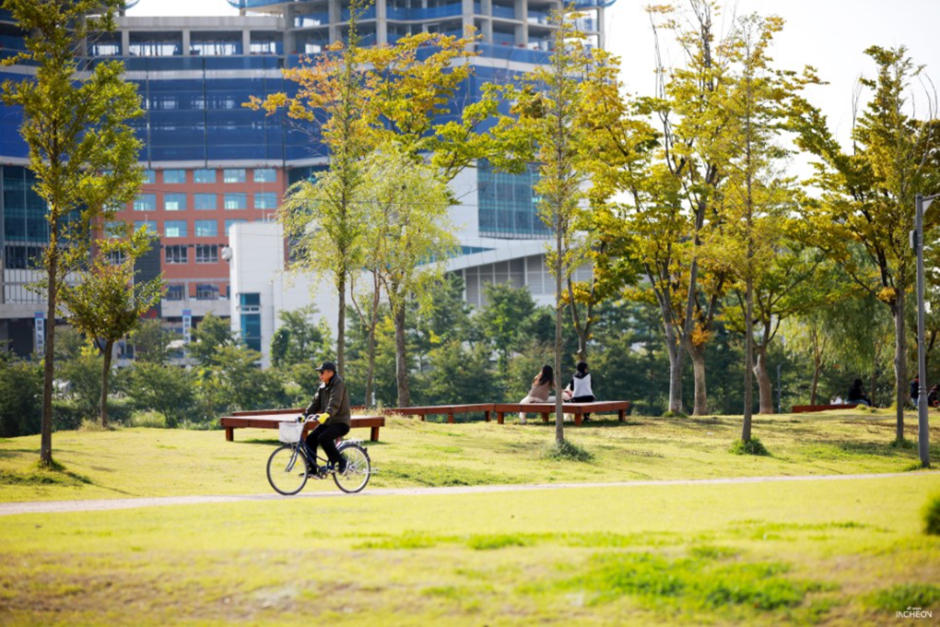
Songdo Dog Park (송도 도그파크)
6.7Km 2024-10-29
350 Central-ro, Yeonsu-gu, Incheon
Songdo Dog Park, located within Songdo-dong Dalbit Festival Park, is a free pet playground open to all pets who are up-to-date on their vaccinations and are microchipped. Owers of pets that are not microchipped must have their pet registration paperwork on hand to enter. The park is divided into three sections based on dog size for safety.
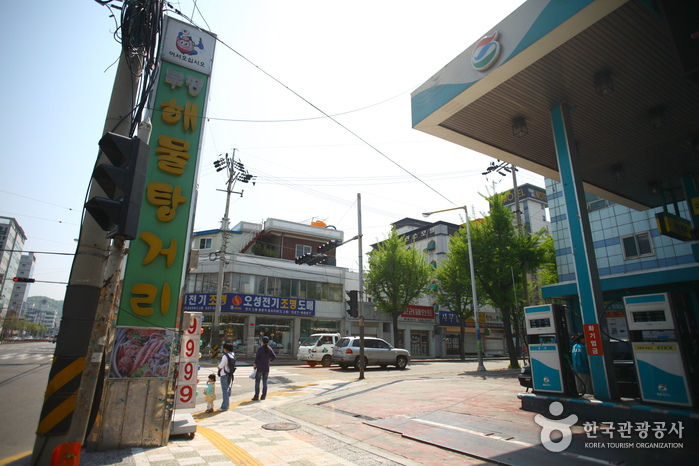
Bupyeong Haemultang (Seafood Stew) Street (부평 해물탕거리)
7.0Km 2022-10-26
113, Bupyeongmunhwa-ro, Bupyeong-gu, Incheon
+82-32-832-3031
The history of Bupyeong Haemultang Street began 30-40 years ago, when there were just three restaurants on the street. Over the years, the street gained a reputation for serving delicious haemultang (seafood stew), and there are now ten seafood restaurants on the street. Each restaurant offers a rich, yet distinctly different flavored seafood stew prepared with aromatic vegetables and fresh seafood purchased from the marketplace every morning. The Haemultang Street has become so popular that many people travel the long distance from Seoul just for a satisfying meal of seafood stew. The restaurants specialize in stew and steamed seafood dishes, but also continue to develop new fusion menus to please all taste buds.
Incheon Port Cruise Terminal (인천항 크루즈터미널)
7.4Km 2024-02-16
438 Gukjehangman-daero, Yeonsu-gu, Incheon
The Incheon Port Cruise Terminal, which opened its doors in April 2019, serves as a docking point for large cruise ships. It features a two-level structure, with the first floor dedicated to arrivals and the second floor designated for departures. To enhance the experience for travelers arriving by cruise ship, the terminal offers a complimentary shuttle bus service that provides convenient access to major tourist destinations within Incheon. Notable nearby attractions include Incheon Chinatown and Wolmido Island.
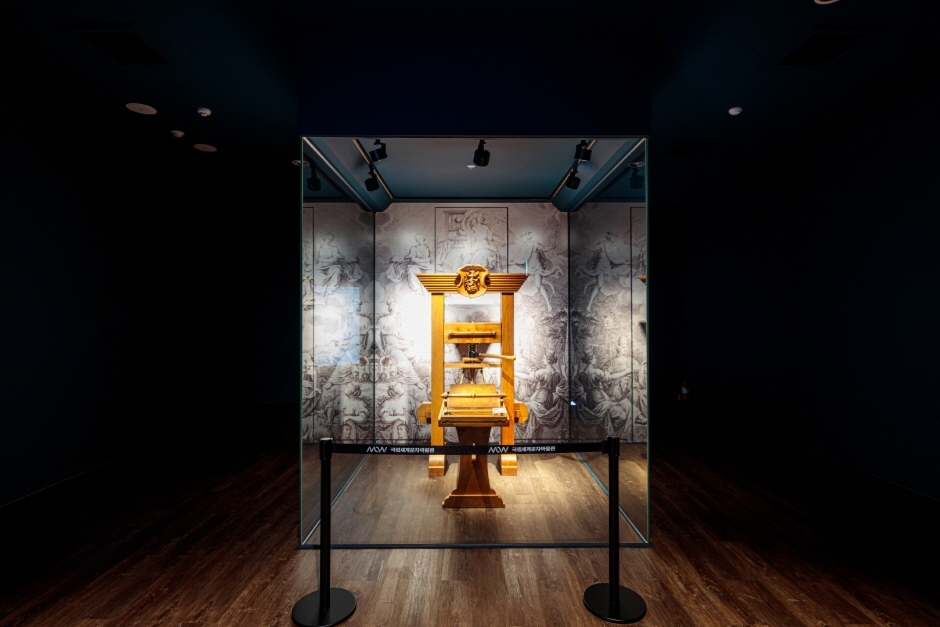
National Museum of World Writing Systems (국립세계문자박물관)
7.6Km 2025-10-23
217 Central-ro, Yeonsu-gu, Incheon
The National Museum of World Writing Systems is the third museum in the world to specialize in writing systems, following the Champollion Museum in France and the National Museum of Chinese Writing. The museum collects and researches new and important information from the stories contained in scripts, and conducts exhibitions and education based on this. By doing so, it shares the historical value of world scripts and provides content that allows visitors to experience the diversity of culture through scripts. From the first written script of mankind to the "Hangeul," Korean alphabet, it tells the story of the birth, development, and future of the characters that have led the development of human civilization.
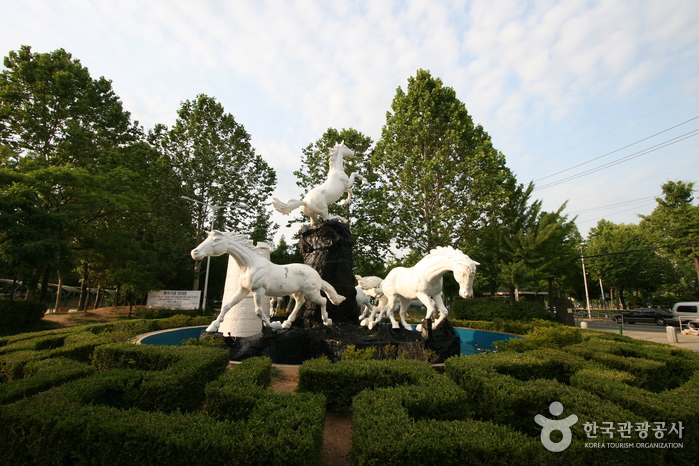
Sinteuri Park (신트리공원)
7.6Km 2021-07-08
21, Sinteuri-ro, Bupyeong-gu, Incheon
+82-32-509-6973
The city of Bupyeong is surrounded by Gyeyangsan Mountain, Cheolmasan Mountain, and Manwolsan Mountain, which all form a basin-shaped area in the center. Bupyeong slowly began to establish itself as a city after the opening of Gyeongin railway and the U.S. Army base established right after the Korean War. Sinteuri Park in Bupyeong 4(sa)-dong neighborhood is equipped with outdoor recreational facilities including a soccer field, tennis court, badminton court, children's playground, walking trail, and water fountain, spanning an impressive 58,594 ㎡. It also has a library with 1,500 seats, and a floor area of 7,869 ㎡. The park serves as a main recreational area for Bupyeong residents.
Incheon Grand Park (인천대공원)
7.6Km 2025-01-10
236 Munemi-ro, Namdong-gu, Incheon
+82-32-466-7282
Incheon Grand Park is an urban nature park located in Jangsu-dong, Namdong-gu, Incheon. The park is surrounded by Gwanmosan Mountain and Sangasan Mountain. Spanning across 727 acres of land, Incheon Grand Park is the only large-scale natural green park in Incheon. The park provides a pleasant atmosphere for citizens to escape from the city life and enjoy the natural surroundings. Over 4 million people visit the park every year to take in the clean air and relax in nature.
 English
 한국어
한국어 日本語
日本語 中文(简体)
 Deutsch
 Français
 Español
 Русский


