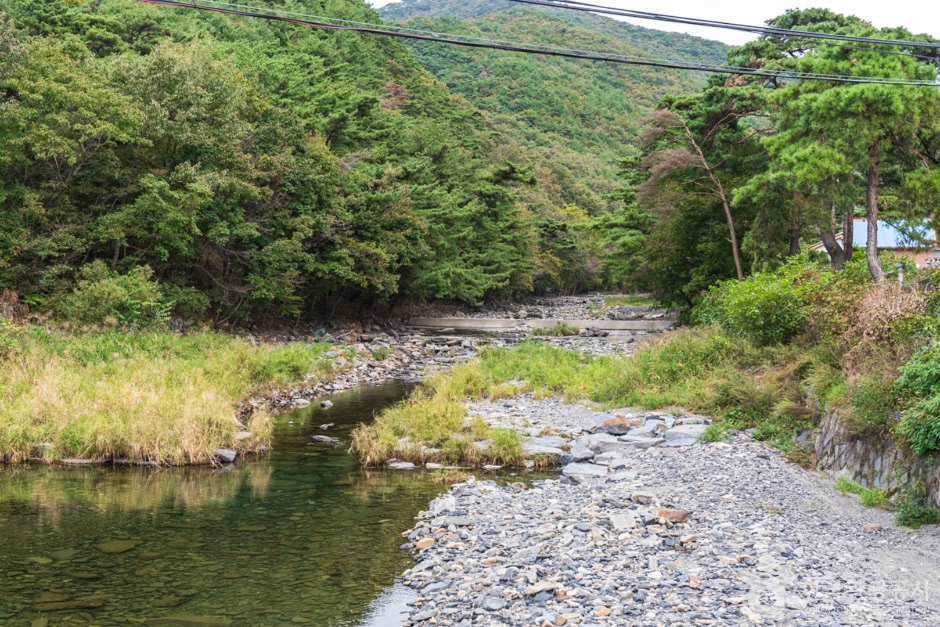
Simyeondonggyegok Valley (Seongjugyegok Valley) (심연동계곡(성주계곡))
16.3Km 2024-02-21
Seongju-ri, Seongju-myeon, Boryeong-si, Chungcheongnam-do
Simyeondonggyegok Valley is a valley formed in an S-shape to the south of Seongjusan Mountain. The name "Simyeon" means deep pond. The landscape is picturesque, and visitors can enjoy forest bathing along the trail lined with pine trees. Even in the summer, the cool flowing water makes it an ideal destination for relaxation.
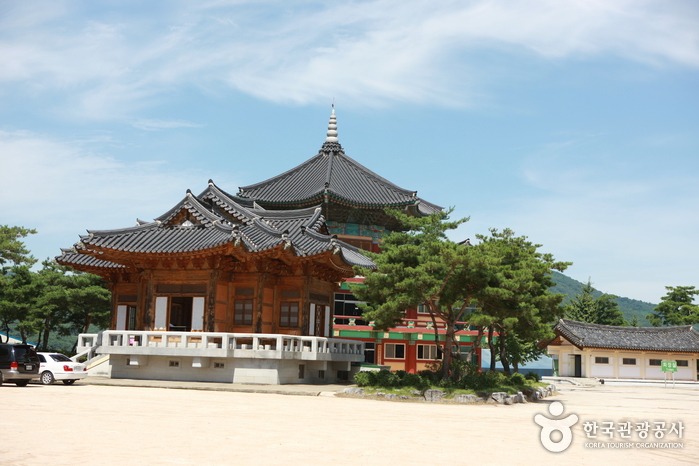
Korea Traditional Architecture Museum (한국고건축박물관)
16.4Km 2022-08-18
543, Hongdeokseo-ro, Yesan-gun, Chungcheongnam-do
+82-41-337-5877
The traditional Korean architectures designated as valuable cultural assets scattered throughout the nation are on display at a one-tenth or one-fifth scale in this museum for the purpose of promoting and passing down the history of Korean architecture.

Yongbongsan Mountain (용봉산)
17.0Km 2024-01-15
Sangha-ri, Hongbuk-eup, Hongseong-gun, Chungcheongnam-do
Yongbongsan Mountain is relatively small mountain, reaching a x_height of just 381 meters, but is filled with beautiful rocky outcroppings and peaks. The mountain's name comes from its ridgeline, resembling a dragon with the head of a phoenix. The mountain is home to a wide range of Korean plants, including Korean pine trees, and cultural heritages such as Yongbongsa Temple.
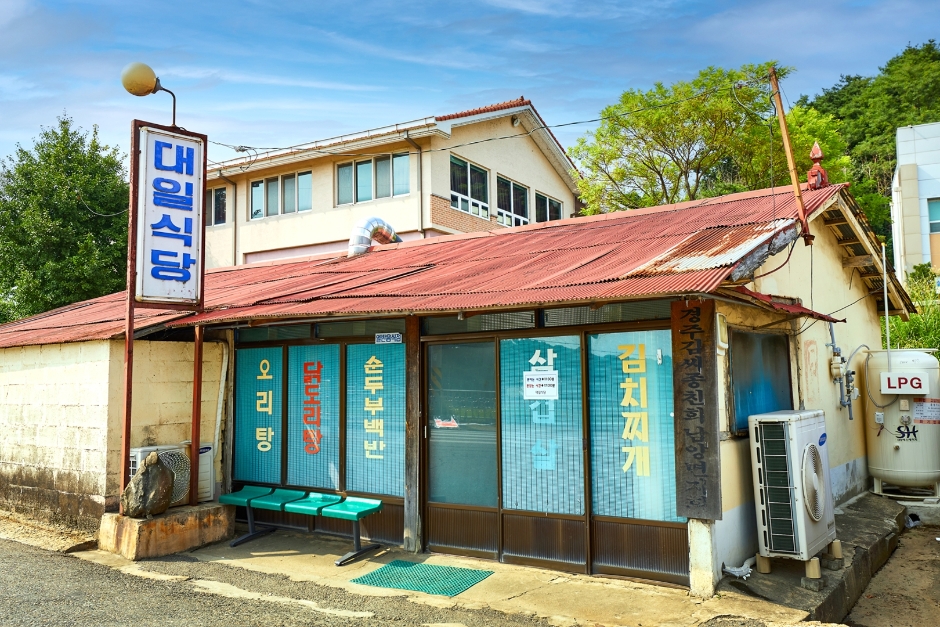
Daeil Restaurant (대일식당)
17.0Km 2024-03-11
334 Guyong-gil, Namyang-myeon, Cheongyang-gun, Chungcheongnam-do
This eatery is celebrated as a true local dining spot, where the ambiance brings one back to a bygone era through its interior and exterior design. It’s a baekban (set menu) restaurant that offers a hearty spread of Korean side dishes, soup (or jjigae), and rice. The menu keeps it simple with three distinct jjigae options: soft bean curd jjigae, known for its delicate texture; a robust soybean paste jjigae, simmered with savory soybean paste; and a zesty kimchi jjigae, renowned for its spicy excellence. Jjigae, a staple in Korean cuisine, pairs perfectly with rice and is a common feature at the Korean dinner table. Here, diners are invited to savor the authentic flavors of Korean home cooking. Notably, this restaurant has earned accolades for its moderately seasoned dishes that avoid overuse of spices, ensuring the flavors are palatable without being overpowering. Be mindful that during peak hours, like weekday lunchtimes, there may be a wait or the restaurant may be sold out of certain items due to popularity.
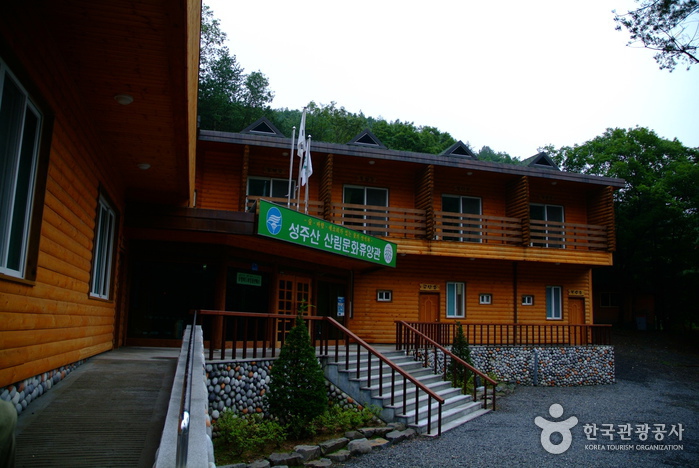
Seongjusan Recreational Forest (성주산자연휴양림)
17.5Km 2022-12-27
57-228, Hwajanggol-gil, Boryeong-si, Chungcheongnam-do
+82-41-934-7133
Seongjusan Recreational Forest in Boryeong, Chungcheongnam-do is especially popular in spring because of its cherry blossoms and beautiful wildflowers. Also, the observatory 100 meters below the mountain peak (680 meters in elevation) offers a great view of Seongju-myeon and Oesan-myeon. Roundtrip hike to the peak takes approximately 2-3 hours.
Nearby tourist attractions include the Seongjusaji Temple site and a coal museum (15 minutes on foot), as well as Daecheon Beach and Muchangpo Beach (20-30 minutes by car).
Imjonseong Fortress (예산 임존성)
18.5Km 2025-01-07
San 28 Masi-ri, Yesan-gun, Chungcheongnam-do
+82-41-339-7332
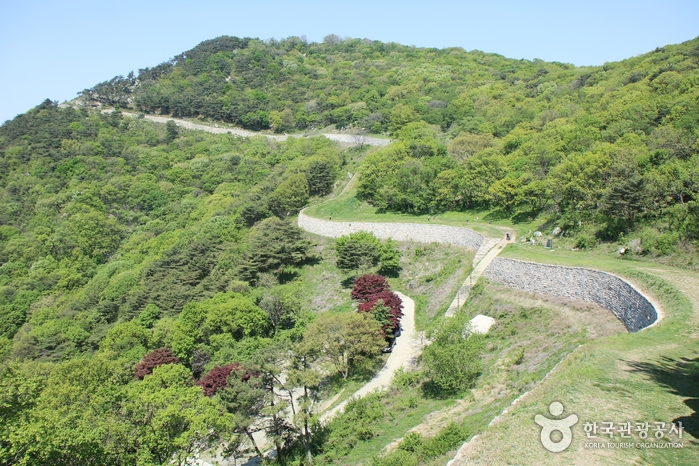
Imjonseong Fortress (also known as Daeheungsanseong Fortress) is located at the top of Bongsusan Mountain between Yesan-gun and Hongseong-gun in Chungcheongnam-do. This stone fortress was designed as a place to launch attacks against enemies. One of the ways in which those in the fortress fended off intruders was to unleash the water from the giant fortress well and let it gush down the mountain towards the oncoming forces.
The fortress wall is about 2.5 meters high and 3.5 meters wide and has a 7 to 8-meter ditch that runs alongside the southern wall. Compared with other Korean fortresses, Imjonseong Fortress is higher and about 2 meters thicker. It is the largest fortress of the Baekje Kingdom and has become the subject of much research.
History shows that the fortress was the central hub of the Restoration Movement of the Baekje Kingdom (18 BC - AD 660). In the 20th year of the reign of King Uija (Baekje dynasty), the kingdom was defeated by the united forces of the Silla Kingdom and the Tang dynasty (currently, China). Boksin (a cousin of King Uisa), a monk, and Heukchisangji stayed at the fortress for three years while trying to return the king to power.
As one walks along the winding trail, the view of Daeryeonsa Temple comes in to view and as once at the top, the spectacular views of Oseosan, Baekwolsan, and Gayasan mountains unfold. Those who come to the fortress from Masa-ri, Gwangsi-myeon, can drive and park their car in the parking lot located right below the fortress.
Yeongmokhang Harbor (영목항)
19.3Km 2021-08-11
55, Wolgoji-gil, Taean-gun, Chungcheongnam-do
+82-41-673-9887
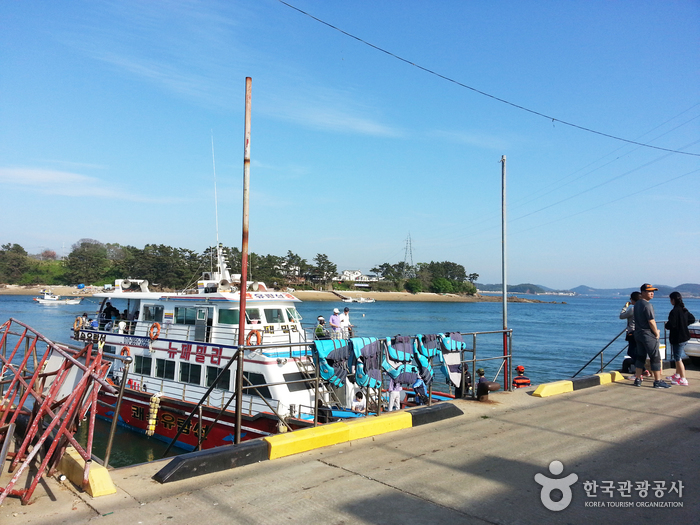
Yeongmokhang Harbor is located at the base of a small hill 4 kilometers away from Gonam-myeon, on the southern tip of Anmyeondo Island. The name was originally just Yeonghang Harbor but the name was changed to reflect its important role in connecting the areas of Boryeong and Taean. Across from the harbor are Wonsando, Hyojado, Chuseom, and Bbaeseom islands and ‘Three Brethren Rock.’ On the left are boats for Cheonsuman Bay. Fishing is the main industry in the region, which means that visitors can find plenty of fresh, quality seafood such as manila clams, conches, bass, and other types of seafood at low prices.
Gaehwa Art Park (개화예술공원)
19.5Km 2021-05-24
673-47, Seongjusan-ro, Boryeong-si, Chungcheongnam-do
+82-41-931-4613
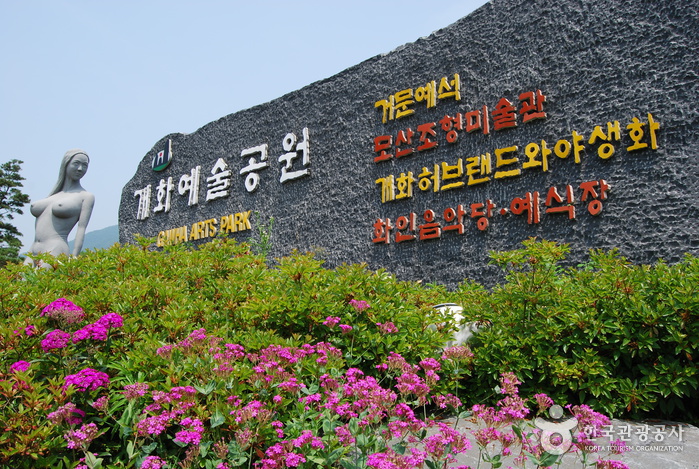
Situated in Boryeong, the spacious Gaehwa Art Park is a theme art park that houses a variety of parks and attractions: to name a few, Mosan Fine Arts Museum, Birim Park, Yukpilsi Park, Hwain Music Hall, and Herb Land. The orange roof of Mosan Fine Arts Museum was made by using local stones. At Yukpilsi Park, visitors can see over 1,500 sculptures, statues and monuments as well as large stones inscribed with famous Korean poems. At Herb Land, visitors can enjoy dining. Throughout the park, visitors can see seven different ponds, waterfalls, and walking trails as well as animals such as deer, rabbits, and ducks roaming freely.
Ongmasan Mountain (옥마산)
19.5Km 2024-06-03
300 Changdong 1-gil, Nampo-myeon, Boryeong-si, Chungcheongnam-do
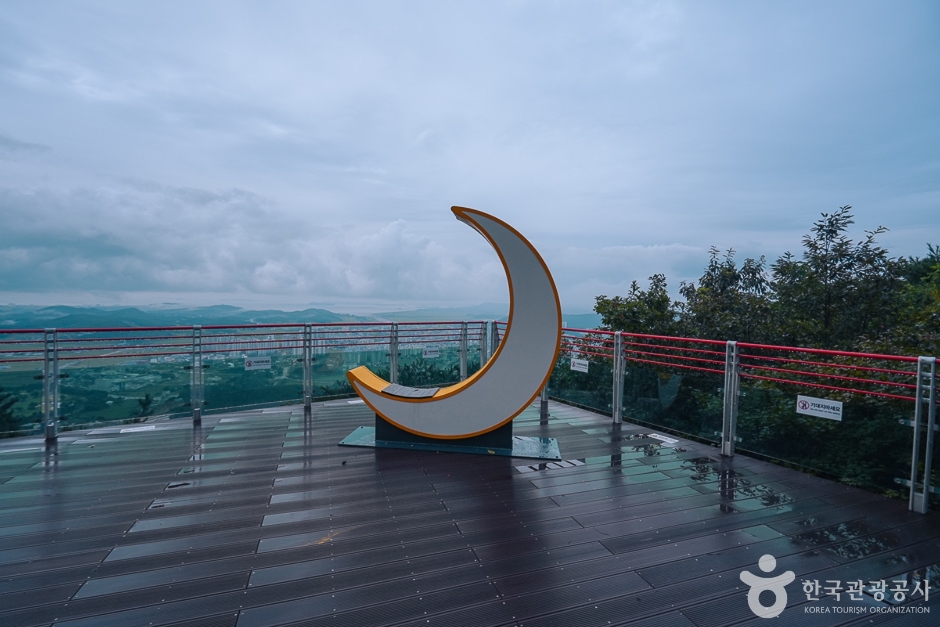
Ongmasan Mountain is located in the southern part of Boryeong with its highest point reaching 601 meters above sea level. Although the mountain encompasses the areas of Myeongcheon-dong and Nampo-myeon, it can easily be identified due to the transmission tower installed at the peak. The mountain's name is said to have derived from the legend of the last king of the Silla period and his horse that was hit with a jade arrow. The mountain has a paragliding center and a pine forest with rest spots. At the northern section of the summit, there is a pavilion that offers an excellent vista and Daeyeongsa Temple, renowned for its beautiful cherry blossoms in spring. Ongmasan Mountain can be reached by taking the National Roads 21 and 40, and other regional highways as well as expressways. Nearby attractions include Boryeong Mugunghwa Arboretum, Seongjusan Mountain, Seongjusan Recreational Forest, Boryeong Coal Museum, and Gaehwa Herb Land.
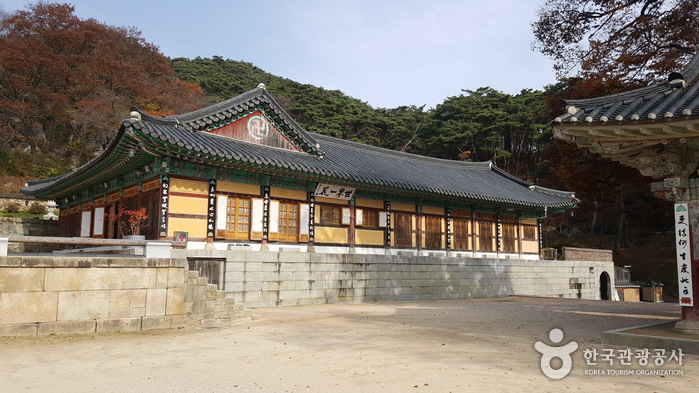
Sudeoksa Temple (수덕사)
19.7Km 2021-12-03
79, Sudeoksaan-gil, Yesan-gun, Chungcheongnam-do
+82-41-330-7700
Sudeoksa Temple, which has played an important role in the history of Korea’s Buddhism, is located at the foot of Deoksungsan Mountain. It was one of twelve temples from the Baekje Kingdom mentioned in Chinese historical records. There is no historical record of when the temple was founded but researchers believe it was founded sometime during the reign of King Wuideok (554-597).
The main building of Sudeoksa Temple, Daeungjeon Hall, was constructed in 1308 during the Goryeo dynasty. It was repaired four times between 1528 and 1803, but fortunately kept its original beauty. In addition to Daeungjeon Hall, Sudeoksa Temple houses many cultural treasures, such as the Three-story Stone Pagoda of Sudeoksa Temple.
 English
 한국어
한국어 日本語
日本語 中文(简体)
 Deutsch
 Français
 Español
 Русский


