
Jeju Oriental Hotel Casino (제주 오리엔탈호텔 카지노)
192.9M 2024-03-19
47 Tapdong-ro, Jeju-si, Jeju-do
+82-64-754-8867
Jeju Oriental Hotel Casino is located at Tapdong Beach, next to the Jeju International Airport. As a casino exclusively for international visitors, it operates around the clock, providing a variety of games, such as blackjack, roulettes, daisai, and baccarat. This ten-story five-star hotel also features various amenities, including restaurants, cafés, a business center, and offers shuttle bus services.
![E-Mart - Jeju Branch [Tax Refund Shop] (이마트 제주)](http://tong.visitkorea.or.kr/cms/resource/65/2887265_image2_1.jpg)
E-Mart - Jeju Branch [Tax Refund Shop] (이마트 제주)
282.8M 2024-04-23
38, Tapdong-ro, Jeju-si, Jeju-do
-
![Olive Young - Jeju Tapdong Branch [Tax Refund Shop] (올리브영 제주탑동)](http://tong.visitkorea.or.kr/cms/resource/85/2887285_image2_1.jpg)
Olive Young - Jeju Tapdong Branch [Tax Refund Shop] (올리브영 제주탑동)
477.8M 2024-04-16
15-1, Tapdong-ro, Jeju-si, Jeju-do
-
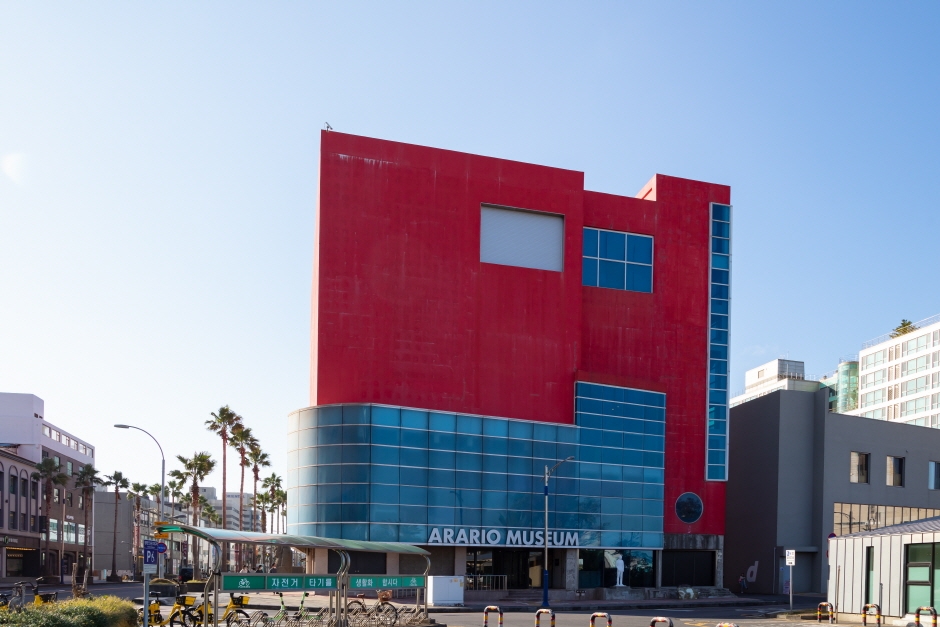
Arario Museum Tapdong Cinema (아라리오 뮤지엄 탑동 시네마)
491.6M 2023-05-05
14, Tapdong-ro, Jeju-si, Jeju-do
+82-64-720-8201
Arario Museum Tapdong Cinema was created by Kim Chang-il, a famous artwork collector in Korea, who reused an abandoned building to make a contemporary art museum. The building did not go through extreme renovation, allowing visitors enjoy the building's original features along with the artworks. The underground floor and four ground floors hold exhibits where visitors can take photographs (flash photography not allowed), and the fifth floor houses a souvenir shop and a cafe where visitors can relax and enjoy panoramic views of the old city center and Tap-dong.
Yongyeon Pond (용연)
551.2M 2024-10-24
73 Heungun-gil, Jeju-si, Jeju-do
Yongyeon Pond, located where water from Hallasan Mountain meets the sea, is aptly named "where dragons frolic,”reflecting its stunning vistas and crystal-clear waters. The Yongyeon Cloud Bridge, spanning the area's cliffs, is particularly famous for its breathtaking night views. Additionally, the area becomes a cultural hub every summer with the Yongyeon Floating Musical Concert, an event that recreates the ambiance of late Joseon-era musical performances held on boats, offering a uniqe blend of history and entertainment.
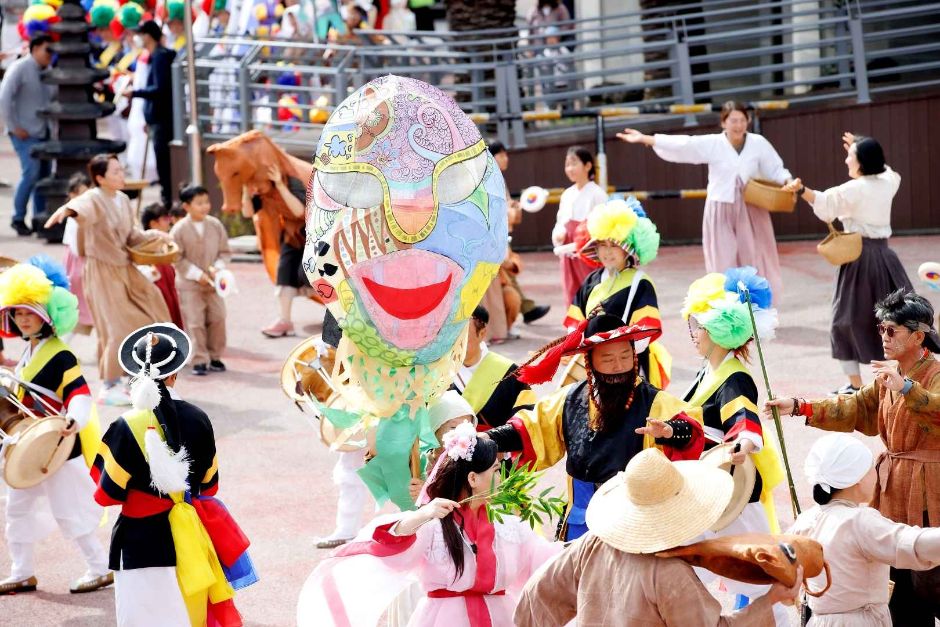
Tamna Culture Festival (탐라문화제)
583.8M 2025-07-11
2 Jungang-ro, Jeju-si, Jeju-do
+82-64-753-3287
The Tamna Cultural Festival is a celebration of Jeju’s unique cultural heritage, including folklore, mythology, history, and daily life. The festival’s highlight is the 1.7 km street parade with over 1,500 participants, showcasing active community involvement. The event also features high-quality performances that attract many visitors.
Yongduam Rock (용두암)
644.3M 2023-01-13
Yongduam-gil, Jeju-si, Jeju-do
+82-64-740-6000
Situated on the northern coast in downtown Jeju, Yongduam Rock is an estimated 10-meter-tall stone that has been worn down over time by strong winds and waves into a shape resembling a dragon's head. There are many legends surrounding the rock. One legend has it that a dragon stealing precious jade from Hallasan Mountain was shot down by an arrow from the mountain deity. When he fell down, his body immediately sank into the ocean and his head rapidly froze looking at the sky. Another legend has it that a white horse, who dreamed of being a dragon and ascending to the sky, came to be caught by a soldier and froze into the rock.
From Yongduam Rock, visitors can see haenyeo (female divers) working at catching seafood. Near the rock are various cafes, bars, and restaurants. The coastal road between here and Aewol-eup is popular among couples. Cafes and seafood restaurants began to appear there five years ago and now form a pleasant café village.
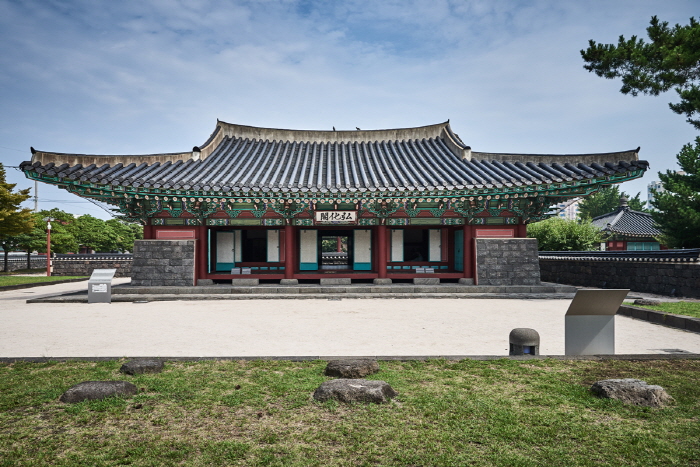
Jeju-mok Government Office (제주목관아)
667.6M 2024-03-15
25 Gwandeok-ro, Jeju-si, Jeju-do
+82-64-710-6714
The Jeju-mok Government Office was a gwana, or regional government office, that historically served as the center of Jeju Island’s political, administrative, and cultural activities, spanning from its early days as the State of Tamna through the Joseon period. A significant portion of the structure was destroyed in a fire in 1434, leading to subsequent rebuilding efforts. From 1991, archeological excavations were conducted in four stages, enabling the meticulous restoration of several key buildings within the complex. These include the Honghwagak Pavilion, Yeonhuigak Pavilion, Uyeondang Pavilion, Gyullimdang Pavilion, and Gwandeokjeong Pavillion, all of which were restored by December 2002. Additionally, the complex is known for hosting annual nighttime events.
![Gwandeokjeong Pavillion (Jeju) [관덕정(제주)]](http://tong.visitkorea.or.kr/cms/resource/75/2513575_image2_1.jpg)
Gwandeokjeong Pavillion (Jeju) [관덕정(제주)]
702.5M 2024-03-15
19 Gwandeok-ro, Jeju-si, Jeju-do
+82-64-740-6000
One of the oldest buildings in Jeju, Gwandeokjeong Pavilion was established in 1448 by the magistrate of Jeju with the purpose of training local soldiers. This historical edifice is renowend for its intricately painted girders, adorned with murals depicting the ten symbols of longevity, scenes from the Battle of Red Cliffs, and hunting imagery. Additionally, the pavilion's signboard is reputed to feature the handwriting of Prince Anpyeong, a notable figure from the Joseon era. Gwandeokjeong Pavillion is part of the Jeju-mok Government Office complex.
![NBA [Tax Refund Shop] (엔비에이)](http://tong.visitkorea.or.kr/cms/resource/41/2887441_image2_1.jpg)
 English
 한국어
한국어 日本語
日本語 中文(简体)
 Deutsch
 Français
 Español
 Русский


