![[Ganghwa Nadeul-gil Course 2] Homeland Fortification Trail ([강화 나들길 제2코스] 호국돈대길)](http://tong.visitkorea.or.kr/cms/resource/05/1895205_image2_1.jpg)
[Ganghwa Nadeul-gil Course 2] Homeland Fortification Trail ([강화 나들길 제2코스] 호국돈대길)
14.0Km 2021-08-11
24, Cheonghadong-gil, Ganghwa-gun, Incheon
+82-32-934-1906
The Ganghwa Nadeul-gil Trails are a collection of walking paths along the coast of Ganghwa Island that connect the watchtowers and and walls of Ganghwasanseong Fortress, as well as royal tombs and other historically significant sites from the Goryeo dynasty that dot the island.
[Ganghwa Nadeul-gil Course 2] Homeland Fortification Trail
Course 2 stretches over a 17 kilometer area between Gapgotdon Watchtower and Chojijin Fort. This trail showcases the history of the island and the changes that happened before and after the opening of the port. The course follows a coastal road that is particularly beautiful in spring and fall.
Gapgotdon Watchtower (갑곶돈대)
14.1Km 2021-01-18
18, Haeandong-ro 1366beon-gil, Ganghwa-gun, Incheon
+82-32-930-7077
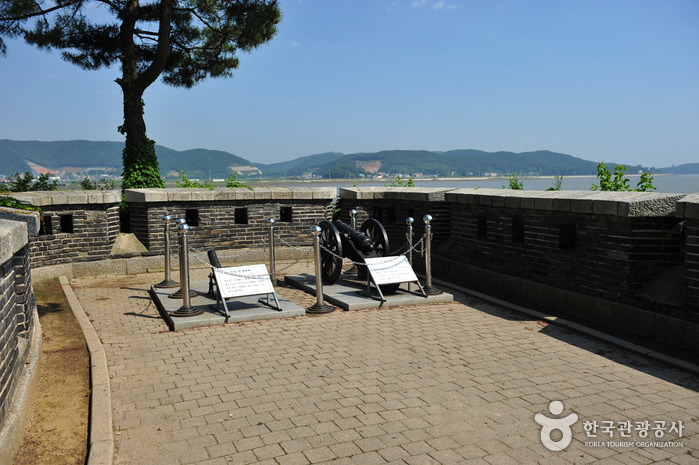
Gapgotdon Watchtower was built to protect the Ganghwa Straits from invasion when the Goryeo Kingdom moved their capital to Ganghwado Island. The fortified area served as a highly strategic location for the Goryeo Kingdom, and had endured multiple invasions by the Mongolian troops between 1232 and 1270.
The watchtower was fortified in the Joseon dynasty by King Sukjong in 1679 and had once fallen during the French campaign against Korea in 1866. In 1977, the site was restored to its original form. The cannons exhibited at the current site were made during the Joseon dynasty to attack outside invaders from sea.
Ganghwa Luge (Ganghwa Seaside Resort) (강화루지(강화씨사이드리조트))
14.4Km 2025-06-25
217 Jangheung-ro, Ganghwa-gun, Incheon
+82-32-930-9000
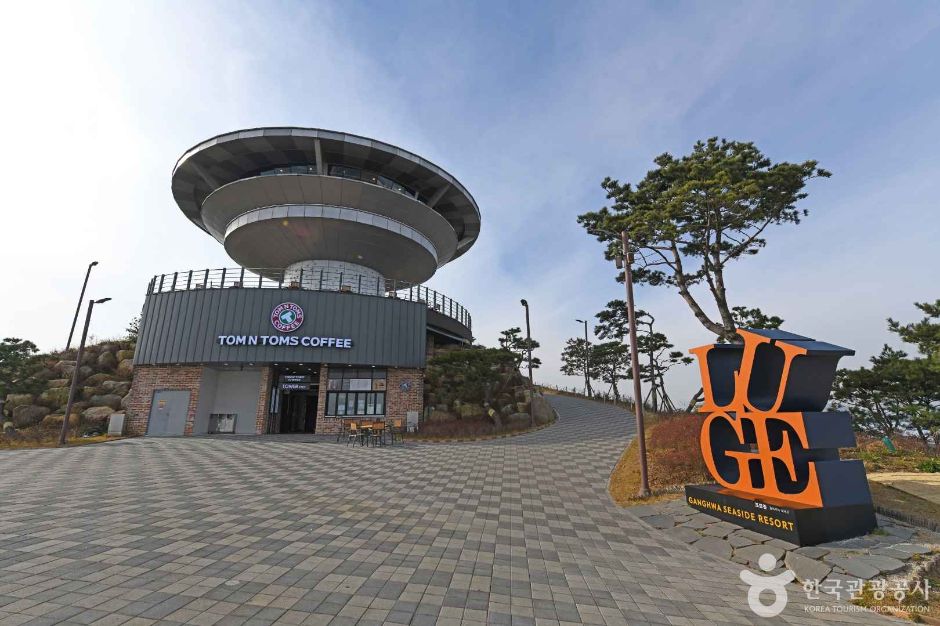
Ganghwa Seaside Resort delivers joy, happiness, and love with a gondola, food court, themed trails and the only luge track in the western part of the metropolitan area. It is a place where visitors can meet the mountains and the sea and feel the profoundness of nature without having to travel far way from the city. Visitors can take the gondola to reach the top, guided by the rich scent of the forest, and fully enjoy the atmosphere of Ganghwado Beach as well as the beautiful sunset from the observatory. The resort has a luge designed to descend dynamically through a 1.8-kilometer track, offering an excitement perfect for all members of the family.
Gwangseongbo Fortress (광성보)
14.9Km 2022-07-25
27, Haeandong-ro 466beon-gil, Ganghwa-gun, Incheon
+82-32-930-7070
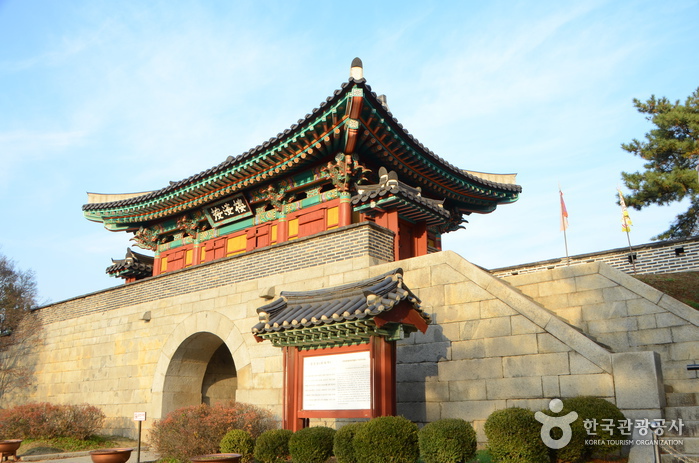
Gwangseongbo Fortress’s outer wall from the Goryeo era was mended in 1618. The fortress was built in 1656 and the outpost was constructed in 1679. It was completely remodeled into
a masonry castle with gates in 1745. During Sinmiyangyo (the American invasion in 1871), Gwangseongbo was the fiercest battle ground in Ganghwa. On April 24, 1871, a
fleet with 1,230 American naval forces led by Rear Admiral John Rodgers landed on Ganghwado Island to demand the
opening of Korea's ports and commerce. The armed forces attacked Chojijin Fortress
and Deokjinjin Camp, then marched to Gwangseongbo Fortress, where they engaged in close combat with the warriors of Joseon. Although General Eo Jae-yeon and the other warriors were poorly equipped with far inferior weapons, they bravely fought to the
death against the invading forces.
The battlefield ruins of the fortress and the gate towers such as Anhaeru, Gwangseongdon, Sondolmokdon, and Yongdudon were repaired
in 1977. The twin tombs of General Eo Jae-Yeon and his brother Eo Jae-seon, along with the anonymous tombs of warriors who died on the battlefield were
also honorably arranged at the same time. Furthermore, a stone monument commemorating the restoration of Ganghwa Battlefield was erected on Yongdudondae Post.
In 1988, an extensive rest area was created toward the shore for visitors’ convenience. Gwangseongbo Fortress is presently designated as Historical Relic No. 227. A religious service known as Gwangseongje is held annually to commemorate the patriotic spirits of General Eo Jae-yeon and other unnamed warriors. This service takes place at 11 a.m. on every April 24th of the lunar calendar.

Gimpo Munsusanseong Fortress (김포 문수산성)
14.9Km 2022-12-20
Ponae-ri, Gimpo-si, Gyeonggi-do
+82-31-980-2485
Munsusanseong Fortress was built on Munsusan Mountain in 1694, during the 20th year of the reign of King Sukjong, the 19th king of the Joseon dynasty. The fortress as designed to defend Gwanghwado Island from marine invasion. At the time, the fortress had north, west, and south gates, but they were destroyed in a fire during the Byeong-in Yangyo (1866). The north gate was restoryed in 1995 and the south gate in 2002. The fortress walls span 6 kilometers in length, 4 kilometers of which remain unrestored. Surrounded by beautiful scenery, the top of the fortress commands a spectacular view spanning from North Korea to the Hangang River inlet, and from Samgaksan Mountain to the sea off Incheon in the distance. It is often referred to as the Geumgangsan Mountain of Gimpo as it boasts superb scenery throughout all four seasons. The mountain is home to Munsusa Temple, established during the reign of Silla King Jinseong.
Yeonmijeong Pavilion (연미정)
15.5Km 2022-08-30
242, Wolgot-ri, Ganghwa-gun, Incheon
+82-32-930-3124
Yeonmijeong Pavilion is Incheon's Tangible Cultural Asset No. 24 (designated on March 1, 1995).
While the exact date of construction is unknown, the pavilion was greatly damaged and then rebuilt afterwards due to the Japanese Invasion of Korea in 1592, the Byeongja Chinese Invasion in 1636, and the Korean War on June 25, 1950.
The name Yeonmi comes from the swallow tail-shape of Imjingang River and Yeomhagang River ('yeon' means swallow and ‘mi’ means a tail). As the pavilion stands on top of Wolgotdondae, visitors can see Paju-si, Gimpo-si, Gaepung-gun in Hwanghae-do (North Korea) at a glance.
Haeden Museum (해든뮤지움)
15.5Km 2025-10-23
44 Jangheung-ro 101beon-gil, Gilsang-myeon, Ganghwa-gun, Incheon
Nestled amid the beautiful landscapes of Incheon, the Haeden Museum is a private art museum that opened in 2013. It showcases works by renowned Korean artists as well as international contemporary masters, including Chagall, Frank Stella, Roy Lichtenstein, Nam June Paik, Kim Whanki, and Lee Ufan. The museum not only hosts exhibitions but also offers educational programs. Its stunning architecture, which earned the Best 7 Architecture of the Year in Korea award in 2013, centers around the concept of harmony and communication with nature, making it a perfect getaway to connect with both art and nature.
Boreumdo Island (Spoonbill Eco Village) (볼음도(저어새 생태마을))
15.8Km 2024-02-15
595-1 Boreumdo-ri, Seodo-myeon, Ganghwa-gun, Incheon
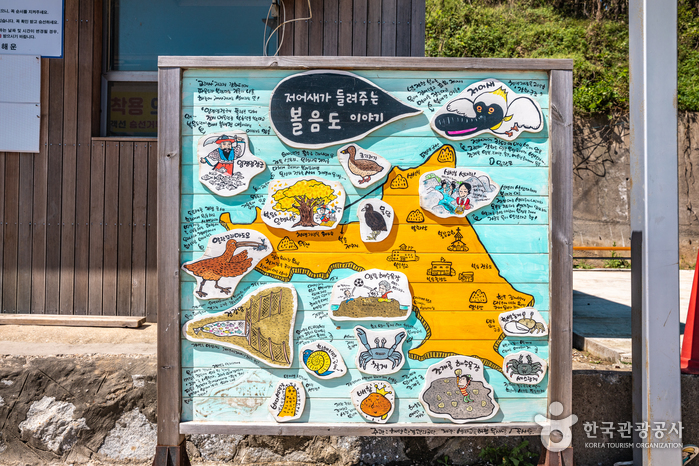
Boreumdo Island, situated in Seodo-myeon, Ganghwa-gun, is renowned as a habitat for spoonbills. The spoonbill, a rare migratory bird with a global population of around 3,000 individuals, finds refuge on this island. Since 2012, Boreumdo Island has been designated as a protected habitat for spoonbills, offering various experiential programs aimed at fostering an understanding of the tidal flat ecosystem. Key experiences include clam digging, net usage, and mudskipper fishing.
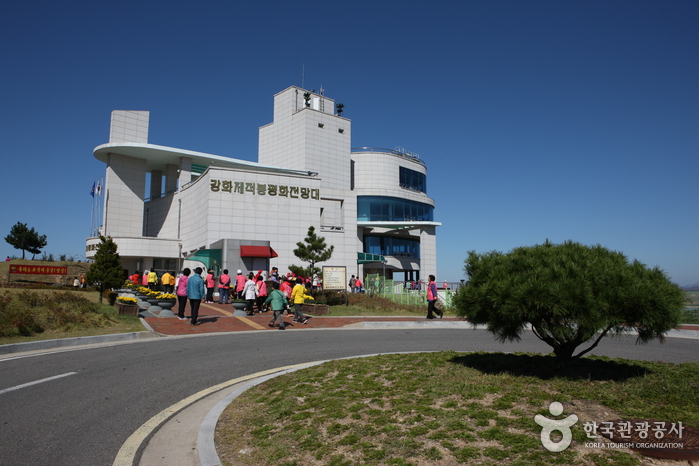
Ganghwado Jejeokbong Peace Observatory (강화도제적봉 평화전망대 )
15.9Km 2021-10-23
797, Jeonmangdae-ro, Ganghwa-gun, Incheon
+82-32-930-7062
Ganghwado Jejeokbong Peace Observatory was constructed in the northern area of the Civilian Restricted Zone in Cheolsan-ri, Yangsa-myeon. Entry to this area was strictly prohibited to the general public until 2008. The observatory allows visitors to take a closer look at the natural beauty the lies beyond the northern border. The observatory consists of four floors. The basement and fourth floor are used by the military; the first floor sells regional produce from Ganghwado Island and specialty products from North Korea, and the second and third floors make up the audio-visual rooms with materials related to North Korea and an observatory where one can observe the Northern territory from afar.
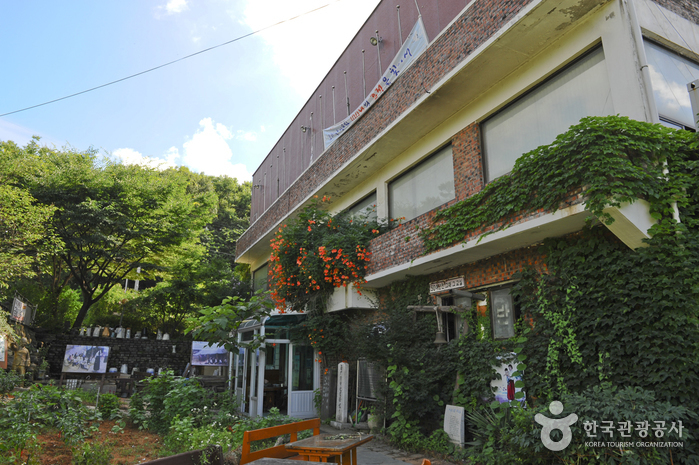
Deokpojin Museum of Education (덕포진교육박물관)
16.0Km 2021-02-26
90, Deokpojin-ro 103beon-gil, Gimpo-si, Gyeonggi-do
+82-31-989-8580
Deokpojin Museum of Education was established by Kim Dong-seon, an elementary school teacher, for his wife, Lee In-suk who lost her eye sight due to an accident while she was also an elementary school teacher. He decided to build the museum to cheer up his wife who was deeply depressed with the fact that she could no longer teach students. Through the husband's will to give his wife opportunities to teach children again, his dream to create hands-on educational programs not available in the ordinary school education system became a reality as well. The museum was finally opened in 1996 with materials collected by the couple, comprised of a music class taught with her pump organ and Mr. Kim's collection of various school materials such as a book wrapper, a nature textbook from 1960, nickel silver lunch boxes and more. These collections attracts many visitors, from kindergarteners to university students and even family visitors.
 English
 한국어
한국어 日本語
日本語 中文(简体)
 Deutsch
 Français
 Español
 Русский


